Chapter 5:
Chapter 5: Busy Work
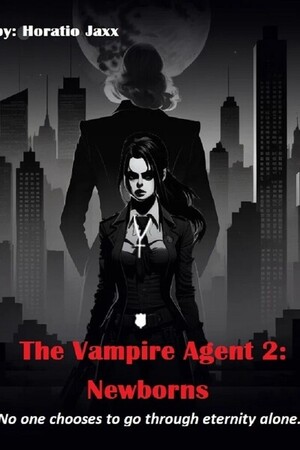
The Vampire Agent 2: Newborns
“Who is he?”
“James Dryden,” Dt. Russo reported back to Dt. Hale while reading off his tablet. “Fifty-six—married—no children; his son from his first marriage died of a drug overdose four years ago. He’s been married to his third wife now for all of nine months, and they have a $50 million townhouse in Lenox Hill. He's the senior finance director for the Hebron Group; a venture capitalist and a very, very wealthy man—or he was.”
It was 8:53am, Tuesday, when Cassidy and her Manhattan South Homicide team arrived at the crime scene of a murder. James Dryden’s body was sprawled on the sidewalk along a narrow one-way street between two buildings. Construction scaffolding was situated over the sidewalk to protect pedestrians, and it also shielded much of the walkway from CCTV cameras. Across the street and halfway down the block was a parking lot entrance. Police cars and crime scene tape at either end of the street kept back dozens of onlookers and the news media.
“How wealthy?” Dt. Hale asked as he moved to look at the body from a different angle.
“His net worth is estimated at just north of 500 million,” Dt. Russo reported from memory.
Dt. Hale stepped back and began examining the surroundings. After a few seconds of study, he began softly speaking to no one in particular.
“What are we looking at?”
“It has all the appearances of a robbery-murder,” Dt. Greene plainly answered.
“But you think it's too apparent?” Dt. Hale inferred aloud.
Dt. Hale was alluding to the fact that the victim’s wallet and watch were missing, and all his pockets were turned out. The scene created a visual that screamed robbery.
“It seems like the killer went to a lot of trouble for a simple mugging,” Dt. Greene surmised. “And then he bumps it up to murder? It smells funny to me, sarge.”
“On the other hand,” Dt. Vera Washington countered as she looked about. “The shooting is timed between 6:18 and 6:23 depending on whose watch you’re going by. This looks like it could be a crime of opportunity. You got your Vic walking out of a parking structure and onto a secluded street with no witnesses around. Our perp may have thought it was too good to let pass.”
Everyone took a moment to digest Vera’s supposition.
“I don’t see it,” Cassidy hesitantly interjected. “You’ve got a perp lurking outside of a parking garage at six in the morning looking for someone, anyone, to rob at gunpoint,” she continued with an introspective shake of her head. “Who would take that kind of risk for what would have likely amounted to a few hundred dollars at best?”
Vera was annoyed by Cassidy’s challenge to her theory. An alternate read of the crime scene was acceptable from anyone but her.
“Like I said,” Dt. Vera spoke with sternness, “a crime of opportunity.”
Cassidy gave the crime of opportunity theory some thought, and that produced a swell of satisfaction within Vera.
“Look at this place,” Cassidy spoke up after a brief deliberation. “Why go through all the trouble of intercepting your mark in the one place with no surveillance cameras, kill him and not know who he is or how much money he’s carrying?”
“You think the killer knew the victim?” Vera challenged Cassidy with disbelief.
“If the perp didn't know the victim, then somebody took a big gamble without any proof that it was going to pay off,” Cassidy speculated.
“Maybe he was a junkie, and the mugging went bad,” a bewildered Vera suggested. “It happens.”
“The shooting is too clean for a mugging gone bad,” Cassidy corrected. “Three shots, no misses, and each wound potentially fatal, the killer wanted Mr. Dryden dead.”
“I agree,” Dt. Greene supported. “I’m not seeing any signs of a struggle. We could be looking at a hit in disguise.”
Vera took offense at being corrected by Cassidy and was angered even more when Dt. Greene backed up her thinking.
“He was probably standing at point blank range,” Vera argued in defense of an alternative theory. “The perp shoots him twice, the victim falls, but he's not dead. The perp panics and shoots the Vic in the head.”
“Then the perp didn't panic,” Cassidy disputed. “I mean, shooting someone in the head seems a little too calculated to be panicked.”
Cassidy’s comeback infuriated Vera almost beyond her will to hide it. She clenched her jaw and took a deep breath to bleed off her anger.
“He only shot the Vic once in the head,” Vera argued after a pause. “Two shots to the head with a small caliber weapon is the rule for professional hits.”
“Not if you're trying to make it look like a mugging,” Cassidy corrected again. “The victim has two wounds to the chest—closely spaced. I think the perp fired two quick shots, our victim went down, and then he shot him in the head for good measure.”
“That fits with what the garage worker said he heard,” Dt. Russo seconded, “two shots, one after the other, and then a third a few seconds later.
Dt. Hale scanned the faces of his team for dissenting opinions. Other than the scowl on Vera's face, he saw nothing to suggest that the murder disguised as a robbery was an invalid theory.
“Okay then,” Dt. Hale announced to his team. “Stick to the robbery-homicide for the press. Russo, check DAS (Domain Awareness System). Greene, dig up everything you can about Dryden: family, friends, enemies, associates, competitors. Look for anyone who might have a reason to want him dead. Call me if you find anything worth knowing right away. Washington, you're with me. Let's see if the people who knew Dryden can tell us if anyone wanted him dead. Tremaine, stay on the background checks on that Pier 17 rock concert stabbing. See if you can find a new lead. We'll meet you back at the squad room.”
Cassidy was humiliated with her order to go back to screening suspects in the Pier 17 rock concert stabbing-homicide. She knew that the shooting death of James Dryden was destined to be a high-profile case, and she believed her input qualified her for a significant role in the investigation. Being told to focus her attention on a stabbing-homicide that went mostly unnoticed by the press felt like a slight, but sober thinking recognized that it was likely a decision based on seniority and the allocation of tasks.
~~~~~Line Break~~~~~
It was shortly after one o'clock in the afternoon when Dt. Hale and Dt. Vera Washington returned to the squad room. Their report to the squad was that James Dryden was thought of as a nerd who happened to be brilliant in the fields of corporate finance and global investments. He went out of his way to avoid making enemies, and he wallowed in the attention, admiration and flattery he got from others. He was disliked by many who thought him boring, but no one thought enough of him to hate. He enjoyed adorning himself with trappings that suggested he was more sophisticated than he was, and this tendency extended to his choices in wives.
“Do you think Mrs. Dryden is capable of putting a hit on her husband?” Dt. Greene questioned with intrigue.
“I don't know, possibly.” Dt. Hale returned.
“She's a phony,” Vera decried. “I can tell that much. I didn't buy her weeping and sobbing for one second.”
“That doesn't make her a killer,” Dt. Hale countered.
“How did she look?” Dt. Greene asked with his gaze toward Dt. Hale.
“She looks like someone who married for money,” Vera quickly spoke up. “And now she's got it without the fuddy-duddy husband that came with.”
“It sounds as if you like her for the murder,” Dt. Greene speculated.
“If it was a hit, then my money is on her as the author of the contract,” Vera enthusiastically concurred.
“Well then, we should put her on the suspect board because it's looking a lot like a hit,” Dt. Russo announced.
“What do you have, Howard?” Dt. Hale queried with a glance his way.
“I singled out the shooter on CCTV,” Dt. Russo reported while activating his computer.
Dt. Hale and the rest of his team followed Dt. Russo around to the back of his desk, Cassidy included. After a few clicks of his mouse, Dt. Russo activated a CCTV playback on his computer monitor. The image of a lone man standing at the intersection of the side street where James Dryden was killed, and the larger cross street is on the monitor. The man is wearing a Yankees baseball cap and a thigh length raincoat. He has long stringy hair coming out from under the cap. He has a mustache and beard, and he is wearing sunglasses.
Cassidy had stopped her research of the Pier 17 rock concert stabbing suspects to be a part of this discussion. The James Dryden murder was still looming large in her thoughts. From the beginning, Cassidy was leaning toward a contract killing. The news about Kathryn Dryden did not sway her one way or the other, but Dt. Russo’s claim that he had images of the killer did intrigue.
“Here he is before the shooting,” Dt. Russo pointed at the screen. “He’s just waiting. Now wait,” he instructed the others as he sped up the playback for a few seconds. “Look at that. He ignores this guy who comes out of the same walkway as our Vic. Okay, hold on,” Dt. Russo instructed again as he moved the playback forward a few minutes. “Note the time—6:19. He goes down the side street.” Dt. Russo moved the playback up again. “The time is now 6:23. He comes out and takes off at a walk like nothing has happened.”
“You sure that's the shooter?” Dt. Hale challenged.
“There's no activity at the other end of the street, and nobody comes out of there until the first patrol car arrives five minutes later. This guy is our shooter,” Dt. Russo declares with a point. “I tracked him to a subway station and then he just disappeared into the rush hour crowd.”
“Did he get on a train?” Vera asked.
“Not in those clothes and beard, he didn't,” Dt. Russo answered.
“A disguise?” Dt. Hale thought aloud.
“He could have gotten on one of a dozen different trains that went through during the morning rush, or he could have ditched the disguise and walked right out of there with a hundred other morning commuters. I've got officers checking the trash up and down that line.”
Dt. Hale pondered all that he knew and heard, and then looked up into the faces of his team.
“Okay, it looks like we've got a hit. Our only suspect is Kathryn Dryden. Find me a better one or prove she did it. Let's get to work.”
Cassidy had little to do with the effort to discover who was behind James Dryden’s murder. Her work continued to be the process of identifying the people at the Pier 17 rock concert through phone calls and social media, doing background checks on them and cross-referencing their history with that of the victim. After another hour of identifying faces in images, doing background checks and calling individuals, Cassidy asked for and was given time off for personal business.
The personal business that Cassidy wanted to deal with was Adrianna’s jury summons. Cassidy was not sure that there was anything that she could do, but she did have her concerns about what Adrianna would do on her own. To avoid parking issues, Cassidy took a cab to the New York County Courthouse. She went directly to the office of the Commissioner of Jurors and made a request for ten minutes of his time. After waiting for 27 minutes, Commissioner Bernard Milgram welcomed her into his office.
“So, what can I do for you, Detective,” Commissioner Milgram queried from behind his desk.
“I’m here about one of your jury summonses,” Cassidy returned while placing a photograph of the summons on the desk.
Commissioner Milgram took the photograph, briefly examined it and then began typing the information from the paper onto his computer keyboard.
“Brooke Chapman—what about her?” Commissioner Milgram asked.
“Well, I was hoping you could excuse her from jury duty,” Cassidy explained softly.
Commissioner Milgram was surprised by such a request coming from an NYPD detective and gave Cassidy a confused look. He knew that the NYPD had an official channel for making a jury summons exemption request.
“That’s not my job,” Commissioner Milgram shrugged. “That’s up to the judge.”
“I was told you could take her off the list so that she wouldn’t have to go through that whole process,” Cassidy quickly countered.
Cassidy's push back elevated Commissioner Milgram's suspicions. He thought that there had to be some conflict with policy and procedure behind her unofficial request.
“What’s this about, Detective?” Commissioner Milgram questioned in a challenging tone.
Cassidy took a breath. She could see that her request was not being received well. She was overly perturbed by the thought of her request being denied. The idea that Brooke and Ronald would leave New York and possibly the country would be an acceptable outcome, but her worry was this would not what would happen. Cassidy did not want Brooke or any of the vampires manipulating people’s minds with their intoxicating pheromones, especially government officials. And she knew that mind manipulation was the most likely outcome if she failed to quash Brooke's jury summons.
“Ms. Chapman’s time on a jury could have a negative effect on an investigation,” Cassidy defensively tossed out.
The lie that Brooke was part of an ongoing investigation was not a last second concoction by Cassidy, but it was a ruse that she was hesitant to use.
“There’s a process through your superior for a request like this,” Commissioner Milgram promptly challenged.
“My lieutenant thinks Ms. Chapman’s value as a confidential informant is too insignificant to put through a formal request,” Cassidy quickly countered. “But I’m hoping that a single potential juror is an insignificant number for you.”
The first thought that went through Commissioner Milgram's mind was that Dt. Tremaine was trying to do a favor for a friend. It was the ideal explanation for an attempted end run around a normal procedure.
“Detective, it’s against our rules and procedures to give special treatment to family and friends of public officials,” Commissioner Milgram explained.
Cassidy quickly pulled out her tablet in response to Commissioner Milgram’s assumption that she was trying to do a favor for a friend.
“She’s not a friend,” Cassidy eagerly assured as she tapped into her tablet. “Here’s the case file with her name in it.”
Cassidy placed her computer tablet on the desk in front of Commissioner Milgram. He began reading the case file with detailed information about Brooke Chapman.
“She is someone who is in a position to come into information that could be useful in an investigation,” Cassidy nervously insisted. “The likelihood is low, but I prefer to keep all my avenues open if I can.”
Commissioner Milgram finished reading from the tablet and looked. Cassidy was made uneasy by his momentary study of her.
“As you can see from the case file, this is a case that I am working,” Cassidy attested with a gesture toward her tablet.
The case file that Commissioner Milgram had just read from was a closed case, but he could not see that from the page he was looking at. It was the case of the Greenbelt Nine Murders that was opened and closed by Cassidy more than two months earlier and was tagged with her name and badge number in the top left corner of every page of the file.
“The department doesn’t allow officers to work cases involving family or friends,” Cassidy hurriedly insisted. “Ms. Chapman is strictly a CI that I would prefer to keep in the field if possible. Her jury duty wouldn’t kill the investigation, but if it is of no inconvenience to you, I would prefer that she not be tied down to a commonplace duty that thousands of others could be doing.”
Commissioner Milgram examined Cassidy for a moment longer and then he began typing into his computer.
“Okay, Detective, your Ms. Chapman will be getting an exemption letter in the mail,” Commissioner Milgram acquiesced.
Cassidy accepted Commissioner Milgram's assurance with a smile and a thank you, then quickly left his office for fear he might change his mind.
~~~~~Line Break~~~~~
“It's about time,” Tony exclaimed with irritation.
It was 8:12pm, Tuesday night, when Tony responded to Charlie's sudden rise to a sitting position on the floor. Charlie was gasping for air, with a look of wide-eyed terror. After a few large heaving breaths, he calmed down enough to speak.
“What—what, where am I? What happened?”
Tony was seated in a nearby lounge chair. He reached into the ice chest next to him and pulled out a raw chuck roast.
“Here, eat this,” Tony instructed as he tossed an unopened package of meat in Charlie's lap.
Charlie examined the unopened package of meat as if it was something he did not recognize. Tony knew his mind was dazed to the point that he did not know his own name, consequently he was reluctant to entertain his questions until his mind cleared.
“Come on, snap out of it,” Tony insisted as he clapped his hands.
Gradually, Charlie’s awareness of who he is and where expanded. Suddenly he was shocked to see another person lying on the floor next to him. The sight of the man on the floor caused him to jump with surprise, then he quickly turned his attention back toward Tony.
“Charlie?” Tony called out to focus his attention.
Charlie shook away the haze that had him in a fog. Within seconds his mind sharpened enough for him to recall his name and who he was looking at.
“What did you do to me?” Charlie huffed as he felt his neck for the wound he expected to find there.
“Stop whining,” Tony grumbled. “I made you better”
“What's wrong with me?” Charlie moaned as he doubled over from exhaustion and hunger pains.
“Eat,” Tony commanded. “You'll feel better.”
“I'm not eating that,” Charlie arduously complained as he brushed the package of meat out of his lap.
Talking and moving caused Charlie to double over from exhaustion and hunger once again.
“Eat the damn meat, Charlie,” Tony roared.
As Tony spoke, Ben began to stir to consciousness. Noting the movement, Tony took another package of meat from the cooler and tossed it over to Ben. Charlie looked at the package of meat on the floor and debated with himself if he should eat the uncooked meat. The pangs of hunger had him desperate for food, especially meat, but his mind had yet to accept the idea of eating uncooked flesh.
“Go on,” Tony encouraged. “I promise. You're going to love it.”
Charlie reached out and picked up the package of meat.
“Open it,” Tony nearly whispered.
Charlie thought for a moment before making a small tear in the package. An instant after opening the package, his sense of smell was flooded with the aroma of the meat and it made his mouth water. His amazement caused him to hesitate, and then he stripped away the rest of the packaging and began to devour the cold raw meat.
“Good, isn't it?” Tony questioned with a roguish smile.
It took Charlie close to ten minutes to finish eating the four-pound chuck roast. Shortly into his feeding, Ben began consuming the four-pound chuck roast that was given to him. Tony gave them bottles of water that they gulped down after they consumed the last of the meat. When they had finished eating, Charlie and Ben stood before Tony looking invigorated. Tony stood from his chair to be at eye level with them.
“How does it feel?” Tony grumbled from under his breath.
Charlie and Ben had no words to describe the exhilaration they were feeling. After a moment of seething with excess energy, they roared their response to the heavens.
“Good. Now we can begin,” Tony declared with an air of satisfaction.
Tony spent much of the next hour explaining to Charlie and Ben their inherent sensitivity to light and heat and particularly the sun. He explained that the sun’s full spectrum of colors and wide variety of radiation made it far more dangerous to them than artificial light.
“The sun, over time—four hours at a minimum, will sap all your energy and rot your body down to the bone. The sun will kill you if you stay out in it too long. Your own exertions can speed this process up by depleting your body of life sustaining nutrients, but the great thing about being a vampire is your senses. All your senses are heightened to their extreme limits.”
Tony paused to give emphasis to his last remark.
“And strength,” Tony continued with a fanatical countenance. “You feel as if there are no limits to your power. Your body obeys your command and gives you whatever you ask of it.”
“I can feel it,” Ben agreed with a large intake of air. “I feel as if I could bite off the head of a shark.”
“But don’t get carried away,” Tony quickly admonished. “Your body will only give you what it has to give. The more you exert yourself, the sooner you deplete the fuel that sustains you: protein, meat, blood. Over exertion is dangerous to us especially during the day. Do you understand?”
Charlie and Ben acknowledged their understanding of the warning.
“When necessary, we sleep when the sun is up,” Tony continued. “But only when necessary.”
“We don’t have to sleep?” Charlie grumbled with astonishment.
“Our bodies don’t, but our minds do,” Tony snapped back. “I’m told that if we don’t sleep a few hours a week our minds will fatigue.”
“What does that mean?” Charlie huffed with dismay.
“I don’t know,” Tony growled with annoyance. “What I do know is that when we are asleep, we can hear, smell, feel everything that’s going on around us,” he exclaimed.
Tony was naïve to the danger that vampires were in while they slept. Razvan was killed before he could educate his newborn about how helpless he was while asleep. That was something his maker, Razvan, had not explained to him. Another reason for Tony’s ignorance about the danger was his ability to process sounds, smells and sensations while he slept. It gave him a sensation of control. Conversations and activities that happened near him registered in his thoughts and were retained in his memory. But because of his dreamlike state of mind, he was unaware how far removed from real-time awareness he was. Things that he could hear, feel and smell took anywhere from several minutes to several hours to coalesce into a discernible sensation or event. Tony knew he could not instantly awaken from sleep, but he had yet to appreciate the full significance of that fact. The ability to will his mind to consciousness had him believing he was in no great danger while he slept. He thought that shutting down his brain and body was just an energy conservation measure during the daylight hours.
The Dacia Vampires knew from experience that when they slept, a day or a decade could pass within the perception of a few minutes depending upon the depth of their slumber. They also knew that awakening from that sleep could take a few minutes to a few hours depending upon how deeply asleep they were. The Dacia Vampires knew that sleep was necessary for the brain and food was the remedy for physical exhaustion, but they also knew that sleep was when they were most vulnerable to attack.
“Are they awake?” Jeremiah asked in a call down from the kitchen.
It was 9:27pm, Tuesday night, when Jeremiah returned from the store with six grocery bags full of meat.



Please sign in to leave a comment.