Chapter 2:
First Session
True Voice [On Hiatus]
Setagaya was another world.
Ayaka stepped out of the taxi onto a quiet residential street, so different from the loud arteries of Shibuya that it felt like she’d crossed an invisible border. No neon. No crowds. Just low houses with pale walls, bicycles parked near gates, and the soft rustle of leaves in the afternoon breeze.
She checked the address on the crumpled post-it.
A modest two-story house, white façade with pastel blue shutters. A tiny front garden with purple hydrangeas and a couple of potted tomato plants. A child’s pink bicycle propped against the wall.
Ayaka hesitated at the gate. She was wearing normal clothes today—jeans, beige oversized sweater, cap pulled low, sunglasses—but she still felt exposed. What if someone recognized her?
Nobody in the street paid her any attention.
She pushed the gate open (it creaked slightly) and walked up the stone path. Before she could even knock, the door opened.
A man stood in the doorway.
Ayaka recognized him vaguely from the picture—Hayashi Takumi, mid-thirties, calm features—but the photo didn’t capture… something. A quiet presence. Not intimidating. Just… steady.
He wore a simple grey sweater and jeans, barefoot on the wooden floor of the entryway. No suit. No excessive professional façade.
“Ayaka-san?” His voice was low, measured. “Welcome. Please come in.”
No “-chan”. No fake cheerfulness. Just… normal.
Ayaka removed her sunglasses and inclined her head. “Thank you for receiving me.”
***
The house smelled faintly of green tea and something sweet—cookies maybe. The entryway was small but tidy, guest slippers neatly lined up. Ayaka removed her sneakers and slipped into a pair.
Takumi guided her into the living room. It was warm, bathed in natural light diffused by linen curtains. A worn beige sofa that looked comfortable, a wooden coffee table covered in books and teacups, shelves full of novels and professional guides.
And photos.
So many framed photos on walls and shelves. A man with a smiling woman with short hair. The same woman holding a baby. A little girl—three or four—laughing in a park.
The woman stopped appearing in the more recent pictures.
Widower, Ayaka understood silently.
Something tightened in her chest.
“Have a seat,” Takumi offered, gesturing to the couch. He sat in the armchair opposite—relaxed posture, but attentive. “Tea? Water?”
“Tea, please.” Ayaka sat, surprised at how soft the cushion felt beneath her. How long since she’d sat on furniture designed to be comfortable, not just look it?
Takumi stepped away, presumably to the kitchen. She heard the sound of running water, clinking pottery.
Ayaka took the moment to observe the room. Unlike her clinically spotless and empty apartment, this house… lived. Traces of actual existence everywhere: a child’s sweatshirt folded on the armrest, colored pencils scattered near a sketchbook on the table, a school calendar with golden star stickers on some dates.
A house that breathed life.
Takumi returned with a tray: two steaming cups of green tea and a small plate of homemade dorayaki.
“My daughter helped make them this morning,” he said as he set the tray down. “She insists whenever I’m receiving someone. I apologize if they’re a little… uneven.”
Ayaka smiled despite herself. The dorayaki were slightly lopsided, some thicker than others.
Takumi sat, took his cup, and looked at her calmly over the rim.
Ayaka waited for him to begin—consultants always opened with a lecture, a pitch, statistics—
But he said nothing.
He just drank his tea, quietly.
The silence stretched. Not uncomfortable, just… unusual. Ayaka was used to filling silence, talking, performing.
Eventually, she cracked. “So… how do we start?”
Takumi set his cup down. “We don’t start.”
She blinked. “Excuse me?”
“This first meeting,” he continued with a faint smile, “isn’t really a session. It’s just… a meeting. To see if you feel comfortable here.” He folded his hands on his knees. “I’m not your manager. I’m not a therapist. I won’t tell you how to smile better or manage your ‘brand’.”
Ayaka stared, thrown. “Then… what are you?”
“Someone who’s watched far too many people like you collapse in this industry.” His voice was gentle yet direct. “And who believes you deserve better than becoming a statistic.”
The words hit like a slap—not violent, but sobering.
No one had ever spoken to her like that. Not her manager. Not her “friends” in the industry. Certainly not her family.
“Your agency contacted me,” Takumi continued, “because they’ve noticed you’re… tired. That the mask is slipping.” He looked into her eyes. “But I’m not here to fix the mask. I’m here to ask: do you still want to wear it?”
Ayaka felt her throat tighten.
“I…” She faltered. What was she supposed to say? Yes of course, it’s my career, my dream? The words sounded hollow even in her head.
Takumi didn’t push. He waited.
“I don’t know,” she finally admitted, her voice smaller than she intended. “I don’t know what I want anymore.”
“Then let’s start there.” He leaned forward slightly. “Not what your agency wants. Not what your fans want. Not what your parents expect. You. Ayaka. Not the character. What do you want?”
No one had ever asked her that…
Ayaka opened her mouth, then closed it again. Words collided in her skull, incoherent. Sleep. Breathe. Stop being afraid. Stop smiling. Be someone else. Be myself—who even is that?
“I want…” Her voice cracked. “I just… want to stop feeling like I’m drowning.”
The silence that followed wasn’t empty. It was full of quiet understanding.
Takumi nodded slowly.
***
For an hour, Ayaka spoke, and Takumi listened. Really listened.
She told him things she had never said out loud: chronic insomnia, panic attacks in dressing rooms, the constant sensation of being watched even when she was alone. The crushing weight of having to be “Ayaka-chan, the energetic idol” while feeling hollow inside.
Takumi never interrupted. Didn’t take notes.
He just remained present.
When she finished—voice raw, eyes slightly wet—he simply handed her a box of tissues and said softly:
“You’re exhausted. Not weak. Exhausted. There’s a difference.”
Ayaka took a tissue, dabbed her eyes discreetly. “My manager says I just need… to endure. That it’ll pass.”
“Your manager,” Takumi replied calmly, “isn’t the one living inside your body.”
Another simple sentence that struck with blinding clarity.
Before she could respond, the front door opened abruptly.
“Tadaima~!” A childlike voice, bright and cheerful.
Ayaka froze.
Takumi smiled—the first real smile she’d seen from him. “My daughter. She’s back from school.” He stood. “You okay?”
Ayaka nodded quickly, wiped her face once more, recomposed her expression.
The mask, automatically.
A little girl appeared in the living room doorway—maybe eight, hair in a high ponytail, navy school uniform, an oversized backpack shaped like a plush animal.
She stopped dead when she saw Ayaka.
Her eyes went wide.
“Papa!” She turned toward Takumi, then pointed at Ayaka. “It’s… it’s the singer from TV!”
Ayaka’s stomach tightened. Even here. Even in this place that had just begun to feel… safe.
But Takumi gently placed his hand on his daughter’s head. “Hana. Remember what we said?”
Hana nodded hard. “Hai! No photos. No weird questions. Just be normal.”
She stepped closer shyly, rocking on her heels. “I’m Hana. Do you… wanna see my drawings?”
It was so unexpected—so normal—that Ayaka felt something loosen in her chest.
She smiled. Not the “Ayaka-chan idol” smile. Just… a smile.
“I’d love to.”
***
Hana sat next to her on the couch with her sketchbook, happily babbling about her cat drawings, princesses, and a dragon she tried to copy from a manga.
Takumi returned to the kitchen to prepare more tea, leaving them together.
Ayaka looked at the clumsy but sincere drawings, listened to Hana explain each detail with childlike seriousness, and realized something strange:
For the first time in months—maybe years—she didn’t want to be anywhere else.
She was simply… here. Sitting on a worn sofa, in a house that smelled like green tea and dorayaki, listening to a little girl talk about her drawings.
No cameras. No script. No performance.
Just… her.
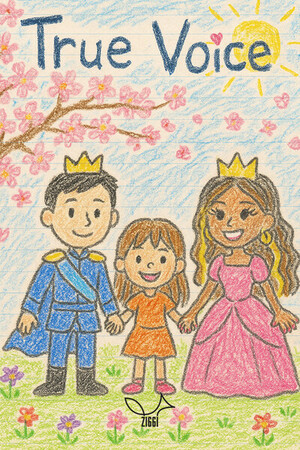
When Hana reached the final page—a drawing of a woman with a crown and a long dress—she looked up at Ayaka.
“She’s a cool princess,” Hana explained seriously. “Like you.”
Ayaka felt her throat tighten again, but differently this time.
“She’s beautiful,” she murmured.
Hana carefully tore out the page and handed it to her. “You can keep it. So you remember you’re cool.”
Ayaka took the drawing with hands that trembled slightly. A clumsy but smiling princess surrounded by stars and hearts.
“Thank you, Hana-chan.”
Takumi returned with the tea, observed the scene, and something soft crossed his gaze.
***
When Ayaka left an hour later, the drawing neatly folded in her bag, she turned back at the doorway.
“The next session…” she began.
“Next Thursday, same time,” Takumi confirmed. Then added gently: “If you want. No obligation.”
Ayaka nodded. “I want to.”
In the taxi back to Shibuya—to neon, crowds, cameras—Ayaka pulled out the drawing and stared at it for a long moment.
She smiled, and for the first time in a long while, that smile wasn’t for anyone else.
It was just for her.










Please sign in to leave a comment.