Chapter 6:
The Haven
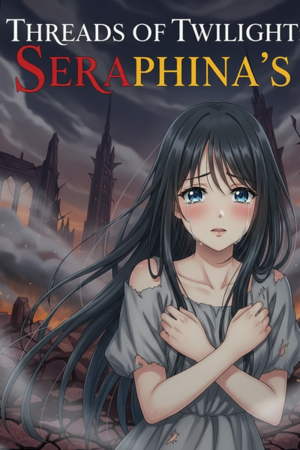
Threads of Twilight: Seraphina's
Time dissolved into a grey, monotonous haze of pain and forward motion. The adrenalized, high-pitched terror of the battle had long since faded, burned out by exhaustion, leaving behind the low, grinding, and far more terrible despair of a survivor. For three days, Seraphina walked. She and the other handful of refugees who had crawled from the wreckage of the carriage became a small, silent procession of ghosts, haunting a world that no longer belonged to them.
The landscape had changed from the scorched, rocky slopes of the holy mountain to a sprawling, ancient forest, its canopy so thick it blotted out the sky, plunging the world into a perpetual, green-tinged twilight. The air here was thick and damp, heavy with the smell of wet earth and decaying leaves. They moved in a daze, their grim determination a fragile shield against the encroaching madness. Hunger was a constant, gnawing ache in Seraphina’s belly, a hollow pain that radiated through her entire body. Thirst was a dry, rasping fire in her throat. She survived on instinct, her mind a numb and foggy landscape. She found a small, trickling stream of clear, cold water and drank until her stomach cramped, then carefully filled a discarded water skin she’d taken from the carriage. She recognized the broad, tender leaves of the mountain sorrel plant—a memory from a long-forgotten acolyte lesson on healing herbs—and gathered them, their sour, citrus-like taste a miserable but life-sustaining meal.
Through it all, Jophiel was a silent, constant weight against her chest. He had not made a sound since the carriage crash. His small body was limp, a dead weight that made her shoulders scream with a fiery, tearing pain, but his eyes were always open. They were two dark, bottomless pools that silently, unblinkingly drank in the horror of their journey—the gaunt, hollowed-out faces of their fellow refugees, the strange, menacing shapes of the forest at dusk, the constant, gnawing emptiness of the world. He was a living repository of their world’s final, agonizing moments, and carrying his silent, waking trauma was a burden far heavier than his physical weight.
On the third day, the last of the other refugees, a grizzled former city guard with a festering wound on his leg, simply sat down beneath a great, gnarled tree and refused to move. "Leave me," he had rasped, his voice a dry, papery whisper. "My race is run. May The Most High have mercy on your souls."
They had left him. There was no argument, no plea. They were all just waiting for their own tree.
Seraphina’s came an hour later. Her body, pushed far beyond the limits of mortal endurance, simply gave out. One moment she was stumbling forward, her mind a blank, white static of pure exhaustion; the next, her legs simply buckled, no longer responding to the commands of her fraying will. She collapsed at the edge of the great forest, her body pitching forward into a sun-drenched meadow of vibrant, multi-colored wildflowers.
The fall was gentle, cushioned by the soft grass and fragrant blossoms. The sudden, brilliant sunlight, after days in the forest’s gloom, was a blinding, painful shock. She lay there, her cheek pressed against the cool, damp earth, the sweet, clean scent of the flowers an almost hallucinatory perfume. She could feel Jophiel’s small, still form beneath her, his breathing a faint, shallow whisper. Her last, fading thought was not of her own death, but a final, desperate, and broken apology to him. I’m sorry, Jophiel. I wasn’t strong enough. Then the world, with a gentle, final sigh, faded to a peaceful, welcoming black.
Consciousness returned not as a sudden jolt, but as a slow, gentle surfacing from a deep and dreamless sea. The first thing she registered was warmth. Not the scorching, violent heat of the fires in Zion, but a soft, steady warmth from a thick, woolen blanket that was tucked securely around her. The second thing she registered was the smell. It was a complex, comforting blend of dried herbs, woodsmoke, and a clean, almost medicinal scent of antiseptic balms.
Her eyes fluttered open. The world was a soft, hazy blur. She was in a room, not of cold, sterile stone, but of warm, rough-hewn wood. Sunlight streamed through a small, square window, illuminating a galaxy of dancing dust motes. She was lying on a simple cot, the mattress stuffed with what felt like soft straw. A profound sense of dislocation washed over her. This was not Zion. This was not the forest. Where was she?
A figure moved in her peripheral vision, a silhouette against the bright window. "Easy now," a calm, gentle voice said, the words spoken in the familiar, melodic tongue of Eden. "You are safe. Just rest."
Seraphina’s vision slowly sharpened, focusing on the person who had spoken. It was a woman, her form human, her face kind and framed by long, dark hair braided with small, colorful beads. But as her sight cleared, a jolt of pure, primal terror shot through her. Two small, elegant horns, the color of polished jet, curled back from the woman’s temples. And as she turned slightly to place a damp cloth in a wooden basin, Seraphina saw a long, slender tail, ending in a small, spade-like tip, swish gently behind her.
A demon.
A guttural, animalistic sound of fear tore from Seraphina’s throat. She scrambled back on the cot, her body a livewire of pure, unthinking terror, her mind flashing with images of the brutal, monstrous Fallen who had torn her home apart. She reached for Jophiel, her hands finding only the empty space on the cot beside her.
"Jophiel!" she shrieked, her voice a raw, panicked croak. "Where is he? What have you done with him?"
The woman held up her hands, her movements slow and placating, her expression one of pure, gentle compassion that was so fundamentally at odds with her demonic features that it shattered Seraphina’s terror into a million pieces of stunned confusion. "He is safe," the woman said, her voice a soothing balm. "He is right there. He is sleeping."
She gestured with her head, and Seraphina’s frantic gaze followed. On a smaller cot in the corner of the room, tucked under a small, patchwork quilt, was Jophiel. He was not a dead weight. He was not a silent, wide-eyed vessel of trauma. He was sleeping, his small face peaceful for the first time in days, his breathing a deep, even, and blessedly normal rhythm. The sight was so beautiful, so profoundly, impossibly welcome, it broke through her panic and shattered her resolve, and she began to sob, not with fear, but with a wave of relief so absolute it was a physical agony.
"My name is Mara," the woman said softly, giving her space. "I am the healer in this village. I found you and your brother collapsed in the meadow three days ago. You were suffering from severe exhaustion and dehydration. You have been sleeping ever since."
Seraphina eventually calmed, her ragged sobs subsiding into a quiet, shuddering silence. She looked at Mara, truly looked at her, her mind struggling to reconcile the horns and the tail with the gentle, compassionate eyes of a healer. "You are… one of The Fallen?"
Mara gave a small, sad smile. "Not quite. My father was a traveling merchant from Sheol. My mother was a human refugee from the last great war. I am… in between. This is Haven. A village of in-betweener's."
Later that day, when Seraphina had regained some of her strength and eaten a bowl of warm, nourishing vegetable stew that tasted like life itself, Mara led her outside. The clinic, a simple, sturdy wooden building, opened directly onto the village square, and the sight that greeted Seraphina made her stop dead in her tracks, her hand flying to her mouth in a gesture of pure, stunned disbelief.
It was a marketplace, bustling and vibrant under the warm afternoon sun. But it was a marketplace of impossible contradictions. A human blacksmith, his face beaded with sweat, hammered a glowing piece of iron on his anvil, his rhythmic clangor a backdrop to the scene. Next to his smithy, a Fallen vendor with skin the color of obsidian presided over a stall piled high with strange, glowing fungi and exotic, phosphorescent mosses that pulsed with a soft, blue light. A human woman bartered cheerfully with a tall, slender demi-human with the ears and tail of a fox for a bolt of brightly colored cloth.
The air was filled with a blend of familiar and alien scents—the smell of roasting meat from a human-run cook fire, the sharp, spicy aroma of a strange, dark liquid being sold by a Fallen brew-master, the sweet, comforting smell of fresh-baked bread from a small bakery. And through it all, a beautiful, mournful melody drifted from the center of the square, played on a stringed instrument that looked like a lute carved from black, polished bone. The musician was a Fallen, a bard with small, elegant horns and a deep, resonant voice that sang a song of sorrow and injustice, of a people cast into darkness, their lyrics a lament that was so full of a profound, human-like pain that it brought a fresh wave of tears to Seraphina’s eyes.
Her initial reaction was a fresh spike of fear. She instinctively took a step back, her body tensing, her mind screaming at her that she was in a nest of the monsters who had destroyed her world. But her fear was at war with the evidence of her own eyes. These were not the snarling, bloodthirsty beasts from the dungeons of Zion. They were… people. They were merchants, artisans, families.
Then she saw it. The sight that finally, irrevocably shattered the foundations of her entire worldview. A group of children, five of them, were chasing a small, leather ball across the square, their high-pitched, joyful laughter a universal sound that transcended race and world. Two of them were human. One was a small demi-human girl with fluffy, cat-like ears. And the other two were Fallen, small children with tiny, budding horns and downy, flightless wings, their faces alight with the same innocent, uncomplicated joy as their human friends.
One of the human boys tripped and fell, scraping his knee. He let out a small cry of pain. It was one of the Fallen children who stopped first, turning back to help his friend to his feet, a look of genuine concern on his small, demonic face.
Seraphina stared, her mind unable to process the simple, profound act of kindness. That was it. That was the moment her fear finally broke, not fading away, but collapsing under the weight of an undeniable, beautiful, and world-altering truth. Akari had been right. They were not monsters.
"It is possible, you see," Mara’s quiet voice said from beside her. The healer had been watching her, a knowing, compassionate look in her eyes. "We have been proving it for a hundred years in this valley. Peace is not a dream. It is a choice. And a lot of hard work."
Just then, a young man approached them. He was human, tall and broad-shouldered, with a quiet strength about him. He wore the simple leather armor of a militiaman, a sword strapped to his side, but his face was kind, his eyes a warm, steady brown. "Mara," he said, his voice a low, calm rumble. "Old Man Hemlock is complaining about the Grolak children stealing his apples again." He rolled his eyes in a gesture of fond exasperation.
"Tell him I will speak to their mother," Mara sighed, a familiar, sisterly annoyance in her voice. "And tell him if he keeps leaving the apples on the low branches, he is inviting it." She turned to Seraphina. "This is Aaron, the captain of our village militia. Aaron, this is Seraphina, and her brother Jophiel. They are… new."
Aaron’s gaze settled on Seraphina, his expression softening from one of friendly annoyance to one of weary, compassionate concern. He had seen refugees before. "Welcome to Haven," he said simply, his voice holding a genuine warmth. He looked past her, into the clinic, where Jophiel was now sitting up on his cot, watching the scene with his wide, silent eyes. Aaron smiled, a gentle, disarming thing. He reached into a pouch at his belt and pulled out a bright red apple. He walked past them into the clinic and knelt by Jophiel’s cot, holding out the fruit. "For you," he said softly.
Jophiel stared at the apple, then at the kind-faced man offering it. He didn’t speak. He didn’t smile. But after a long, hesitant moment, he slowly reached out a small, trembling hand and took it.
Seraphina watched, her heart a painful, aching knot in her chest. A human man, a warrior, showing a simple act of kindness to her broken, silent brother, while a demi-human healer stood at her side. In the background, a Fallen bard sang a song of sorrow, and children of three different races laughed and played.
Her old world of perfect, sterile, and absolute light was a ruin of ash and lies. She was in a new world now, a world of messy, complicated, and beautiful shades of grey. A world she did not understand. A world that terrified her. But a world that, for the first time since the sky had broken, held a tiny, fragile, and terrifying flicker of something that felt, impossibly, like hope.





Please sign in to leave a comment.