Chapter 9:
The Confession
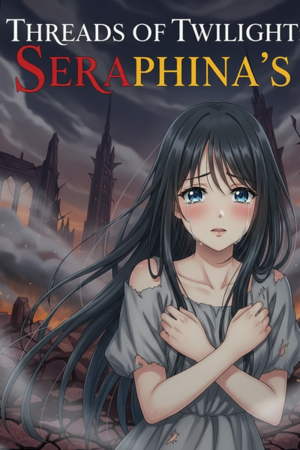
Threads of Twilight: Seraphina's
The weeks that followed Jophiel’s breakthrough at the Grove were a time of quiet, fragile, and miraculous rebirth. The silent, hollow-eyed ghost who had haunted the clinic was gone, replaced by the tentative, curious, and beautiful emergence of a five-year-old boy. His first three words had been a key, unlocking a door in his mind that had been rusted shut by trauma. Now, a slow but steady stream of language began to trickle, then flow, from him.
His days found a new rhythm, a structure built not around grief, but around discovery. Aaron, in his quiet, steady way, had become a surrogate older brother, a figure of gentle, masculine strength. He would spend hours with Jophiel in the small garden behind the clinic, tracing the angular runes of the common tongue into a tray of fine sand, his large, calloused warrior’s hand patiently guiding Jophiel’s small, hesitant one. Jophiel, his brow furrowed in a mask of intense concentration that was a miniature echo of Seraphina’s own, would whisper the names of the letters, his voice still a soft, raspy thing, but growing stronger, more confident, with each passing day.
Mara, in turn, became the source of his laughter. The sound, when it first erupted—a high-pitched, joyful giggle in response to Mara playfully tickling his nose with a fluffy cattail—had been so shocking, so impossibly welcome, that it had brought Seraphina to tears. Mara seemed to have a unique gift for finding the small pockets of joy that still existed in his wounded soul, coaxing them out with silly faces, stories of talking animals, and games of hide-and-seek among the tall shelves in the clinic's storeroom.
Seraphina watched it all with a mixture of profound, soul-deep relief and a subtle, aching loneliness. She was happy for him, a happiness so pure and so fierce it was a physical ache in her chest. But she was also an observer of this new, beautiful life he was building. She was his sister, his protector, the constant in his life, but she was also the vessel of their shared trauma, a living reminder of the fire and the screams. The easy, uncomplicated joy he found with Mara and Aaron was something she could witness, but never truly join. Her role was shifting from that of his sole protector to a more distant, quieter guardian of his newfound peace.
The trigger, when it came, was a simple, mundane, and utterly devastating thing. It was a bright, warm afternoon, and Seraphina had gone to the market on an errand for Mara. The square was bustling with its usual, beautiful chaos of life. She found herself smiling, a small, genuine smile, as she navigated the familiar crowds, the scent of fresh-baked bread and roasting meat a comforting, grounding presence. She was beginning to feel a sense of belonging, a fragile peace taking root in the barren soil of her heart.
She was waiting in line at a fruit vendor’s stall when she saw them. It was a family—a human father with a kind, gentle face, and a Fallen mother, her small, elegant horns adorned with little silver rings. Between them, clutching one of each of their hands, was a small, horned girl, no older than Jophiel, her face a mask of pure, childish delight as she pointed at a display of bright, glistening sun-berries. The father laughed, a deep, easy sound, and bought a small basket for her. The little girl, her face beaming with joy, dropped the basket, its contents spilling across the dusty ground. The mother knelt, her expression one of fond exasperation, and began to gather the fallen fruit. The little girl, her own face a picture of contrition, looked up at her mother and spoke a single, perfect, and world-shattering word.
“Mama.”
The sound, so simple, so universal, pierced Seraphina’s fragile peace like a shard of glass. The world narrowed. The cheerful, bustling noise of the market faded to a distant, muffled roar. The vibrant colors of the stalls blurred into a grey, indistinct haze. All she could hear was that single word, repeating over and over in her mind, a key that unlocked a door she had been desperately, subconsciously holding shut.
The memory, which she had managed to suppress into a vague, formless horror, crashed over her with a vivid, brutal, and suffocating clarity. She was back in the fire, the air thick with smoke and the smell of her own burning world. She saw her father’s still, pale face, his eyes staring blankly at the collapsing ceiling. She saw her mother, pinned and dying, her face a mask of pain and a desperate, all-consuming love. She heard her voice, a final, sacred command: “Forget us! Seraphina, please! Protect him! Go!”
The guilt, a monster she had kept chained in the deepest dungeon of her soul, broke free. It was a living, breathing thing, a crushing weight that settled on her chest, stealing the air from her lungs. She had run. She had left her mother there, alive, to die. It was not a tragic memory; it was an active, ongoing sin, a choice she was still making in her mind every single day.
A strangled, guttural sound, half sob and half gasp, tore from her throat. She dropped the empty basket she had been holding, its wicker frame clattering unnoticed onto the stone ground. She turned and fled, pushing blindly through the crowd, their surprised shouts and curses a distant, meaningless noise. She ran from the market, from the happy family, from the ghost of her mother’s voice, her own breath coming in ragged, painful sobs.
That night, the grief, now reawakened, festered in the quiet of the clinic. She couldn't sleep. She couldn’t rest. The image of her mother’s face was a constant, searing presence behind her eyes. She felt a desperate, clawing need for solace, for a place where the screaming in her own mind might finally go quiet. She crept to Jophiel’s room, needing to see him, to reassure herself that her terrible, monstrous choice had at least not been in vain.
He was fast asleep, not in his own small cot, but curled up in a large armchair in Aaron’s adjoining room, a half-read book of children’s fables resting on the floor beside him. Aaron was slumped in a chair opposite, his own head lolled back in exhaustion, a protective hand resting on the arm of Jophiel’s chair even in sleep. It was a portrait of such profound, peaceful, and masculine tenderness that it was a fresh wound in Seraphina’s heart. Jophiel was safe. He was loved. And he was building a new family, one that she felt increasingly on the outside of.
A thin line of light shone from under Mara’s door. The soft, rhythmic thump-thump of a mortar and pestle told her the healer was still awake, still working. For a moment, she considered knocking, of pouring out her grief to the one person who might understand. But she couldn’t. Mara and Aaron had already done so much. They had taken in two broken refugees, had healed their bodies and were patiently mending their souls. She could not burden them with this, her own private, ugly, and inconsolable guilt. This pain was hers alone to carry.
The need for a different kind of sanctuary, a place where she could be alone with her ghosts without being judged, became an overwhelming, physical ache. She slipped out of the clinic, her bare feet silent on the cool, damp earth. The village of Haven was asleep, its small, timber houses dark and quiet under a brilliant, star-dusted sky. Her destination was the only place that promised peace: The Grove.
The walk was a quiet meditation. The cool night air was a balm on her feverish skin, and the gentle, chirping symphony of the crickets was a soothing counterpoint to the roaring chaos in her mind. As she approached the great tree, the very atmosphere seemed to change, the air growing stiller, clearer, imbued with a profound sense of peace that seemed to emanate from the ground itself. The Grove was bathed in the soft, silver light of the twin moons, making the wildflowers on the grave glow with an ethereal, otherworldly luminescence. The air smelled of damp earth, night-blooming moonpetal flowers, and a profound, hallowed calm.
She knelt before the simple, stone-marked grave, the dew-soaked grass cool and soft against her bare knees. For a long time, she was silent, the tears she had been holding back all evening finally falling, hot and silent, onto the flowers below. She was not just grieving; she was asking for permission, for a moment of peace from the silent, unknown soul who had consecrated this ground. She felt a profound, irrational sense of a presence, a quiet, non-judgmental listener in the darkness.
"Hello, Stranger," she finally whispered, her voice a raw, trembling thing in the sacred silence. "It's me again."
She took a deep, shuddering breath. "Jophiel… he spoke. Right here. He's getting better. He's learning to write. Aaron is teaching him… He's laughing again," she said, the words a strange mixture of a report and a confession, as if the boy in the grave had a stake in her brother’s recovery.
Her voice cracked, the carefully constructed dam of her composure finally breaking. "I saw a family today," she choked out, the words tumbling from her in a raw, ragged torrent. "A little girl… she called her mother 'Mama'... and I remembered…"
This was it. The confession she had not been able to make to anyone else, she now poured out to the silent, listening earth. She recounted it all, every terrible, vivid detail of her home's collapse, the fire, her father's still, pale body, her mother's desperate, final plea. "She told me to go," she sobbed, her words now barely coherent through the storm of her grief. "She begged me to save him. So I did. I ran. I left her there… alive. I left her to die."
She hunched over, her body wracked with great, shuddering sobs, the guilt a physical poison she was finally, painfully, purging from her soul. "Was I right to do it?" she wailed to the silent grave. "Was it a brave choice, or was it a coward's? I don't know. I just… I miss her so much."
She cried until she had no tears left, her body a hollow, aching void. And in that emptiness, a profound sense of peace began to settle over her, a calm so deep and so absolute it felt as if the silent listener in the grave understood, as if the ground itself, consecrated by his own peaceful end, was absorbing her grief, taking her burden into itself.
After the storm had passed, she sat up, wiping the tears from her face with the back of her hand. She looked up from the grave, her gaze drawn down the gentle slope to the warm, golden lights of Haven, a small, fragile constellation of peace in a vast, dark world. She saw the impossible truth of it, a village where a Fallen elder disciplined a human boy with a gruff, paternal love.
And in that moment, it all connected. Akari’s truth. Richard’s tragic love for Lyra. The impossible peace of Haven. And the profound, inexplicable peace of this unknown stranger. They were all threads of the same, terrible, beautiful story.
She looked back at the grave, her voice no longer grieving, but full of a new, quiet wonder. "There was another girl," she whispered to the stranger. "Like me. A heretic. They called her the Saintess. She was the one who first made me question everything. She saw this truth before I ever could." Her voice dropped to a quiet, mournful prayer, a lament for a tragedy she believed was already complete. "She had someone she loved, too. Someone she was torn away from. I wish they could have found a place like this. I wish they could have had the peace that you found here, instead of the fire and death they found in Zion."
The thought, her quiet sorrow for another's tragic love story, was the final piece. The seed of purpose that Richard had exposed, that she had tried to suppress, finally, quietly, sprouted. Her voice, when she spoke again, was no longer that of a grieving daughter or a lost refugee. It was the voice of a woman who had found her new altar.
"This peace," she whispered, her hand resting on the cool, dew-damp river stone of the grave. "It can't just stay here. It's not enough. It has to mean something. Everything that happened, all the death and losses, must mean something, not just another sad story."
She looked out at the dark, sleeping world beyond the valley, a world still tearing itself apart with the same old hatreds, the same old lies.
"I have to share this," she declared to the silent stranger, to the stars, to the memory of her mother. "So no one else ever has to make a choice like I did. So no one else ends up alone in the dark like you."
The confession was over. Her grief had been given a name, and her purpose, a direction. She was no longer just a survivor. She was a missionary of a new and fragile faith, a faith born not of dogma, but of a shared and profound pain.







Please sign in to leave a comment.