Chapter 3:
A Den of Wolves
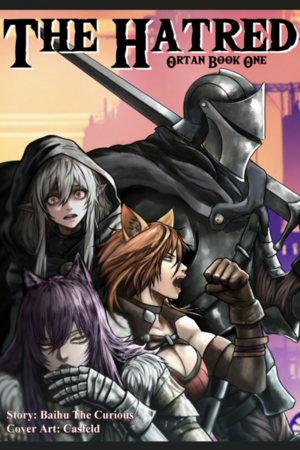
The Hatred
Everything hinged on the outcome of the hearing with the Church’s high council. Everything for Aliya, at least.
She had met with the emperor, received formal recognition as a Hero of the Empire, but now she was facing a charge of heresy for violating conventions established in the Synod of Something-or-Other. She wasn’t an expert on the history of Church doctrine, but she found it dumbfounding that the use of a specific weapon was such a crime while the Church had naught to say on slavery.
A short, portly man spilled through the doorway into the carriage with an armful of papers and folders, “I-I am so sorry, Lady Aliya,” he spoke with a slight stutter, but there was a hint of optimism in his voice.
The man, Barnabas, pushed round spectacles up his flat nose and took a deep breath while surveying Aliya, sticking out his pot belly in the process.
“You look positively heroic, by the way,” Barnabas continued, setting his paper bundles down on the wooden table at the center of the carriage. “Not that the emperor would have permitted any less!”
Aliya recalled the chance she had to look at herself in a mirror when visiting the emperor. She suspected she hadn’t looked in a proper mirror in over five years. She hardly recognized herself, well-groomed as she was. Her light brown skin was a shade darker from the bronzer they had applied. They even trimmed down the excess fluff in her wolf ears and the matted hair out of her tail. Her plum mane still looked on the wilder side, but now it shone with exotic oils as opposed to grime, wax, and blood. And that silver armor… it made her look like a storybook hero, although she noticed it did appear to accentuate her curves more than she expected—enough for her to feel slightly bashful.
She certainly hadn’t worn anything this fancy during the war. Most of the time she’d had no armor at all—just the cloth on her back, so to speak. The best she’d managed armor-wise was rusted chainmail pilfered off of soldiers whose heads she’d lopped off, or caved in, or—not that she hadn’t killed any knights. She’d killed dozens of knights; she just didn’t care much for their armor. Always too bulky and never quite the right fit, inflexible as heavy plate usually was.
Aliya had bowed her head pensively as she ran over memories of the war in her head, thinking of what other heresies she might be accused of committing. She only knew the basics of Church law, so she could only speculate.
A sharp whistle blew as the carriage slowly began to accelerate, its engine beginning to spout steam that Aliya could see trailing the front of the carriage as it passed her window. She shifted uncomfortably in the hard wooden seat, barely cushioned by a thin sheet of leather and her own clothes. At least the ride was smooth—surprisingly so.
“We’ve a strong case, my Lady,” Barnabas continued, attempting to assuage her noticeable anxiety. “Aside from the various technical arguments, I believe that third point we discussed with the emperor is the strongest! We have multiple witnesses of excellent repute who can claim you defended them against the Union’s own blatant violations of the Sorcisian Conventions. I believe this is unimpeachable! There is legal precedent for a favorable ruling if your opponent broke heresy rules first in war!”
Aliya smiled gently at Barnabas. She hadn’t known him for long, but he had always struck her as earnest. And his advice for meeting with the emperor was spot on.
“Softening me up before the bad news?”
“Perhaps.” Barnabas adjusted his glasses, furrowing his thick grey eyebrows into a more serious expression. “Rumor has it the main agenda will be attacking your character. Declaring you unfit to wield…”
Aliya let out a drawn-out, resigned sigh as Barnabas trailed off.
The lawyer forced out an apologetic smile, “I am confident I can counter their rhetoric. Worst case, the Knight Sisterhood would be safe. And that is in the absolute, farthest extreme.”
“A far cry from a duchess. Who would govern in my absence?”
“There are measures being taken to ensure that governance is peacefully transferred to one of your subordinates. Malin, most likely.”
Aliya couldn’t think of a choice with more heart, but Malin didn’t like making the tougher decisions. He’d have to be a quick study. At least he certainly looked the part and had a fierce voice that could command hundreds.
“Aliya.” Barnabas fixed his gaze deep into her eyes. “The Sisterhood is extremely unlikely, but there is a spectrum of possibilities that lie between the full sympathy of the council and its condemnation.”
Aliya knew where Barnabas was going, but allowed him to continue. She began to pour two glasses of water from a glass carafe.
“I am near certain you will be able to go to Serafal as its duchess, as promised, but the outcome of this trial will decide how difficult that position is for you going forward.”
Barnabas accepted the cup of water Aliya handed him with two hands, gracefully half-bowing from his seat. The two of them enjoyed a brief moment of silence as they sipped away at the cool, refreshing water.
“I’d like some fresh air. Mind if I open up the window?” Aliya asked, having drained her cup of water. The carriage now passed along an overlook of the gardens and central shopping district and she wanted to hear the sounds of the city.
“Please, allow me!” Barnabas reached up and undid the latch, causing a small gust of cool morning air to blow into the cabin.
Sancrés truly was the jewel of Sorcis. The gardens looked like they could be explored for days. Winding hedge mazes, lush grasses, and rows of beautifully arranged flowers stretched farther than most cities. The adjacent shopping district was already bustling with activity: tiny men and women running door-to-door, others strolling leisurely as they browsed parlor windows. Loud shouts and occasional laughter floated up to the carriage. In the corner of the shopping district, the telltale chimneys of factories reached into the skyline as they poured their thick smoke into the clouds.
日
Aliya sat upright at her courtroom bench. She tried her best to look attentive, but half of the legal arguments and procedures were from a realm of knowledge beyond her experience.
The last half-decade she had spent fighting a war, which only taught her about human cruelty and how little laws meant when there was no-one around to enforce them. Before that, she was a slave. One of the fortunate ones in that her mistress raised her to be more cultured and capable than most free folk in the Empire. She could sing classical repertoire, recite histories of the provinces and nations of Sorcis, dance, write poetry, and even play the tenor viol. Her mistress even had her train in sword fighting and archery with her. The obscure technicalities of heresy law didn’t make it into her education. She could, at least, tell that Barnabas was working very hard for her benefit.
The courtroom was vast and almost overwhelmingly bright as the walls and columns were made of white marble that had been polished to a sparkle. There was a large audience of nobles seated in a circle of rowed benches around the central chamber.
She could hear many of their conversations. Most were not even paying attention to the trial as they idly babbled about horse races, the latest fashion, reconstruction efforts, or—according to most of them—the imminent economic crisis.
Barnabas and Aliya’s shared bench was close to the center of the chamber, with the high council’s seven raised thrones and lecterns occupying a quarter-circle opposite.
The long ornate box just in front of the grand cleric’s lectern kept drawing Aliya’s attention. No doubt that’s where it was sitting. She felt vulnerable—naked, even—without it. How long had it been her companion now?
Evenly spaced about the courtroom’s circular center were eight paladins, all in full, shining armor that rendered them visually identical. Each had their back to a column as they held their greatswords’ blades point down by the hilt like statues. Even the smallest of them looked at least a head taller than Aliya.
“Very well, Master Russheim.” The grand cleric’s voice echoed throughout the chamber and startled Aliya out of her daydreaming.
The grand cleric wasn’t that old, maybe her early fifties at most? She had dark brown hair, contrasted by a fashionable streak of grey down a single bang. She was on the shorter side, too, and was constantly having to lean forward to peek at Barnabas over her lectern, although Barnabas’s height wasn’t helping matters either. She had a commanding voice, though, and her stare gave Aliya a brief chill whenever they made eye contact.
Aside from her, the rest of the council consisted of old men with various complexions, various levels of baldness, various attempts to cover up said baldness, and a variety of beards all so atrociously fashioned that Aliya—having not memorized their names—decided beard styles were the greatest distinguishing feature between them and would suffice as their names for now.
The grand cleric continued. “Your arguments, if true, hold sufficient merit to reject the charge of heresy for Aliya of…” She trailed off as she looked down at her lectern. “…Angiers.”
Barnabas shot a quick wink over at Aliya, causing her to flash a quick smile. He then pivoted towards a hallway off to the side and called his first witness.
Aliya had gotten to know that dour face well over the war. Count Ilhan Senvoire, the Blackberry Count. Originally a faux title to mock the count, it had become a name of endearment for his fiercely loyal soldiers. Pure black hair and pure black clothes. The blackberries were a specialty of Angiers and used in dyes as well as cuisine.
So far, he had simply been responding with blunt yes and no answers to basic questions from both the council and Barnabas.
“Count Senvoire,” Barnabas continued, “Let us proceed to the Battle of Prashen.”
That bloodbath. The turning point of the war.
“Did Aliya of Angiers, your subordinate, use any form of non-defensive magic during that siege?”
“Yes.”
There were a few excited murmurs from the crowd, likely some foolish nobles who thought this was a snare to find Aliya guilty. They really weren’t paying attention. She imagined a sizeable number of nobles in the audience would prefer she not walk from the trial unscathed.
“Did she use this magic from her sword without orders?”
“To the best of my knowledge, she received no orders to use this magic.”
More excited whispers. Even a few gasps. Barnabas was putting on a show for her.
“Unconscionable!” stammered the archbishop on the far right. “She used a sacred weapon’s magic against Union soldiers?”
Cordgeon was it? More like curmudgeon.
He had been double-pointed beard until recently. Most of his questions and comments had been adversarial or purely performative. Aliya had caught him exchanging multiple glances with a small pack of nobles nested among the audience.
“Excellency, allow me to finish,” responded Barnabas to the sudden interruption. “Count Senvoire, are you able to detail the circumstances of this incident?”
“I am able to provide some perspective.”
“By all means!” Barnabas made a polite bow and flourish, pulling an annoyed wince out of the count.
“We had broken into the inner keep of Prashen’s fortress. We were expecting either a full surrender or a protracted battle in close quarters. Instead, we found the bodies of the defenders littered about the inner keep. Hundreds of them.”
The room grew silent as the count drew everyone’s attention with the chilling detail. This was probably the first and only time most of these nobles would ever hear about this.
“We were all looking for the Duke of Starmgard, the supposed general of the defenders. If he retreated or was never there to begin with, I do not know. But we were set upon by monsters. Hundreds of them.”
“What sort of monsters?” elicited Barnabas, squeezing his hands together and cocking his head in feigned interest.
“Necromantic automata is the technical term, I believe. To put it simply, we were attacked by the animated corpses that littered the inner keep. Golems of both deceased flesh and bone.”
Gasps from the crowd echoed about the courtroom. Even the other archbishops appeared shocked, whispering in each other’s ears. Only the grand cleric seemed unperturbed.
Probably the only one that actually did the reading.
Archbishop Cordgeon slammed his fist down on his lectern. “Foolishness! You are claiming the Union used necromancy of that scale at Prashen? And why have none of us heard of this until now?”
Count Senvoire shot the archbishop a murderous glare from his pale blue eyes before responding, his voice seething with snide anger. “Because we were at the turning point of the largest war this country had ever seen! And we were not interested in spreading news of the Union’s use of underhanded and heretical tactics, lest it affect morale!” Though his eyes continued to shoot daggers towards Archbishop Cordgeon, the count’s voice softened slightly, “There are over two thousand others you would have to accuse of perjury.”
“That won’t be necessary,” the grand cleric interjected, rolling her eyes. “We have plenty of signed statements from decorated military officers and Church officials that corroborate your story.”
Archbishop Cordgeon seemed like he wanted to respond, but instead proceeded to impotently flap his mouth, causing his twin-tailed beard to wiggle like dangling feet. He then started hurriedly digging through the papers on his lectern.
He didn’t do the reading.
Barnabas wore a big smile as he continued with his inquiry, “Please continue, Count Senvoire. What happened next?”
The count shook his head and squeezed the bridge of his slightly crooked nose. “It was complete chaos… we lost over eight hundred good men to the relentless undead. The death count would have likely been in the thousands—no, tens of thousands—if not for Aliya’s magic. In the middle of the chaos, it felt like the Golden Veil itself had descended as it set the undead aflame, scorching them to ashes in a matter of moments. The threads of that veil traced back to Aliya’s sword, which she had held high atop the inner keep.”
The rest of Count Senvoire’s questioning passed smoothly and he was eventually dismissed. On his way out, he exchanged a quick glance with Aliya, offering her a curt nod before exiting down the hallway, his hard boots clacking on the marble floor.
After a brief recess, which only afforded Aliya an opportunity to visit the bathroom—an offer she declined—the council had reseated.
“Aliya of Angiers, we have some final questions for you,” said the grand cleric with a stern look.
Archbishop Cordgeon was restless in his chair, but his high spirits were rubbing Aliya all the wrong ways.
“Aliya of Angiers,” began the curmudgeonly archbishop, “I have a report and witnesses here that you burned some young imperial nobles to death at an inn shortly after the Battle of Prashen. Is this true?”
Aliya sat there, blinking several times. Even Barnabas looked shocked as he met her eyes with a concerned stare, his face beginning to drain of color.
She remembered the incident. The only witnesses should’ve been those two boys and the girl. The ones she saved.
The gossiping of the excited crowd grew louder by the moment, ringing in Aliya’s ears.
Cordgeon’s mouth had warped into a wormy smile. “Shall I repeat the question? Three nobles were scorched to death with magic.”
Barnabas lightly shook his head at Aliya, signaling her to deny it.
The heavy steps of two paladins echoed from the witness entrance hall. As they came into view, Aliya spotted three beastkin children with downcast eyes lined up in a row between the two heavy suits of armor.
“No, I—” Aliya was stuttering.
“No, is it not true? I suppose another possibility is these three beastkin children killed the nobles or were accessories to another murderer and needed a scapegoat. That said, they will have to face a criminal trial in the imperial court for murder or accessory to murder. Although the charges of perjury against the Church for claiming it was you who committed the murders is already a life sentence...”
Aliya gritted her teeth in a pained scowl, baring her fangs at the smug archbishop. Her arms began shaking and her knuckles turned white as she tightly gripped the table in front of her.
“Excellency, she has been enduring a long, arduous trial,” Barnabas interjected.
“She will answer for herself, thank you,” snapped the grand cleric.
Aliya looked at the grey-haired inari boy, the blonde moonkin boy, and the white-haired bastien girl. They were freshly freed Union slaves, finally liberated from the worst place imaginable. Aliya had comforted them herself as she removed their irons and destroyed their collars.
“Those nobles,” she spat out the words with disgust, “were raping those children.”
Archbishop Cordgeon sat back in his seat as he stroked his chin. “Young ones, was this lady moonkin in the silver armor the one who took the lives of those nobles?”
“Yes, m’lord,” the inari boy responded with a whimper, the other two nodding their heads.
“Excellency, is the proper way to address me. And you all understand the grave consequences of lying?”
“Y-yes, excellency.”
Aliya couldn’t bring herself to lie, condemning innocents, to save herself. These bastards knew that. Would the Knight Sisterhood even be an option at this point?
“Aliya of Angiers, was it you, the bearer of a sacred weapon, who killed these imperial nobles? Did you take justice into your own hands with its magic? Or is the testimony of these children false?”
Cordgeon had turned the noble crowd against her. She heard all the usual slurs for moonkin women whispered in the crowd, along with some new ones.
Aliya slammed her fists into the table in front of her as she stood up. “What did you do to them?” she screamed. “We just rescued them from the Union. They were slaves from Starmgard! You know what they do there? And we rescued them, only to—"
“Aliya, stop!” Barnabas shouted at her, an uncharacteristic fierceness in his voice.
She stared at him for a moment as her face formed a pitiful smile, tears in her golden eyes. “I’m sorry, Barnabas…”






Please sign in to leave a comment.