Chapter 8:
The Reverie of Time: Part 2
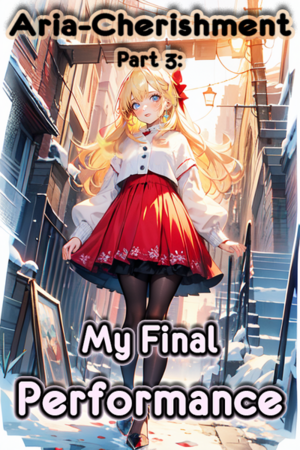
Aria-Cherishment: My Final Performance
“Aria, the piece is meant to be played in three-four time, not four-four time,” Miss Chrys said. “I know this class tends to be a little lax sometimes, but you must practice outside of class if you’re struggling with pitch and tempo.”
“It’s not like I’m not trying,” Aria whined. “I keep tuning this stupid thing, but it’s like it just, I don’t know, untunes itself or something. I swear I’m not purposefully trying to ruin everyone else’s playing…”
“Well, if you want extra lessons, come see me after school lets out for the day. I think we might be able to figure something out,” Miss Chrys smiled. “Instruments are fickle, especially when we’re a little overwhelmed.”
The afternoon bell rang to dismiss class for lunch. Aria frowned, but Miss Chrys had offered a tiny glimmer of hope, almost like she understood her desire to get away from the torment she’d been enduring the entire semester so far. She wanted to say something, to open up to Miss Chrys and just have a moment where she could let her frustrations boil over into tears, but she knew the Orchestra Room wasn’t the place for that—plus, she was hungry.
Everyone called the afternoon lunch “late-lunch” because it didn’t start until one in the afternoon, much to Aria’s usual dismay and rumbling stomach. As the final batch of students clamored through the halls, their stomachs also rumbling, Aria waited patiently, hoping the crowd would thin a bit before she decided to join the maddening rush of bodies. Besides, fighting the early-to-lunch line was more trouble than it was worth, and she had an hour to eat, anyways—there was no sense in hurrying.
She thanked Miss Chrys for her understanding and offer of extra lessons as she waited for the crowd to thin. Placing her violin back inside its case, she fastened the locks with a quick, plastic-y snap also taking the time to grab her backpack. A minute later, the final stragglers of the late-lunch crowd emerged from their classrooms, a significant improvement in hallway traffic compared to a minute ago—it was just enough for her to easily maneuver around any of the slower students or unobservant groups that carelessly decided to span the width of the hall. Secretly, she wished someone would come charging through and knock them all to the floor in a heap. She’d idly walk by, paying no attention to them; in fact, she’d giggle a little once she passed—they deserved their fates, she thought.
“Alas,” she mumbled to herself, ensuring she was out of earshot, “my wish will probably never come true. A girl can’t have everything she wants, can she? But it sure would be nice if someone would finally say something to them…”
A ferocious growl came from her stomach causing her face to flush. Thankfully, no one had heard the noisy hunger pangs that had emanated from her empty stomach… or they just decided to ignore it. Either way, she was hungry, famished, even. It had been a couple days since she last ate anything of substance, enough to tie her over until she could eat an actual meal. She’d spent all weekend practicing her solo in advance of Miruna High School’s orchestra concert that she’d forgotten to eat, though she’d also spent the time stressing out about what-if scenarios— What if she suddenly collapsed on stage? What if her violin untuned itself in the middle of her performance? What if the audience laughed at her, called her a disgrace to the school?
She’d wanted to challenge herself, to try something new and step out of her comfort zone—a violin solo was that challenge. Strangely, after she’d announced her candidacy, and won the first of two spots, the tuners on her violin started behaving strangely. Not only did they cause her to play in the wrong key, despite numerous tuning attempts, but they’d also disrupted her tempo, causing her to speed up to four-four time instead of three-four time—too fast. Every instrument shop she took the violin to told her it played fine, demonstrating how to tune the instrument and demoing a small piece to show her the issue could just be user-error—stress-induced. Yet, as soon as she got home, it would magically untune itself and refuse to stay tuned even after she adjusted the fine tuners themselves—over and over again.
When she arrived at school each morning, long before classes even started for the day, she’d toil away on the violin’s strings, the bow nestled gently between her neck and shoulder. By the time class began, she was exhausted, frustrated because she just couldn’t hit the right notes despite her perfect form, the tens of times she’d practiced the solo and innumerable tunings. It latched onto her like a floating spider web she couldn’t pull off. “How can the shops get it so right,” she’d ask herself, “but I get it so wrong when I’m doing the exact same thing?”
She sighed. “At this rate, I’m going to make a fool of myself and make the entire orchestra look bad if this keeps up. I just don’t understand what I’m doing wrong.” She walked over to the table closest to the back windows of the cafeteria, sliding her backpack across the surface. “Is it me? Am I still grieving Mom and Dad? The accident? It’s already been six months… Maybe it’s the meds… Maybe I need to try a new one or something because it’s, like, messing with my brain.” She rolled her eyes, frustrated and without answers. “I need to… eat. What… No… Why is that random weirdo waving at me? And how can he see through the glass in the middle of the day? What the hell?”
“Oh, Ari,” a familiar voice called. “How are you doing? It’s been a while! By chance,” she pondered, “would you happen to have the notes from sixth period? From last week?”
Aria turned around, completely forgetting about the strange man she’d seen, presumably, waving at her as she shifted her attention away from the window. Her heart leapt at the sound of her name before it immediately sank, back into its melancholic pit. She recognized the voice, making her less than happy to help: it was one of the girls who’d so conveniently shied away from her after the accident, one of the girls who claimed to be her friend but only wanted her so she could leech off of her notes—the same girl who tried to sneak her phone out in class to text her boyfriend. Subconsciously, Aria already knew what she wanted, and it wasn’t to sit and chat. Everyone wanted her class notes. The only reason she’d been taking notes at all was because her own grades were borderline failing despite her best efforts to raise them.
“Ever since I got back… All they want me for are my notes so they can pass their classes,” she thought to herself. “They all treat me like some object. I don’t even know why I keep doing this.”
“Ooo. Hey! Is that a violin case? Did you pick up the violin recently?” The girl’s eyes fell over the fiberglass carrying case, the black matte finish gleaming in the windowed sunlight. “We should totally hang out and study sometime so you can show me how good you are at that thing!” She turned her attention back to Aria who stared at her glumly. “Anyways, about those notes again… I was kinda absent last week, and it would be super great if you could help me out,” she smiled.
Aria pulled a red plastic folder from her backpack, handing it over to the girl. “Why am I giving this to her? I’m so gross. I’m trying so hard just to have a friend again even though she’s the one who walked away first.” She handed the folder over, smiling back. “It’s all in there. Just try to have it back to me by tomorrow, Mika… I need to study for next week’s test, and this violin is stressing me—”
“You’re a lifesaver, Aria,” Mika interrupted. “I’ll repay you as soon as I get paid at the end of the month. We could get coffee or something! Err… Actually, I forgot my boyfriend had plans to hang out then…”
“Oh?” Aria said, intonation rising. “You met someone? What’s he li—”
“Anyways,” she interrupted again, “I’ll get this back to you as soon as I copy everything down! Probably, like, end of the week. Let’s try to hang out another time!”
Aria nodded. “Uh, yeah. That’s fine, I guess. I’ll try to find some time to study this weekend…”
She didn’t realize she’d been staring at the floor after she’d handed the folder over. When she looked up, to reaffirm that she needed the folder back before the weekend hit, Mika was gone, already chatting with the new table of friends she’d made.
“I must be cursed,” Aria sighed, shoulders slumped in defeat. “I guess I’ll eat alone again today. Not like anyone wants me for a whole lot of anything else, anyways. I’m just the problem-girl everyone avoids now. Can’t even genuinely ask me how I am, or how I’m doing after losing my parents…” She gave a defeated sigh, shaking her head. “I hate it here.”
She turned around, suddenly remembering the mysterious man from earlier, but he was gone, no trace anyone had ever been there—not even the yellowing, autumn grass had managed to retain an impression of his shoes. While she was thankful whoever he was had vanished, it left an unnerving feeling in the pit of her stomach: she couldn’t figure out if she was so traumatized she was seeing things, or if she’d unwillingly invited something dark into her life.
In the time since the accident, she’d scoured every corner of the internet. From conspiracy theories about parallel universes to fortune tellers who claimed they could commune with the dead and even random street beggars who claimed they could “tell something was bothering” her—every single one led to the same dead end and her eventual embarrassment for falling for the same scam over again. To get her mind off things, she had decided to pick up the violin, but her inability to properly tune the instrument only led to more self-doubt. She was determined to pick her life back up, to start over, yet she didn’t even know where to begin.
Laying in bed at night, binging a new television series with a tub of ice cream and spoon in her hands, wasn’t the kind of new beginning she’d envisioned, though. Every day, she told herself that today would be the day, that today she’d finally shed all the emotional baggage that weighed her down. Every day, she’d manage to psych herself out, telling herself it would be selfish if she just “moved on.” After all, someone had to pay the price for her parents’ death, and it wasn’t her grandmother. The other, drunken, motorist had been declared deceased when paramedics arrived that evening, but everyone she talked to said they either hadn’t heard of the name, an expected response or, after nosily butting into her personal life, said there never was another motorist—of course, that angered her.
“Maybe that’s why no one likes me anymore… I did get kinda mean, hitting a few people, but,” she tried to reason with herself, “I was there. I saw the other car. Like, I don’t understand how a doctored photo is somehow more believable than the girl who survived the collision.” She slumped against the window as she slid to the floor, sun warming her back. “Still… No one reached out to ask how I was. No one even has asked. They just think that, because I’m on an antidepressant now, that my word is worth next-to-nothing. Why was I brought into a world like this if all I ever have to go through is nothing but suffering?”
She closed her eyes, allowing the incomprehensible lunchroom chatter to drown her out. School was the only time she ever left the house, much less her room—the only place she could be alone with her thoughts. The television would cast its glow onto the bedroom walls as her fingers typed away on her phone, journaling her thoughts into the only thing that would listen—that and the bed pillows she’d mumble into before falling asleep for the night. If someone overheard her talking to herself, they’d think she was crazy, for sure. She’d grab a table somewhere out in the courtyard if it wasn’t colder than the shoulders her fellow classmates gave her. Even by October standards, it was an unusually cold day. The sun-warmed windows would have to put up with her thoughts for now.
“You know… Despite the odds, you still decided to try something new. I think that’s commendable.” Aria’s eyes shot open. Standing next to her violin case was a boy, his thin shadow briefly occluding her window sun. “Oh. Sorry, didn’t mean to startle you…” He looked around nervously, ensuring no one was paying attention to him. “I, uh, heard about your situation. Just between you and me, I believe you. The only reason no one else does…”
“Um… Before we get any further,” Aria interrupted, “could you tell me your name and why you’re so interested in my violin…?”
“Sorry, sorry!” He pressed his hands together. “I’m no one important, believe me. I’m in the Photography Club— My name is… Well, actually, I think it’s better that we stay strangers… Anyways,” he continued, “I could tell the photo everyone saw was fake from the start. I tried to tell them, but no one would listen to me.” He rolled the sleeves of his hoodie up, the off-white cottony fabric bunched up past his elbows. “Before I answer your question… I really admire your ability to try something new, like the violin, but that’s why everyone walked away.”
Bewildered, all she could do was gawk at the strange boy. Not only had he refused to give her his name, having appeared from out of nowhere, but he’d dropped a bombshell of a claim on her. Was he right? Did everyone actually walk out on her just because she was trying to rebuild her life? Because she refused to join everyone else’s pity party? What right did they have to ostracize her?
“Anyways,” he said, gently lifting the violin from its case, “with instruments like these, you have to be gentle with them. I’m a, uh, little ashamed to admit I listen to your playing every morning before class. But, I think your problem is—”
Before he could finish, the bell rang, not only signaling the end of the lunch hour, but also the end of the one-sided conversation with the strange boy—to Aria’s dismay. She wasn’t big on coincidences or fate but, she admitted to herself, something about his sudden appearance and striking words were enough for her to reconsider.
“Thank you,” she said softly, “I think—for believing in me. It means a lot.”
He smiled, nodding his head as he placed the violin back inside its case, and disappeared into the gathering crowd of students. Before joining the bumbling chaos herself, she took an extra minute to think about what he’d said… about being part of the photography club, how he’d listen to her wailing violin in the mornings, and how he’d believed in her when no one else would.
“I don’t know who just walks up to random strangers like that and starts talking to them, but… Maybe it’s the spark to my fire I’m missing…”
***
The night of the concert arrived faster than the season’s first snowfall, the cacophony of frantic instrument tuning greeting her ears from as far out as the parking lot. She hugged her grandmother bye for a while, explaining she’d meet her by the front doors of the performing arts center once the concert was over.
“I’ll be fine,” Aria smiled. “I have a feeling everything will work out as it should tonight. Besides,” she mumbled, “it’ll be pretty hard to be more useless than I already am…” She peered down at her feet, the black faux leather of her flats reflecting the light from the streetlamps—even her legs seemed to glisten. “Big night…”
“Go finish what you need to, Aria. I’ll find a seat in the audience,” her grandmother comforted. “You’ll do fine tonight! You’ve really pushed yourself to try something new this year. I have no doubt you will perform a wonderful solo tonight, but if I make you wait any longer, I worry your fingers may be too cold to play,” she joked.
A brisk wind tore through the parking lot, stripping the warmth from Aria’s body as winter tried to bare its icy fangs early. She wrapped her arms around her body for warmth, shivering as the skirt of her dress billowed in the late-autumn gale—not even her wool coat could defend against the chill. She hugged her grandmother one more time before hurrying inside the building, violin case bouncing against her back.
As she pushed through the doors, into the lobby, she found Miss Chrys frantically rushing between backstage and the entryway to the auditorium. Aria frowned, getting the sinking feeling that, somehow, something was about to inconvenience her. Reluctantly, she called out.
“Good evening, Miss Chrys,” she started. “You seem a little panicked… What’s wrong?”
“Hi, Aria,” she said, keyboard clicks rising from her phone. “It turns out, Elys, our other soloist, caught the flu this morning, and her backup is a no-show.” A deep, stressful sigh escaped from her lips. “I hate to ask this of you…”
“Great,” she thought, “she’s going to ask me to do Elys’ solo after I do mine, isn’t she?”
“But would you mind covering her solo? Just the first minute, as an interlude. I’ll signal to the rest of the orchestra to join in afterwards.” Aria could tell from her face alone she was desperate, much less the pleading tone of her voice. “I know you’ve been pushing yourself lately, but you’re the only one who’s been reliable enough this semester or I wouldn’t have asked. You can decline, that’s ok! Seriously, Aria.”
She turned her head, hiding her dissatisfaction from Miss Chrys as she mulled over her decision. There was still half an hour before the concert even began, and it wasn’t like she hadn’t heard Elys practicing her part. In fact, she didn’t even need the sheet music. She could play the entirety of the solo the moment she heard her play it in full—that wasn’t the problem.
“Let me practice it once before I decide. I can play it, but… I want to make sure I actually can play it… that my violin doesn’t untune itself mid-solo. If I can practice her part and it stays tuned, I’ll do it.”
Miss Chrys grasped Aria’s hands between hers. “You just might be the saving grace of this night, Aria. Thank you! How long do you think you need?”
“Mmm…” She shifted her eyes, an aslant frown also creeping onto her face. “No more than ten minutes I think.”
As soon as the words left her lips, she wished she could take them back. Her plan, when the whole orchestra was playing, was to fake it if her violin came untuned mid-play. Unfortunately, she’d yet to devise a plan for her own performance mostly because she didn’t even want to begin trying to imagine the horrific embarrassment she’d face in such an event. She scolded herself for being so manipulative—it was always something; someone always needed her for something and, lately, it always managed to end in disaster.
She thought about the folder she’d given to Mika earlier in the week and how, without a copy of her own notes to study, she’d bombed a pop quiz meant to help prepare for the coming week’s test. They’d gone from friends to strangers; Aria herself had gone from straight As to straight Ds. It wasn’t that she didn’t care, because she did, spending hours each week trying to cram everything into her brain, but the social fallout from the accident had forced her into a corner: either she give in to the wants of her “friends” or she stand up for herself. Regardless of what decision she made, she knew she’d have to give something up in return. What did she value more? Her dignity, or her social status? The girl who had everything together, or the girl who latched onto others like a leech, trying not to feel so alone?
“I can give you fifteen minutes tops if you feel you end up needing the time,” Miss Chrys added, “but if you feel confident you have what you need sooner, I’ll be backstage, so come find me there.”
Aria nodded. “Yeah… That’s what I’ll probably end up doing. I’ll be in the Rrchestra Room until then.”
She turned her back, the light tap of her flats padding the linoleum floor as she walked towards the Orchestra Room—the room she couldn’t seem to escape, the room that seemed to hold her musical abilities captive. All she’d wanted was to escape the woeful misery that had encircled her life over the last six months: the car accident, the loss of her friends, the endless hours of after-school-tutoring and extra lectures that went in one ear and out the other… Now, here she was again, marching to the beat of her own misery. The one thing she’d hoped would free her from the chains that bound her had become the prison itself; the more her violin fell out of tune, the more her inner dissonance grew louder.
Before she knew it, she stood at the doors, the doors to what would inevitably define her future—she just didn’t know it yet. Pushing the heavy wooden doors open, the eerie emptiness of the room was startling but the lone music stand that stood in the center of the floor was even more unsettling—tantalizingly so. The metal stand was set to her preferred height, Elys’ solo was open and centered in the holder next to her own solo’s sheet music, and the cold steel was as rigid as Aria’s legs that refused to move.
“I was delusional to think I could do this. Oh my god,” she whispered to herself, panic creeping into her voice. “But I have to. I have to do this. I have to prove to myself that I can move on…”
She checked the time on her phone. The concert was slated for an 8:30pm start; it was currently 8:05pm—time was ticking, time she wished she could claw back and bottle up. It was time she knew she could never get back, and the more she stood in the doorway, trying to reason against her own self-doubt, the longer the minutes seemed to be—minutes that had turned into hours rather than a compilation of seconds.
The more she stood in the doorway, the more she had time to turn around and make up an excuse for why she had to bail on the solo she said she’d cover. Before she knew it, she was holding the violin, the sleek, wooden instrument resting gently atop her shoulder as she stood before the sheet music. Carefully, she crossed the bow over the strings, a soothing melody drifting through the air like an elegant figure skater captured beneath the gleaming lights, all eyes on their performance. The notes were smoother than ice, as joyous as the escapades of youth, and as frightful as the demons that threatened to capture the notes that now brought her peace and comfort—a wicked exchange.
She couldn’t believe it. Not only, for the first time in weeks, was the instrument cooperating with her, the steady back and forth of the bow had encapsulated her in a rhythmic trance: each whole note represented the lingering tones that hung in the air before easing into the subsequent half notes… where she struggled most—the divide between past and present, two halves of a whole she was still trying to put back together. She swayed back and forth, the skirt of her dress dancing to the tune of her heartbeat represented in the flurry of quarter notes that came before the following sequence of whole notes.
Music flowed from the Orchestra Room through the hall and into the ears of anyone who might have happened to catch a fleeting moment of the notes that poured from her heart. Covering Elys’ solo was more than just a cover—it was the curtain that would be raised on Aria’s own performance.
“Sonata number seven in C Minor, Op. 9… How beautifully sad,” she said, finishing the piece. “We just had to perform the one sonata whose numbers represented emotion and renewal. A little too real right now…”
Suddenly conscious of the time, she fished for her shoulder bag nestled against the back wall where she’d placed it when she walked in. She dug her hand into the contents, scouring for her phone—the one thing she couldn’t seem to find amidst everything else crowding the bag: a sealed tube of ChapStick here, half-empty bottle of hand sanitizer there, a package of crackers, makeup bag… Where was her phone?
For a moment, she wondered if she’d left it in the car, but that couldn’t be right. She swore she had it when she walked in the building. She took her coat off and checked the pockets, watching as her hand disappeared then reappeared. No phone. Patting her sides, she confirmed her dress did, in-fact, not have pockets—another tiny shred of hope squandered by the tips of her fingers. Desperation seeped in.
“I had thirty minutes when I walked in,” she said, recounting the evening’s events. “It took me probably three to get here, another two to walk in and raise the violin, about five minutes to play Ely’s solo and then mine, and I’ve been looking for my phone for about two minutes. That leaves me with a little more than fifteen minutes… if my math is correct…”
She crept onto her hands and knees, looking under the music stand, behind the door—still no phone. Taking the sheet music, she held it up to her chest, waiting to see if anything fell out, as unlikely as it was she would have managed to hide it in the booklet. Her ears grew warm. She knew time was ticking and that she couldn’t spend all night looking for her phone, but she couldn't just leave it laying around somewhere, either. What if someone managed to guess her passcode and unlocked her phone? Where would they go first? Her photos? Text messages? Social media? Her face flushed at the thought of someone prying into her personal life without her knowledge or consent.
She returned to floor, hands and knees rubbing against the scruffy carpet. For all she cared, if it meant saving herself the embarrassment of someone getting into her phone, she’d gladly carpet-burn her arms and legs, concert or no. It had to be around somewhere—there was no way she would have been careless enough to leave it in the car when she could have sworn it was in her hand.
There was only so much time she could spend, crawling around on the floor like she’d lost her mind. The concert was set to start in approximately fifteen minutes, not accounting for the time it would take to get back up the stairs, backstage, and in her seat. She swore under her breath, ready to abandon the hunt for her phone, when a sharp knock came at the door, abruptly startling her as she rammed her head into the metal stand.
“Oww… That hurt way more than it should have,” she whined.
“Sorry to interrupt,” came a man’s voice, “but I think this is yours.” He held out a phone, protected by a white leather case with a golden heart etched into the back. “I was looking for the exit when I found this laying on the ground just outside the door. Seeing as you’re the only other one down here and you’re…” He paused, realizing Aria was still on all fours, butt in the air. “What are you doing, actually?”
“Bold of you to ask,” she muttered under her breath. “I was looking for my phone, but it seems you found it for me… and with time to spare.” She stood up, walking over to the man as he handed her phone over. “I really don’t know it got away from me, but you’re a lifesaver!” She looked up at his face, taking note of the tired bruises under his eyes and his semi-unkept hair, black strands popping out like tiny needles. “Are you… Elys’ father?”
The only reason she could think of why the man had come all the way down to the Orchestra Room was just so he could stretch his legs—there was no exit door anywhere near the music rooms. It didn’t scream RED FLAG at her, but his supposed looking-for-the-exit story definitely wasn’t a green flag, either: it was a beige flag, if anything. He could have figured out there was no exit door long before reaching the Orchestra Room of all places. The only reason she could think he might have come all the way down the hall was her playing—she had always envied Elys’ solo for its melodic beauty. It was no surprise that someone would be drawn toward the source of the music.
“Yes. She’s been in and out of the hospital recently, so when I heard someone playing her part, I had to see for myself who had chosen to inadvertently help my daughter out,” Elys’ father explained. “Believe me when I say her mother and I are extremely grateful to you, Aria. She talks a lot about you, but I’ll let Elys explain all that to you when she returns to class.”
“Oh… Well, thank you, I guess. If I’m being completely honest with you right now, I didn’t willingly offer to cover her part. I just happened to walk inside the PAC lobby at the same time as Miss Chrys was in a bit of a panic…” Aria said quietly. “I have my reasons, but your daughter really does have a beautiful solo. I… I’ll do my best to give it justice tonight. Since you came all this way, you should at least wait to hear it before you leave, if you’re not in a hurry.”
Elys’ father nodded. “That’s a great suggestion, actually.” He glanced down at his wristwatch. “Judging by the time, you have about eight minutes to get situated before the concert starts. I’d hate if you were late because I held you up.”
Aria’s eyes widened. “Oh my god. You’re so right,” she said, grabbing her coat and bag before hurrying through the door. “Thank you again for finding my phone and… Tell Elys I said I hope she gets well soon!” She stuffed her phone in her bag, the sound of the zipper echoing up the hallway as she slung the bag strap across her chest. “Thank you, again.”
***
“Before you ask if I’m ready,” Aria started, “the answer is no, but I’m open to the idea of trying something new. Not like I can really back out now, you know?” she laughed awkwardly.
“Either way, I’m just glad you made it back in time. Four minutes to spare, too—goodness,” Miss Chrys said, relieved. “Ok, everyone. Get seated! Aria, I will signal when you need to come in, ok?”
Aria nodded. She’d spent the entire semester preparing for tonight—in no world was she about to let the past cheat on the future, to define the rest of her life. As hard as it was, she subconsciously knew she had to move on from the accident.
“But how does one rebuild when their castles were only made of sand and washed away by the tide?” she wondered. “Am I just making it harder on myself, though? Everywhere I look, there’s so much sand, but every time I try to rebuild, everything just crumbles again…”
A rush of cool air refocused her attention, signaling the rise of the stage curtain. It was refreshing. The stage lights were warm and bright, and the heavy curtain had trapped the heat, enveloping the stage in an uncomfortable blanket of heat and light. As the curtain rose further, the warm air seemed eager to rush out into the audience, replaced by the ambient chill that kept them comfortable. The curtain-rise symbolized more than just the start of the evening’s concert, though—it was the start of a new chapter in her life, one where she finally held the pen.
After weeks of incessant struggles with her violin and its refusal to stay tuned, tonight, the notes had aligned, and she was ready to channel all of her pain, the months of lost friends, failing grades… Tonight, she was going to put on a show unlike anything both the audience and her fellow orchestra members had ever seen. Tonight, she was going to show the world that she wasn’t the weed it had treated her as.
As the opening notes rang out into the audience, she could feel the vibrations in the air, the way the music created something from such simple motions or puffs of air. For the first time in weeks, she felt like things were finally going her way. All of the early mornings spent practicing, frustrated and confused, melted like the frost that formed on the grass that morning. Finally, she could see through the frosty glaze that had encircled her heart, hoping to quell its cries for passion. She was tired of being the victim—tonight, she would show everyone… no. Tonight, they would hear the tears she shed in silence, bleeding into the muffling cottony down of her bed pillows; they would hear how much she yearned for something to make her happy again; they would hear how she was taking the first step out of the darkness and into the light, but not just any light. Tonight, she was stepping into the spotlight.
Playing in unison, finally playing with the rest of the orchestra, not off-key or tempo… She felt like a spring thaw: the stage lights were the sun, the music notes were the warm breeze, and the audience embodied the perceived infinity of a clear, blue sky. In just under a minute, the rest of the orchestra would decrescendo until the crescendo of her own notes would drown them out at which point they would stop playing, setting her free from the strings that used to refuse her playing.
“There. They’ve started the decrescendo,” Aria noted mentally. Miss Chrys focused her eyes on her, the glimmering-gold baton now her lighthouse in a stormy sea. The shore was near—she just had to keep pushing, pushing for the new life that was waiting for her on the beach. “Just watch me. Watch me put on a show tonight, Mom… Dad. Guide my bow for me… please.”
She raised the bow of her violin, imbuing the start of her performance with a delicacy that would make even the most renowned musicians jealous. The bow glided across the violin’s strings like they were thinner than air, their gentle touch seamlessly crafting melodic harmonies from the same air that delivered a surprised gasp from the audience to her ears. Slowly, she rose to her feet as she continued playing, her own notes gradually rising in volume. She closed her eyes, allowing the months of pent-up emotions to flow into her music, emotions of admiration and bliss that had been transformed into feelings of hatred and self-loathing as they threatened to plunge their jagged ends into her heart like spears.
Tonight, she was going to make everyone hear the torment that she’d been subjected to. Even if it was inadvertent, it didn’t make grieving any easier, nor did it make her feel any better about herself. If anything, it made her question her own generosity and the compassion she’d always shown to the people who’d chosen to be around her. She didn’t mind spotting one of her classmates for a morning coffee or helping a friend struggling with complex, algebraic equations with a test on the horizon. Each time, she willingly smiled, told them they didn’t need to thank her, and carried on with her day, happy that she was able to make someone else’s life just a little easier…
The way the bow rested across the taught strings of the violin was something just as selfless as the generosity she’d imparted upon everyone she crossed paths with—supportive and full of potential. In the same way the violin strings would happily support each note, they would also allow her the chance to imbue her most heartfelt emotions into the very notes themselves. Her fragile heart bled like an open wound as emotions poured from the metaphorical hole she had inadvertently created.
The opening notes were marked piano—she would start soft and gradually build into forte near the climax of the piece. She closed her eyes, imagining the notes. First up, the four whole notes that introduced the solo. She moved the bow across the strings—slowly but with just enough grace the subtle anxiety-induced shake in her hands wasn’t visible. She willed her heart to relax, seemingly eager to jumpstart her performance. The audience couldn’t tell, but she knew her tempo was a fraction too fast. Still, it wasn’t a bad start, and she could feel her heart settling, no longer bashing itself against her ribs. She opened her eyes just enough to catch sight of Miss Chrys’ smile. She understood her overwhelming desire, the insatiable urge to dazzle the room with a delectable palette of kaleidoscopic musicality. The notes were meant to become more than just invisible vibrations in the air; the quick flash of Miss Chrys’ smile and the way she gradually raised and lowered her baton was code for “take a deep breath and relax.” She wanted to see the same spark that had driven her to this very moment—the inflection point between the past and the future.
As she steadied her playing, she couldn’t help but feel like the violin was such a simple, yet incredibly complex, instrument, capable of both delicate melodies and harsh attacks. When she really thought about it, though, she realized that the very same vibrations she was releasing into the crowd, eagerly awaiting her full performance, were the impermanence of her very life itself. Music notes were fleeting, never staying for longer than intended—they didn’t wait for the world to right itself, nor did they wait for synthetic, medicinal cures. It was that very impermanence, she came to understand, that made them so beautiful. Unlike humans, music notes weren’t bound by gravity, unable to soar into the sky or forced to bear the burden of life’s heavy weight—they were wild and free, unrestricted.
“They say time is cruel, or that time heals most things,” she thought as she continued to play, “but are the things that time can’t heal the wounds that scar my heart? Why it’s also so cruel?”
With each seamless glide of the bow, she felt the music restore a tiny piece of her fractured soul. It wasn’t much, but the anxiety that had riddled her mind for weeks had begun to thaw. Her playing had fallen into perfection—she was on-tempo and had corrected the earlier off-key start as she reached a series of whole rests. The violin had retained its earlier tuning and, with the rest in the music, she couldn’t help but let her mind wander a little. What changed? Why were things suddenly going… right? Whatever the reason, she was content with letting things end up as they should—she was content with letting the music guide her emotions at a time when she needed them to be understood more than ever.
She wondered, if she just let the notes play, if they could overwrite the signature tumult time had scarred her heart and fractured her soul with. She thought of her life as a sheet of music; now, as she reached the final rest, before the true start of the solo, she closed her eyes again—for only a moment. When she opened them again, her whole heart would be on display, etched into the pages of a new piece of music.
She smiled. “It may be someone else’s music but, tonight, I will make it my own.”





Please sign in to leave a comment.