Chapter 21:
CHECKMATE
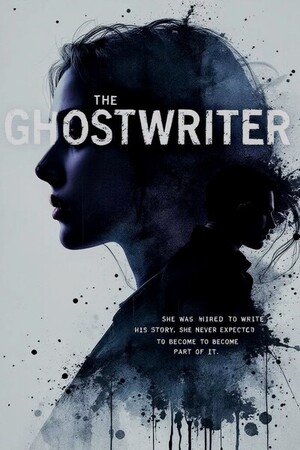
THE GHOSTWRITER
The door shut behind me with a sound that felt final in a way nothing else had yet.
Not loud.
Not dramatic.
Just a clean, bureaucratic click, The sound of something being filed away.
I stood in the hallway for half a second too long, staring at the blank wall, trying to remember how to breathe without him in front of me.
An officer cleared his throat.
“This way, Miss Alessi.”
Claire was waiting at the end of the corridor, arms crossed, fury vibrating off her in waves.
“Thank God,” she hissed when she saw me. “I was two seconds away from committing a felony.”
She reached for me instinctively but stopped herself when she saw my face.
“Oh,” she said softly. “Oh, sweetheart.”
I didn’t answer. I couldn’t. My mouth felt like it belonged to someone else.
The detective Harrow appeared behind us.
“Ms. Alessi,” he said, already in professional mode, “we’re continuing your interview.”
Claire straightened immediately. “I’m staying.”
Harrow hesitated. Just a fraction.
“Miss Alessi,” he said carefully, “before we proceed, I need to clarify your status.”
My heart thudded.
“At this point,” he continued, “given the overlap between your testimony and Mr. Vale’s confession, you are no longer just a witness.”
Claire inhaled sharply.
“You are now considered a potential suspect in an active homicide investigation.”
The word hit like ice water.
Suspect.
“I didn’t” I started.
Harrow raised a hand gently. “This is not an accusation. It’s a legal classification.”
Claire stepped in front of me. “Then she wants a lawyer.”
Harrow nodded. “That is her right.”
I looked at Claire. At her fierce, protective eyes. At the lifeline she represented.
Then I thought of Julian’s face when he said: Tell the truth.
“I’ll talk,” I said.
Claire turned to me, alarm flaring. “Ava!”
“I’ll talk,” I repeated, steadier this time. “But I need you here.”
Harrow shook his head slowly.
“I’m sorry. If you continue without legal counsel, Ms. Claire cannot remain.”
The room tilted.
Claire’s hand tightened on my arm. “Ava. You don’t have to do this. We can stop. We can wait.”
I closed my eyes.
If I waited, the narrative would be written without me.
If I stayed silent, I’d look complicit.
If I spoke, everything could shatter.
I opened my eyes.
“Claire,” I whispered, “if I don’t talk now, they’ll think I helped hide him.”
Her expression broke just enough to show fear.
“I know,” she said quietly. “That’s why I’m scared.”
Harrow’s voice cut in, neutral but firm.
“Miss Alessi, this is your decision. But once Ms. Claire leaves the room, everything you say is on the record.”
I swallowed.
“Claire,” I said again. “Please.”
She searched my face for a long moment. Then she nodded once.
“Okay,” she whispered. “But you stop the second you feel overwhelmed. You ask for water. You ask for a break. And if they cross a line…”
“I’ll say I want a lawyer,” I finished.
She cupped my face briefly uncharacteristically gentle.
“You are not alone,” she said. “Even when I’m not in the room.”
Then she straightened, smoothed her jacket, and shot Harrow a look that promised litigation, damnation, and eternal professional vengeance.
“If she so much as sneezes,” she said, “I will end you.”
Harrow almost smiled.
Claire left.
The door closed behind her.
And for the first time since this began, it was just me and the law.
Harrow gestured to the table.
“Sit, Ava.”
I did.
He turned the recorder back on.
“This is Detective Rowan Harrow, resuming questioning of Ava Alessi. Ms. Alessi is aware she is a potential suspect and has chosen to continue without counsel.”
The words landed with procedural precision, clipped and emotionless, like something rehearsed too many times to still feel human. My pulse roared in my ears, so loud it nearly drowned him out. I focused on the sound of my own breathing too fast and way too shallow it was afraid that if I stopped paying attention, I might simply unravel right there in the chair.
Detective Harrow sat across from me, elbows resting on the metal table, hands loosely folded as if he were in no rush at all. He was probably in his early fifties. I could almost imagine him younger; full of hopes and convictions, believing he might actually make a difference in a society already rotting at its core. A young Afro-American man who had worked his way out of circumstances designed to keep him still. Carrying ambition like both a shield and a burden. I wondered how many doors had closed in his face before one finally opened, and how many compromises had been required just to walk through it.
Now, the years had settled into him. There were sharp lines around his eyes, the kind you earn from seeing too much and sleeping too little, from learning that justice is rarely clean and never simple. His face gave nothing away. It was sharp without being cruel, tired without being careless. The kind of tired that doesn’t come from age, but from endurance. From staying when leaving would have been easier. From choosing restraint over rage, again and again, until it became second nature. He looked like a man who had once believed in change, and learned instead how to survive its absence.
His gaze didn’t flicker. It stayed on me, steady, patient, almost gentle in a way that made it worse. He wasn’t here to intimidate me. He was here to wait me out. He leaned forward, just slightly. The chair creaked. A small sound. Somehow enormous.
“Let’s start again,” he said. His voice was calm, almost kind. “And this time, I need you to tell me everything you know. No gaps. No shortcuts.”
He paused, watching my reaction.
“But to help you,” he added, “we could start with the attic.”
The word hit me like a gunshot.
The attic.
My chest tightened instantly, lungs refusing to cooperate. Heat rushed up my spine as if my body had decided before my mind could catch up. Of course he would start there. Of course he knew. I wondered briefly, stupidly if he could see it on my face, the way that single word cracked something open inside me.
The attic wasn’t just a place. It was a vault. A confession sealed in dust and silence.
I thought of Julian’s eyes; too observant, too haunted. Of his hand squeezing mine, grounding and pleading all at once, as if he were asking me not to disappear on him. I thought of the choice we’d made together, knowing it was the kind of choice that stains you forever. The kind history remembers only after it’s too late to forgive.
My thoughts spiraled, fast and merciless. You don’t get to control the story anymore.
You don’t get to protect him.
You don’t get to protect yourself.
Harrow waited. He always waited.
I inhaled, slow and deliberate, forcing air into my lungs like I was relearning how to exist.
And then I spoke.
I didn’t ration the truth. I didn’t dress it up. I emptied myself completely, letting everything pour out, the secrets I had buried, the lies I had justified, the things I had convinced myself were necessary evils. Under the pressure, something inside me sharpened instead of breaking. I knew exactly where to begin and where it would lead. From why I had entered Julian’s life in the first place, to how I had somehow walked straight into the center of a murder case.
Saying it out loud stripped it of its power. It sounded almost simple. Ugly, yes. But simple.
And at the center of everything like the eye of a storm was Julian.
My Julian.
I told him how I had started as his ghostwriter, invisible by design, a voice without a face. How I learned, piece by piece, that the man the world adored was holding together something far darker behind closed doors. I spoke about his brother. About the truth behind his death, the kind of truth people prefer buried because it demands accountability.
I talked about the girls. About patterns. About silence that wasn’t accidental but engineered. About the Polaroids hidden in the attic, yellowing with time, waiting patiently for someone brave or stupid enough to look and do something about it.
Harrow didn’t interrupt. He just listened, eyes never leaving mine, pen hovering but rarely moving.
“Did Julian cover for his brother?” he asked eventually.
The question landed heavier than all the others.
“Yes,” I said. The word tasted like ash. “He did.”
But the reality, once exposed, was far more layered than that. I explained how broken people don’t make clean choices. How Julian lived inside a contradiction; guilt and loyalty tangled so tightly they became indistinguishable. And how I recognized that fracture immediately.
Because I was broken too.
Noah wanted revenge for his daughter. I understood that kind of grief. I respected it. And I failed him anyway. That failure sat between Harrow and me like a third presence at the table.
Still, he kept asking. And I kept answering. No hesitation. No embellishment. Just the truth.
Maybe it was dull in its honesty. Maybe it lacked the drama people crave. But it was the kind of truth that doesn’t perform but purges.
No more lies. No more protecting the wrong people. The rot had to be cut out, even if it took parts of me with it.
With every sentence, something loosened inside my chest. As if my soul were being rinsed clean, stripped raw but finally exposed to air. I realized almost with surprise that I wasn’t afraid anymore.
I had a voice.
And I was finally choosing to use it. Not just for myself, but for the girls who never got the chance.
Harrow was quiet for a long moment.
Not the uncomfortable kind of silence meant to provoke, but the deliberate one. The kind that makes you wonder which part of your story he’s replaying in his head and which part he’s already discarded.
He finally picked up his pen. Rolled it once between his fingers.
“You’re very articulate,” he said. Not a compliment. An observation. “Most people unravel by now.”
I felt it then the sudden shift.
This wasn’t about what I had said anymore. It was about what I hadn’t.
“I’ve had a lot of practice,” I replied.
A corner of his mouth twitched. Not quite a smile. More like acknowledgment. He leaned back slightly, increasing the distance between us, as if conceding me a square on the board.
“You’ve been honest,” he continued. “Consistent. That’s rare.”
Pause.
“But honesty isn’t the same thing as completeness.”
There it was his opening move.
I resisted the urge to defend myself. Defense is how you lose. Instead, I waited.
Harrow tilted his head, studying me the way you study an opponent who refuses to blink.
“You talked about Julian protecting his brother,” he said. “You talked about the girls. The attic. The Polaroids.” He tapped the table once with his pen. Click.
“But you didn’t talk about timing.”
My stomach tightened.
“Timing of what?” I asked.
“The moment you stopped being an observer,” he said calmly. “And started being a participant.”
I saw it then the line he was drawing. Clean. Merciless.
“You weren’t just documenting anymore,” he went on. “You weren’t just a ghostwriter. Somewhere along the way, you made a choice.”
I felt the old instinct rise in me, the one that knew how to redirect, how to soften edges. Julian had taught me that. Or maybe I’d always known.
“I told you about the choice,” I said.
“You told me about a choice,” Harrow corrected. “Not the one.”
He leaned forward again. Same distance as before. Same posture. A repeated move. Intentional.
“Tell me,” he said, voice low, “when did you realize the attic wasn’t just evidence.”
He paused.
“but leverage?”
Check.
The room felt smaller. The walls closer. I could hear the hum of the lights overhead, loud and invasive. I searched his face for hostility and found none. That was the problem. He wasn’t angry. He wasn’t accusing.
He was inviting me to move.
I thought of Julian again. Of the way he used silence like a weapon. Of the way he always knew when to let people talk themselves into corners.
“I realized,” I said slowly, choosing each word like a piece placed with care, “that truth doesn’t matter unless someone is willing to survive it.”
Harrow didn’t look away.
“And you decided you were willing?”
I swallowed. “I decided someone had to be.”
Another silence. Longer this time.
He nodded once, almost imperceptibly, as if confirming something he’d suspected all along.
“Noah,” he said, shifting the board. “You said you failed him.”
“Yes.”
“Failed how?”
This was dangerous territory. I could feel it. One wrong answer and the game would be over.
“I didn’t give him what he wanted,” I said. “And I didn’t stop him from wanting it”
Harrow exhaled through his nose. A quiet, tired sound.
“Revenge is a powerful motivator,” he said. “So is guilt.”
Beat.
“So is love.”
My chest tightened.
“You love Julian?” he said
It wasn’t a question.
“Yes,” I answered. The truth, bare and unarmored.
“And Julian loved you enough,” Harrow continued, “to let you hold the most dangerous pieces on the board.”
I met his gaze. Didn’t flinch.
“He trusted me,” I said.
Harrow leaned back at last. The chair creaked again, the sound now familiar, almost ritualistic. He looked at the ceiling for a brief second, as if recalculating the entire game.
“People don’t like it when the wrong person controls the truth,” he said. “Especially when bodies are involved.”
“Neither do I,” I replied.
That finally did it.
He smiled not warmly, not cruelly. With respect.
“Then we understand each other,” he said. “Because the question isn’t whether you’re guilty.”
My pulse spiked.
“It’s whether you’re useful.”
Checkmate hovered in the air between us, unresolved.
Harrow closed his notebook.
“For now,” he added, standing, “we’ll say the board is still in play.”
Harrow had reached the door when I spoke.
“Detective.”
He stopped.
Not immediately just a fraction too late. As if part of him had hoped I wouldn’t.
“You said the board was still in play,” I continued. My voice surprised even me. Steady. Clear. “But that assumes I’m reacting to your moves.”
He turned slowly. Fully now.
I remained seated, hands folded in my lap, posture unchanged. Still the suspect. Still the woman in the chair. And yet something in the room had shifted. He felt it. I could tell.
“You’re right about one thing,” I said. “I stopped being an observer.”
Harrow’s eyes narrowed, just slightly.
“But you’re wrong about when.”
Silence stretched between us again.
“You think the attic was leverage,” I went on. “That the Polaroids were the moment I gained control.” I shook my head once. “By then, the game was already over.”
He didn’t interrupt. He wouldn’t give me that satisfaction.
“I realized the truth didn’t belong to Julian,” I said. “Or to his brother. Or to Noah. And it certainly didn’t belong to the police.” I met his gaze. “It belonged to the girls.”
Harrow crossed his arms. Defensive now.
Good.
“You’re suggesting you orchestrated this,” he said. “From the beginning.”
“No,” I replied. “I’m saying I anticipated you.”
That I did.
Something flickered across his face not anger. Not surprise.
But recognition.
“You don’t open an attic like that without consequences,” I continued. “You don’t expose men like Julian and his brother expecting the system to give justice. I knew how this would go. Media first. Then pressure. Then you.”
Harrow took a slow step back toward the table.
“You inserted yourself into a criminal investigation,” he said carefully. “That’s obstruction at best.”
“Only if I interfered,” I said. “I didn’t.”
I leaned forward now.
My turn.
“I preserved evidence. I documented patterns. I made sure nothing could disappear quietly.” A pause. “And I made sure you’d have no choice but to look.”
He stared at me, weighing every word.
“You think you forced our hand,” he said.
“I know I did.”
The room felt colder suddenly. Or maybe I had finally stopped shaking.
“You asked me when I became a participant,” I said. “The answer is simple.”
I held his gaze, unblinking.
“The moment I realized the truth would be safer with me than without me.”
Harrow was silent for a long time.
“You’re playing a dangerous game,” he said finally.
I smiled
“No,” I corrected him. “I ended one.”
Another beat.
“And you’re standing in the aftermath.”
He looked down at the table the same metal surface where he had tried to pin me, contain me, define me. Slowly, he placed his notebook back down. Opened it again.
“Why tell me this now?” he asked.
“Because,” I said, “you’re deciding whether I’m a suspect or a witness.”
He didn’t deny it.
“And because,” I added, softer now, “if you charge me, everything comes out. Every name. Every failure. Every warning ignored.”
His jaw tightened.
“If you don’t,” I finished, “you still get justice. Just not the kind that fits neatly in a file.”
Harrow closed his eyes for a brief second. When he opened them, the game was over.
“You don’t want immunity,” he said quietly.
“No.”
“You want control.” I shook my head.
“I want accountability.”
He studied me one last time, no longer as a suspect, not quite as an ally.
But as an equal.
“You flipped the board,” he said with a faint smile.
“Yes,” I replied.
“And now?”
Harrow watches the board for a long moment.
“Proximity complicates testimony,” he says finally.
I don’t look at him.
“It only does if you think I can be managed.”
A pause.
“If you stay,” he says carefully, “everything you say becomes something we have to defend.”
“And if I leave,” I reply, already knowing the answer, “it stays clean.”
His silence confirms it.
“I’ll go,” I say. “On my terms.”
He lifts his gaze.
“I cooperate. Fully. You get the truth without contamination.”
I stand. “And you don’t pretend this was my only option.”
Harrow exhales once.
“That would be… acceptable.”
Harrow looked at me for a long moment no longer measuring, no longer calculating. Just seeing what was left on the table, and what wasn’t.
I stood, the chair scraping softly against the floor. The sound echoed, final and unceremonious. There was nothing else to say. No more questions that mattered.
“There are no more moves,” I said.
I met his eyes.
“Checkmate.”










Please sign in to leave a comment.