Chapter 1:
Chapter 1 Dust and Echoes
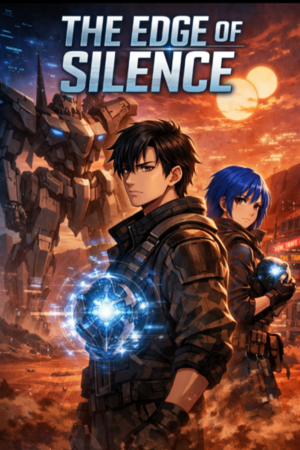
The Edge of Silence
My world begins and ends with dust. It’s the first thing I taste when I wake, a fine red powder coating my tongue, and the last thing I see before the hangar doors hiss shut, sealing me in with my only companion. The dust of New Tombstone is a constant, a gritty reminder of a planet still raw, still untamed. They say this town was built on the bones of an old Earth settlement, a real ‘Tombstone’ from the age of cowboys and six-shooters. Now, the guns are plasma casters and the horses are fifty-ton mechs, but the spirit remains the same: a frontier town teetering on the edge of civilization, attracting the desperate, the hopeful, and the forgotten. I count myself among the last.
My name is Kai Nakamura. Or at least, that’s the name stitched onto the flight suit I was found in. The past is a blank slate, a corrupted data file I can’t access. All I have is the present: the hum of the fusion core in my hangar, the weight of the neural interface helmet in my hands, and the towering silhouette of the machine they call Chronos. It’s a custom rig, sleek and angular where most mechs are brutish and blocky. Its chassis is a patchwork of matte black and gunmetal grey, scarred from battles I don’t remember fighting. The locals see it and see a guardian, a hired gun. I see it and feel a hollow echo, a sense of purpose without a source.
My hangar is my sanctuary, a cavernous metal dome on the outskirts of town, just past the last flickering neon sign of the ‘Stardust Saloon.’ Inside, the air is thick with the smell of ozone and hydraulic fluid. I spend my days here, running diagnostics, calibrating weapon systems, polishing armor plates that already gleam. It’s a ritual, a way to keep my hands busy and my mind from wandering into the empty corridors of my memory. Sheriff Brody, a man whose face is as weathered as the mesas surrounding us, pays me a stipend to keep the peace. Mostly, that means chasing off scrap-jackals or scaring away the more ambitious gangs from the lawless territories beyond the ridge. It’s simple work. It keeps the dust settled, both outside and in.
Tonight, the twin moons of Kepler-186f cast a pale, ethereal glow over the single dusty street of New Tombstone. I was in the Stardust, nursing a synthetic whiskey that tasted like burnt plastic and regret. The saloon was a microcosm of the town: grizzled prospectors with cybernetic limbs, lithe data-runners with mirrored eyes, and off-worlders trying to lose themselves at the edge of the mapped galaxy. A fight broke out, as it often did. Two miners arguing over a claim, their voices rising over the holographic jukebox’s mournful synth-ballad. One threw a punch. The other drew a vibro-knife. That was my cue.
I didn’t say a word. I just stood up. At six-foot-two, with the quiet intensity that comes from not knowing who you are, I tend to cast a long shadow. The brawlers froze, the glint of the knife catching the light. They knew who I was. The pilot. The man with the ghost-mech. The argument died in their throats. They mumbled apologies and retreated to opposite ends of the bar. I sat back down, the silence that followed more potent than the preceding noise. This was my function here: a walking, talking deterrent. A ghost whose reputation did the heavy lifting.
Later, walking back to my hangar under the binary moonlight, I felt a familiar pang. Not a memory, but the shape of one. A flicker at the edge of my vision, a sound just below the threshold of hearing. It was a woman’s laugh, I thought. Then it was gone, replaced by the lonely whistle of the wind through the canyons. These phantoms were frequent visitors, ghosts in my own head. My doctor, a back-alley cyber-medic named Doc Stitch, said they were just synaptic misfires, my brain trying to fill in the blanks. He said amnesia was like a shattered mirror; you might find pieces, but they’ll never show you the whole picture again. I wasn't so sure. These echoes felt too specific, too real.
Back in the hangar, I powered up Chronos’s cockpit. The world outside vanished, replaced by the cool blue light of the holographic displays. The neural link settled over my head, and for a moment, the machine and I were one. I ran a deep diagnostic, my thoughts flowing directly into the mech’s systems. The command line scrolled with green text, reporting all systems nominal. All except one. A subroutine I’d never seen before, buried deep in the core programming, flagged an anomaly. File name: T-D_Lapse.log. It was encrypted, locked behind a wall of code that felt ancient and impossibly complex. I tried to access it, but the system just returned a single, cryptic phrase: The observer changes the observed. It meant nothing to me. Yet, as I stared at the words, I felt that same phantom sensation, a cold dread that had nothing to do with the chill of the hangar. It was the feeling of standing on the edge of a cliff in the dark, knowing the drop was infinite. The log was a piece of the shattered mirror. And I knew, with a certainty that defied logic, that it held a reflection of the man I used to.
My name is Kai Nakamura. Or at least, that’s the name stitched onto the flight suit I was found in. The past is a blank slate, a corrupted data file I can’t access. All I have is the present: the hum of the fusion core in my hangar, the weight of the neural interface helmet in my hands, and the towering silhouette of the machine they call Chronos. It’s a custom rig, sleek and angular where most mechs are brutish and blocky. Its chassis is a patchwork of matte black and gunmetal grey, scarred from battles I don’t remember fighting. The locals see it and see a guardian, a hired gun. I see it and feel a hollow echo, a sense of purpose without a source.
My hangar is my sanctuary, a cavernous metal dome on the outskirts of town, just past the last flickering neon sign of the ‘Stardust Saloon.’ Inside, the air is thick with the smell of ozone and hydraulic fluid. I spend my days here, running diagnostics, calibrating weapon systems, polishing armor plates that already gleam. It’s a ritual, a way to keep my hands busy and my mind from wandering into the empty corridors of my memory. Sheriff Brody, a man whose face is as weathered as the mesas surrounding us, pays me a stipend to keep the peace. Mostly, that means chasing off scrap-jackals or scaring away the more ambitious gangs from the lawless territories beyond the ridge. It’s simple work. It keeps the dust settled, both outside and in.
Tonight, the twin moons of Kepler-186f cast a pale, ethereal glow over the single dusty street of New Tombstone. I was in the Stardust, nursing a synthetic whiskey that tasted like burnt plastic and regret. The saloon was a microcosm of the town: grizzled prospectors with cybernetic limbs, lithe data-runners with mirrored eyes, and off-worlders trying to lose themselves at the edge of the mapped galaxy. A fight broke out, as it often did. Two miners arguing over a claim, their voices rising over the holographic jukebox’s mournful synth-ballad. One threw a punch. The other drew a vibro-knife. That was my cue.
I didn’t say a word. I just stood up. At six-foot-two, with the quiet intensity that comes from not knowing who you are, I tend to cast a long shadow. The brawlers froze, the glint of the knife catching the light. They knew who I was. The pilot. The man with the ghost-mech. The argument died in their throats. They mumbled apologies and retreated to opposite ends of the bar. I sat back down, the silence that followed more potent than the preceding noise. This was my function here: a walking, talking deterrent. A ghost whose reputation did the heavy lifting.
Later, walking back to my hangar under the binary moonlight, I felt a familiar pang. Not a memory, but the shape of one. A flicker at the edge of my vision, a sound just below the threshold of hearing. It was a woman’s laugh, I thought. Then it was gone, replaced by the lonely whistle of the wind through the canyons. These phantoms were frequent visitors, ghosts in my own head. My doctor, a back-alley cyber-medic named Doc Stitch, said they were just synaptic misfires, my brain trying to fill in the blanks. He said amnesia was like a shattered mirror; you might find pieces, but they’ll never show you the whole picture again. I wasn't so sure. These echoes felt too specific, too real.
Back in the hangar, I powered up Chronos’s cockpit. The world outside vanished, replaced by the cool blue light of the holographic displays. The neural link settled over my head, and for a moment, the machine and I were one. I ran a deep diagnostic, my thoughts flowing directly into the mech’s systems. The command line scrolled with green text, reporting all systems nominal. All except one. A subroutine I’d never seen before, buried deep in the core programming, flagged an anomaly. File name: T-D_Lapse.log. It was encrypted, locked behind a wall of code that felt ancient and impossibly complex. I tried to access it, but the system just returned a single, cryptic phrase: The observer changes the observed. It meant nothing to me. Yet, as I stared at the words, I felt that same phantom sensation, a cold dread that had nothing to do with the chill of the hangar. It was the feeling of standing on the edge of a cliff in the dark, knowing the drop was infinite. The log was a piece of the shattered mirror. And I knew, with a certainty that defied logic, that it held a reflection of the man I used to.




Please sign in to leave a comment.