Chapter 4:
The Mechanic
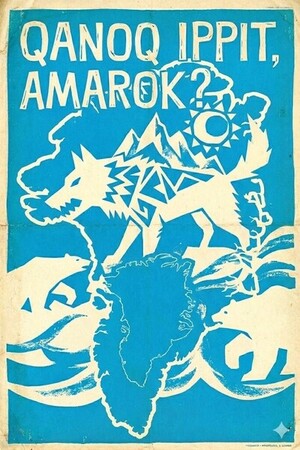
Qanoq Ippit, Amarok? (How Are You, Wolf?)
What Leffer Cliff got from the police officer was this: the Montroses took a ship back to Canada in the early fall. The robot the company had sent, which with a tank-like lower body attachment was supposed to be able to penetrate the interior and get right to the parcels, had never gotten into the tank. The young couple used it as a servant of sorts. They even programmed it to help with some of the hunting—the robot had become particularly good at stalking musk ox, and could strip down every part of the animal for use. The Montroses made some money renting out the robots, then left with the sun. Nanny had helped them, according to police, but he always made sure the tax on the hunt was paid, so it was no problem for them.
So the company was right. It shouldn’t be hard to find the Montroses in Canada, especially with the robot, if that’s where they went after all. The officer was evasive about where in Canada the boat was headed, or even what ship it was, and he was evasive about whether the Montroses had managed any kind of expedition into the interior.
Neither of the settlements-in-a-box were accounted for. The police did have one of the snowmobiles, and said they’d be happy to give it back once the company had paid for its retrieval. It was found several kilometers into the interior.
The second team had arrived during the polar night, when the sky was no longer pale with the sun that wasn’t there anymore, after the blue twilight. The police and the locals advised them against making the expedition into the interior during the polar night, even with their fancy gear and night vision goggles. Leffer had been led to believe not much had been done in the building the company had acquired, but the police officer was very interested in coming along with Leffer to see what was there, convinced the team had been working there for weeks after they arrived.
-They waited till the dead of the polar night to go. Why?
-The wolves stay deeper in the interior in the winter months, Leffer suggested. Don’t they?
The officer scoffed at the question.
-I’m going to be in town for a few weeks. I’m going to go into the interior, try to find what happened to the company team.
-With what gear?
In fact Leffer had to head to the Qaanaaq harbor, where the ship with his supplies was coming in. It was sent via Nuuk but the company decided a ship would be safer than a plane as expensive as the equipment was. The captain of the ship was authorized to release the cargo to Leffer, or in the case of his death en route, another company representative. Not anyone local.
Leffer had to rent a truck from a small rental place that had opened up in recent years for the tourists that had started trickling in.
He had to drive down to the harbor, where the ship he was waiting for was the only one that wasn’t a fishing boat.
There was yet another settlement-in-a-box in the cargo. The cookie company had gotten these from a logistics firm that picked the concept up in one of the Middle East wars, where they tried to put a whole government in a box.
These were simpler, because they were technological, not political. They were automated systems for a small human settlement in harsh terrains—a water collector, waste removal system, hydroponic garden, nutrients and pharmaceuticals, sleeping containers and so on.
It was different from a government in a box but the scientist who came up with it for the cookie concept insisted it came to him when he heard some general talking about it, and he had some magazine article somewhere to prove it.
In any case, the settlements-in-a-box were useful in deploying human capital to hard to reach places that could get easier with time. Leffer was fairly certain he wouldn’t be using it. The last team had to have set one up somewhere. It’s possible the Montroses took theirs with them, but it too could have been deployed somewhere.
What he did know he was going to use in the cargo was the armor and the weapons. He had tried to delay his arrival by another month but the bosses were eager to hear what was going on. For himself, Leffer wanted to test his idea of a park for wolf hunting, and another month would’ve brought the wolves from the interior even closer.
The cookie company had acquired a sports apparel company last year that actually made some of the best body armor on the market, and Leffer had it included in the cargo shipment. It was more like a full armor suit. It was multi-layered, with temperature controls, titanium reinforcement, and a layer for water storage that could last a week. It could also collect water ambiently, and had external plates that could reach boiling temperatures while keeping the wearer at a cool temperature.
As for weapons, they were big guns. The latest in Gauss accelerators from a partnership the company had with an electronics firm, and an old fashioned bolt-action shotgun. He requisitioned grenades from one of the company’s logistics subdivisions overseas. His girlfriend had suggested a bow and arrow when he told her he was going wolf hunting in Greenland, he thought she had to be kidding. But they did have an arrow-shooter attachment for the body armor, so he got that too.
Leffer didn’t want the police officer to see the cargo, but got the sense he’d follow him along. He had nowhere else to be.
-Okay, Leffer said in resignation. Let’s go to the office and see what the last teams left behind.







Please sign in to leave a comment.