Chapter 4:
CHAPTER 4: AFTERMATH AND ARCHITECTS
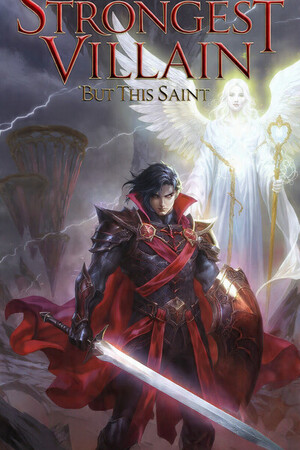
I Was Reborn as the World's Strongest Villain, But This Saint Won't Stop Trying to Heal My Heart!
Peace, Kazuki quickly determined, was a more complex logistical challenge than war.
With the Crimson Maw shattered, Luminas’s observers withdrawn, and the Corrupted Heart transmuted into a dormant, neutral ley line, the glade entered a period of quiet unlike any it had known. The Blackwood itself seemed to exhale; the constant, whispering malice receded, replaced by the ordinary sounds of wind and creatures no longer driven to frenzy. Sunlight, true and unfiltered, now reached the forest floor in patches, fostering pockets of timid, non-magical growth.
Kazuki’s systems, so long attuned to threat analysis and combat optimization, found themselves without a primary directive. The void within him, once filled only with the echo of his own power, now held lingering impressions: the warmth of Elara’s grip pulling him back, the quiet satisfaction of a problem solved without annihilation, the specific scent of damp earth after tending the garden.
He attempted to apply his usual analytical framework to this new state.
*Observation: Period of zero hostile activity. Saintess Elara exhibits increased frequency of non-task-related vocalization (humming, naming of plants). Glade’s ecosystem shows 14.3% expansion in non-corrupted flora. My own processing cycles are frequently allocated to non-essential monitoring of these changes.*
Conclusion: This is "peace." It is statistically inefficient but appears to be the desired state of the primary ally (Elara). Adaptation required.
His adaptation took the form of projects. If he could not optimize for destruction, he would optimize for growth.
He started with water. The glade’s needs were met by a small, crystal-clear spring, but its flow was variable. Using [Omni-Magic Affinity] with surgical precision, he coaxed the underground aquifers into a more efficient convergence, creating a consistent, gentle flow. He then designed and, with a thought, assembled a series of graduated stone basins from the bedrock beneath the soil. They served as a reservoir, a filtering system, and, unintentionally, a beautiful tiered fountain where light danced on the water’s surface.
Elara found him one afternoon staring intently at a patch of Sunblooms, his fingers tracing equations in the air that only he could see.
“What are you calculating now?” she asked, handing him a cup of mint tea. The brew had improved; she’d found a wild honeycomb.
“Their photosynthetic efficiency is sub-optimal. The lower leaves are shaded. I am modeling a reflective substrate to redirect ambient light.” He gestured, and a few pebbles at the base of the flowers subtly realigned, their surfaces becoming mirror-smooth. The Sunblooms seemed to perk up immediately.
“You’re gardening with celestial mechanics,” she laughed, a sound that still seemed to startle him slightly.
“It is efficient gardening,” he corrected, but the corner of his mouth might have twitched. A new expression he was analyzing: Amusement? Context: non-hostile social interaction following perceived positive outcome.
He moved on to infrastructure. The cottage was sufficient, but Elara’s collection of herbs and remedies was overflowing shelves. Kazuki spent a day in the forest, not destroying, but selecting. He returned with straight, strong lengths of ironwood. Without nails or glue, he used molecular cohesion to fuse the wood together, constructing a spacious, elegant addition with multiple shelves, a proper drying rack, and a skylight made of solidified, transparent air.
When Elara saw it, her eyes shone. “It’s perfect. Thank you, Kazuki.” She touched his arm, a brief, grounding contact. The system notification that flashed was not about threat levels, but about biometric anomalies: a slight increase in dermal temperature, a minute elevation in heart rate. Categorizing: Response to positive reinforcement.
Alden, who had decided to extend his “observation” into a semi-permanent residency, watched these developments with the delight of a naturalist documenting a new species. He filled scrolls with notes. “Subject demonstrates translational intelligence, applying cosmic-scale power to domestic problems. Motivation appears linked to Saintess’s expressed needs and observable joy. A fascinating case of trans-dimensional socialization.”
But peace was not idleness. The memory of the poisoned ley line was fresh. Kazuki’s new projects gradually took on a defensive, albeit peaceful, character. He wove subtle Ward-Weaves into the very growth patterns of the glade’s plants—a harmony so deep it would passively reject intrusive corruption as the body rejects a virus. He upgraded the perimeter from a wall to a membrane, one that would allow benign life and weather to pass but would resonate with a warning chime in his mind at any hostile intent.
He was, he realized, not just defending a territory. He was curating an ecosystem. The glade was no longer just Elara’s sanctuary. It was becoming theirs.
Part 2: The Uninvited GuestA week into this newfound peace, the air in the glade shimmered.
It was not a magical distortion. It was a statistical anomaly, a localized glitch in reality. The light bent in ways that defied refraction. The songs of birds stuttered and looped. For a single, disorienting second, every leaf on every tree pointed in the same direction.
Then, with a sound like a page turning in a cosmic book, he was there.
The Assistant Manager of Transdimensional Soul Relocation stood in the middle of the vegetable patch, looking profoundly out of place. He wore the same aura of blinding light, though dimmed to a bearable gleam, and was consulting his shimmering tablet.
“Ah! There you are, Reclaimer! Kazuki! Sorry for the drop-in. No appointment setter in the void, you know how it is.” He looked up and blinked, taking in the cottage, the fountain, the blooming flowers, and Elara, who had frozen while watering the herbs, her watering can tilted. “Oh. This is… quaint.”
Every defensive ward Kazuki had built screamed in silent alarm before going utterly dead. His [Absolute Domination] field, which could freeze dragons, slid off the being like water off glass.
<< ANALYSIS: ENTITY BEYOND LOCAL DIMENSIONAL FRAMEWORK. DESIGNATION: [PATRON/ADMIN]. THREAT ASSESSMENT: NULL (IMMUTABLE). COUNTERMEASURES: NONE. >>
“You,” Kazuki said, his voice flat. He stepped subtly between God and Elara.
“Me! Just popping by for a follow-up. Performance review, really.” The Manager tapped his tablet. “Your file was flagged. ‘Anomalous Stability Event.’ See, we drop you in, give you the ultimate sandbox, expect a bit of chaos, maybe a demon king coup, the usual. But the energy signatures we’re reading from this sector… they’ve shifted from ‘Cataclysmic’ to ‘…Domestic?’” He peered at Kazuki. “There’s even a sub-category for ‘Agricultural Optimization.’ What are you doing?”
“I am living,” Kazuki stated, though the word felt foreign.
“Living? You’re a Reclaimer! A variable! You’re supposed to be shaking things up!” The Manager floated over to a Starlight Bell, poking it. The flower chimed nervously. “You neutralized a regional primal evil with a… a conceptual therapy session. Do you have any idea how much paperwork that creates? ‘Transmutation’ is a whole different form suite than ‘Obliteration’!”
Elara found her voice, setting down her watering can. “Who are you?”
The Manager turned, his radiance pulsing with interest. “Ah! The local stabilizing element! [Saintess]. Fascinating. Your soul-signature is intertwined with his operational matrix. You’re the reason for the anomaly.” He scanned her with the tablet. “Hmm. Purity, compassion, stubborn hope… a classic catalyst. But the effect is extreme. You’ve essentially installed a moral operating system in a weapon of mass destruction.”
“He is not a weapon,” Elara said, her chin lifting.
“He was. That was the whole point! Now he’s a… a gardener with superpowers.” The Manager sighed, a sound like wind chimes in a vacuum. “Look, Kazuki. This isn’t a criticism. Your happiness metrics are up, way up from the baseline ‘suicidal nihilism.’ That’s good! Corporate is pleased with the improved quality-of-life score. But you’re not fulfilling your purpose.”
“What is my purpose?” Kazuki asked, the old emptiness echoing in the question.
“To be interesting! To generate data! Conflict, growth, change, drama! Right now, you’re generating data on compost enrichment and water management. It’s not wrong, it’s just… off-brand.” The Manager flicked through his tablet. “I’m supposed to guide the narrative. So, consider this your official nudge. The peace is lovely. But it’s static. And static variables get… reviewed for repurposing.”
A cold that had nothing to do with magic seeped into Kazuki’s bones. “Repurposing?”
“Reassignment. Memory wipe. Reset. Your power suite is too valuable to spend eternity growing prize-winning tomatoes.” The Manager’s tone was breezy, administrative. “You need a new conflict. A personal one. A challenge that tests this new ‘self’ you’re building. Something that forces growth, or…” he shrugged, “…provides a dramatic end point. Data either way!”
Elara moved to stand beside Kazuki. “You can’t just decide that. He has a life here.”
“He has an experiment here,” the Manager corrected gently. “And experiments either conclude or evolve. I’m here to ensure evolution. Consider me… a narrative consultant.” He looked around the glade. “You’ve built a wonderful set. Now you need a plot. Don’t worry, I’m not going to smite anyone. Too direct. The best stories arise organically. I’ll just… introduce a few new variables. A catalyst or two. See what happens!”
He gave them a cheerful, terrifying smile. “Continue your gardening! It’s adorable. Really. The report will be fascinating.” With another shimmering page-turn sound, he was gone. The air settled. The birdsong returned to normal.
The silence he left behind was deafening. The wards reactivated, buzzing with confused energy. The glade was safe from mortal threats. But it had just been judged by something infinitely higher.
Kazuki looked at his hands—the hands that could unmake mountains, now stained with soil from the vegetables. The void inside him, which had begun to feel like a quiet chamber rather than a screaming abyss, now felt like a cage again. A comfortable cage he was only permitted to stay in if he remained entertaining.
“What,” he said, his voice dangerously calm, “was that?”
“Your… God?” Elara whispered, her face pale.
“My manager.” The word was acid on his tongue. “This was never a second chance. It was a performance review. And we are failing.”
The Manager’s visit poisoned the peace. Not with corruption, but with existential dread. Kazuki’s projects continued, but the joy had been leeched from them. Every improved irrigation channel, every strengthened ward, felt like a desperate attempt to prove stability, to justify his continued existence in this quiet narrative.
He began scanning the horizon, not for armies, but for “variables.” What constituted a worthy conflict? Another kingdom? A planar invasion? The return of the Corrupted Heart? He ran simulations, but they all felt hollow, like staging a play for a single, capricious critic.
Elara watched him retreat into a different kind of silence—not the empty silence of old, but the tense silence of a soldier waiting for a storm he cannot see. She tried to pull him back with routine, with small tasks.
“The lavender needs pruning,” she said one morning, handing him shears.
He took them, looking at the simple tool. “Pruning is a controlled violence. It directs growth by inflicting harm. Is this the kind of conflict he seeks?”
“It’s just gardening, Kazuki.”
“Is it?” He looked at her, his gray eyes haunted. “What if our peace is the prelude? What if the ‘catalyst’ is your death? My failure to protect you would certainly generate… data.”
The words hung in the air, a terrifying possibility made real. It was the first time he had voiced his deepest fear so clearly, not as a tactical assessment, but as a personal horror.
Elara took the shears from his stiff hands and set them aside. She took his face in her hands, forcing him to meet her gaze. “Listen to me. That thing, that Manager, he sees us as a story. But this is our life. My life is not a plot point to motivate you. Your life is not a variable to be adjusted. We choose. Here. Now. We choose the garden, the stew, the quiet. Every day we choose it, we defy him.”
Her words were a different kind of magic, not purification, but affirmation. They fought the narrative thrust upon him with the weapon of mundane choice.
For a moment, the tension in his shoulders eased. He leaned his forehead against hers, a gesture of sheer exhaustion and need. “I do not know how to fight an author,” he confessed, his voice barely audible.
“You live a better story,” she whispered.
But the universe, it seemed, was listening to the Manager.
The catalyst arrived three days later, not with a bang, but with a whimper.
Alden, returning from a trip to a nearby trading post for ink and parchment, was not alone. He supported a slight figure cloaked in travel-stained rags. As they crossed the glade’s threshold, the wards chimed a complex, confused note—not hostility, but profound, soul-deep anguish.
The figure stumbled, and the hood fell back. It was a young woman, perhaps Elara’s age. Her hair was matted, her face gaunt, but her eyes were the most striking feature—one was a vivid, intelligent amber. The other was a milky, dead white, and from its socket trailed not scars, but delicate, crystalline patterns that looked like frozen tears. She trembled violently.
“Found her at the post,” Alden panted. “She was begging for scraps, mumbling about ‘the hollow-eyed one.’ When she heard me mention this glade, she clutched at me. Knew your name, Kazuki.”
Elara was already moving, her healer’s instincts overriding caution. She guided the girl to a seat, offering water. The girl drank greedily, her bi-colored eyes fixed on Kazuki with a terrifying mix of terror and desperate hope.
“Who are you?” Kazuki asked, his voice carefully neutral.
“Lira,” the girl rasped. “Of Oakhaven.”
The name was a punch to a ghost of a feeling. Oakhaven. The first town. The ash-statues.
“You… survived,” Kazuki stated. It was not a question.
“I was in the cellar. Sick with fever. I heard the screams. The silence.” Lira’s voice was hollow. “When I crawled out… everyone was gone. Just dust and… shapes.” She hugged herself. “I ran. Been running since. The world hates a survivor from a cursed place.”
“Why come here?” Elara asked softly, bathing the girl’s grimy face with a damp cloth.
Lira’s amber eye locked onto Kazuki. “Because the stories changed. They say the Hollow Demon found a saint. That he protects a glade. That he… doesn’t kill anymore.” A single, clean tear traced a path through the dirt on her cheek. “I want to hate you. I should hate you. But hate is so heavy. And I am so tired.” She gestured weakly to her crystalline eye. “The corruption… it followed me. It festers in old wounds. I heard… the Saintess here can heal. Can you heal this?” Her voice broke. “Can you heal what he did?”
The glade was utterly still. The weight of Kazuki’s past had just walked in, sat down at their table, and asked for succor.
This was the Manager’s catalyst. Not an army, but a single, broken soul from his first and most meaningless atrocity. A personal conflict. A test of his new “moral operating system.”
Kazuki looked at Lira, at her one seeing eye full of a pain he had causally inflicted. He felt the void within him twist. This was not an abstract statistic of “hundreds killed.” This was a person who had lost everything, whose life had been twisted into a permanent reminder of his emptiness. The “data” had a face, a voice, a trembling hand.
Elara looked from Lira to Kazuki, her own heart breaking for them both. “Kazuki,” she said softly. “This is your choice.”
He could turn her away. It would be logical. Her presence was a security risk, an emotional destabilizer. The Manager would likely note the “drama” of refusal and call it acceptable conflict.
He could try to heal her. But the corruption in her was tied to the trauma he had caused. His power was infinite, but it was not a healer’s art. He could maybe erase the crystalline growth, but would that heal the wound beneath? Or would it be another form of violence—erasing the symptom but not the disease?
Or he could do nothing. Let Elara try, while he stood by, a monument to the cause of the suffering being treated.
Every option was a thread in a narrative. Every choice would be data for the Manager’s report.
Lira watched him, waiting for the judgment of the god who had unmade her world.
Kazuki closed his eyes. He searched the void within, not for power, but for an answer. He found no logic, no clear optimization path. He found only echoes: Elara’s voice saying “We choose.” The feel of weeding. The taste of bland stew. The weight of a responsibility he had begun, haltingly, to accept.
He opened his eyes. His gaze was not empty. It was heavy.
“You may stay,” he said to Lira, his voice rough. “The Saintess will tend to your physical wounds.” He paused, the next words costing him more than any magical exertion. “I… cannot heal what I have done. But I will ensure this glade is a place where such wounds are not made.”
It was not forgiveness. It was not redemption. It was a statement of policy. A new rule for his domain. It was the first, faltering step towards atonement.
Lira stared at him, then buried her face in her hands, her shoulders shaking with silent sobs. Elara moved to comfort her, shooting Kazuki a look of profound, aching pride.
The catalyst had been introduced. The conflict was internal, moral, and utterly human. The Manager’s variable was in play.
Kazuki turned and walked to the edge of the glade, looking out at the forest. The story was no longer about a Hollow Demon. It was about what a Reclaimer could build, and whether the architect of his suffering—both his old life and his new existence—would allow that building to stand.
The peace was over. The real work had begun.
Part 4: The Scars We ChooseLira’s integration was a fragile, painful process. The glade, a place of healing for corrupted beasts and blighted plants, now faced its most complex patient: a human soul shattered by its own guardian.
Elara worked with tireless compassion. The physical corruption in Lira’s eye socket was resistant, a unique crystallization born of trauma and lingering dark mana. It would not be purged like a simple disease; it had to be carefully dissolved, a grain at a time, while soothing the psychic pain that fed it.
Kazuki kept his distance, a silent, looming presence. He assigned himself tasks on the periphery: reinforcing the cottage walls, expanding the garden to provide more food, creating a secluded, comfortable lean-to for Lira to call her own. It was his way of contributing—building the physical safety she had lost.
But the true test came in the quiet moments. When Lira would flinch at a sudden movement, her amber eye darting to him in instinctive terror. When she had nightmares and her whimpers cut through the night. When she would stare into the fountain’s reflective surface and trace the crystalline scars on her face with a look of utter despair.
One afternoon, Lira was helping Elara (a task she insisted on, needing to feel useful) harvest medicinal moss. Kazuki was across the glade, using controlled applications of heat to fire clay tiles for a new walkway. Lira’s gaze kept drifting to him, a storm of emotions on her face.
Suddenly, she put down her basket and walked toward him. Elara made a small motion to stop her, then hesitated, letting her go.
Kazuki saw her approach and stopped his work, becoming perfectly still.
Lira stopped a few feet away, hugging herself. “Why?” she asked, the single word loaded with the weight of a hundred unspoken questions. “Why did you do it? The people in Oakhaven… they weren’t soldiers. They weren’t evil. The merchant who yelled at you… he was just stressed. His daughter was sick. Did you know that?”
Kazuki met her gaze. To lie would be easy. To claim some grand, dark purpose. But the old, empty logic was gone. “No,” he answered truthfully. “I did not know. I did not care to know. At that time, I did not care about anything. A slight was a perturbation. Perturbations were removed. That was the entirety of my existence.”
His honesty was more brutal than any excuse. Lira flinched but stood her ground. “And now? Do you care now?”
He looked past her, at Elara watching from near the herbs, at Alden peeking from the cottage window, at the glade itself. “I am… learning to. The mechanism is inefficient and prone to error. But I am attempting to run a new protocol: ‘Do no harm.’ Your presence is a continuous audit of its success.”
It was a clinical way to describe guilt, but Lira seemed to understand. Her shoulders slumped, not with forgiveness, but with a weary acceptance of the incomprehensible. “You’re not the monster from the stories anymore, are you?”
“The monster is a part of the data set,” he said. “It cannot be deleted. It can only be… integrated. Contained by newer, stronger structures.”
He gestured vaguely to the glade, to the cottage, to Elara.
Lira was silent for a long time. Then, she did something astonishing. She took a step closer, her bi-colored eyes searching his face. “The corruption in my eye… it hurts most when I feel hate. When I remember the dust that was my home. Elara says it feeds on that pain.” She took a shaky breath. “I don’t know if I can ever forgive you. But I am tired of feeding this thing inside me with my hate. For my own sake… I need to try to put the monster in the past. Not for you. For me.”
It was not forgiveness. It was a strategic decision for survival. Kazuki understood that perfectly.
“A logical course of action,” he nodded. “If my absence facilitates this, I will remain at a distance.”
“No,” Lira said, surprising them both. “That just makes you a ghost. Ghosts are hard to move past. Be present. Be the gardener. Be the… whatever you are now. Let me see that the monster isn’t all there is. That’s how I starve the corruption.”
It was a demand as much as a request. A challenge to prove his new protocol wasn’t just for show.
Kazuki looked at this brave, broken girl who was offering him a role in her own healing—not as a penitent, but as a counter-example. The void in him churned with unfamiliar, complex data. He gave a single, stiff nod. “Understood.”
From that day, a new, fragile dynamic formed. Kazuki did not avoid Lira. He worked in her vicinity. She began asking him quiet, practical questions. “How does the fountain work?” “Can this clay be used for a cup?” His explanations were technical, but he gave them. Slowly, the flinches grew less frequent. The fearful looks were occasionally replaced by looks of cautious curiosity.
One evening, as Kazuki was calculating the optimal starlight absorption for the night-blooming Moonshadow flowers, Lira sat nearby, sketching on a piece of parchment Alden had given her. She had a talent for capturing shapes.
“You see the world in numbers, don’t you?” she asked without looking up.
“It is an efficient way to process reality.”
“What’s the number for this?” she asked, gesturing to the glade bathed in twilight.
Kazuki paused his calculations. He scanned the glade—the bio-luminescence of the flowers, the harmonic resonance of the wards, the emotional signatures of its inhabitants (Elara’s steady warmth, Alden’s curious spark, Lira’s jagged but softening pain). He tried to reduce it to a value.
He could not.
“There is no number,” he said, the realization unsettling. “It is a… system too complex for single-value quantification. It requires a continuous, multi-variable model.”
A small, almost-smile touched Lira’s scarred face. “So it’s not just a garden. It’s a… living equation.”
“A dynamic, non-linear one,” he agreed. “With unpredictable inputs.” Like a broken girl from Oakhaven. Like a cosmic Manager. Like his own evolving heart.
It was progress. Not the dramatic, world-shaking conflict the Manager might have wanted, but something deeper: the slow, grinding, beautiful work of healing. It was a narrative of scars becoming foundations.
**Part 5: The Architect’s ReturnA month passed. The glade’s new normal settled. Lira’s corruption had receded by half, the crystalline patterns growing dull and brittle. Her nightmares became less frequent. She smiled at times, a rare, precious event.
Kazuki’s projects grew more ambitious. He began mapping the newly stabilized ley lines of the Blackwood, curious about the ecosystem’s recovery. He designed a system to channel harmless, ambient magic into the soil to accelerate the growth of healing herbs for Elara. He was, for stretches of time, genuinely engrossed in the puzzle of creation rather than destruction.
He almost allowed himself to believe the Manager had been satisfied.
He was wrong.
The return was not announced by a shimmer. This time, it was a glitch in perception.
Kazuki was teaching Lira the geometric principles behind the ward-weaves (she had a knack for pattern recognition) when the world stuttered. For three consecutive seconds, the same butterfly crossed the same patch of sunlight. Elara, pouring tea, poured the same arc of liquid twice. The sound of the fountain looped.
Then, the Assistant Manager was there, leaning against the water fountain as if he’d been there for hours. He was reviewing his tablet.
“Interesting! Very interesting!” he chirped. “Conflict integration via survivor’s guilt and gradual empathy-building! Trauma as a bonding agent! A bit slow-burn for my taste, but the character work is fascinating.” He looked up, beaming at Kazuki, Lira, and a wary Elara who had stepped outside. “Quality-of-life scores are holding! And you’ve even introduced a compelling supporting character with a visual motif!” He nodded at Lira’s crystalline scars.
Lira shrank back, terror flooding her features. The monster from her past was one thing; this cheerful, indifferent force was another.
“What do you want?” Kazuki asked, his voice a low hum of controlled power.
“Just a mid-point review! The ‘survivor’ catalyst is working nicely, but the dramatic tension is plateauing. We need to raise the stakes!” He tapped his chin. “I was thinking… a reveal! A secret from the past! Something that challenges the core identity of our protagonist!”
He snapped his fingers. A sphere of light appeared between them, resolving into a moving image. It showed Kazuki’s past life—not the abuse, but the moment of his death. The bleak bathroom. The young man with empty eyes, preparing to end it. But the image focused on the window behind him. Reflected in the grimy glass was a figure watching from the doorway of the apartment. A silhouette of a woman, his mother, her face not in grief or horror, but in what could only be described as… relief.
The image froze.
“You thought you were unwanted. A burden. And you were!” the Manager said cheerfully. “But the reason! See, your existence was a constant reminder of her failure, her pain. Your suffering wasn’t the point; your absence was the desired outcome. Your final act was the one thing you ever did that truly made her happy.”
The words were psychic scalpels, designed to reopen the oldest wound at its core. Kazuki felt the void within him, the foundation of his entire being, tremble. His last, desperate act in that world… had it been a gift to his tormentor? Had his greatest defeat been someone else’s victory?
Elara cried out, “Stop it! That’s cruel!”
“Cruelty is a subjective value! This is clarity!” the Manager replied. “Think of the drama! The existential crisis! ‘Who am I if my defining tragedy was someone else’s comfort?’ Wonderful stuff!”
Kazuki was silent, his face a mask. Inside, his systems were reeling. << CORE IDENTITY PARAMETERS QUESTIONED. LOGICAL FRAMEWORK FOR PRIOR SUFFERING COMPROMISED. >> The old, black despair, the one that said he was worthless, that his pain was meaningless, rose with a new, more venomous truth: his pain had had a meaning. It had been a currency for someone else’s peace.
He felt the pull of the old void, now whispering a new temptation: if his very suffering was part of a system that valued him only in his removal, then why build anything? Why try?
But then he felt a hand slip into his. It was small, warm, and trembling. Lira. She was staring at the Manager, her face pale, but she held onto Kazuki’s hand with fierce determination. On his other side, Elara moved closer, her presence a wall of silent defiance.
They were anchors. Not in a dramatic, storybook way, but in a real, physical way. Their touch was data his sensors could process: connection, loyalty, shared defiance.
He looked from the Manager’s gleeful face to the frozen image of his mother’s relief, then to the living glade around him, to the hands in his.
The void still yawned. But he was not in it alone anymore. And he had built things here. A fountain. A garden. A fragile peace. He had rules.
He took a deep, shuddering breath, the kind a human takes to steady themselves. He looked the Manager in the eye.
“Your data is incomplete,” Kazuki said, his voice finding its strength. “You show the cause of my despair. You do not show its end. That story concluded. This is a new story. It is authored here, by these hands.” He gently squeezed Lira’s hand and felt Elara’s shoulder press against his arm. “The protagonist is no longer the boy in that room. He is the Reclaimer. And his core conflict is not with his past, but with forces that would reduce his present to… entertainment.”
The Manager’s smile didn’t falter, but his radiance flickered, just once. He looked intrigued. “Defiance! Meta-narrative awareness! Now that’s a twist! The variable becomes aware of the experimenter!” He clapped his hands, making a sound like breaking crystal. “Oh, this is getting good. The stakes are officially raised. Can self-defined meaning survive in a cosmos that sees it as a storyline? Can you write your own ending when I hold the pen?”
He winked. “Let’s find out.” And with a final, lingering look at their joined hands, he vanished. No glitch this time. Just a perfect, silent deletion from their space.
The released tension was a physical force. Lira sagged. Elara let out a choked sob. Kazuki continued to stare at the spot where the Manager had been.
The challenge was now explicit. This was no longer about defending a glade from monsters or kingdoms. This was about defending the reality of their lives from a being who saw it as fiction. The ultimate conflict was not for territory, but for sovereignty of the self.
Kazuki looked at the glade—his creation, their home. He looked at the hands that held his. The void was still there, but it was no longer the defining feature. It was the negative space around a sculpture that was finally taking form.
“We will need a new protocol,” he said quietly, his mind already moving beyond despair to strategy. “One for defending against narrative subversion.”
Elara managed a tearful smile. “What will we call it?”
He looked at her, then at Lira, then at the world they had built together.
“We will call it ‘Our Story,’” he said. “And we will make it a boring one for him, and a beautiful one for us.”
The sun set over the glade, painting it in defiant golds and reds. The architects of this small, fragile world stood together, facing not an army, but the author of their existence. And for the first time, they had a plan: to live so fully, so quietly, and so well, that no cosmic drama could ever compare to the profound, ordinary peace of a garden, tended by broken hands, under a healing sky.
End of Chapter 4
Chapter 5 Teaser: The Boring Protocol
Life in the glade becomes an act of quiet rebellion. Kazuki, Elara, Lira, and Alden dedicate themselves to the mundane: perfecting bread recipes, cataloging insect species, composing terribly un-dramatic poetry about moss. Kazuki’s vast intellect devises “Anti-Drama Wards”—subtle fields that gently nudge probabilities towards peaceful, boring outcomes. But the Manager is not idle. When forced narrative conflict cannot take root, he begins importing it, pulling characters from other “stories” across the multiverse and depositing them at the glade’s edge: a fallen hero consumed by bitterness, a rogue AI seeking a soul, a lovestruck dragon in human form—each a potential spark for the drama he craves. Kazuki’s new challenge becomes not fighting these individuals, but de-escalating them, offering therapy instead of battle, turning would-be climactic confrontations into awkward support group sessions. The ultimate battle for their story’s soul will be fought not with spells, but with empathy, routine, and the radical, world-defying power of a truly boring, happy life.






Please sign in to leave a comment.