Chapter 29:
Elsewhere, At the Same Time
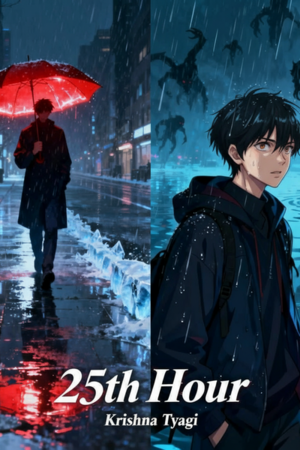
25th Hour
The streetlights were on.
That was the first sign — not because they shouldn’t have been, but because they were trying too hard. The sodium glow pooled neatly on the asphalt, every halo intact, every shadow placed where it belonged. The city looked finished. Rendered. Like someone had pressed pause after making sure all the details were correct.
Kazu noticed it without breaking stride.
No engines. No distant horns. No late-night arguments bleeding out of open windows. Just light, doing its job for no one. He checked his phone out of habit, not concern. Full signal. Battery fine. Notifications stacked and unmoving, each timestamp locked in place like a thought that refused to resolve. 3:59. Still. He slid the phone back into his pocket and kept walking.
The 25th Hour didn’t scare him anymore — not in the way it once had. It never announced itself properly. It seeped into the world, thinning it, stretching moments until they forgot how to end. Kazu had learned the patterns. He knew that panic sharpened the space against you. He knew that running turned the city hostile. He knew when to slow, when to breathe, when to let the Hour settle instead of fighting it.
This wasn’t his first time here. But it was the first time the Hour felt… crowded.
His footsteps carried too far. Not echoing just traveling. Each step slid forward through the air as if sound itself had been given extra permission. The distance between cause and effect felt longer, stretched thin like wire. A shop sign somewhere behind him rattled once. Not twice. Just once — and then it stayed there, angled mid-swing, arrested between intentions. Kazu slowed. Not because he was afraid. Because he was listening. You didn’t survive the 25th Hour by reacting. You survived by noticing what didn’t finish happening.
He passed a convenience store washed in white fluorescent light. The automatic doors were open halfway, frozen as if the mechanism had lost interest in completing the motion. Inside, the shelves were immaculate. Too neat. A tipped plastic basket lay near the register, its contents scattered gently across the floor, no frantic reach, no mess of impact. A receipt printer chirped. Stopped. No clerk. No customers.
Kazu didn’t step inside.
The Hour never erased people cleanly. It wasn’t kind enough for that. It interrupted them. Left their intentions behind. Proof that someone had been removed rather than lost. He adjusted his stride, shortening it just enough to stay aligned with the world’s pace. When the Hour slowed, you respected it. Treated it like a current instead of a wall. That was when he felt it. Not danger. Not hostility. Mass. The sensation pressed in from somewhere ahead, low and wide, like atmospheric pressure changing beneath the city. It wasn’t directed. It wasn’t searching. Whatever it was didn’t need to orient itself toward him to exist.
Kazu stopped at the edge of an intersection. The traffic light above glowed red, obedient and useless. He stood there for half a second out of habit, then crossed anyway. The city didn’t reward rules. Halfway across, the presence sharpened — not closer, just clearer. Like a shape resolving behind fog. His pulse ticked up despite his control, a quiet biological response he didn’t bother suppressing.
“So that’s the scale,” he murmured.
He reached the far side and rested a hand on the cold metal guardrail. For the first time since entering the Hour, he felt small — not helpless, just proportionally irrelevant. Like standing beside something that existed on a different order of consequence. This wasn’t localized. This wasn’t regret folded inward on itself. This was something that occupied territory. Kazu closed his eyes briefly and exhaled.
Okay. So it’s not about me.
That realization didn’t comfort him. It stripped him of reference. Encounters he understood. Patterns he could anticipate. This wasn’t an opponent yet — it was an environment. He turned down a side street without consciously deciding to. He wasn’t retreating. He was circling. Learning the distortion radius. Watching how the world bent along the edges.
Somewhere deep in the city, metal groaned — not the sharp scream of stress, but the low complaint of something carrying more weight than it was designed to hold. The sound traveled wrong, flattening as it reached him, distance collapsing until direction lost meaning. Kazu checked the time again. 3:59. Still. The 25th Hour hummed, stretched thin, like it was holding something it didn’t know how to release.
Reina stood in a stairwell that smelled faintly of disinfectant and old concrete. The fluorescent lights overhead hummed with mechanical patience, louder than they needed to be. She stared at the emergency exit sign above the door, green, steady, reassuring and waited for the flicker that usually came every few seconds. It didn’t flicker.
The perfection bothered her more than darkness would have. She checked her watch. 3:59. “Consistent,” she said quietly. Reina didn’t sigh. Didn’t curse. She leaned her shoulder against the wall and let herself feel the space properly. The 25th Hour didn’t announce itself to her through absence. It announced itself through pressure — a density that settled into her joints, into the air behind her eyes.
She took one step down.
The sound of her footfall dulled halfway, as if the concrete had softened under her weight. Reina paused. Palm flat against the wall. Cold. Solid. Real. Beneath that — vibration. A steady hum that didn’t correspond to machinery or traffic or airflow. Not movement. Presence. She exhaled slowly and continued down, counting her steps without meaning to. Habit. Structure kept panic out. At the bottom, her reflection waited in the narrow mirror bolted beside the fire extinguisher. For a fraction of a second, it lagged. Not enough to be dramatic. Just enough to confirm what she already knew.
Reina looked away first. Cause reacting never helped.
She emerged into the station corridor. Ticket gates stood open, lights blinking patiently, expecting commuters who would never arrive. A paper cup lay crushed near the vending machines, steam still curling faintly into the air. Warm. “Recent,” she noted.
She stepped past it, shoes clicking too sharply against the tiles. Every sound felt overexposed, edges too clean. She slowed her breathing deliberately, grounding herself in rhythm. The 25th Hour had rules. They shifted, but they existed. Objects lingered. Intentions froze. Time pretended to move while refusing to advance. This wasn’t empty. It was occupied. Her phone vibrated in her pocket.
Reina didn’t check it. Some notifications were safer unread.
She reached street level just as the air shifted, not a gust, but a pull. Her coat tugged forward, fabric straining like the city itself had exhaled sharply somewhere far away. She adjusted her stance automatically. Then she heard it. Not loud. Not close. A scream. It didn’t travel like sound should. It bent, warped, rattling glass without shattering it. The pitch wasn’t human — but the intent was. Pain stretched past its limits, pulled thin until it became something else.
Reina swallowed. This wasn’t a signal. It was a byproduct. She didn’t run.
She turned toward it, already mapping routes in her head. The distortion felt wide. Too wide for anything contained. She’d fought before — things that lashed out, things that chased, things that collapsed inward under their own regret.
This wasn’t collapsing. This was pressing outward. Across the city, Kazu heard it too, not through his ears, but through bone and steel and memory. The presence shifted. Not advancing. Just acknowledging. Somewhere in the city, something enormous finished remembering why it hurt. Reina set her jaw and stepped forward. Whatever this was, it wasn’t here by accident.
And the 25th Hour finally began to move.














Please sign in to leave a comment.