Chapter 1:
The Biennial Cycle
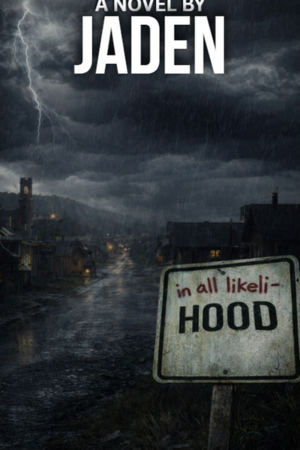
In All Likelihood
The policeman paused before the office door as though it were something alive — something that might breathe if he listened closely enough. The corridor behind him hummed faintly with fluorescent light, but here, in this narrow strip of space between responsibility and confession, time seemed to stretch unnaturally long. He adjusted the papers in his trembling hand, feeling the weight of them far exceed their physical mass. He inhaled once, deeply, as if oxygen itself might give him courage, then exhaled with a slow resignation that bordered on prayer. At last, after what felt like a meditation forced upon him by fear, he knocked twice. The sound echoed sharper than he intended.
“Hi, officer… it’s me.”
A voice from inside answered, calm but weary, as though it had been expecting this moment. “Yeah. Come in.”
The door opened with a soft groan, and the policeman stepped inside, clutching his report like a shield. The office smelled faintly of old coffee and dust, a place where too many unsolved questions had been allowed to settle. He crossed the room, each step deliberate, and sat opposite the desk. The officer behind it looked older than his years — lines carved deep into his face by time and anger alike. The young man swallowed.
“I’ve finished the report,” he said, his voice thin.
The officer did not bother to open it. He leaned back slightly and asked, bluntly, “So? Is it solved?”
The room seemed to tighten. The young policeman let out a long sigh, one that had been building for weeks, perhaps years. He raised his head and forced himself to meet the officer’s gaze, though it felt like staring into a storm.
“Officer,” he said carefully, “I need to be clear.”
“Yes?” the officer replied, his tone sharpening.
“It’s impossible.”
The word landed like a dropped weapon. As soon as it was spoken, the young man lowered his eyes again, shame and fear dragging his chin downward. He could not bear to see the reaction he knew would come.
“Why?” the officer demanded. “Explain.”
“There are no footprints,” the young policeman said, voice steady but subdued. “No blood. No signs of struggle. No damage to the environment. The crime scenes are… clean. Too clean. It’s as if no crime occurred at all — as if the victims simply decided to vanish.” He paused, then added, “It’s less like murder, and more like erasure.”
The officer’s fist slammed into the desk with a thunderous crack.
“Eight years!” he roared, rising to his feet. “Eight fucking years of people disappearing into nothing, and you’re telling me it’s still unsolvable?”
The door burst open as other policemen rushed in, gripping his arms, urging restraint. Papers slid off the desk and scattered like startled birds.
“Calm down!” they shouted. “Officer, please!”
“What if the next one is my family?” the officer yelled, eyes wild. “What if it’s yours?”
The young policeman remained seated. When he spoke again, his voice was quiet — too quiet, yet nervous for the chaos around him.
“I found something new.”
The officer froze. Slowly, he sank back into his chair, breathing hard, like a man dragged back from the edge of something final.
“What?” he asked.
“The appearances,” the young policeman said. “They occur every two years. Precisely. Whatever — or whoever — is behind this doesn’t act randomly. That means we have time. Two years from now, we can predict where they’ll strike next.”
“And what if this was the last time?” the officer countered. “What if there is no next crime?”
The young man looked up then, his expression unreadable. “Then why worry? If it’s over, you’re safe. Your family is safe.” He hesitated, then continued. “This is society, officer. Survival matters more than justice. You’re protected. You always have been ever since you hold privilege.”
The room fell silent.
“I’ve seen too much,” the officer finally said, his voice hollow. “You youngling don’t understand yet.”
He stood, took his coat, and left without another word. Officially, he requested a day off. Unofficially, something in him, is lurking.
Two years later, the officer retired quietly. No ceremony. No speeches. The young policeman took his place, his promotion met with applause that rang strangely false. And somewhere — whether in a town not yet named, or in a place that left no footprints at all — something waited patiently, counting the days.
Ring —
The school bell shrieked through the building like a signal for release, sharp and unforgiving, and in an instant the corridors erupted. Doors burst open. Lockers slammed. Laughter, shouting, and profanity collided in the air as students poured out of classrooms like convicts granted sudden freedom after years of routine confinement. There was a recklessness to their movement, a careless joy that came from believing — truly believing — that the worst was behind them. Sunlight spilled in through the open exits, bleaching the halls of their institutional gray, and for a brief, fragile moment, the world felt light again.
“Woo-hoo! We’re finally out of this ass secondary school!” Vincent Ricard shouted, his voice cracking with triumph as he threw his arms into the air. His laughter echoed too loudly, the way laughter sometimes does when it’s trying to drown out something else.
Andras Marquis walked beside him, slower, more thoughtful, his eyes drifting toward the school building as if committing it to memory. “Next year won’t be easy,” he said. “Different universities. Different cities.” He hesitated. “We might not even see each other much.”
Vincent scoffed, waving the thought away. “Come on. We’ve got phones now. We’re not cavemen. We can still talk.”
“Exactly,” Dave Chislon chimed in, clapping Andras on the shoulder. “It’s summer. No homework. No bells. No deadlines. Let’s not poison the moment with funeral talk.”
Arden Vischain smirked faintly. “Smile while you still have teeth,” he said, half-joking, half-not, his tone slipping through the group like a thin blade. No one laughed at that — not really.
They were nearly past the gates when Magnus Durant, walking slightly ahead, slowed his pace. He coughed once, then again, as if clearing more than just his throat. When he spoke, his voice was quieter, measured.
“Hey,” he said. “You guys remember… the last time children went missing?”
The laughter died instantly.
“That was two years ago,” Magnus continued, turning to face them. His eyes were sharp, unsettlingly focused. “I looked it up. Every case. Every report.” He paused, letting the silence stretch. “It happens every two years. Always.”
Andras frowned. “You mean like… a pattern?”
“A cycle,” Magnus replied. “A biennial one.”
“So what, like a ritual?” someone asked, half-mocking, half-curious.
“That was my first thought,” Magnus said. “But the real problem is simpler than that.” He took a breath, then said the words that settled heavily among them. “This year marks the start of another cycle.”
For a moment, even the sounds of the street beyond the school seemed distant.
Eric Prescott laughed too loudly, shoving his hands into his pockets. “Relax. If it was something serious, the cops would’ve handled it by now. Probably just a bunch of runaways.” He grinned. “We’re fine. What matters now is summer.”
Slowly, conversation resumed. Plans were made — games, late nights, places to go. The tension dissolved, but not completely. Like a bad smell, it lingered faintly in the background, unnoticed but never gone.
At the corner where they usually split, Vincent waved. “I’m heading home first. Meet later at the computer hub?”
“Yeah. Sure,” they replied, one by one.
They scattered, footsteps fading in different directions, unaware that cycles do not require belief to function — and that some bells, once rung, cannot be unheard.
When Andras reached home, he did not enter immediately. He sat on the cold step before the front door, shoulders slumped, backpack resting at his feet like something abandoned. The house loomed behind him, silent and expectant, its windows dark even in daylight. He exhaled slowly, as if emptying himself of what little courage he had left, and for a moment he allowed himself to imagine standing up and walking away — down the street, past the corner, anywhere else. The thought faded quickly. It always did. At last, with a stiffness that came from habit rather than resolve, he rose and unlocked the door.
“I’m home,” he said.
The man in the living room did not look up at first. When he finally did, his expression was unreadable — flat, assessing. He nodded once and patted the space beside him on the couch, a gesture that felt less like invitation and more like command.
“So,” the man said, “where are you going?”
“Uh… the computer hub. With my friends. Later,” Andras replied, already knowing the answer, already bracing himself for it.
“Friends?” The word was spoken with disdain. “Those peasants?”
Silence followed, thick and suffocating.
“So,” Andras tried again, voice barely above a whisper, “can I go?”
The man smiled thinly. “Obviously not. You’re staying. You need to study. University doesn’t accept failures.”
“But—”
The sound came before the pain. A sharp crack across his face that snapped his head sideways and stole the rest of his sentence.
“You think you’re grown now?” the man snarled. “Talking back?” He leaned forward. “Know your place. Go. Get the belt.”
“Yes,” Andras said automatically.
In his bedroom, the air felt heavier. The telephone sat on the nightstand, old and yellowed, its cord tangled like veins. He picked it up and dialed a number he knew by heart.
“Hey,” he said quietly when Vincent answered. “Like always.”
There was a pause on the other end. “Oh… okay. You can’t come again.”
“Yeah.”
A voice thundered from the living room. “Hurry up!”
Andras set the receiver down carefully, as if any sudden movement might fracture him. He took the belt from the drawer and walked back.
The punishment was swift, efficient, impersonal. The metal buckle struck flesh again and again, each impact erasing another small piece of him. He did not cry out. He never did anymore.
Afterward, he locked himself in the bathroom and undressed. The mirror revealed what time had written onto his body — old scars crossing new ones, a map of endurance no one had ever asked him to draw. Blood seeped slowly, but he barely noticed. Pain had long since lost its sharpness; it was simply part of the background now, like noise from a distant road.
His mother was overseas. She worked, she sent money, she called occasionally. She never asked the right questions, "Are you alright?" . Andras suspected she already knew the answers.
The man in the other room was not his real father. His real father had died years ago—suddenly, unfairly. This man had once been a priest, a man of sermons and hollow virtue, until lawsuits buried him with "Pedophilia" and left him bitter, unemployed, and cruel. There had been other things too. Things whispered in courtrooms and shouted in headlines. Things Andras tried not to remember.
He remembered enough.
There were times — too many — when the man had tried to cross lines that should never exist. Each time, Andras fought back. Each time, punishment followed. Eventually, the attempts stopped. The man declared Andras “disgusting,” a word that echoed with irony so sharp it almost felt deliberate, but Andras likes it, he won't be molested anymore with that description of his father's.
Andras had thought of calling the police. Many times. The phone was always right there. But fear has a way of disguising itself as loyalty, and trauma is an expert liar. After losing one father, he could not bear to lose another — even a monster.
At school, they called him names. They laughed. Loss clung to him like a scent others could detect but never understand.
While Andras remained confined within a house that had long since ceased to feel like shelter, Vincent and the others arrived at the computer hub as evening began to settle over the town. The building stood at the edge of a narrow street, its windows glowing faintly, its sign humming with tired electricity. Inside, the air was warm with recycled heat and the faint smell of dust and plastic, a familiar environment that carried the comfort of routine. For a moment, standing just inside the door, the boys existed in a space untouched by responsibility, their laughter low but genuine, their relief at being free of school still fresh enough to feel real.
Out of habit more than concern, Vincent counted them. He did it once without thinking, then again more carefully, his eyes moving from face to face until the absence became undeniable. Dave noticed the pause before Vincent spoke, the way his expression tightened almost imperceptibly.
“Where’s Andras?” Dave asked. “Again?”
Vincent shrugged, though the motion lacked conviction. “Yeah. I called him earlier. Heard his father yelling when he picked up.” He hesitated before adding, quieter now, “Didn’t sound good.”
Arden’s reaction was immediate, his posture stiffening, irritation flashing across his face with an intensity that felt disproportionate and yet entirely justified. “Even now?” he said. “Even after graduation?” His voice rose despite himself. “I would have killed that old, sloppy molest — ” He stopped abruptly as Vincent drove an elbow into his side.
“Lower your voice,” Vincent said, not looking at him. “You want people listening?”
Arden muttered something under his breath, but the anger remained, simmering rather than fading. No one said Andras’s name again after that. The silence that followed was not comfortable, but it was familiar.
They paid for five seats anyway, a decision driven less by logic than by the comfort of habit, and settled in quickly, unwilling to waste time. Screens came alive, keyboards clattered, and the room filled with the artificial noise of gunfire and shouted insults. Arden launched a first-person shooter with theatrical confidence, narrating his actions as if performance might sharpen his skill.
“It’s been a minute since I ran this game,” he said. “Let me show you how this is actually done.”
Dave joined the opposing team without hesitation, Vincent following shortly after, and for a while the world narrowed to pixels and reflexes. The tension from earlier receded, pushed aside by competition and noise.
Magnus did not join them.
Vincent noticed slowly, not because Magnus did anything overtly strange, but because he did nothing at all. He sat upright, hands steady on the mouse, eyes fixed on his screen, scrolling with deliberate care. When Vincent finally rolled his chair closer, it was with casual intent, a remark already forming on his tongue.
“You know it’s summer now, genius,” Vincent said. “You don’t have to keep — ”
He stopped when he saw the screen clearly.
The images were disturbing, their graphic nature, their intent, they piss him off. Faces frozen in moments of fear when being unskinned. Scenes arranged with an unsettling sense of order. Documentation rather than spectacle. Vincent felt an immediate urge to look away, resisted it, then gave in.
“What is this shit?” he asked.
“Theories,” Magnus replied calmly. “People who’ve been suggested as suspects. Serial offenders, mostly.”
“That’s sick,” Vincent said flatly.
“Exactly,” Magnus replied. “Too sick. Too visible.” He scrolled again. “They were dunderheaded. They leave traces. The culprit of the missing cases doesn’t.” He paused, then added, “Whoever is responsible doesn’t need attention.”
Vincent straightened. “This isn’t our problem.”
Magnus looked at him, "But it's interesting to read this, a "Jack the Ripper" in our small, unnamed town? Isn't that concerning?"
When their time expired, they left the hub and wandered without purpose, restless now, the excitement thinning as daylight faded. Eventually the town gave way to quieter paths, and the river revealed itself — a shallow, winding stretch of water, clear enough to expose smooth stones and slow-moving life beneath the surface. The place felt untouched, forgotten in a way that suggested neglect rather than peace.
“I didn’t know this was here,” Arden said, crouching at the edge.
Vincent nodded. “Andras would’ve liked it.”
“Maybe I’ll bring him tomorrow,” Magnus said simply.
Vincent’s gaze followed the river downstream. “I want to see where it ends.”
Magnus checked the time and shook his head. “I’m heading home.”
Dave agreed, and soon they parted, each taking a different direction until Vincent and Arden stood alone beside the water.
"So, you're with me?" Vincent asked.
"You know, it's late now, my mom might kill me if I'm not home yet." Arden then replied and waved at Vincent before he left.
Vincent is now alone. He followed the river.
At first, the walk was uneventful. The sound of water accompanied him steadily, his footsteps measured. Then the air cooled, subtly at first, before a thin fog crept in from the edges of the path. It thickened gradually, obscuring distance without fully blocking vision, lending the surroundings an unfamiliar flatness.
“This is stupid,” Vincent muttered, though he didn’t turn back.
The water beside him lost its clarity, clouding as though disturbed. Ahead, a structure emerged from the fog — a small pavilion, burned and partially collapsed, its roof sagging inward. Three blackened pillars remained standing, improbably intact. Near its entrance lay a lighter, scorched, marked with a single letter: E.
Vincent checked his watch. 6:00 p.m.
He turned back, following the river. Walked. Continued walking. The water thinned, then vanished altogether, replaced by bare stones beneath his feet. Unease grew steadily, becoming panic only when the pavilion appeared again ahead of him, unchanged.
He ran.
The sound of flowing water returned, relief surging just before his foot caught on stone. He fell hard, pain sharp and immediate, blood seeping through torn fabric. When he finally looked up, the fog had lifted.
The river was shallow again. Clear. Ordinary.
There was no pavilion.
Vincent stood and ran home without looking back.
His mother was waiting on the porch, impatience evident in her posture. She demanded an explanation, "Where have you been? And what's with that wound?" She pointed out the wound on his knee, ushered him inside with efficient concern.
"Oh, uh. I have lost my way back home when I was wandering around in the town..." Vincent answered mechanically.
"The wound?"
"I fall down when I ran home."
"Well, then. Come in, we have to treat the wound."
They both entered the house.
As she cleaned the wound, he stared at the floor, certain of one thing:
The river had not misled him by accident.
Something had been there.
Something had watched.
And something had decided, deliberately, to let him go, perhaps.






Please sign in to leave a comment.