Chapter 32:
6 FEET UNDER
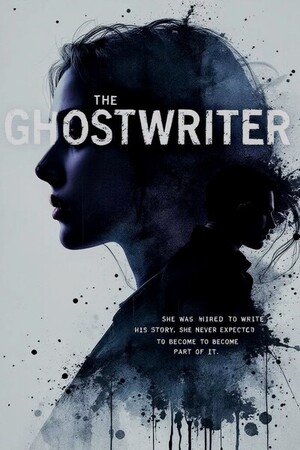
THE GHOSTWRITER
~AVA’S POV~
Tulsa did not look like a place where monsters were born.
That was the first lie.
The world here was too open to hide anything, flat land stretched thin like tired skin beneath a sky that never committed to kindness. No hills. No shelter. Just distance and exposure and the quiet cruelty of ordinary life. Telephone wires stitched the horizon together like crude sutures. Gas stations blinked, buzzed, and surrendered. The wind moved through everything with the confidence of something that had been here longer than forgiveness.
It was the kind of place you did not stay.
Julian drove like the road was a sentence he had to finish. Both hands locked on the wheel, jaw set, knuckles pale. He had not spoken since the state line. His silence was not calm. It was containment.
I did not ask him to explain it.
I slid my hand over his thigh. To remind him that I was here no matter what. He flinched. But he did not pull away.
“You okay?” I asked knowing full well he wasn’t.
He shook his head once.
“No.”
Good. Honesty first. We could build on that.
The cemetery arrived without ceremony, as if it was embarrassed to exist. No gate. No welcome. Just a leaning sign and a gravel path half-choked by weeds. The grass was high and wet, unbothered by the dead it covered. Headstones leaned in odd angles, some clean, some cracked, some half-swallowed by the earth that had decided ownership.
Julian didn’t move so I moved first. I unbuckled, then reached across and took his face in my hands. He startled, eyes snapping to mine, already glassy with emotions.
“Look at me,” I said.
He did.
And there it was, unmasked. The boy who lost his parents. The brother who lost his brother. The man who had been forced to become the last line of defense and never stopped paying for it.
“I’m here,” I said. “But you don’t get to disappear on me.”
His throat worked.
“Okay,” he whispered, like the word was a rope he could hold.
The wind hit us hard when we stepped out. Cold and wet and sharp. The smell of rain-soaked rot, old leaves turning themselves into soil. The ground gave under our boots like the earth wanted to tug us down by the ankles and make us part of the collection.
His shoulder brushed mine. I stayed close, but not soft. Not yet.
Two stones. Side by side. Worn thin by time.
His parents.
The names were dulled, but still legible. The graves were dirty, unkept. Mud on the base. Grass climbing where no grass should be allowed to climb.
Julian’s breath caught.
“I haven’t been back,” he said, voice scraped raw. “Not since the funeral.”
I didn’t tell him it was okay. Instead, I stepped closer and put my hand at the small of his back, anchoring him.
“You survived,” I said.
He laughed once, but it wasn’t humor. It was disbelief with teeth.
“That doesn’t mean I deserved to.”
I turned my face toward him. “We’re not here to discuss what you deserve.”
His eyes flickered. He hated that. People like Julian always did. They wanted punishment because punishment felt like control.
The wind pushed harder, shoving through the grass. Somewhere, a crow called out, then stopped like it had remembered better.
We walked on.
And then we saw it.
Levi Vale.
The stone was cracked down the middle like a broken jaw. Spray paint slashed across it in violent black arcs. Glass glittered in the dirt like teeth. Someone had written over his name in red, thick and angry.
MONSTER.
Julian folded.
Not a dramatic fall. Just the sudden collapse of a body that had been upright for too long. He dropped to his knees and the mud took him like it had been waiting. I caught him before his forehead could hit stone. He dragged me with him, and I let him, because I could afford the descent. I wrapped one arm across his shoulders, the other cradling his head, holding him to my chest. His sobs came open-mouthed, broken almost humiliating. The kind of grief men are taught to swallow.
“I didn’t fix anything,” he gasped. “I didn’t fix anything.”
“Breathe,” I said, sharp and steady. “Do not make this bigger by drowning in it.”
He tried. Failed. Tried again.
His fingers dug into my coat like he could climb out through my ribs.
“You stopped him,” I said. “That is not nothing.”
He shook his head hard. “He’s still here.” He jerked his chin toward the stone. “Look. He’s still here.”
I looked.
The defaced grave. The word. The glass. The hatred lingering like smoke.
His sobs slowed, as if the truth had given his body something solid to lean on. When he finally went still, I pulled back enough to see his face. His eyes were wrecked. Red-rimmed.
“I don’t deserve you,” he said.
“Correct,” I replied with a soft laugh.
He blinked, startled, then something shaky in him lifted.
“I missed that humor of yours,” he murmured with a visible smile.
His hands trembled as he reached into his coat.
“The letter… I wrote it when I was in prison”
He pulled it out like it was sacred. Or dangerous. Maybe both. He knelt and placed it at the base of the stone. Smoothed it once, like he was trying to smooth the past.
Then he read.
Levi,
I am not writing to who you became. I am writing to who you were before you learned how to hurt people.
I miss the boy in the garage. I do not miss you.
You said I ruined your life. Maybe I did. But you ruined so many. And I let you. That part is mine.
I don’t know if stopping you makes me a hero or a murderer. I only know I couldn’t watch you do it again. There was a girl. She was scared. I saw our mother’s face in her.
I don’t forgive you. I don’t forgive myself. I just know I ended it.
You were my brother.
And I ended you.
– Julian
His voice broke on the last line. He pressed his fist to his mouth like he could hold himself in.
I didn’t hush him. I put my hand on his shoulder, firm as a vow.
“I don’t want to be like him,” he whispered.
“You’re not,” I said. Then, because he needed more than reassurance: “Not because you’re better. Because you chose differently.”
He swallowed hard.
We stood.
I stepped half a pace in front of him without thinking. Not to coddle. To claim space. To remind the world that if it wanted to come for him, it would have to go through me first.
“Ava,” he murmured, a warning and a wonder. His eyes found mine again.
“Do you forgive me?” he asked.
He was asking for release. He was asking for permission to stop bleeding. I let the silence stretch. Let it bite. He deserved that much honesty.
“I am not your judge,” I said. “And I am not your absolution.”
He eyes widened.
“But I will tell you what I am,” I continued. “I am the person who will not let you lie to yourself. Not in either direction. Not by calling yourself a monster. Not by pretending you’re a hero.”
Now his eyes glistened.
“And I am the person,” I said, stepping closer, “who gets to choose.”
He waited, breath caught, like the world was balanced on my next word.
“Yes,” I said. “I choose you.”
Because he told the truth. Because he changed.
I kissed him.
He kissed me back like he was learning how to live in a body again.
“I love you,” he said, wrecked and simple.
“I know,” I said, because I did. And because I was not afraid of love that heavy.
We walked back to the car, fingers laced. Behind us, the grave stayed silent, the land stayed flat, the wind stayed cruel.
“Now we’re going to live,” I said.
He looked at me like the words were impossible and holy.
I looked back once, only once, while Julian was already turned away, already choosing forward. Levi’s grave waited where it always would, cracked and defaced and small, a wound pretending to be a monument. Six feet of dirt. Six feet of cowardice. Six feet between him and every woman he ever tried to own. The wind dragged its fingers over the stone and I felt my own ghosts answer, every hand that lingered too long, every silence I swallowed, every night I taught myself to be smaller so someone else could feel bigger. I thought of all the men like him, the ones with clean reputations and dirty secrets, the ones who learned how to take without being seen. I thought of the girls who were not believed. The women who were taught to endure. The ones who survived and the ones who did not. And Hanna. Sweet, bright Hanna. Gone because he taught her the world was not safe for her to exist in. You should be here, I thought. You should see this. But you can’t, so I will. I will stand. I will live. I will carry it for you. The scars would remain. The damage would remain. Trauma does not dissolve just because the man is gone. But he was finished. Reduced to rot and memory and warning. And the others would be too. One by one. I felt it settle into me, not like rage, not like hope, but like inheritance. Cold. Bright. Unbreakable. The kind of power that comes from surviving what was meant to erase you. I smiled victorious, not for him, not for the grave, but for every woman who never got to. Then I leaned into the wind, let it carry the truth through bone and soil and whispered
“I won.”
- THE END










Please sign in to leave a comment.