Chapter 16:
The Fire Within
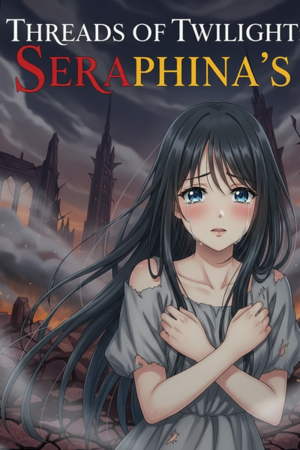
Threads of Twilight: Seraphina's
The day after the funeral was a void, a suffocating vacuum of unnatural silence. The village of Haven, a community built on a foundation of shared, quiet hope, was now united in a profound, public grief. The marketplace was empty, the forge was cold, and the bard's lute was silent. The only sound was the low, mournful sigh of the wind as it passed through the Grove, now a place of fresh, raw sorrow.
The survivors of the failed mission, Daniel and his men, were sequestered, their shock and grief hardening into a grim, vengeful anger. Mara, the stoic healer, had finally been broken; she moved through her clinic with the slow, mechanical motions of an automaton, her eyes red-rimmed and hollow, her pragmatic skepticism no match for the brutal, senseless loss of the boy she had helped raise.
Aaron was a storm. He had not slept. He had not spoken. He had spent the long hours since they returned in the militia's training yard, his arm still in a sling, his other hand wrapped around the hilt of a practice sword. He was a whirlwind of pure, unfocused, and grieving rage, his roars of exertion a raw, animalistic sound of a soul in torment as he brutalized one training dummy after another, his knuckles bloody, his face a mask of self-loathing. He was grieving as a warrior, in the only way he knew how—by punishing himself for his failure, by channeling his pain into a rage that had nowhere to go.
And then there was Seraphina.
She was the epicenter of the void, a figure of profound, unnerving, and absolute calm. She had not shed another tear since her first, broken words over Jophiel's coffin. The hysterical, grief-stricken girl who had thrashed in Aaron's arms on the dark road home was gone, as if she had been a different person entirely. The storm had passed, leaving behind a cold, empty, and perfectly still ocean.
She spent the day at the Grove. She sat at the foot of the two graves—the old, weathered mound of the Peaceful Stranger and the fresh, dark earth that held her brother. She sat with her back straight, her hands resting calmly in her lap, for hours, motionless as a statue. She did not weep. She did not pray. She simply watched the wind move through the leaves of the great tree, her gaze distant, her expression a mask of chilling, unreadable serenity.
Mara had tried to reach her, bringing her a small cup of water and a piece of bread, her voice full of a gentle, pleading concern. "Seraphina, you must eat. You must rest. This... this is not healthy."
Seraphina had simply turned her gaze to the healer, her eyes no longer the fiery, passionate orbs of a zealot or the broken, haunted pools of a victim. They were something else entirely. They were cold, clear, and empty, like polished stones at the bottom of a frozen lake. "I am resting, Mara," she had said, her voice a flat, dead monotone that held no emotion at all. "I am just... thinking."
Aaron had come, too, his own rage finally spent, leaving him a hollowed-out, exhausted wreck. He stood before her, his face a ruin of grief, his eyes pleading with her to show something, to feel something. "Seri," he whispered, his voice hoarse. "Please. Yell at me. Hit me. Blame me. Say something. This… this silence… it's scaring me."
She looked up at him, her gaze devoid of accusation, of anger, of anything. "It wasn't your fault, Aaron. It was mine. I was the one who was blind. I was the one who led him there." She turned her gaze back to the fresh grave. "I won't be blind again. Not yet. Meet me at the tanner's shop. After nightfall. Bring Daniel, Mara, and Ron. All of you."
Her unnerving calmness, her assumption of command in the depths of her own unimaginable loss, was more terrifying to him than any scream would have been.
Night fell. The small, cluttered, and pungent-smelling tanner's workshop was thick with a new, suffocating tension. Seraphina’s inner circle, the core of her movement, was gathered. Aaron, his arm in a fresh sling, stood by the door, his face a grim, stony mask. Daniel, his vice-captain, stood beside him, his expression one of confusion and wary loyalty. Mara sat on a workbench, her hands clenched in her lap. And Ron, the spy, leaned against the far wall, his face etched with the guilt of a man who had delivered the message that had led to all of this.
They were all grieving, all broken in their own way. They were waiting for their leader to collapse, to need their support, to finally, mercifully, fall apart so they could begin to pick up the pieces.
Seraphina entered. She was not the grieving sister. She was not the broken leader. She was something new, something forged. Her movements were calm, deliberate. In her hands, she held Jophiel’s small, worn, leather-bound notebook.
"He's gone," she said, her voice a quiet, flat statement that cut through the heavy, expectant silence. She walked to the center of the room, her gaze meeting each of theirs in turn. "He's gone, and it's my fault. I was a fool. I was a zealot who lost her god, just as Richard said. I was so desperate to find a new purpose for my own pain that I wrapped it in a holy banner and called it a peace movement. I looked at a memory of a kind man, and I convinced myself that a nest of vipers would listen to reason. My hope was a weakness. My guilt was a blindness. And Jophiel paid the price for it."
She looked down at the notebook in her hands, her expression softening for just a fraction of a second, a flicker of the profound, aching love that still existed beneath the ice. "JHe believed in it," she whispered. "He believed that words could stop a war. He believed in his poems." She looked up, her eyes once again hard and clear. "He was naive. He was a child." A beat of silence. "And he was right."
She walked to the small, cast-iron forge in the corner of the workshop, where a low fire still smoldered, its embers glowing a dull, angry red.
"Seraphina, what are you doing?" Mara asked, her voice sharp with a sudden, new alarm.
"This," Seraphina said, holding up the book, "is a memory. It's a relic. It's the last physical piece of a boy we all loved. And as long as it exists, it is an anchor. It is a thing to be mourned over, to be cried over, to be enshrined. It will hold us in the past, in our grief, until we are too weak to do anything but remember."
"Seraphina, no," Aaron said, his voice a low, pained groan as he took a step forward. "That's all we have left of him. You can't."
"We have everything left of him," she countered, her voice gaining a sudden, fierce strength. "His idea is what we have left. These pages… they are a cage, holding his words, holding his purpose. I am not destroying his poem. I am setting it free. I am transforming it from a memory into a mission."
She opened the book to the last page, to the final, unfinished verse he had been working on, a verse she had found when she had packed his small things. She read it aloud, her voice clear and strong.
"The poem is not the ink and page, It is the ending of the cage."
Then, before any of them could move to stop her, she dropped the notebook into the glowing embers of the forge.
The group gasped, a collective sound of shock and pain. Aaron lunged forward, his hand outstretched, but it was too late. The dry, brittle pages caught instantly. The fire flared, a bright, hungry, orange-and-yellow plume, consuming the leather, the paper, the ink. They watched in a stunned, horrified silence as Jophiel’s life’s work, his dreams, his very essence, curled into black, weightless ash and rose on the heat, dissipating into smoke.
Seraphina watched the last page burn, her face illuminated by the flames, her expression one of pure, unnerving, and absolute serenity. The last of her grief, her fear, and her doubt seemed to burn away with it, leaving only a core of cold, hard, and perfect resolve.
She turned to face her shocked, horrified council. The woman who had fled Haven in desperate, reckless hope was gone. The sister who had wept in hysterical, broken denial was gone. In her place stood a queen, forged in the fires of her own making.
"This is a do-or-die mission," she announced, her voice the quiet, calm command of a general on the eve of a battle she had already accepted she might not survive. "Our old ways are over. They were the ways of children. Richard's peace is a beautiful lie. It is a garden wall, pretending the hurricane isn't coming. We built a sanctuary, but the world is still a slaughterhouse. Jophiel's death has proven that. There is no negotiating with the storm. There is no hiding from it. There is only stopping it."
Her gaze, now sharp as a razor, found Ron. "I want everything on these new champions. Eric Thompson and Antiope. I don't want to know their tactics. I want to know them. What they ate for breakfast in their old worlds. What they fear. Who they love. What their moral breaking points are. I will find a crack in their armor, and I will wedge a knife in it."
She turned to Mara. "Your contacts in Sheol are dead. Find new ones. I don't care how. I don't care what it costs. We are no longer begging for a meeting. We are sowing dissent. We will turn their own factions against them. We will give Lilith so many internal fires to put out she won't have time to look beyond her own borders."
Finally, she turned to Aaron. His face was a mask of pale, stunned confusion. The rage was gone, his grief now eclipsed by a profound, terrifying awe at this new, cold woman who stood in Seraphina's place.
"Aaron," she commanded, "you will take the militia. We are no longer a defense force. We are a scalpel. You will triple their training. I want them drilled not just for defense, but for surgical insertion. I want them ready to move fast, hit hard, and vanish. When I find a weakness, you will be the blade that cuts it out."
She walked to the center of the room, her small frame radiating an authority that was absolute. "I will try diplomacy first. I will try strategy. I will use Ron's intelligence and Mara's agents to turn our enemies against each other. I will try to break them from within, by hook or by crook. But if all of that fails..."
She paused, her gaze drifting back to the forge, where the last, glowing ember of Jophiel’s notebook finally winked out, its transformation complete.
"If those armies still march," she concluded, her voice a flat, dead whisper that was more terrifying than any vow, "then I will execute the final plan. I will walk onto that battlefield myself. I will stand between them. And I will not let his poem be just another sad story. I will make it the first chapter of a new world. That is my vow."
The group stared at their new leader, at this woman of ice and fire, her grief burned away, leaving only a terrible, defiant resolve. Aaron looked at her, his grief for the boy now mixed with a new, profound, and agonizing fear for the woman. He had lost his little brother. He was now, in that moment, terrifyingly certain he was about to lose her, too, to an all-consuming fire that would one day burn her to ash.






Please sign in to leave a comment.