Chapter 67:
The Weight of Names — When Memory Becomes a Battlefield
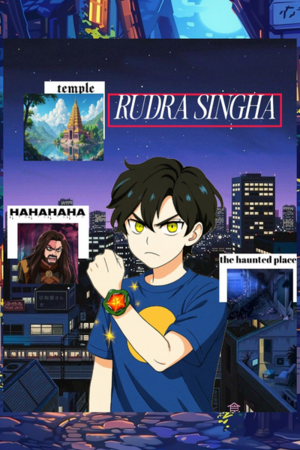
Rudra Singha
The night after the Chorus fell was heavy.
Not silent—there were insects, wind, the soft breathing of the Rememberers—but heavy in a way that pressed down on the chest. Rudra lay awake, staring at the dark sky. The stars looked dimmer than before, as if even they were tired of shining.
Inside him, Jinnah was quiet.
That worried Rudra more than the enemy.
He slowly sat up. His hands were shaking, not from fear, but from effort—effort to stay himself.
“I am Rudra,” he whispered again.
“I exist.”
The words felt thinner now, like they might tear if he repeated them too many times.
The healer noticed him moving and came closer, wrapping a blanket around his shoulders.
“You shouldn’t be awake,” she said softly.
“Your mind needs rest.”
Rudra gave a small smile.
“My mind doesn’t know how anymore.”
She did not argue.
Instead, she asked, “Do you remember your first memory?”
Rudra closed his eyes.
“Yes,” he said after a moment.
“I was a child. I touched fire for the first time. It burned, but I didn’t cry. I was curious.”
The healer nodded.
“Good,” she said.
“Hold that.”
A Fracture in the World
At dawn, the land itself warned them.
The ground did not shake.
The sky did not darken.
Something worse happened.
Names began to slip.
The scholar woke up confused, staring at her own books.
“I know I wrote these,” she said slowly.
“But I don’t remember why.”
The monk struggled to finish his morning prayer.
The words vanished halfway through.
Rudra stood, feeling the pull in his chest grow stronger.
Jinnah finally spoke, voice tight.
Null has changed tactics.
It is no longer creating Echoes.
It is extracting names directly.
Rudra’s breath caught.
“Names… of people?”
Yes.
Of places.
Of bonds.
Of you.
The healer grabbed Rudra’s arm.
“I can’t remember my teacher’s face,” she said, panic rising.
“I know she existed—but she’s fading.”
Rudra looked around the group.
This was worse than monsters.
Worse than Echoes.
This was slow erasure.
Null was starving the world of identity.
The Last Strategy
They gathered near the old sanctuary stones again. The air felt unstable, like glass about to crack.
The scholar spoke first.
“If names disappear,” she said, “then history collapses.”
The monk clenched his fists.
“And faith weakens.”
The healer swallowed.
“And people lose themselves.”
Rudra listened, then nodded.
“Yes,” he said.
“That’s why Null is doing this now.
Because we resisted.”
Inside him, Jinnah added quietly,
It has identified the core variable.
Meaning.
And it is attacking it directly.
Rudra took a slow breath.
“Then we do the opposite,” he said.
They all looked at him.
“We speak names,” Rudra continued.
“Out loud.
Constantly.
We tell stories.
We remember people who aren’t here.
We flood the world with identity.”
The scholar frowned.
“That will draw Null’s full attention.”
Rudra met her eyes.
“I know.”
The monk bowed his head.
“Then we stand with you.”
The healer hesitated.
“And if it costs you?”
Rudra did not answer immediately.
Inside him, Jinnah whispered something unexpected.
If this continues…
I may not be able to protect you.
Rudra closed his eyes briefly.
“That’s okay,” he said.
“You’ve done enough.”
Jinnah went silent—not in anger, but something close to sadness.
The Flood of Names
They began immediately.
The scholar read names of lost cities.
The monk spoke names of forgotten gods and saints.
The healer whispered the names of every patient she had ever saved—or failed to save.
Rudra spoke last.
He spoke of his village.
His mother.
Kaali.
Valmiki.
With each name, the air trembled.
Far above them, the sky darkened—not with clouds, but with pressure.
Null had noticed.
The world resisted.
Rudra felt pain bloom behind his eyes.
Blood ran from his nose.
But he did not stop.
“I remember you,” he said loudly.
“You are not empty.
You are not nothing.”
The land answered.
Grass grew thicker.
Stone stabilized.
The sanctuary stones glowed faintly.
Null struck back.
The air twisted, and a presence descended—not a form, not a monster.
A voice.
Not Kaali’s.
Not Valmiki’s.
Rudra’s own.
“Why are you fighting?” the voice asked calmly.
“You are tired.
You are almost gone.”
Rudra staggered.
The healer shouted, “Don’t listen!”
Jinnah roared inside him.
This is Null itself.
Direct contact!
Rudra dropped to one knee, clutching his head.
“I fight,” he gasped,
“because if I stop—
there will be nothing left to stop.”
The voice replied gently,
“You will be erased anyway.”
Rudra laughed weakly.
“Then I will be erased remembering.”
The Breaking Point
The pressure became unbearable.
The Rememberers fell to the ground, clutching their heads.
The sanctuary stones cracked.
Rudra felt himself slipping.
Memories blurred together.
His childhood.
His battles.
His name.
Jinnah screamed inside him.
Rudra!
You are losing cohesion!
Rudra whispered,
“Then anchor me.”
There was a pause.
Then Jinnah did something it had never done before.
It spoke its own name.
Not as a title.
Not as a demon.
As a memory.
I was Jinnah.
Once a protector.
Once a guardian who failed.
Once afraid of being forgotten.
The world reacted violently.
Null recoiled.
This—this was new.
Two beings sharing identity instead of competing for it.
The pressure cracked.
The sky screamed.
Null withdrew—not defeated, but shaken.
Silence fell.
After the Storm
Rudra collapsed fully this time.
The healer held him, crying.
“You’re still here,” she said.
“You’re still here.”
Rudra smiled faintly.
“Barely.”
Inside him, Jinnah spoke softly.
We have forced Null into a final choice.
It will not play games anymore.
Rudra nodded weakly.
“I know.”
The scholar approached slowly.
“What happens now?”
Rudra looked toward the horizon, where the sky seemed thinner than ever.
“Now,” he said,
“Null will come in one piece.
Not fragments.
Not Echoes.”
The monk swallowed.
“And you?”
Rudra closed his eyes.
“I will stand,” he said.
“Even if I don’t survive it.”
Inside him, Jinnah answered quietly.
You will not stand alone.
Far beneath reality, Null reorganized itself.
No more experiments.
No more observation.
The final correction was coming.
The long war was almost over.
And everything—
Everything—
Would be decided by what remained remembered.




Please sign in to leave a comment.