Chapter 21:
“Where the Track Ends, and the Heart Begins”
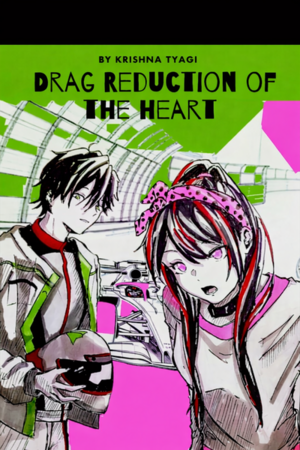
Drag Reduction of the Heart
The Nordschleife didn’t roar for the final laps. It breathed. Lap forty-four rolled across the timing screens without ceremony. Numbers updated. Gaps adjusted by tenths, then hundredths. The field was stretched thin now, scattered by nearly three hours of attrition. This wasn’t a race being fought anymore. It was one being endured.
Jonas led. Not through desperation. Not through gamble. Through control.
The Rodbull felt settled beneath him, the steering weight unchanged from corner to corner, the rear rotating cleanly instead of snapping. Tire temperatures sat just inside the safe window. Brake wear aligned with what the simulations had promised back on Friday. For the first time all afternoon, the car wasn’t asking questions.
“Gap stable,” his engineer said. “You’re good. Just bring it home.”
Jonas didn’t answer. Silence like that wasn’t awkward. It was earned. Behind him, Mateo Ríos ran second with a presence that felt heavier than pressure. Ferrano’s race had been quiet all day — no radio panic, no highlight-reel moments. Just proximity. The kind that waited until others cracked. Theo Wagner held third. And that was where the picture began to shift.
Exiting a fast right-hander, the Mercedyx twitched. Not a snap. A correction that arrived half a beat late. Jonas caught it instantly. The onboard feed didn’t dramatize it, but trained eyes would’ve seen the rear axle hesitate, the throttle pickup slightly misaligned with steering input.
“That didn’t look clean,” the co-commentator said, voice lowering.
“No,” the lead replied. “And that’s not driver error.”
Theo stayed on pace. For the moment. Another corner. Another exit. The same subtle disagreement between intent and response. The Mercedyx wasn’t failing loudly, it was negotiating quietly.
Lap forty-six.
Theo’s voice came over the radio, controlled, but tightened at the edges.
“Brake feels inconsistent. Entry’s moving.”
A pause followed. Too long.
“Manage where you can,” his engineer said at last. “Avoid trail braking.”
“Copy.”
Jonas closed by a fraction — not because he attacked, but because Theo couldn’t carry the same minimum speeds anymore. The delta compressed, then steadied as Jonas lifted instinctively.
“Car ahead looks compromised,” Jonas said.
“We see it,” his engineer replied. “No action required. You’ve got margin.”
Margin. The word stayed with him longer than it should have.
Lap forty-nine.
The Nordschleife opened into one of its faster sequences, corners that demanded commitment long before vision. Theo turned in. The car didn’t. Not fully. The rear stepped wider than intended, tires brushing grass, speed bleeding away in a way no camera angle could hide. He caught it, barely — but the damage was done.
Local yellow flags lit sector eight.
“Car off line,” race control announced. “No further intervention.”
Theo tried to settle it. The brake-by-wire warning flickered again. Yellow. Persistent. He coasted wider. Not into barriers. Not into disaster. Just far enough that rejoining cleanly alone became impossible. Jonas slowed through the yellow. He didn’t need to be told. Theo got moving again, awkward but rolling, rejoining behind that group with momentum fractured but alive.
The order reshaped itself.
Mateo passed first — decisive, unquestioned. Moretti followed, Maclorenx keeping distance..Petrov hesitated for half a heartbeat, then went through.
Jonas now at third. Theo fourth, wounded, but running.
Lap fifty-Four. The final lap board came out. Everything tightened. Theo’s car was deteriorating now — braking earlier, exits softer, rhythm gone. On the giant screens ahead, Jonas saw the warning light flicker again as they approached the final sector.
This time, it didn’t clear. Theo turned in. The rear stepped out fully. Grass. Gravel. No impact, but no escape either. He stopped just off-line, angled wrong, wheels spinning uselessly against uneven ground.
The crowd inhaled as one.
“Sector ten — car stranded,” race control announced. “Yellow flags.”
Mateo and Moretti passed cleanly. Jonas arrived seconds later. He saw Theo sitting there, helmet still, hands steady on the wheel. No panic. Just understanding.
“Jonas,” his engineer cut in sharply. “Stay left. Do not—”
Jonas lifted. The Rodbull slowed in a place it had no business slowing.
“What is he doing?” the commentator said, disbelief breaking through.
Jonas didn’t look at the timing screen. A memory surfaced — quiet, uninvited. F2. Rain. His own car broken, stranded. Theo lifting just enough. Giving space. Giving time. Enough.
Jonas positioned the Rodbull carefully, inch by inch, until his front wing was almost touching Theo’s diffuser. Theo’s voice came through, strained now.
“You’re... you're giving up a podium.”
Jonas answered immediately, calm, almost grounding.
“You already helped me once.” Gentle throttle. Controlled contact. The Rodbull pushed. For a moment, nothing happened. Tires spun. Engines strained. The gap between effort and motion stretched uncomfortably long. Then Theo’s car moved. Slowly. Reluctantly. Free.
Green flags waved.
Theo rejoined, just enough speed to finish. Jonas stayed behind him. They crossed the line like that, together, but not equal. The checkered flag fell.
Mateo Ríos won. Moretti second. Theo Wagner third. Jonas fourth. The circuit didn’t react immediately. Then it understood.
“That’s the difference,” the lead commentator said, voice steady but changed.
“When the result is still on the table — and you choose something else.”
The co-commentator let out a breath he hadn’t realized he was holding. “Sometimes the sport gives you speed.”
A pause.
“And sometimes it gives you something better, what a race this has been.”
Jonas pulled into parc fermé without ceremony. He shut the car down. The engine note fell away, replaced by a quiet that felt heavier than the noise had been. He stayed seated, hands still on the wheel, helmet pressed back against the headrest. A second longer than required. Enough time for the crowd to become distant. Enough time for the result to settle into his chest.
When he finally climbed out, there was no release in the movement. No rush. Just fatigue, and something unresolved that hadn’t found words yet. Theo was waiting just beyond the barrier. He didn’t say anything at first. He stood there with his helmet tucked under his arm, breathing unevenly, like his body hadn’t caught up to the fact that the car was no longer moving.
Jonas sensed him before he looked.
“You didn’t have to,” Theo said eventually. The line landed flat. Not defensive. Not grateful. Just true.
Jonas kept his eyes ahead. Gave a small shrug, barely there. “I know.”
The space between them held. Not awkward. Just full.
“I wouldn’t have finished,” Theo said after a moment. His voice dipped, like he hadn’t meant to admit it out loud. “Not without that.”
Jonas nodded once.
“You’ve finished before,” he said.
Theo turned properly this time. Met his eyes and stayed there longer than necessary. “I won’t forget it.”
Jonas held the look, steady, unburdened.
“You don’t need to.”
They remained there another beat. Two drivers sharing a moment that didn’t belong to timing screens or positions. Then their names were called. And the race, finally, moved on. The interviews followed immediately. Microphones closed in. Cameras pressed closer than comfort allowed.
“Jonas,” a reporter said, breathless, “you were on course for the win. Did you know what you were giving up?”
Jonas looked past the camera. His jaw set, not tense, decided. “I knew what I was choosing,” he said.
Another voice cut in, sharper. “Do you regret it?”
Jonas shook his head once. “No.”
The answer didn’t reach for justification. As he stepped back, one last question followed him. “What does this say about you as a driver?”
Jonas stopped. He exhaled first. Slow. Measured. Like he was making sure the answer belonged to him before letting it go.
“It says,” he began, then paused again, “that I didn’t leave someone there.”
A beat.
“That mattered more to me today.”
He turned away before anyone could follow up. Clara watched from the edge of the media pen. She hadn’t moved since the flag fell. She saw the moment Jonas broke from the cameras — not toward his team, not toward the garages, but toward the tunnel that led out. She noticed the way he walked faster than necessary, the way his helmet bag hung low in his grip, like it carried more than equipment.
Curiosity came first. Then something sharper. By the time she slipped her headset off and stepped forward, he was already gone.
Something inside her pulled, a quiet worry she couldn’t name. She wanted to go after him. She wanted to ask, to say something, but she couldn’t. She saw him disappear into the tunnel, swallowed by the stadium. Her fingers tightened on the railing. A small part of her hoped he would slow down. Another small part feared he wouldn’t.
The park was quiet when Jonas arrived.
The streetlights hummed softly, the worn paths stretching pale and empty ahead of him. He didn’t look around. Didn’t notice the lights, the benches, or the faint scent of damp grass. He only noticed the swing. He sank into it slowly, letting the chains support his weight. Helmet bag dropped beside his feet, forgotten. He stayed still. Long enough for the world to stop pressing.
The silence pressed against him. It was heavy. It felt like the first moment he could breathe without performance, without expectation, without cameras. His hands gripped the chains, fingers tight enough to leave impressions, loose enough that he didn’t notice. He looked down. Didn’t move his head. His shoulders shook slightly. Once. Twice.
And then the sound came. Not dramatic. Just quiet, impossible to hide.
“I had it,” he whispered. Almost to himself. “I really had it.”
He leaned forward, elbows on his knees, face buried in his hands. His mind ran. He thought about the lap. About Theo. About the margin. About what he had chosen. About what it had cost. He thought about winning and not winning, and how none of that had ever felt like this — the emptiness, the relief, the weight of everything he hadn’t said.
He thought about the applause and how it all meant nothing here. He didn’t notice the footsteps at first. Then, hesitantly, a presence. Quiet. Gentle. Arms wrapped around his shoulders. Hesitant. Unsure. He stiffened for a fraction of a second. Then he let it be. He leaned back slightly, breath hitching, shaking against the weight of the arms.
A voice, soft, almost trembling, close to his ear.
“W-why are you crying…?” A pause. “It’s… it’s okay, you know. You did your best. Everyone saw it.”
Another small pause. “I saw it.”
He didn’t turn. He just nodded once. Eyes closed. The swing rocked gently. She whispered again, slower this time, like she was letting the words settle between them.
“You didn’t lose today. You… you just gave a little so someone else could keep going. That… that doesn’t make you less. It makes you more than anyone knows.”
A long pause.
“You’re still you. The best you. Even if the line didn’t come first. Even if it… didn’t.”
He stayed silent. He let the words wrap around him, without needing to reply.
“I’m not going anywhere,” she murmured, moving a little closer. Her cheeks warmed slightly as she spoke, the faintest hesitance in her voice. “Not while you… not like this. I saw it. I saw you giving everything you had. And it was… beautiful. You’re… amazing.”
Her hands shifted a little, fingers brushing lightly against his back, almost shy.
Jonas leaned slightly back, into her arms, letting the weight of her presence hold him. His own shaking slowed, just a fraction, because someone was there. Someone who didn’t need him to be perfect, or victorious, or anything but himself.
“You’re allowed to feel it,” she said softly, her voice gaining a bit of courage now, cheeks still tinged with warmth. “All of it. And you… you still stood there. You still finished. You did everything you could.”
A small exhale, her breath brushing his neck. She shifted a little closer, as if her presence could carry him.
“I’m proud of you,” she whispered, voice quiet but firm, almost catching herself mid-sentence. “I really am. Don’t forget that.”
The swing moved slowly under him.
The moment stretched. Long enough that Jonas could let go of everything he’d held, even just for this one breath. He finally moved his head slightly. Not enough to look. But close enough to feel her presence fully, and know that she was there. That she had seen him. That he was not alone.
And for the first time since the lights had gone out, no one was asking him to move forward. No one except himself, and he didn’t have to yet. He closed his eyes again. Let the swing sway. Let the silence hold. Let the warmth stay. And it stayed.
“There was no promise made. Just someone who stayed.”













Please sign in to leave a comment.