Chapter 8:
Episode 8 - "The Brightness Before Dark"
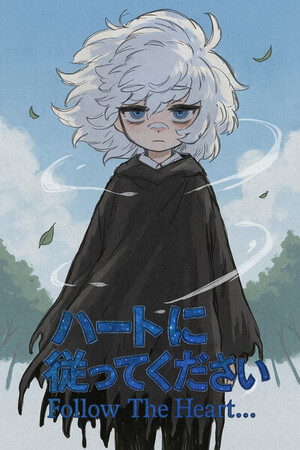
Follow The Heart... [ハートに従って…]
The safe house was a traditional machiya tucked into Kagurazaka's winding streets—the kind of place that existed in Tokyo's memory rather than its present, wooden beams and tatami floors preserved like amber against the city's relentless modernization. Akari led them through a genkan entrance that smelled like old wood and incense, into a space that felt separate from the chaos they'd just escaped.
"This belonged to my grandfather," Akari explained, sliding the door shut behind them. "He was a detective too. Died five years ago and left me this place. Off the books. No paper trail connecting it to me officially." She looked at the three kids standing in her entryway—Josu tense and alert, Hazuno exhausted beyond measure, and Kisuno between them still clutching their hands like lifelines. "You'll be safe here. For now."
"For now," Josu repeated, catching the implicit limitation. "How long is now?"
"Long enough for me to build a case against Nakamura. To prove he's a threat to Kisuno and get you kids legal protection." Akari moved deeper into the house, turning on lights that cast warm amber glows across shoji screens. "The children's home will report Kisuno missing by morning. Police will assume he ran away—not unusual for traumatized kids in the system. That gives us maybe forty-eight hours before they expand the search."
"And Nakamura?" Hazuno asked.
"Will know something's wrong. His investigators have been monitoring the home." Akari's expression was grim. "Which means we need to move fast. I have evidence—financial records, witness statements, surveillance—but I need one more piece to make it stick."
"What piece?" Josu's voice carried the sharp edge of someone who'd learned to distrust incomplete plans. "Kisuno's testimony. What he remembers from that night."
The room went silent. Kisuno's small body had gone rigid between them, his blue eyes suddenly distant, looking at something none of them could see. "He was three," Hazuno said, protective instinct flaring. "You can't ask him to—"
"I'm not asking him to testify in court. Not yet. But if he can remember details—anything specific about that night—it might be enough to get a warrant. To dig deeper into Nakamura's activities." Akari knelt down to Kisuno's eye level, her voice gentling. "I know it's hard. I know remembering hurts. But this might be the only way to keep you safe. To make sure he can't hurt you the way he hurt your parents."
Kisuno looked at her with those penetrating eyes that seemed to hold centuries of sadness despite belonging to a six-year-old face. Then he looked up at Josu and Hazuno, seeking permission, guidance, some indication of what he should do.
"It's your choice," Hazuno said quietly. "Whatever you decide, we're with you." Kisuno was silent for a long moment. Then, in a voice barely above a whisper: "I'll try. But I don't know what I remember and what I just dreamed."
"That's okay," Akari said. "Dreams and memories blur with trauma. We'll work through it together."
She led them deeper into the machiya, to a living room where modern comfort negotiated with traditional aesthetics—futons arranged around a low table, a small television in one corner, windows overlooking a pocket garden where stone lanterns caught moonlight. It felt like stepping into a space between worlds, neither fully contemporary nor historical, just existing.
"There's food in the kitchen. Futons in the back rooms. Rest tonight. Tomorrow we'll talk about next steps." Akari moved toward the door, then paused. "And kids? What you did tonight—getting Kisuno out—that took courage. Your grandfather would be proud, Josu."
The words landed like stones in still water. Josu nodded, unable to speak past the sudden tightness in his throat.
When Akari left, the three of them stood in the living room, suddenly awkward with each other after the adrenaline of escape had faded. Five days apart had created distance—not large, but noticeable, like continental drift measured in emotional millimeters.
"I missed you," Kisuno said finally, breaking the silence. "In that place, with all those other kids, I kept drawing pictures of you. The workers asked who they were and I said 'my brothers' and they looked sad like I was making it up."
"You weren't making it up," Hazuno said, voice rough with emotion. "We are your brothers. Maybe not by blood, but by choice. And choice counts more."
"Does it?" Kisuno asked with the brutal honesty only he possessed. "Because everyone says family is blood. That's why they took me away. Because you weren't really family."
Josu knelt down, bringing himself to Kisuno's eye level in a gesture he'd learned from his grandfather—meet people where they are, don't make them reach up to you. "Family is whoever stays. Whoever comes back. Whoever sees you when you're invisible to everyone else." He placed a hand on Kisuno's small shoulder. "We came back. We'll always come back. That makes us family in every way that matters."
Kisuno's eyes filled with tears—not sad tears, but the kind that came from feeling seen, understood, valued in ways the world had taught him not to expect. He collapsed into both of them, and they held him while he cried out five days of institutional loneliness and three years of survival that had cost him his childhood.
Later, after they'd eaten convenience store bentos Akari had left in the refrigerator, after Hazuno had found extra clothes in a closet that fit well enough, after exhaustion had driven them to claim sleeping spaces in the back rooms, Kisuno made a discovery.
"Look," he whispered, voice carrying wonder.
Josu and Hazuno turned from arranging futons to find Kisuno in the corner of the room, pulling something from an old storage chest. Black fabric emerged—heavy, worn, familiar.
His cloak.
The one he'd worn since fleeing Kyoto at three years old. The one that had been taken by social services when they'd processed him, catalogued as "personal effects" and filed away like it hadn't been the only connection to parents he barely remembered.
"How—" Hazuno started. "Akari must have gotten it from evidence," Josu said. "She's been planning this longer than we thought."
Kisuno held the cloak like it was sacred, fingers tracing the tattered edges where three years of survival had worn the fabric thin. It was too large for him still—had been his father's originally, meant for an adult, which meant at six it still dragged behind him like broken wings.
But when he draped it over his shoulders, something shifted. The institutional child in borrowed pajamas disappeared, replaced by the Kisuno they'd first met—wild and wounded and fiercely himself. His messy white hair caught the lamplight, making it seem to glow. And his eyes, those impossible blue eyes, reflected the night sky visible through the window—bright and vast and full of something that looked almost like hope.
"I thought I lost this forever," Kisuno said softly. "It still smells like..." He buried his face in the fabric, breathing deeply. "Like home. Before everything bad happened."
Hazuno felt his heart tighten watching this person find comfort in a piece of cloth that represented everything he'd lost. It was beautiful and heartbreaking in equal measure—the resilience of someone who created meaning from fragments, who built hope from ruins. That was the Kisuno he knew.
"It suits you," Josu said, and meant it. "Makes you look like some kind of mysterious night spirit."
Kisuno's smile was small but genuine. "Papa used to say that. That I was his little night spirit with sky eyes." The smile faded slightly. "I wish I could remember his face better. It's getting fuzzy, like fog."
"That's okay," Hazuno said, moving to sit beside him. "Memories fade. That's normal. It doesn't mean you loved them less or that they matter less." "How do you know?"
"Because I'm already forgetting what my parents' voices sounded like before they started drinking and fighting. The good memories get fuzzy while the bad ones stay sharp." Hazuno's voice carried pain he rarely acknowledged. "But the feeling—the love underneath—that stays. Even when details fade."
Kisuno considered this, processing in that intense way he had, those blue eyes tracking through internal landscapes they couldn't access. Finally, he nodded.
"I want to try," he said. "Tomorrow. To remember that night. Not because she asked, but because..." He struggled for words. "Because I'm tired of running from it. Tired of the nightmares being stronger than the memories."
"You don't have to," Josu said firmly. "We can find another way—"
"There is no other way. You know it and I know it." Kisuno pulled the cloak tighter around himself, and in the lamplight with the fabric pooling around him and his white hair catching gold, he looked like something from mythology—a child who'd walked through darkness and emerged changed. "If I remember, maybe I can stop being scared all the time. Maybe I can help catch the person who took them from me."
The maturity in those words, coming from a six-year-old mouth, was almost unbearable. This was what trauma did—forced Kisuno to grow up too fast, to make impossible choices between protection and justice, safety and truth.
"Then we'll be with you," Hazuno promised. "When you remember. We'll be right there." "Every step," Josu added.
They arranged the futons close together, Kisuno in the middle as always, protected on both sides. But tonight felt different—not just three broken kids surviving, but something more purposeful, more whole. They were choosing this, choosing each other, building something that looked like family even if it didn't fit traditional definitions.
Kisuno fell asleep first, exhaustion from five days of institutional stress finally catching up. He curled into his cloak like it was armor against nightmares, his breathing evening out into the soft rhythm of childhood dreams.
Josu and Hazuno lay awake, neither ready for sleep, both processing what the day had brought.
"Your grandfather died three days ago," Hazuno whispered. "And here you are, breaking into buildings and harboring fugitives. You should be grieving, not playing hero."
"Maybe this is how I grieve," Josu said. "By being someone he'd be proud of. By protecting something instead of destroying it." He was quiet for a moment. "The funeral was empty. Seven people. Most of them strangers or vultures come to make sure he was really dead. But you were there. That mattered."
"Where else would I be?"
"Anywhere. You could have walked away from all this—from me, from Kisuno, from the absolute shit our lives have become." Josu turned his head, looking at Hazuno in the dim light. "Why didn't you?"
Hazuno considered the question seriously. "Because for the first time in thirteen years, I feel like I'm actually living instead of just performing life. Everything before—the smile, the friends, the accommodating nature—that was all defense mechanism. But this?" He gestured at the sleeping Kisuno between them, at the impossible situation they'd created. "This is real. Messy and terrifying and probably going to blow up in our faces, but real."
"Real," Josu echoed. "Yeah. I get that."
They lapsed into comfortable silence, listening to Tokyo's distant hum—trains and traffic and millions of lives intersecting in ways both profound and meaningless. Somewhere in that vast city, Nakamura was likely learning about Kisuno's disappearance. Somewhere, police were filing reports. Somewhere, the machinery of consequence was grinding into motion.
But here, in this pocket of safety carved from chaos, three kids existed in temporary peace. "Josu," Hazuno said after a while. "What happens if we can't protect him? If Nakamura finds us, or the police take him back, or everything falls apart?"
"Then we'll have tried. We'll have given him something to remember—proof that people can choose to stay, to fight, to care about something beyond themselves." Josu's voice carried certainty earned through loss. "My grandfather taught me that. That effort matters even when outcomes are uncertain. That trying is its own kind of victory."
"That's pretty philosophical for a kid whose main skill is punching people." "Punching people is just how I've been processing philosophy. Turns out there are better ways."
Hazuno laughed quietly, careful not to wake Kisuno. "Who are you and what have you done with Katsugawa Josu, school psycho?" "He died when his grandfather did. This is version 2.0. Still debugging."
They fell quiet again, and eventually, exhaustion claimed them both. They slept without nightmares for the first time in weeks, the three of them arranged like puzzle pieces that had finally found their proper configuration.
In the garden outside, stone lanterns cast long shadows across carefully raked gravel. The moon traced its arc across Tokyo's light-polluted sky. And in the machiya's living room, Kisuno's discarded drawings from the children's home lay scattered on the table—dozens of pictures showing two older kids and one smaller one, always together, always holding hands.
My brothers, the workers had transcribed beneath one drawing in neat handwriting. They'll come back for me. And they had.
In the morning, they would face Kisuno's memories, Nakamura's threat, the consequences of their choices. They would navigate trauma and testimony and the impossible task of keeping promises made to someone who'd already been failed too many times.
But tonight, they existed in brightness—the small, fierce brightness that occurred when broken people chose each other, when lost people built family from nothing, when impossible hope persisted despite every reason to surrender.
Kisuno stirred in his sleep, the black cloak shifting around him, and his lips curved into the smallest smile—not the smile of someone escaping nightmares, but of someone finally, finally safe enough to dream of something better.
Above the machiya, stars fought through Tokyo's glow, distant and beautiful and witnessing everything. The sky stretched infinite and bright, reflecting in blue eyes that had learned to hope again.
TO BE CONTINUED... [Next Episode: "Heart Failure"]




Please sign in to leave a comment.