Chapter 10:
Episode 10 - "Breaking Points"
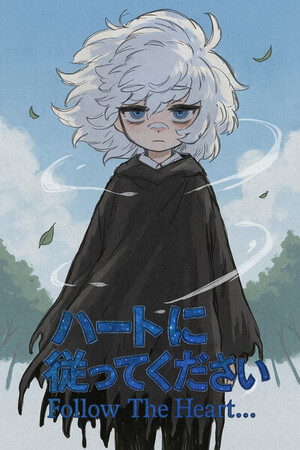
Follow The Heart... [ハートに従って…]
The police station held Josu for fourteen hours.
He sat in an interrogation room that smelled like stale coffee and decades of extracted confessions, his split lip still bleeding sluggishly, ribs screaming from where the enemy had landed three solid punches before the street collision. Two detectives sat across from him—one middle-aged and weary, the other young and sharp-eyed—both trying to piece together a story that didn't make sense from any conventional angle.
"Let's go through this again," the older detective said, voice carrying the patience of someone who'd heard every lie Tokyo could produce. "You were at a private residence in Kagurazaka. Armed people broke in. A detective was shot. You fought one of the assailants, who then ended up in front of a truck. But you claim you don't know why any of this happened?"
"I told you already," Josu said, voice flat from exhaustion and repetition. "I was visiting a friend. The enemy broke in. I defended myself. That's all I know."
"A friend. Akari Shimizu. A detective currently in surgery for a gunshot wound to the shoulder." The younger detective leaned forward, predatory. "Funny how a fourteen-year-old delinquent with a history of violence just happens to be visiting a detective investigating a cold case murder when hired killers show up."
"Coincidence."
"There's no such thing as coincidence in police work. Only patterns." The detective slid a photo across the table—Kisuno, the official missing persons photo from the children's home. "You know this kid. Kisuno Minazawa. You and another student—Kisagawa Hazuno—were seen with him before he disappeared from state custody."
Josu's heart rate spiked, but he kept his expression neutral, a skill learned from years of hiding fear behind rage. "Don't know him."
"Really? Because we have security footage from a convenience store showing the three of you together. We have witness statements placing you at the children's home the night he vanished." The detective's voice hardened. "Where is he, Josu? Where's the child?"
"I don't know what you're talking about."
The interrogation continued in circles—accusations met with denials, evidence presented and deflected, the steady erosion of Josu's defenses through sheer exhaustion. But he held firm, kept his story consistent and sparse, giving them nothing they could use to find Hazuno and Kisuno.
Because he'd made a promise. Family didn't abandon family, even when the walls were closing in.
The detectives had nothing concrete—just suspicions and half-formed connections. They released him at 2 AM with warnings about leaving Tokyo and stern reminders that the investigation was ongoing.
Josu walked out into the October night feeling hollowed out, every step sending pain radiating from his ribs. The lawyer had vanished immediately after securing his release, which raised questions Josu was too exhausted to pursue. He pulled out his phone—battery at 3%—and found seventeen missed calls from Hazuno.
He called back. Hazuno answered before the first ring completed. "Josu? Holy shit, are you okay? I've been going insane—" "I'm fine. Where are you?" "Ueno Park. North end. By the shrine." Hazuno's voice was tight with stress. "Kisuno's terrified. I've been telling him you're okay but—"
"Stay there. I'm coming."
The phone died before Hazuno could respond, battery finally surrendering. Josu started walking, navigating by memory and instinct toward Ueno, every breath making his ribs sing with pain, his split lip tasting like copper and defeat.
The city at 2 AM was a different creature—softer around the edges, populated by people who existed in the margins. Salary workers stumbling home drunk. Convenience store workers restocking shelves. The occasional taxi cutting through empty streets like yellow fish through dark water.
Josu walked through it all, a ghost among ghosts, wondering how long before everything collapsed completely.
He found them huddled beneath a grove of zelkova trees, hidden from the park's main pathways. Kisuno was wrapped in his black cloak despite the relative warmth, his white hair messy and dull without proper washing, those blue eyes huge in the darkness when they fixed on Josu's approaching figure.
"You're alive," Kisuno whispered, and the raw relief in his voice made something in Josu's heart crack.
"Takes more than a truck to kill me," Josu said, attempting lightness he didn't feel. He collapsed beside them, pain making him grunt despite his attempt to hide it.
Hazuno was on him immediately, examining the damage with hands that shook slightly. "Your ribs are broken. Maybe your nose too. You need a hospital—"
"Can't. Police are watching hospitals. Looking for me, for you, for Kisuno." Josu winced as Hazuno probed a particularly tender spot. "We're fugitives now. Officially."
"What happened at the station?"
Josu recounted the interrogation, the lawyer's mysterious appearance, his release without charges. As he spoke, he watched Hazuno's expression shift from relief to confusion to something approaching terror.
"A lawyer just showed up?" Hazuno asked. "Retained by anonymous parties?" "Yeah. Why?"
"Because that means someone with resources knows about us. Knows we're involved. And if it's not Akari..." Hazuno's voice dropped. "It might be Nakamura. Might be his way of keeping track of you."
The implication settled over them like frost. They sat in silence, three kids who'd tried to do something good and ended up deeper in darkness than any of them had imagined possible.
"Akari," Kisuno said suddenly. "Is she okay?"
"Surgery. That's all they'd tell me." Josu looked at the child, this six-year-old who'd already lost so much and kept losing more. "I'm sorry, kid. We tried to protect you and made everything worse."
"You didn't make anything worse." Kisuno's voice carried surprising strength. "You gave me something to remember. Proof that people can choose to care." His small hands twisted in his cloak. "That person—the one the truck hit—he's dead?"
"Yeah."
"Good." The word came without hesitation, without guilt, just simple acceptance. "He worked for the person who killed my parents. He would've killed you too if he could."
The casual way Kisuno discussed death was horrifying and understandable in equal measure to Josu—this was a child who'd witnessed murder at three, survived alone for years, learned that violence was just another feature of reality. It broke something in Josu to hear it spoken so plainly.
"We need a plan," Hazuno said, forcing them back to practical concerns. "We can't stay in Tokyo. Police are looking for us. Nakamura's people are looking for us. We're running out of places to hide."
"Where would we even go?" Josu asked. "We're broke, underage, with no connections outside the city." "What about that warehouse? The one they're demolishing?"
"Demolition starts in three days. It's not safe." "Nowhere's safe." Hazuno's voice carried an edge of hysteria barely contained. "At least there we'd have shelter. Time to think."
Before Josu could respond, his borrowed phone—the lawyer had given it to him, which should have raised red flags—buzzed with an incoming message.
Unknown Number: I know where you are. All three of you. Meet me at Sensō-ji Temple, main hall, 4 AM. Come alone or the kid dies. You have my word he'll be unharmed if you comply. -DN
Josu's blood went cold. He showed the message to Hazuno, watched the color drain from the older kids face. "Nakamura," Hazuno whispered. "He tracked you through the phone."
"Stupid shit." Josu threw the device as far as he could, watching it disappear into the darkness. But the damage was done—Nakamura knew where they'd been, could triangulate their general location, probably had people converging on Ueno Park right now.
"We need to move," Josu said urgently. "Now."
They ran, Kisuno scooped into Hazuno's arms to move faster, his black cloak streaming behind them like a banner announcing their presence to anyone watching. Through Ueno's darkened pathways, past the closed zoo and silent museums, emerging onto streets where early morning workers were beginning Tokyo's daily resurrection.
"The warehouse," Hazuno gasped, lungs burning. "It's our only option."
They flagged a taxi—risky but necessary—and gave an address two blocks from their actual destination. The driver looked at them—three kids, one bleeding, one carrying a child in a cloak, all of them radiating desperation—and asked no questions. Tokyo had taught him to mind his business.
Twenty minutes later, they stood outside the condemned warehouse in the industrial district, the same place where their strange family had first taken shape. It looked more derelict than ever—windows broken, graffiti fresh and obscene, demolition notices plastered on every surface.
But it was shelter. And shelter was all they had.
Inside, their corner was exactly as they'd left it—camping supplies, sleeping bags, the small camping stove. It felt like returning to a grave, some place that had died while they'd been gone.
"What time is it?" Kisuno asked. Hazuno checked his phone—he'd kept his off, paranoid about tracking. "3:47 AM." Thirteen minutes until Nakamura's deadline.
"I should go," Josu said quietly. "Absolutely not." Hazuno's voice was sharp, absolute. "That's suicide." "He said he'd leave Kisuno alone if I complied. That might be our only chance to protect him."
"Or it's a trap to get all of us in one place. Use you as bait to hunt us out." Hazuno moved between Josu and the door. "We stay together. That's the rule. That's always been the rule."
"The rule doesn't work when staying together gets everyone killed!" Josu's voice rose, frustration and fear spilling over. "Don't you get it? We lost. Nakamura has resources, connections, professional killers. We're three kids with nothing. The smart play is I surrender, buy you time to get Kisuno somewhere actually safe—"
"There is nowhere safe!" Hazuno was shouting now too, all his carefully maintained composure shattering. "The system failed him. We tried to protect him and people died. There's no good option here, Josu. There's only the option where we don't abandon each other."
"Even if staying together means we all die?" "Yes! Even then!"
The word hung between them, absolute and terrifying. Kisuno watched this argument with those too-aware eyes, processing the calculus of sacrifice, understanding that people he cared about were fighting over who got to protect whom.
"Stop," Kisuno said quietly. They both turned to look at him.
"Stop fighting about me like I'm not here. Like I'm just something to be protected or bargained with." His small hands were clenched into fists, his blue eyes blazing with an anger that was new and frightening. "I'm tired of running. I'm tired of hiding. I'm tired of people dying because of me."
"Kisuno—" Hazuno started.
"No. Listen." The child's voice carried a weight that silenced them both. "That fool—Nakamura—he killed my parents because they found out something bad about him and stupid stuff with paying bills garbage. Because they were going to tell people. And he sent people to kill Akari because she was going to prove he did it. And he's hunting us because I remember. Because I spoke."
"That's not your fault," Josu said.
"I know. But it's still true." Kisuno looked between them. "What if I went to him? What if I told him I'd stay quiet, that I won't testify, that I'll disappear and never tell anyone what I saw?"
"Absolutely not," both older kids said i unison. "Why not? If it keeps you safe—"
"Because it won't." Hazuno knelt down, bringing himself to Kisuno's eye level. "He's already killed two people and tried to kill more. He's not going to let any of us live, no matter what promises he makes. That's not how this works."
"Then how does it work?" Kisuno's voice beaking. "How do we win when he has all the power and we have nothing?"
No one had an answer. They sat in the warehouse darkness, three kids at the absolute limit of their resources, facing a problem with no solution, trying to figure out how to survive when every option led to destruction.
Josu's ribs throbbed with each breath. Hazuno's hands shook from exhaustion and terror barely contained. And Kisuno stood between them in his father's cloak, white hair catching the pre-dawn light filtering through broken windows, blue eyes reflecting a sky they couldn't reach.
"We could call the police," Hazuno said finally. "Turn ourselves in. Protective custody for Kisuno, and maybe—" "The police couldn't protect Akari in her own safe house," Josu interrupted. "What makes you think they can protect us?"
"Then what? We just sit here and wait for Nakamura to find us?" "Maybe we find him first." Both Hazuno and Kisuno turned to stare at Josu. "What?" Hazuno's voice was barely above a whisper.
"You heard me. He wants to meet at Sensō-ji. Probably has people there, an ambush ready. He thinks we'll hide or run or do something predictable." Josu's expression hardened into something frightening. "What if we don't? What if we show up, but on our terms? With a plan?"
"We're not assassins, Josu. We're kids—"
"Kids who've survived this long by being smarter and more desperate than people expect." Josu looked at Kisuno. "You remember everything now. Every detail from that night. What if we recorded it? Sent it to every news outlet, every police station, made it public before he can silence us?"
"He'll kill us for that," Hazuno said. "He's going to try to kill us anyway. At least this way we take him down with us."
The plan was insane, suicidal, born from desperation rather than strategy. But it was something—a way to fight back instead of just running, a chance to make Kisuno's testimony matter even if they didn't survive to see justice served.
"Okay," Hazuno said finally. "Okay. We do this. Together." "Together," Kisuno echoed, his small voice carrying fierce determination. "Together," Josu agreed.
They had two hours until dawn. Two hours to prepare, to record Kisuno's testimony, to send it everywhere, to make sure that no matter what happened at Sensō-ji, the truth would survive even if they didn't.
Outside, Tokyo prepared for another day, indifferent to the drama playing out in its industrial margins. The sky lightened from black to deep blue, stars fading as artificial light claimed dominion.
And in the warehouse, three kids who'd been broken and abandoned and told they didn't matter prepared to prove that sometimes, the people who have nothing left to lose are the most dangerous of all.
They'd reached their breaking point. And on the other side of breaking was either destruction or transformation. They'd find out which in two hours.
TO BE CONTINUED... [Next Episode: "The Sky We Reach For"]




Please sign in to leave a comment.