Chapter 0:
Chapter 1: I Remember the World Ending
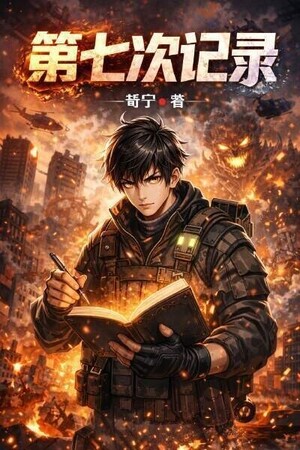
“The Seventh Record”
I discovered the problem on a piece of paper.
At 7:06 that morning, I woke up in bed. Sunlight fell normally across the windowsill. The city was quiet and healthy. There were no explosions, no sirens—none of the signs an apocalypse was supposed to leave behind.
But there was an extra sticky note on my desk.
The paper was slightly yellowed, its edges torn and creased as if it had been handled again and again, crushed in someone’s hand for a long time. The handwriting on it was mine—yet far messier than how I write now:
“If you’re seeing this note, it means you’ve already forgotten.”
I stared at the line, a chill crawling up my spine.
I didn’t remember writing it.
Yet I was intimately familiar with this handwriting.
It was how I wrote only when I was utterly exhausted, severely sleep-deprived—letters pressed downward, endings dragged out, as if struggling against some invisible resistance.
I picked up the note and turned it over.
Blank.
That meant something.
It meant the person who wrote it had no intention of leaving further explanations.
Or that he knew I wouldn’t be able to see them.
I tried to recall yesterday.
The memories were complete: getting off work, going home, cooking, showering, sleeping. No interruptions. No gaps. But they were too complete—so seamless they felt carefully assembled.
I checked my phone. The date was normal. The news was normal.
No disasters. No anomalies.
And yet, a sentence kept repeating in my mind—
The world has ended.
I didn’t know when it ended, or how.
I only knew this wasn’t the first time.
I slipped the sticky note into my wallet and took it with me to work.
The subway was crowded. The rush-hour crush gave me a strange sense of reassurance. But when the train pulled into the station and the announcement played, I noticed something absurdly small.
One sentence was missing.
Normally, after announcing the station, the broadcast would add:
“Please mind the gap between the train and the platform.”
Today, it didn’t.
The train stopped. The doors opened.
No one found it strange.
Only I stood there, my heartbeat skipping a beat.
I was certain that sentence had existed.
But I had no way to prove it.
At noon, I went to the convenience store near my office.
The cashier was a young woman. I couldn’t remember her name, yet I knew—clearly—that there was an old scar on her left ring finger.
A glass cut.
Three years ago.
The information surfaced in my mind without warning.
I blurted out, “Is the cut on your hand better now?”
She froze, instinctively pulling her hand back.
“How do you know about that?” she asked, her eyes sharp with suspicion.
I opened my mouth, but no explanation came.
Because suddenly, I realized—
I wasn’t supposed to know this.
It was something I remembered, yet it didn’t belong to the present version of me.
At 3:27 p.m., fear hit me for the first time.
Not because of apocalyptic visions,
but because—
My memory had started running ahead of reality.
I knew the power would go out next.
I knew the air conditioning would stop at 3:29.
I knew someone would curse, “Damn it, the breaker tripped again.”
At 3:29, the lights went out.
The office erupted in noise.
I nearly lost my footing—not because of the blackout,
but because of a far more terrifying thought:
If the apocalypse is real, why am I the only one who remembers?
And if the apocalypse is false, why can I predict reality?
In that moment, I finally understood what the note truly meant.
—I have forgotten many times before.
And every time I “remember,”
it is never the first time.




Please sign in to leave a comment.