Chapter 2:
Chapter 3: The Me They Remember Is Not the Same Person
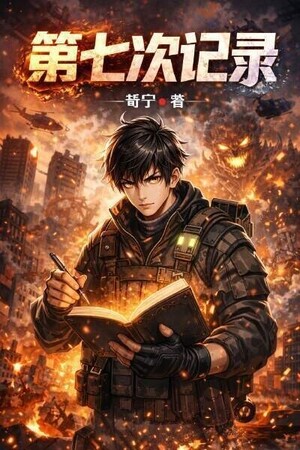
“The Seventh Record”
Things began spiraling out of control because of something extremely small.
The next morning, I went to work as usual. In the elevator, I ran into Sister Liu from Administration. She smiled and greeted me.
“You look much better today,” she said.
I froze for a moment. “Was I looking that bad recently?”
“Weren’t you staying up late nonstop a few days ago?” she replied casually. “Your dark circles were terrible. You even told me you were ‘running out of time.’”
I stared at the reflective metal wall of the elevator and saw my own face.
Normal complexion. No signs of sleep deprivation.
“When was this?” I asked.
“Last week,” she said as she pressed her floor. “You don’t remember?”
I didn’t answer.
The elevator doors opened. She stepped out first, as if it had been nothing more than ordinary small talk. I remained inside, a clear conclusion slowly taking shape in my mind—
She had seen a version of “me,” but not the me standing here now.
At ten in the morning, I went to the tech department to confirm a project detail with Engineer Chen.
“Didn’t you already revise this requirement?” he said. “You even emphasized, ‘Don’t leave any redundant interfaces.’”
I shook my head instinctively. “I never said that.”
He frowned. “That’s impossible. You were very serious about it.”
He paused, studying me, his tone turning strange.
“And that day… you were pretty cold.”
“Cold?” I echoed.
“Yes,” he said. “Not like you. You’re usually talkative, but that day you didn’t say a single unnecessary word. It was like—”
He hesitated.
“Like what?”
“Like you were executing a task.”
A chill crept up my back.
At lunch, I deliberately chose a different restaurant.
I wanted to verify something.
When the owner saw me, she clearly froze.
“You’re early today,” she said.
“This is my first time here,” I replied.
She eyed me suspiciously. “No way. Didn’t you come last night? Alone. Sat in the corner and ordered the same set.”
I looked where she pointed.
The corner, against the wall, with a view of the entire place.
That wasn’t a seat I would choose.
“You’ve got the wrong person,” I said.
“I don’t think so,” she replied firmly. “You even asked me, ‘Are there any blind spots in the surveillance cameras here?’”
My fingers clenched tightly.
That sentence sounded like it had come from a stranger’s mouth—
yet it had been placed on me with absolute certainty.
At three in the afternoon, a feeling surfaced—crystal clear, yet impossible to explain to anyone:
The world hadn’t changed.
What had changed was the way I appeared in it.
Some people saw a version of me that was exhausted, anxious, in a hurry.
Some saw a version that was cold, closed off, as if carrying out a plan.
And I myself knew nothing about what these “versions” had done.
It was as if I had been cut into segments,
then dropped into the same life at different times.
I left work early and went to Zhou Wan’s clinic.
When she saw me, she visibly relaxed.
“You’re in good shape today,” she said.
“Based on what?” I asked.
She paused, then smiled. “Your speech rhythm is steady, and your gaze is more focused.”
I sat down and looked at her. “What about yesterday?”
She fell silent.
“Was I here yesterday?” I pressed.
She avoided my eyes and opened a file on her desk. “Lin Shu, let’s first talk about how you’re feeling today.”
I reached out and pressed my hand on her notebook.
“Zhou Wan,” I said. “I need to know—which version of me do you remember?”
She finally looked up.
In that moment, her eyes didn’t hold the gaze of a doctor examining a patient,
but something closer to… verifying an identity.
“The way you are right now,” she said slowly, “is very similar to when I first met you.”
“And the time in between?”
She paused for several seconds before speaking.
“In that period, you were… switching.”
“Sometimes you’d ask me to keep records. Sometimes you’d ask me to delete them.”
“And once, you even told me—”
Her voice dropped.
“—that if I ever realized I was starting to confuse you, it meant there wasn’t much time left.”
When I heard the word you, my heart slammed hard against my chest.
“Who is ‘you’?” I asked.
Zhou Wan didn’t answer immediately.
She only said softly:
“At the very least, there’s more than one of you.”
When I left the clinic, it was already dark.
Streetlights flickered on one by one. The crowd flowed normally. There were no signs of the apocalypse.
Yet as I stood on the sidewalk, a thought struck me—one far more terrifying than “the world ending”:
Maybe what isn’t continuous…
isn’t time.
Maybe it’s me.
And maybe those notes, those records, those moments of foresight,
didn’t come from a “past me” at all.
But from—
other versions.



Please sign in to leave a comment.