Chapter 1:
The Things That Do Not Answer
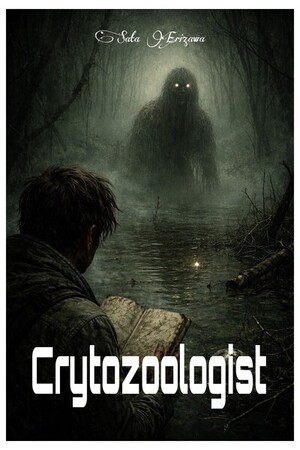
Crytozoologist
I began taking notes not to prove anything, but to make sure that I still existed.
Every morning, before the sun fully rose, I opened the black notebook I always kept in the lowest drawer. Its cover was damp, its edges peeling like dead skin. The pages had yellowed, carrying a musty odor mixed with the metallic scent that clung to my fingers. I was never certain whether it came from rusted staples, the drawer itself, or my own blood.
I rarely paid attention to the small wounds. They always appeared after nights of observation, as if my body remembered something my mind refused to keep.
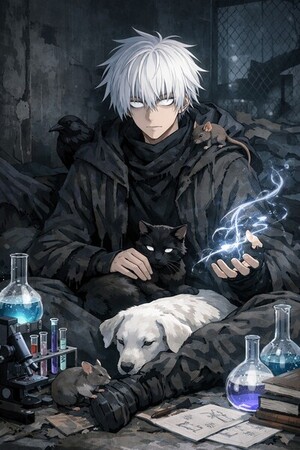
I have called myself a cryptozoologist for five years now. No one ever granted me the title. There was no institution. No witness. It emerged on its own—like a whisper repeated too often until it began to sound like truth.
In this village, the swamp behind my house is known as a dumping ground. Chicken carcasses. Dead dogs. Black plastic bags no one speaks of openly. Occasionally, something larger. The villagers call them wild animals. I call them specimens.
The swamp is never truly still. Even when the wind dies, something always moves beneath the surface—small, inconsistent ripples, waves that form without cause. I first noticed it five years ago, on a night I came home later than usual and found the water breathing.
That night, I stood at the edge of the swamp for too long. When I finally became aware of myself, my feet were submerged up to the ankles. The mud was warm. Not the way mud should be.
That was when I began to record everything.
On the first night of that month, I found drag marks in the mud. Their length was inconsistent, as though something had been pulled, then walked on its own, then dragged again. I measured them by pacing, photographed them from several angles, and marked the location with bamboo stakes.
When I turned to put my camera back into my bag, the marks had changed.
Not disappeared.
Changed.
The lines had grown shallower, as if wiped from the inside. As though the mud were closing its own wound.
I wrote:
Object moves without discernible pattern. Response to observation remains unknown.
My handwriting trembled. I blamed the night air.
I returned home with my nails blackened by mud and my palms stinging. In the bathroom, I noticed a small wound between my fingers. A bite, perhaps. I could not remember when it happened.
From that night on, sounds began to appear inside the house.
Not loud sounds. Never loud. Only small ones—too close to ignore: breathing behind my bedroom door, fingernails scraping along the wall, something dragging itself beneath my bed. I placed recorders in every corner of the house. The results were always the same.
Silence.
The wrong kind of silence.
Sometimes I replayed the recordings just to be sure. There was no breathing. No scraping. Yet every time I turned them off, the sounds returned—as if they only existed when unobserved.
On the seventh night, I dreamed of sinking into the swamp. The mud was not mud. It was soft. Warm. Pulsing like living flesh. Something wrapped around my leg and pulled me down with unhurried patience.
When I woke, the sheets were soaked with sweat, and there was a bite mark on my calf.
I stared at it for a long time.
I did not write it down.





Please sign in to leave a comment.