Chapter 3:
The Average Life
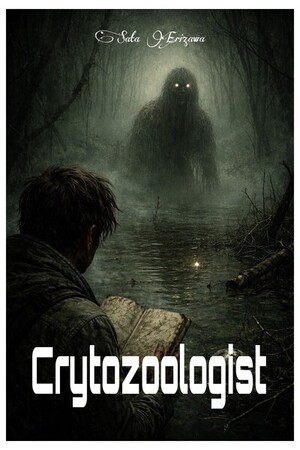
Crytozoologist
I no longer distinguished between day and night.
The swamp felt closer now than my house, as though the distance between them shortened every time I closed my eyes. Sometimes I woke at its edge with no memory of how I had arrived there. Sometimes I woke on my bedroom floor with mud filling my lungs and a saline taste on my tongue.
I did not panic anymore.
My notebook was nearly full.
The most recent entries no longer sounded like me. The sentences were shorter. More decisive.
It is not a creature.
It is a process.
It requires witnesses in order to persist.
I began to understand something I should have realized from the beginning: there was no evidence I could carry out of the swamp. Photographs degraded. Recordings were empty. Samples decayed within hours.
Everything except me.
My body began rejecting certain things. Food tasted dull. Water made me nauseous. But mud—mud felt familiar. I often stood in the shower for too long, letting the water run over my legs, imagining the sensation returning.
On the final night—or the night I chose to call final—I stood in the middle of the swamp. The water reached my chest. Something wrapped around my legs, gentle as intestines. It did not pull. It merely ensured that I would not leave.
I did not resist.
For the first time, I asked not as a researcher, but as a human being.
“Are you real?”
The answer did not arrive in words.
It arrived as memories that were not my own.
Of others before me. Of observers who mistook themselves for discoverers. Of average lives gradually eroded until only function remained. Of black notebooks that passed endlessly from hand to hand.
I understood, with calm clarity, that I was not special.
I had simply endured long enough.
I wrote the final sentence in the notebook:
A cryptozoologist does not find the creature.
He provides the body.
When dawn touched the swamp, I felt something released.
Or completed.
I do not remember how I returned home.
Several days later—or perhaps the same day—I opened the lowest drawer. The black notebook was there, dry and clean, as if it had never been taken into the swamp.
The final page was blank.
Outside, the swamp looked calm.
Too calm.
I picked up my pen.
I waited.
And somehow, I knew—
if I stopped writing, something else would begin to record.




Please sign in to leave a comment.