Chapter 16:
Episode 16: Diagnosis
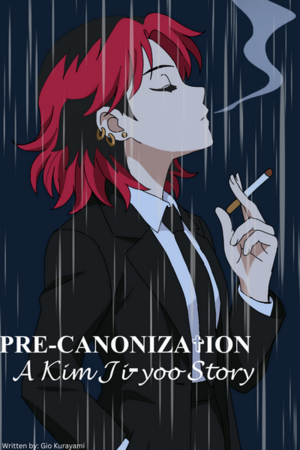
Pre-Canonization: A Kim Ji-yoo Story
The hallway outside the hospital room was white, cold, and quiet—the kind of quiet that didn’t soothe, but suffocated.Everything in the space seemed designed to erase sound: the waxed floors, the sealed windows, even the sterile air that smelled faintly of alcohol and metal.
The vending machine buzzed beside her, its hum the only proof that time was still moving. Ji-yoo stood there, an unopened bottle of water clutched in both hands. The plastic crackled each time her fingers tightened—her only outlet for the panic she refused to let out through tears.
She hadn’t left since Marco collapsed. Not to eat. Not to rest.Not even to breathe properly.
Every time she closed her eyes, she saw it again—Marco mid-song, guitar strap sliding off his shoulder as his knees buckled, his body hitting the floor before anyone could reach him. The crowd’s cheer had turned into a scream, and the memory kept replaying like a broken track.
A nurse passed by, glancing at her. “Miss Kim, are you sure you don’t want to sit inside? There’s a chair beside the bed.”
Ji-yoo shook her head. “He… he said he wanted to wake up to quiet.”
The nurse smiled sadly. “Then I’ll bring you a blanket at least. You’ve been out here all night.”
When the nurse left, Ji-yoo exhaled shakily, running a hand through her hair. Her reflection on the vending machine door looked foreign—eyes swollen from exhaustion, skin pale under the white lights. She looked more like a ghost haunting the corridor than a person waiting for news.
A door clicked open somewhere down the hall.She straightened immediately.
The doctor emerged, clipboard in hand, face composed in that carefully measured calm that only people used to delivering bad news could wear.
Her throat went dry.
“Miss Kim?” he asked. “You’re…Mister Marco’s partner, correct?”
“Yeah.” She swallowed. “Yes. I’m his—uh, I’m with him. I mean… yeah.”
The doctor nodded, gesturing toward the bench nearby. “Would you mind sitting with me for a moment?”
Her body moved before her mind did. She sank down onto the cold bench, bottle of water still unopened in her grip. The sound of her heartbeat was louder than the machines behind the wall.
The doctor spoke slowly, his voice professional but kind. “Marco’s condition has… advanced since his last checkup. The disease has begun to affect multiple organs.”
Ji-yoo’s brow furrowed. “What does that mean? I thought— I thought his meds were working.”
“They were helping,” the doctor said carefully. “But the progression accelerated. His kidneys are beginning to fail, and we’re seeing pulmonary complications as well.”
The words blurred together in her head—progression, failure, complications.All she could focus on was that last one.
She gripped the bottle tighter. “But he can still recover, right? You’re just— you’re saying it’s bad, but not final.”
The doctor hesitated. He didn’t look away, but he didn’t rush to fill the silence either. “We’re managing it,” he finally said. “But we may not have long.”
Her voice broke. “How long?”
He glanced down at his clipboard as if the answer might’ve changed since the last time he checked. “Weeks,” he said softly. “Maybe months. But not years.”
Ji-yoo stared at him blankly. The hallway blurred—the white walls, the flickering exit sign, the hum of fluorescent lights. All of it disappeared under the heavy ringing in her ears.
She blinked, once. Twice. The world refused to focus.
“I… I don’t understand,” she murmured. “He was fine yesterday. He was smiling. He said he felt lighter.”
“That happens sometimes,” the doctor said. “A brief improvement before decline. It’s not uncommon in his condition.”
She laughed weakly—sharp, dry, and broken. “That’s cruel.”
“I know,” he said gently. “I’m sorry.”
Her chest heaved, but no tears came. She didn’t have the energy for them. She just stared at the floor, at her shoes, at the bottle in her hand.
“He asked me once if I’d stay,” she whispered. “Even if things got bad. I told him I would.”
The doctor’s expression softened. “Then he’s lucky.”
“No,” she said, shaking her head. “I am.”
For a long moment, neither of them spoke. The doctor’s pager buzzed, faint and insistent, and he stood slowly.
“If you need anything—counseling, support—we have staff who can help you process this.”
Ji-yoo nodded numbly. “Thank you.”
When he walked away, the silence grew heavier.
She stayed seated for another full minute, then finally stood. Her legs felt like lead.The hallway seemed longer now, stretching endlessly toward Marco’s door.
She pressed her palm against the cold wall for balance, closed her eyes, and whispered to herself—softly, like a vow.
“I’ll stay,” she said. “I’ll stay until the end.”
Then she took a deep breath and walked toward the room.
The sunlight that entered Marco’s hospital room was weak—thin golden threads trying their best to soften the sterile white around him. The blinds were half-open, letting in a pale morning glow that stretched across the bed, the machines, and the little table cluttered with IV tubes and medication cups.
The faint beep of the heart monitor kept time with his breathing.Ji-yoo stood by the doorway for a moment before entering, her hands stuffed in her jacket pockets, as if she needed to hide how much they shook.
Marco’s eyes fluttered open when he heard her footsteps. His voice came out rough, grainy.“You didn’t run.”
“Never even looked at the door,” she replied, forcing a smile.
He tried to grin but coughed instead. “Figures. You’re too stubborn to even leave when the universe tells you to.”
“Someone’s got to keep you in check,” she said, setting her bag on the chair beside his bed. “Besides, who else is going to argue with you about snare tempos?”
He chuckled, though his voice was thin. “God, I miss that sound.”
“What sound?”
“You yelling at me for rushing the beat.”He smirked faintly. “Guess I can’t do that from here, huh?”
She pulled the chair close and sat down. The room smelled faintly of antiseptic and jasmine—probably from the air freshener one of the nurses placed by the window.“Then let’s bring the music here,” she said softly.
Marco raised an eyebrow. “You’re not serious.”
“Oh, I’m very serious,” she replied, already unzipping her bag. “You think I’m going to let this place win?”
He blinked, confused—until she started pulling out a small MIDI keyboard, her laptop, and a pair of cheap studio headphones.“You brought the gear?” he asked, half laughing, half exasperated. “Ji, this is a hospital, not a jam session.”
She smirked. “Then we’ll make it one. I’m not letting your last recorded track be ‘Flatline Funk.’”
“Hey, that was a good one,” he protested, pretending to be offended. “Experimental.”
“It was noise,” she said, grinning. “Beautiful noise, but still noise.”
He laughed again—then coughed, his breath catching. Instantly, Ji-yoo reached forward. “Hey—easy, slow. Don’t talk too much.”
“I’m fine,” he managed, his voice shaky but calm. “Just… let’s make something. Before the nurse busts us.”
That afternoon, the room became their secret studio.
Ji-yoo balanced her laptop on a rolling table while the keyboard rested on her knees. The hum of the machines mixed with faint notes of piano as she played. Marco tapped the rhythm softly on his bedsheet, trying to find the right pulse between each beep of the heart monitor.
“Slower,” he said.
“Too slow,” she countered.
“Still too fast.”
She glared at him. “Marco, you’re not even tapping in time!”
He smiled weakly. “Guess I’ve got rhythm in the wrong places.”
She rolled her eyes, though she couldn’t hide her grin. “You always did.”
For a few minutes, the two of them worked in silence—her fingers moving carefully over the keys, his voice humming small fragments of melody. The music was fragile, like glass—every note felt like it could shatter at the wrong touch.
When she hit a chord that resonated through the room, he opened his eyes again. “That one. Play that again.”
She did. Once. Twice.“Feels like dawn,” he murmured. “Like the moment before you wake up.”
She nodded quietly. “Yeah. It’s… gentle.”
“Name it that,” he said. “Gentle.”
She shook her head. “No. Too small.”
“Then what?”
Her fingers hovered above the keys. “Still Here.”
Marco smiled. It wasn’t wide or loud—but it reached his eyes. “Perfect.”
They kept working, sketching lyrics between nurse visits and IV changes.The line between patient and musician blurred until all that was left were two people trying to bottle a feeling before it slipped away.
Ji-yoo adjusted her mic setup and hit record. “Okay, sing the first line—just hum it if it’s too much.”
Marco took a deep breath and sang softly:
Don’t pull the curtains yet, The morning still remembers my name.
His voice cracked on the last word, but Ji-yoo didn’t stop the recording. She let the imperfection stay—it made it real.She looked up, eyes stinging. “That’s beautiful.”
“Yeah, because it’s true,” he said. “I’m still here.”
She smiled, blinking back tears. “You will be. Long enough to finish this song, at least.”
“Long enough to see you perform it,” he said quietly. “Promise me that.”
She hesitated. “Marco—”
“Promise,” he insisted, gripping her hand with what little strength he had left.
Ji-yoo squeezed back, nodding. “I promise.”
The machines beeped softly beside them, perfectly in rhythm with the track playing on her laptop. The irony wasn’t lost on either of them.
“See that?” Marco whispered with a smirk. “Hospital’s got better timing than I ever did.”
She laughed, finally, and rested her head lightly on the edge of his bed.“Yeah,” she said. “You’re surrounded by metronomes now.”
For a moment, neither of them spoke. The only sound was the slow fade of their unfinished song—a tender loop of piano chords and machine hum.It was imperfect. Unmixed. Incomplete. But it was alive.
When the night nurse peeked in later and frowned at the equipment, Ji-yoo looked up sheepishly.“Sorry,” she whispered. “We’re just… keeping him awake.”
The nurse sighed, then smiled faintly. “As long as it doesn’t trip the monitors, you can play all you want.”
After she left, Marco turned to Ji-yoo with tired eyes and a teasing grin.“You hear that? We’ve got official approval.”
“Guess we’re charting in the medical ward now.”
He chuckled quietly, and she smiled—though behind it, her heart ached.Every note, every breath, every joke—they all felt like goodbyes disguised as laughter.
When he drifted off to sleep later that night, Ji-yoo stayed by his side, laptop still open, headphones on. She listened to the song they’d made.Looped it again and again, afraid to stop, afraid that silence might mean he’d slipped away.
She whispered the title under her breath like a prayer.“Still Here.”
And as the machines beeped softly in the background, it sounded like the song was breathing with him.
Night fell like a slow curtain.By the time Ji-yoo got home, the city had already dimmed into a blur of lights through the rain-streaked taxi window. The streets of Quezon City were quieter than usual, the kind of quiet that followed bad news—like even the city knew what had happened.
She dropped her bag onto the couch and stood in the dark, unsure what to do with her hands. Everything felt wrong. The apartment was too clean, too still, too full of echoes from the last time Marco had been there—his laughter when he’d burned the rice, the way he’d left his guitar picks everywhere like breadcrumbs.
She turned on the light. It only made the emptiness sharper.
On the kitchen counter, beside her unopened mail, was an envelope.Her name written in Marco’s familiar handwriting—small, precise, slightly slanted.She froze.
Ji-yoo.
Her throat tightened. She ran her thumb over the ink, tracing it like she could feel his pulse through the paper. Her heart screamed don’t open it, but her trembling fingers didn’t listen.
Inside, she found a single folded letter.The paper was creased from being handled too much.He must’ve written it days ago. Maybe weeks. Maybe the moment he knew.
She unfolded it slowly.
“If I die before the festival, sing louder.” “If I die after, play the beat anyway.” “If I die during, let the silence say everything I didn’t.”
The words blurred almost instantly. Ji-yoo blinked hard, the paper trembling in her grip.
“You gave me a life beyond the limit of my diagnosis. That’s more than most get. That’s more than I could ask for.” “Don’t cry at the stage. Dance. Make the ground shake.” “Don’t stop living just because I stopped breathing.”
At the bottom, his messy scrawl ended with:
—Marco.
Her hand went to her mouth, and the first sob came out raw, cracked, unwilling.Then another. And another.
She sank to the floor, clutching the letter to her chest, her tears falling onto the paper—smudging the ink until his name was just a blur.
For a long time, she didn’t move.The clock ticked. The fridge hummed. Somewhere outside, a motorcycle passed.The world continued as if nothing had changed.
But everything had.
When the tears finally ran dry, she sat in silence.Her breathing uneven, her heart hollow.Then her eyes fell on the keyboard by the window, and something inside her shifted.
The memory of his voice—gentle, teasing, alive—floated back.
“Promise me you’ll sing it. No matter what.”
She stood, wiped her eyes, and whispered to the empty room,“I will.”
The next morning, she was already in the festival office before it even opened.
The receptionist blinked at her in surprise. “Uh—ma’am, the committee isn’t—”
“I’ll wait,” Ji-yoo said simply.
When the organizer, a man in his forties wearing a wrinkled collared shirt and a badge that read “INDEPENDENT SUN FESTIVAL DIRECTOR,” finally appeared, he looked startled to find her there.
“Miss Kim Ji-yoo, right? From Time Stains? I heard about what happened to your bandmate—”
“My partner,” she corrected softly, though her voice didn’t waver. “Marco.”
He nodded awkwardly. “Right, I’m so sorry. The festival sends our—”
“I need to ask for something,” she interrupted gently, her tone calm but urgent. “We can’t perform at the venue. But I still want to do the set.”
He frowned, confused. “You… want to cancel, then?”
“No.”She met his eyes, determination burning through exhaustion. “I want to perform from the hospital.”
He blinked. “You’re serious?”
“Completely.”
She took a deep breath, steadying herself. “We have one week left. He might not make it to the stage, but he deserves to hear us finish what we started. You said the performances will be livestreamed, right? Then stream ours from his room.”
The organizer hesitated. “Miss Kim, logistically that’s—”
“I don’t care if it’s messy,” she said. “I don’t care if the sound’s not perfect or if there’s static or if I have to use my phone camera. I’ll bring the mic, the laptop, the cables. All I need is your permission to connect to the stream.”
Her voice cracked, but she didn’t back down.“This isn’t about exposure. This is about finishing something that he started. You said the festival was about giving real artists a chance to be heard. Well—this is how he’ll be heard.”
The room went quiet.The organizer looked at her for a long moment, then exhaled, rubbing the back of his neck.
“…All right,” he said finally. “You’ve got it. We’ll make it happen.”
Her eyes widened slightly. “Really?”
He nodded. “I’ll talk to the tech team. We’ll need to test the signal, maybe coordinate with the hospital admin, but… we’ll do it. I can’t say no to that kind of reason.”
She let out a shaky laugh, the first in days. “Thank you. You don’t know what this means.”
The man smiled faintly. “I think I do.”
That evening, Ji-yoo returned to the hospital. Marco was asleep, his chest rising and falling in slow, careful rhythm. The machines hummed softly around him like background music.
She sat beside him, taking his hand gently. His fingers were colder now.She brushed her thumb against his knuckles.
“Guess what, babe?” she whispered. “You’re headlining.”
A flicker of a smile crossed his face—even in sleep.And for a moment, Ji-yoo swore he heard her.
She looked at him for a long time, memorizing every line of his face—the faint scar on his chin, the messy curls that refused to stay flat, the curve of his smile even in rest.
Then she leaned forward and whispered,“We’ll make the ground shake, just like you wanted.”
The following morning, Ji-yoo arrived with her keyboard, Marco’s guitar, and a small sign she taped to the wall above his bed.
LIVE FROM ROOM 402
Still Here – for Marco.
She looked at the setup, then at him. Her eyes welled up—but this time, not from sorrow.
From purpose.
For the first time in days, she smiled.It wasn’t the kind that hid pain. It was the kind that carried it forward.
End of Episode 16—”Diagnosis”




Please sign in to leave a comment.