Chapter 21:
Episode 21: Silence
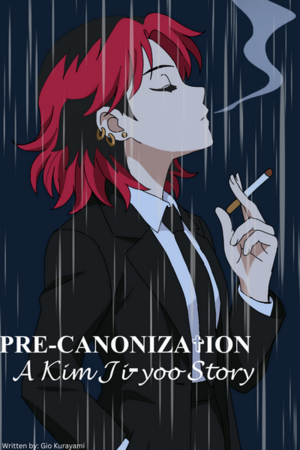
Pre-Canonization: A Kim Ji-yoo Story
The world moved on. As it always did.
News outlets ran their headlines like clockwork:
“Filipino Beatmaker Dies After Viral Performance.”
“The Love Story That Made the Country Cry.” “Kim Ji-yoo Mourns the Loss of a Musical Partner and Lover.”
Every post, every headline felt like a pinprick in her chest.The internet didn’t mean harm—it just didn’t understand.
Clips of that final hospital performance spread across every platform.Fans looped his trembling voice.Late-night hosts cried on air.The hashtags trended for days:
#StillHere
#ForMarco
People sang covers, whispered their own voices into the void Marco left behind.A student recording inside a bathroom.A street musician playing his beat through an old speaker.A little kid humming the chorus in front of his phone camera.
They didn’t know him. But they felt him.
The world was listening.And yet, for Ji-yoo, there was only silence.
The kind that fills your chest until it’s too heavy to breathe.The kind that doesn’t come from lack of noise,but from the absence of his noise.
The shop stayed closed.
The windows were fogged from the inside, the “OPEN” sign flipped down so long that dust had begun to collect along the edges. The outside world moved past—people laughing, cars honking, rain dripping down from the awning—but inside, time had frozen.
Ji-yoo sat behind the counter—his spot—knees pulled up to her chest.The soft hum of an unplugged amp filled the empty room like a ghost that refused to leave.
Her eyes moved across the clutter: tangled cables on the floor, half-empty water bottles lined like soldiers on the shelf, sticky notes covered in scribbled lyrics. The beat pad Marco had smashed during one of their late-night jams still had one key permanently jammed.
It smelled like coffee.Like dust.Like him.
A faint chill hung in the air, carried by the soft whir of the broken ceiling fan.
Her phone buzzed every few minutes—Condolences.Messages from fans.From the label.From people who suddenly remembered she existed.
“Stay strong, Ji-yoo.”“ He’s proud of you.” “The performance changed lives.”
She didn’t open any of them.The words were too clean, too polite, too far away.
The only sound she wanted to hear was his voice.That lazy drawl whenever he teased her.That quiet hum when he worked on a melody.The sound of him existing in the same room.
Hours bled into each other.The city outside dimmed to orange, then black.The only light inside came from the faint neon glow of the “RECORDS” sign flickering outside the fogged window.
Ji-yoo sat there for so long that the world began to sound distant—like she was underwater.
At some point, she started talking again.Not to herself.But to him.
“Hey, Marco…” Her voice was barely above a whisper. “Should I… should I keep it open? The shop, I mean.”
The air stayed still.No answer.
Her gaze drifted toward his stool—his sneakers still underneath it, one shoelace untied.
“I don’t even know if I can touch anything,” she murmured. “It feels wrong. Like if I move one thing, you’ll really be gone.”
Her throat tightened.She waited for the sound of his laugh, his voice saying, ‘Don’t be dramatic, Ji. Just fix the damn shop.’
But the only reply came from the faint hum of the fridge.
That familiar low sound that always played beneath their conversations.
She almost smiled.That was exactly the kind of answer he’d give.
“Right,” she said softly. “Figures.”
She leaned back against the counter, eyes half-closed, and let the silence settle again.
Outside, the rain started up—slow, tapping the windows like hesitant fingers.
Ji-yoo pulled her knees tighter and whispered, “You promised we’d make one more song, you idiot…”
Her voice cracked at the end.
The fridge hummed again.The lights flickered.
And in that hollow shop filled with the ghosts of melodies and laughter, Ji-yoo closed her eyes and listened—to nothing,and to everything he left behind.
Days blurred.Or maybe weeks.
The calendar on the wall was still on the same date.Coffee cups stacked on the counter like monuments to days she couldn’t remember making it out of bed.
Time had lost its edges—melting into sleepless nights, half-hearted mornings, and that endless middle ground between missing him and pretending she wasn’t.
One afternoon—though it could’ve been evening—Ji-yoo found herself sitting in front of Marco’s laptop.
It was still where he’d left it, half-covered by an old hoodie and a tangle of cables. The screen had a thin crack in the corner, faint fingerprints smeared across it—his fingerprints.
She brushed her thumb against them, tracing where he once pressed.Her reflection stared back at her, hollow-eyed and hesitant.
Turning it on felt like opening a grave.But also like unlocking a heartbeat.
“Okay,” she whispered. “Just once.”
Her finger hovered over the power button for a long moment. Then she pressed it.
The fan whirred weakly, like an old sigh.The light flickered, struggled, then came alive.
The desktop was mostly empty—just the wallpaper of a blurred photo of the two of them laughing mid-rehearsal. Her mouth open, his head tilted, sunlight spilling in through the shop window.
But there, in the middle of the screen, sat one folder.Titled simply: “US.”
Her breath hitched.“Marco…?” she whispered, as if saying his name might stop her from falling apart.
When she opened it, her vision blurred.
Hundreds of files.Beat drafts.Half-written lyric sheets.Voice memos with names like Ji riff 1, late night idea 2, sunset loop test.
Each name sounded like a memory.Like nights they’d stayed up too late, arguing about tone and rhythm and meaning until dawn broke through the blinds.
Ji-yoo scrolled down, heart pounding faster with every file she saw.
“God, Marco…” she breathed. “You never stopped working.”
Her hands trembled as she double-clicked a file labeled demo_v8.mp3.
A soft static filled the speakers—then his voice.
“Still here… still fighting the fade…”
The words cut off mid-line, but Ji-yoo froze.
That voice—raspy, alive, caught between exhaustion and passion—filled the air like he was right there beside her. She could hear him breathing between takes, adjusting knobs, tapping the mic to test sound levels.
The sound was imperfect.But it was him.
“Marco…” she whispered, clutching at her chest. “You were making more?”
Her voice cracked on the last word.
She opened another file. Then another.A new beat. A stray melody.Half a verse sung in that low, lazy tone he only used when he thought she wasn’t listening.
She covered her mouth, choking on the mix of laughter and grief.
“You were building an album,” she realized, the words trembling out of her. “Not just the festival set… you were building this.”
Her gaze darted toward the title again—“US.”
It wasn’t a folder.It was a love letter.
For a long time, she just sat there—motionless—until the tears came.Quiet. Relentless.
The soft glow of the screen painted her face in blue light as she scrolled through the list, fingertips hovering over every track like she was touching something sacred.
And then, in her mind, she heard his voice again.Not from a file, but from memory—warm and teasing.
“You said our sound’s not done evolving, right? So… let’s make it evolve forever.”
Ji-yoo let out a wet, bitter laugh. “You idiot,” she whispered. “You really meant it, didn’t you?”
But she smiled through her tears.Because of course he would.Marco always finished with love.
Hours passed before she could bring herself to close the folder.Her fingers hovered over the tracklist one last time, and she whispered,“I’ll finish it. I promise.”
The promise felt heavy. Real. Like something that tied her to the world again.
That night, for the first time in weeks, she opened her social media.
The blank “New Post” window stared back at her, waiting.Her heart raced as she typed.
“Marco Reyes isn’t gone. His beats are still here. His voice is still here. His dreams are still here.And I will finish what we started. The album is coming. For him. For us.”
Her finger lingered over the “Post” button.
She hesitated.
Once she clicked it, the world would see. The grief would no longer be quiet.
“Guess you’d say… go for it, huh?” she murmured.
The rain outside tapped gently against the window—soft, rhythmic, almost in time with her heartbeat.
She took a deep breath, hit Post, and sat there in silence.
The replies came almost instantly—thousands of hearts, messages, tributes.But Ji-yoo didn’t stay to read them.
Instead, she whispered to the quiet room,“We’re not done yet.”
Then she turned back to the laptop, reopened the folder, and pressed play again.
The beat started—uneven, cracked, alive.
And for the first time since he’d gone, Ji-yoo nodded to the rhythm.
She titled the album “Beats of the Dying Sun.”
Because Marco hadn’t been a tragedy.He’d been a sunset—brief, brilliant, unforgettable.
And Ji-yoo refused to let him fade quietly.
Every day after that, she worked.Not because she had to.But because she needed to.
The shop lights came back on, one bulb at a time.Dust danced in the golden afternoon light, drifting like slow-motion embers over the recording setup.
Marco’s chair stayed where it always had—pushed slightly back from the desk, the cushion worn from hours of late-night mixing.
Ji-yoo sat beside it now, headphones on, laptop open to the folder labeled “US”.
“Okay,” she murmured, cracking her knuckles. “Let’s get to work.”
She hit play.
A beat loop filled the room—imperfect, uneven, like a heartbeat still learning how to continue.
She listened. Paused. Rewound. Listened again.
“Hmm,” she muttered to herself, adjusting a knob. “Your bassline’s a mess again, Marco.”
Her lips quirked into a faint smile.
“I can hear you laughing, you jerk,” she added softly. “Saying it’s ‘experimental’ again, huh? No. We’re cleaning this up.”
Her voice broke mid-laugh, but she didn’t stop.
Days blurred into nights.She mixed through her tears, learning every file name by heart.
loop_heart1.mp3demo_latefinal.mp3tryagain12.wav
Each one carried pieces of him—his breath between lines, his small muttered curses, the way he’d tap his fingers against the mic stand while thinking.
At 3AM, when the grief hit hardest, Ji-yoo recorded new verses—half-sung, half-sobbed.Sometimes, she’d stop mid-take to whisper into the empty room:
“Does this sound right, Marco? Too soft? Too much reverb?”
She waited, listening to the silence like it might answer.Then, after a while, she smiled to herself.
“Yeah… you’d tell me to keep it raw.”
She wiped her cheeks and started again, singing through the ache.
Weeks passed.The walls of the shop began to fill again—not with customers, but with sound.
The same old speakers that once blasted festival rehearsals now carried unfinished harmonies and new beginnings.The same posters that once looked back at her like ghosts now seemed to listen.
Every beat was a heartbeat.Every lyric was a memory reassembled.
She wrote verses in coffee shops, on bus tickets, on the backs of receipts.Sometimes strangers would glance over, curious. One barista even said quietly, “That’s the girl from the video.”
Ji-yoo only smiled and replied, “No. That was someone else.”
Because it was true.That version of her—the one before Marco’s last song—was gone.
What remained was something new.Something she was still building.
When the final mix was done, Ji-yoo sat alone in the studio.The lights were dim. The air smelled faintly of coffee and rain from the open window.
She stared at the screen. The last file blinked quietly on the tracklist: finalsunset_mixdown.wav
Her finger hovered over the spacebar.
“Okay,” she whispered. “Here it is.”
She pressed Play.
The track rolled out—soft at first, then swelling like the sun breaking through clouds.
Marco’s voice filled the room, blending with hers in perfect harmony.Two souls, one song.
Ji-yoo closed her eyes.
For a moment, it wasn’t the studio anymore.It was the hospital room again—machines beeping, his hand warm against hers.Then it shifted to the shop, to the nights they stayed up until dawn, laughing at their own exhaustion.
The music carried all of it.All the laughter, the pain, the promises they never got to say out loud.
“Told you,” his voice seemed to whisper through the static. “Still here.”
Ji-yoo’s lips trembled.She laughed softly, tears running down her cheeks.
“Yeah,” she whispered back. “Still near.”
The song faded out, replaced by silence.But it wasn’t the hollow kind anymore.It was full—alive with echoes.
She sat there for a long time, letting it settle.
When the sun finally rose, it poured through the shop window—gold, warm, alive.
The light landed across the desk, on Marco’s old headphones, on the folder labeled “US”.
Ji-yoo stood, stretching her sore arms, and whispered, “We did it.”
She reached for her phone and snapped a photo of the setup—the screen, the sunlight, the quiet room—and posted it with one simple caption:
“For Marco. For Us. Beats of the Dying Sun — out tomorrow.”
Her feed exploded instantly.Fans, friends, strangers—all of them sharing, crying, remembering.
But Ji-yoo didn’t read the comments.She just sat back, closed her eyes, and listened to the final track one more time.
Outside, the city woke up.Traffic hummed, people called out to each other, life moved forward.
And in that little record shop, filled with the sound of what once was and what would always be,the beats kept playing.
Still here.Still near.Still alive.
End of Episode 21—”Silence”




Please sign in to leave a comment.