Chapter 36:
Volume #3 - EPISODE 12 - The Weight of Survival
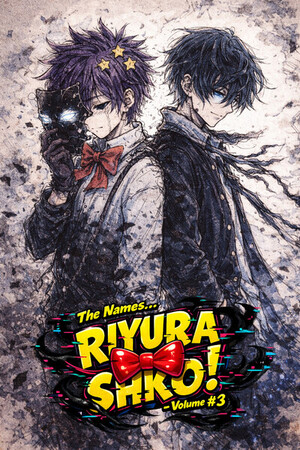
THE NAMES... Riyura Shiko!
VOLUME #3 - EPISODE 12 [VOLUME FINALE PART TWO]
[NARRATOR: Some mornings you wake up and forget. For three beautiful seconds, you forget your brother is dead. Forget you killed your father. Forget the psychic energy that awakened from despair. Then reality crashes back and you remember everything. Today is one of those mornings. Except it's been every morning for two weeks. And Riyura Shiko is drowning in survivor's guilt so deep he's not sure he wants to survive anymore. But his friends won't let him drown. Not without a fight. This is the weight of survival. This is what comes after the battle. This is the hardest part—and somehow, impossibly, also where healing begins.]
PART ONE: THE FUNERAL WHERE EVERYTHING HURT
Saturday. Two weeks after Yakamira's death. The funeral was small, private, held at a cemetery where winter light filtered through thinned trees like broken promises.
Riyura stood beside the casket—closed, because the knife wound had been too brutal for open viewing. His purple hair hung limp and unwashed. No star hairclip. Black suit borrowed from Subarashī because he'd never owned one. His hands trembled as he held a single white flower.
His mother stood beside him, silent tears streaming down her face. She'd aged a decade in two weeks. Lost her husband (even though he'd been a monster, he'd still been her husband). Lost her eldest son. Nearly lost her youngest.
The cemetery was nearly empty. Just family. Just friends. Just the people who'd survived the corruption network's collapse and its violent, desperate retaliation. And after the networks last remains, had now been cleaned up.
Subarashī and Miyaka were there—both still bandaged from the attack at school when network members had tried one final act of revenge. Sotsuko stood nearby, his arm in a sling. Shoehead and Socksiku flanked them, silent and present.
Jimiko stood slightly apart, as always, but his eyes held profound grief. He'd lost his own parents to this network. Understood exactly what Riyura was feeling.
And Keiko—the piano prodigy who understood performing through pain—stood at the very back, tears streaming down his face, not even trying to hide them. The priest spoke words about eternal rest and peace. Standard funeral script. Meaningless platitudes.
Riyura barely heard any of it.
[RIYURA'S INTERNAL MONOLOGUE: Yakamira should be here. Standing beside me. Making analytical observations about funeral customs or pointing out logical inconsistencies in many ways. He should be alive. He should be—but he's not. He's in that box. Dead because he stepped in front of a knife meant for me. Dead because our father hated me so much he was willing to kill both his sons. Dead because I investigated. Because I exposed. Because I—]
"Riyura?" His mother's voice, gentle. "It's time. Do you want to say anything?" He looked at the casket. At the finality of closed wood and flowers and the knowledge that his brother's body was inside, cold and still and gone forever.
"I—" His voice broke immediately. "I can't. I don't know what to say. How do you summarize someone's entire life in a few words? How do you—" "You don't have to," Miyaka said quietly, stepping forward. "We can just—we can just be here. That's enough."
But it wasn't enough. Nothing would ever be enough. Riyura stepped forward anyway. Placed his hand on the casket. And spoke to his brother one final time:
"Yakamira. Brother. You went from trying to kill me to dying to protect me. That's—that's the most dramatic character arc I've ever witnessed. Very anime of you. Subarashī would be proud."
A few people laughed weakly. Even through grief, Riyura's comedy instincts kicked in. Except this time it wasn't performance. It was genuine—his real personality, his actual voice, trying to honor his brother the only way he knew how.
"I'm sorry I wasn't a better brother sooner," Riyura continued, his voice shaking. "Sorry it took so long for us to actually connect. Sorry that when we finally did, it was taken away so fast. You deserved better. Deserved a family that loved you properly. Deserved—"
He couldn't continue. Just collapsed against the casket, sobbing openly, all the grief he'd been holding finally, completely breaking free.
His mother held him. His friends gathered around. And they stood there in the cold cemetery while Riyura cried for his brother, for his broken family, for everything that had been destroyed and couldn't be rebuilt.
The casket was lowered. Dirt followed. Finality settled in like winter frost.
Riyura felt something inside him go numb—not peaceful, just empty. As if all the emotion had burned itself out, leaving only ash and exhaustion behind.
After that, the practical mess of death took over. The confusing living arrangements. The unfinished problems. The quiet sorting of things that no one ever wants to sort.
In the end, Yakamira was no longer reduced to a shadow in his father's house—no longer just a tool to be used and ignored as a person. That chapter, at least, was over. Riyura and his mother were left to handle what remained: supplies, living arrangements, the slow work of cleaning up what someone leaves behind when they're gone.
And soon, the world would continue without him. Without his presence, without his name spoken daily. Eventually, Riyura would have to do the same—move forward without his brother, carrying what was left of their bloodline into whatever came next. And his mother and uncle and friends as well. And other relatives he probably had never got to meet in the end. And so Yakamira's story had ended.
PART TWO: THE SCHOOL THAT FELT LIKE A GRAVEYARD
Monday. Return to Jeremy High.
Riyura walked through the gates and immediately felt every eye on him. Students whispering. Teachers looking concerned. Everyone knew what happened—the investigation, the confrontation, the deaths.
Riyura Shiko: the student whose father was the real mastermind. Whose brother died. Who killed his own father in self-defense. Who'd survived but looked like he wished he hadn't.
[RIYURA'S INTERNAL MONOLOGUE: I can't do this. Can't walk these hallways. Can't pretend to be normal. Can't exist in a space where Yakamira should be but isn't. Every corner I expect to see him. Every moment I forget and then remember. It's torture. This is actual torture.]
He made it to homeroom. Sat in his usual seat. Stared at nothing. Sotsuko slid into the seat beside him—Yakamira's old seat. "You shouldn't be here. You should be home. Processing. Healing."
"Can't heal at home," Riyura said hollowly. "Too many memories. Too many rooms where he used to be. At least here I can pretend to be functional." "You're not functional," Sotsuko observed. "You're barely present. Your eyes are—there's nothing in them. You've gone somewhere else."
"Yeah," Riyura agreed. "Somewhere safer. Somewhere I don't have to feel this."
Miyaka appeared on his other side, leaning on crutches from her injuries. "Riyura. We're worried. You haven't answered texts. Haven't eaten according to your mom. You're just—existing. Barely."
"Existing is all I've got right now," Riyura replied.
The teacher entered—a substitute, because Muzaki-sensei was still on leave dealing with his own trauma, and Vice Principal Tanaka had been arrested as part of the network.
"Class," the substitute began nervously, clearly aware of the situation. "We're going to continue with—"
"I can't do this," Riyura said suddenly, standing. "I'm sorry. I thought I could. But I can't. I can't sit here and pretend to care about math or literature or anything when my brother is dead and my father is dead and everything is—"
He walked out before anyone could stop him. Not running. Just walking with purpose toward the one place that made sense. The rooftop. Where everything seemed to happen at Jeremy High. Where truths emerged whether anyone wanted them to or not.
PART THREE: THE INTERVENTION NOBODY PLANNED
Riyura stood at the rooftop's edge, looking down at the courtyard four stories below. Not planning anything. Just... looking. Thinking about how easy it would be. How simple. How all the pain would just stop.
[RIYURA'S INTERNAL MONOLOGUE: I'm not suicidal. I don't think I'm suicidal. I just—I just want the pain to stop. Want to stop feeling responsible for everything. Want to stop seeing Yakamira's face every time I close my eyes. Want to stop existing in a world where he doesn't. Is that suicidal? Or is that just exhaustion? I can't tell anymore.]
"Don't."
Riyura turned. Keiko Pianissimo stood at the rooftop door, his handsome features twisted with concern, his usual color-music speech completely absent.
"I wasn't—" Riyura started.
"Yes you were," Keiko interrupted, walking closer. "Maybe not consciously. But you were thinking about it. I can tell. Because I've stood exactly where you're standing. Thought exactly what you're thinking. And I need you to step back. Please."
"Why?" Riyura asked. "Why does it matter? Yakamira is dead because of me. My father is dead because of me. My friends are injured because of me. Everyone I touch gets hurt. Maybe the world is better if I just—"
"STOP!" Keiko's shout echoed across the rooftop. "Stop talking like that! Stop thinking like that! You're not poison! You're not cursed! You're just—you're just human and traumatized and grieving and none of that means you deserve to die!"
He was crying now, tears streaming freely. "I tried to kill myself after Vienna. After my breakdown. After I destroyed the piano and lost everything. I thought—I thought if I was too broken to perform, I was too broken to exist. And you know what stopped me?"
Riyura shook his head.
"My aunt found me," Keiko said. "In my bedroom in near the bedroom mirror. Pills scattered. Crying. And she didn't lecture me. Didn't tell me it was selfish or stupid or any of that stuff. She just—she just sat with me. Held me. And said: 'You're allowed to be broken. You're allowed to hurt. But you're not allowed to decide for everyone else that you're not worth saving.'"
He stepped closer to Riyura. "So I'm sitting with you. And I'm telling you: You're allowed to be broken. You're allowed to hurt. But you're not allowed to decide that your brother died for nothing. That your survival is worthless. That the people who love you should just accept your death."
The rooftop door burst open again. Subarashī, Miyaka, Shoehead, Socksiku, Jimiko, and Sotsuko emerged—all of them, moving together, forming a circle around Riyura but not trapping him. Just... present.
"We're not letting you do this," Subarashī said firmly. "We're not letting you give up like an anime protaganist who feels hopeless." "I'm too tired to fight," Riyura whispered. "Too tired to keep pretending I'm okay. Too tired to survive."
"Then don't fight," Miyaka said. "Just exist. Let us carry you until you can walk again. Let us be strong while you're weak. That's what friends do."
"I don't deserve friends," Riyura said. "Don't deserve people who care. I'm just—I'm just the kid whose father was a monster. Whose brother died because of him. Who's broken beyond repair."
"WE'RE ALL BROKEN!" Shoehead suddenly shouted, louder than anyone had ever heard him speak. "I eat shoes because my mother died and I couldn't process it! Socksiku eats socks because his parents destroyed his childhood! Miyaka hides behind her brother's shadow because being seen terrifies her! Keiko speaks in colors because normal words hurt too much!"
He stepped forward. "We're all broken, Riyura. And we found each other anyway. We chose each other despite the brokenness. And you—you're the reason most of us are still alive anyway. You helped me when Letace erased my memories. You saved Keiko during his breakdown. You protected all of us by exposing your father. And without you, we wouldn't be willing to try and heal ourselfs today no matter the cost."
"And now," Shoehead continued, his voice softening, "now we're going to help you. Whether you want it or not. Because that's what you taught us. That broken people survive by choosing each other."
Riyura looked at them all—these impossible, damaged, wonderful people who'd become his family when his actual family had destroyed itself. "I don't know how to keep living," Riyura admitted. "Don't know how to exist when everything hurts this much."
"One day at a time," Jimiko said quietly. "One hour. One minute. Whatever you can manage. We'll be here for all of it. Because your are friend." "Even when I'm not silly anymore?" Riyura asked. "Even when the comedy mask is gone and all that's left is grief and exhaustion?"
"ESPECIALLY then," everyone said in unison.
And something in Riyura broke—but not in a destructive way. In a releasing way. Like a dam that had been holding back too much finally, safely letting water through.
He stepped back from the edge. Sank to the ground. And let them gather around him—not smothering, just present—while he cried harder than he'd ever cried in his life.
For Yakamira. For his father who could have been good but chose corruption. For his uncle who had to flee the country. For his mother who lost her entire family in two weeks. For himself—the unique, caring, comedy-masked teenager who'd survived but didn't know how to live with that very survival just yet.
They sat on the rooftop until sunset painted the sky in shades of orange and purple—beautiful and melancholy in equal measure, like existence itself.
"I don't know who I am anymore," Riyura said. "The cheerful host is gone. The comedy mask is broken. I'm just—I'm just whoever's left after everything burned away."
"Then we'll help you figure it out," Miyaka said. "We'll help you become whoever you're meant to be next. Together." Riyura nodded slowly. He didn't believe them yet. Didn't believe healing was possible. Didn't believe he deserved to survive when Yakamira hadn't done so to.
But he believed they believed it. And for now, that was enough.
EPILOGUE: THE BEGINNING OF WHAT COMES NEXT
One month later. Spring arriving early, bringing with it the promise of renewal that felt both hopeful and cruel.
Riyura sat in therapy—court-mandated after everything that happened, but also genuinely helpful in ways he hadn't expected. Learning that grief didn't have a timeline. That surviving wasn't betraying the dead. That broken things could exist without being fixed.
He'd returned to school properly. Still struggling. Still sad. But showing up anyway.
His jokes were properly coming back—slowly, carefully, not as performance but as genuine expression. His friends had learned to tell the difference now. Knew when he was deflecting versus when he was actually feeling lightness.
The corruption network had collapsed completely and didn't exist anymore. Arrests had been made. Trials were starting. His uncle Hiroaki sent occasional messages from wherever he'd fled—checking on Riyura, on his mother, making sure they were surviving.
His mother entered therapy as well, finally confronting decades of silence, complicity, and the tangled grief of loving a husband who had been both victim and monster.
Jeremy High, meanwhile, slipped back into something that resembled normal again. Not unchanged—nothing ever truly stays the same at that school, not with the government quietly choosing to leave it alone because of the trouble it attracts—but familiar enough.
And so did Riyura Shiko, reshaped by pain, but not erased by it.
People accepted the difference easily. He was still their familiar jokester, still quick with humor, still finding a hundred new ways to make people laugh. The jokes carried more weight now, but no one minded. It was enough to have him back in the swing of things. And that, was enough within itself in the end. But it all felt the same again really.
They were healing. Slowly. Imperfectly. Together. Volume 4 was about to begin. Riyura's senior year at Jeremy High. The final chapter as well.
Where he'd help Keiko find genuine joy in music again. Where he'd support Kaiju and Muzaki's healing relationship. Where he'd help Jimiko find complete closure. Where he'd watch Sotsuko become the person his sister had hoped he'd be.
And where he'd learn to exist as himself—broken but honest, grieving but surviving, carrying Yakamira's memory without being crushed by it. It wouldn't be easy. Some days would be harder than others. Some days he'd still stand at that edge wondering if jumping would be simpler.
But his friends were there. His mother was there. His therapist was there. And Yakamira's memory was there—not as burden, but as reminder that survival could be its own kind of victory.
As Riyura walked through Jeremy High's gates that spring morning, he felt something he hadn't felt in months: possibility. Not happiness. Not yet. Maybe not for a long time.
But the possibility that someday, he might feel happiness again. That someday, the grief might ease into something manageable. That someday, he'd be able to think about his brother without wanting to die.
That was enough. For now, that was enough.
[NARRATOR: And so ends Volume 3. With death and revelation and grief so profound it nearly destroyed our protagonist. But also with survival. With friends who refused to let him drown. With the smallest, hardest choice: to keep living when dying seemed easier. Volume 4 awaits—"The Battle of Jeremy High." Where healing happens slowly. Where broken people help each other become whole. Where Riyura Shiko learns that comedy isn't a mask to hide behind but a language to express genuine joy earned through surviving hell. Where every story we've followed reaches its conclusion. Where the kid with purple hair and star-shaped pupils and too much trauma finally, impossibly, finds peace. The final volume begins soon. Stay with us, dear readers. The hardest part is over. Now comes the healing. Now comes the end that's really a beginning. Now comes hope.
(END OF VOLUME 3)
[VOLUME 4 PREVIEW: "THE BATTLE OF JEREMY HIGH" - Senior year begins. Riyura helps his friends while learning to help himself. Keiko's piano journey reaches its hopeful conclusion. Kaiju and Muzaki build their father and son relationship properly. Jimiko finds closure about his parents and his stolen memories. Sotsuko completes his redemption arc. Letace sends messages from overseas, proving change is possible even for monsters. And Riyura—slowly, painfully, beautifully—learns to laugh again. Not as performance. As genuine joy. As proof that survival can become living. As testament to everyone who didn't survive but whose memory makes survival meaningful. The final volume. The conclusion. The moment where Riyura Shiko's story ends not with tragedy, but with hope earned through hell and held onto despite everything. And so comes also the most emotional and sinister threat yet, that Riyura has ever faced. His name is Jisatsu Bara.]
BONUS ENDING - The Student Who Wanted To Die - [VOLUME 3 EPILOGUE / VOLUME 4 PREVIEW]
[NARRATOR: Some people survive when they want to die. Some people live when they're desperate to leave. And some people become so consumed by their desire for death that they make it everyone else's problem. Meet Jisatsu Bara—Suicide Rose—the most emotionally damaged, sinister, and paradoxically unlucky-yet-unkillable student Jeremy High has ever known, and the perfect example of that reasoning alone. He's about to make Riyura Shiko's final year a living hell to. And he has very good reasons for it. Terrible reasons. But good nonetheless.]
Three weeks after Yakamira's funeral. Jeremy High's east wing classroom. 3:47 PM.
A student stood in front of a broken mirror, pale fingers tracing the reflection of a face he hated. White hair falling across dead eyes. Emo clothing—black everything. And a scarf of pure white fluffyness.
Jisatsu Bara. Seventeen years old. Still alive despite his best efforts.
"Another day breathing," he muttered to his reflection, voice carrying that particular emo cadence—melodramatic, poetic, drenched in performative despair that was also completely genuine. "Another day trapped in this flesh prison. Another day fate refuses to let me see what's beyond the veil. How tedious. How cruel. How utterly predictable."
He'd tried dying forty-seven times. Forty-seven documented attempts ranging from the mundane (pills, smashing his face into a desk until he almost bled death, heights) to the creative (poisonous plants, elaborate strangle mechanisms, that one time with the train that inexplicably derailed seconds before impact).
Every time: survival. Miraculous, impossible, infuriating survival. Bad luck in life. Good luck in living. The universe's cruelest joke.
His phone buzzed. Text from his older sister—the golden child, the successful one, the person their parents actually loved. "Mom wants to know if you're coming to dinner. Please don't embarrass us this time by talking about death. What meaningless message in a pointless world that we live in."
Jisatsu deleted it without responding. His family hated him. All four siblings, both parents, extended relatives who avoided him at gatherings. They hated how he dressed. How he spoke. The music he listened to (exclusively melancholic alternative rock and classical requiems). The books he read (existential philosophy and gothic horror). The way he existed as a walking reminder that their perfect family had raised something broken.
But there was more. Something deeper. Something he kept hidden even from himself most days.
They hated him because he was different. Because he liked things they didn't understand. Because he refused to perform normalcy when normalcy felt like slow suffocation. Because he was—though he'd never say it aloud—maybe not entirely normal, maybe not entirely the same, maybe not entirely anything they wanted him to be.
So they pushed him away. Made him the black sheep. The embarrassment. The child they pretended didn't exist at family photos. And Jisatsu learned to hate himself too. Learned that maybe they were right. Maybe he was too broken to deserve love. Maybe death really would be mercy for him.
Except death kept refusing him. He pulled a piece of paper from his pocket—wrinkled, stained, carried with him for three weeks. A news article about the Shiko family incident.
It reported that Riyura Shiko's father was dead, though no cause had ever been confirmed. All physical evidence had been erased—burned away by energy surges so extreme that analysts speculated they could have destroyed the planet if they'd been any larger. The article labeled it the world's first verified supernatural event.
Theories flooded the public sphere. None of them were grounded. None of them were close. No one knew the truth. Not about Riyazo Shiko. Not about the power involved. And not about Yakamira—who had died at his father's hands and the killer being Riyura. And Jitasu already saw the truth when he was walking to school like any other normal day. And ignored it all somehow. Considering him It's not shocking. So he knew Riyura did it and was fine with it all, as he saw a glimpse of the scene while ignoring the event that was not shocking to him in the very least to.
Yakamira. The name made something inside Jisatsu twist very painfully indeed.
He'd known Yakamira. Years ago. Childhood. Before the Shiko family had moved, before everything had fractured. They'd been—not friends exactly, but something. Two isolated kids who understood loneliness.
And Riyura had been there too. The cheerful younger brother. The purple-haired anomaly.
Jisatsu had watched from the margins. Had seen the Shiko family dynamics. Had felt something like relation with Yakamira's isolation. Then they'd moved away. And Jisatsu had stayed trapped in his own hell.
Now Yakamira was dead. And Riyura—the survivor, the unique one, the person everyone seemed to love despite his trauma—was very much still alive. It wasn't fair.
Jisatsu crumpled the article, then smoothed it out again carefully. His hands were trembling. Not with grief exactly. With something more complicated.
Rage. Jealousy. Grief for a childhood connection lost. And underneath it all: a kind heart he'd buried so deep beneath sinister aesthetics and death-obsession that even he'd almost forgotten it existed.
"Riyura Shiko," Jisatsu whispered to his reflection. "You survived when Yakamira didn't. You get to be loved despite being broken. You get to have friends who care. While I—"
He touched the mirror, and shadows responded.
Not metaphorical shadows. Actual darkness swirling around his fingers like living smoke. His ability—the psychic manifestation of his desire for death, his performance of despair that was also genuine suffering as well.
Where Riyura's power was blue stars and comedy masks and desperate joy hiding pain, Jisatsu's was pure void. Shadows that consumed light. Darkness that spread like infection. The visual representation of wanting to cease existing.
"While I get to rot alone," Jisatsu finished. "Hated by everyone. Unable to die. Unable to live. Just existing in this liminal space between wanting death and being cursed with life."
The shadows coiled tighter, responding to his emotional intensity. He'd heard the rumors. Riyura Shiko was returning to school. Starting his senior year. Trying to heal with his friends surrounding him like armor.
And Jisatsu had made a decision. If he couldn't die—if fate kept forcing him to live despite forty-seven sincere attempts at escape—then he'd make his existence mean something.
He'd destroy Riyura Shiko. The person who survived when Yakamira didn't. The person who got love despite being broken. The person who represented everything Jisatsu wanted but couldn't have.
Not because he genuinely believed Riyura deserved it. But because pain needed outlet. Because jealousy needed target. Because if Jisatsu had to suffer, then why not make the universe's favorite survivor suffer too?
"I have something fantastic planned," Jisatsu said to his reflection, shadows dancing around him like eager servants. "The Battle of Jeremy High. How dramatic. How fitting. How perfectly tragic."
He smiled—sinister, creepy, hiding the kind heart that still existed somewhere beneath layers of self-hatred and performance.
"I'm coming for you, Riyura Shiko. And when we meet—when you see what I've become, what your survival cost—you'll wish you'd died with your brother. You'll understand what it means to be hated. To be isolated. To want death but be cursed with living."
The shadows expanded, filling the room, turning afternoon light into twilight.
"Welcome to my world, purple-haired survivor. Let's see how long your hope lasts when someone who has none decides to make you their final project before I finally, finally find a way to die."
The classroom lights flickered. The shadows receded. And Jisatsu Bara—Suicide Rose, the student who wanted death more than anything, the kid whose bad luck in life and good luck in living had made him into something sinister—walked out into Jeremy High's hallways.
Hunting for the teenager who'd survived when his childhood almost-friend hadn't. Preparing for Volume 4. Where healing would be interrupted by destruction. Where hope would be tested by despair. Where Riyura would face his most emotionally damaged enemy yet.
And where maybe—just maybe—two broken people could find something other than mutual destruction. But probably not. This was Jeremy High, after all. Where everything that could go wrong inevitably did.
[TO BE CONTINUED IN VOLUME 4: "THE BATTLE OF JEREMY HIGH"]



Please sign in to leave a comment.