Chapter 9:
Chapter 9_ The Fracture and the Glue
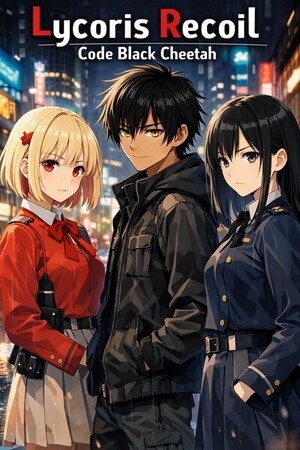
Lycoris Recoil: Code Black Cheetah
The ride back to LycoReco was a silence so complete it felt like a physical presence in the van. Mizuki drove, her knuckles white on the steering wheel, her eyes fixed on the road with a frightening intensity. In the back, Takina methodically checked her remaining equipment, her movements sharp, almost angry. Chisato stared out the window at the passing city lights, her usual vibrant energy replaced by a still, thoughtful quiet. Raze cradled K-1 in his lap; the drone was powered down, a long, scorched dent marring his sleek hull from the debris impact.
The defeat wasn’t in the lost prisoners or the damaged highway. It was in the air they breathed. Stalker hadn’t just beaten their plan; he had dissected it in front of them, showing how easily their cohesion could be turned into a vulnerability.
When they stumbled through the café door, the warm, familiar space felt like a museum of a former life. The cheerful bell was a taunt.
Mika took one look at them—at Mizuki’s silent fury, Takina’s rigid posture, Chisato’s uncharacteristic stillness, and the damaged drone in Raze’s arms—and didn’t ask a single question. He simply walked behind the counter.
“Sit,” he said, not as a suggestion.
They sat. A moment later, Mika placed a tray on the table. Not beer, not coffee. A pot of steaming herbal tea—chamomile and lemon balm—and five simple clay cups. The act was so profoundly domestic, so care-full in the midst of their care-less failure, that it made something in Raze’s chest tighten.
“Kurumi,” Mika said. “The drone.”
Kurumi, who had been watching them wide-eyed from her corner, scurried over. “Let me see,” she said, her voice uncharacteristically soft. Raze handed K-1 over. She took the drone with surprising gentleness, her fingers immediately probing the damaged housing. “Hull integrity is compromised, but the core systems seem intact. A few ruptured capacitors, fried wiring from an energy surge… I can fix this. He’ll be sarcastic again by morning.” She gave Raze a small, determined nod before hurrying to her workbench, already muttering about micro-soldering.
Mika poured the tea. The sound of the liquid filling the cups was the only sound in the room.
It was Mizuki who finally broke, her voice cracking. “He was on top of us. The whole time. We were the mice, and he was the cat with the fucking night-vision goggles.” She slammed her palm on the table, making the cups rattle. “I was in the van! I was useless! What’s the point of being the driver if the road gets cut out from under you?!”
“The point,” Mika said calmly, handing her a cup, “is that you were where you were supposed to be. The plan failed. The roles did not.” He looked at each of them. “A poor craftsman blames his tools. A wise one learns why the tool broke. We were the tool tonight. Stalker found our stress point. Now we must understand it.”
Takina took a precise sip of her tea. “He exploited our predictability. We assumed they would engage the convoy directly. We did not anticipate an aerial platform targeting our command position. We became static defenders of a position that became a trap.”
“But we got out,” Chisato said, her voice quiet but clear. She wasn’t looking at anyone, tracing the rim of her cup with a finger. “He had us dead to rights. He could have dropped the whole tower. He could have shot us while we were scrambling. But he didn’t. He just… watched. He let us scramble.” She finally looked up, her red eyes meeting Raze’s. “You called for a distraction. You came for Takina. I swung for a new angle. We didn’t follow a plan. We just… helped each other. And it worked. We’re here.”
Her words hung in the air. Stalker had predicted the trap, but had he predicted that? The chaotic, human improvisation born of trust?
“He called it the ‘human variable,’” Raze murmured, repeating Stalker’s parting words. “He was collecting data on it. On us. Our reactions under pressure. Our loyalty to each other.”
“Then we must become an unpredictable variable,” Mika stated. “Our strength is our bond. Our weakness was letting the enemy choose the battlefield where that bond could be tested as a liability. No more. From now on, we fight on our terms. Not as DA operatives or a deniable asset, but as LycoReco.”
A new resolve, fragile but steady, began to seep into the room, replacing the ashes of defeat.
Later, as the others dispersed to tend to wounds and wounded pride, Raze found himself in the back room with Kurumi, watching her work on K-1 under a bright magnifying lamp. Her hands were impossibly steady.
“He’s tougher than he looks,” she said without glancing up.
“He’s all I had for a long time,” Raze admitted.
“I get that,” Kurumi said, swapping a microscopic tool. “My tech is my… everything. It’s how I see the world, how I interact with it. Someone threatening my systems is like someone threatening my eyes.” She paused. “He talked about you, you know. While you were on missions. Fretted, in his own weird way. ‘His cortisol levels are elevated,’ ‘his tactical choices are 3.2% more aggressive than optimal.’ Annoying. But… kind of sweet.”
Raze felt a lump in his throat. “Thank you for fixing him.”
“Don’t thank me yet. I’m adding a subroutine that lets me override his sarcasm module with a remote kill-switch. For the good of the team.”
From across the room, a spark flew from K-1’s open chassis, and a distorted, glitching voice emanated from a temporary speaker. “I… heeearrr… that… and… pro-test…”
Kurumi and Raze looked at each other, and for the first time that night, genuine smiles broke through.
The next morning, K-1 was back online, his hull patched with a sleek, carbon-fiber weave that Kurumi insisted was an upgrade. His voice was clear, his sarcasm undimmed.
“I have analyzed the sensor data from the engagement before my unscheduled impact with construction materials,” he announced to the team over breakfast. “Stalker’s drone employs a phased-cloaking technology that scatters active scans. However, it leaves a minute thermal bloom in the upper infrared spectrum during high-power maneuvers. It is a signature. A faint one, but a signature nonetheless.”
It was a thread. A tiny, technological loose end to pull on.
Mika nodded. “Kurumi, build a dedicated sensor filter for that signature. Scan the city passively. Mizuki, plot patterns—where would a group needing high-tech isolation and multiple exit routes base themselves? Takina, Chisato, begin training in unstructured, urban environments. No more fixed positions.” He then looked at Raze. “And you. You need to understand your own variable.”
Raze blinked. “Sir?”
“Stalker is studying our human element. You contain a dual nature—the programmed and the personal. You must understand both to control the variable you represent. Train with Chisato. Learn her ‘unpredictability.’ Train with Takina. Learn her ruthless focus. And listen to that chip. Not to obey it, but to understand its logic, so you can subvert it.”
It was a new mission. Not to find the enemy, but to master themselves.
As they cleared the breakfast dishes, Chisato sidled up to Raze, her smile tentative but returning. “So, partner. Ready for your first lesson in being gloriously, wonderfully unpredictable?”
For the first time since the tower fell, Raze felt not dread, but a spark of anticipation. “I have no idea what to expect. So, I guess I’m ready.”
Chisato’s grin finally reached her eyes. “Perfect! That’s exactly the right answer!”
The fracture from the failed ambush was still there, a hairline crack in their confidence. But as Raze looked around at Mizuki arguing with K-1 over traffic patterns, at Kurumi already lost in a swirl of code, at Takina calmly cleaning a pistol, and at Chisato buzzing with a new kind of plan, he realized something.
They weren’t just the team’s glue, mending the break. They were the kintsugi—the golden repair. The fracture was part of their story now, and they would be stronger, and more brilliant, for it. Stalker had seen the human variable. Soon, he would learn just how powerful that variable could be.
End of Chapter 9
The defeat wasn’t in the lost prisoners or the damaged highway. It was in the air they breathed. Stalker hadn’t just beaten their plan; he had dissected it in front of them, showing how easily their cohesion could be turned into a vulnerability.
When they stumbled through the café door, the warm, familiar space felt like a museum of a former life. The cheerful bell was a taunt.
Mika took one look at them—at Mizuki’s silent fury, Takina’s rigid posture, Chisato’s uncharacteristic stillness, and the damaged drone in Raze’s arms—and didn’t ask a single question. He simply walked behind the counter.
“Sit,” he said, not as a suggestion.
They sat. A moment later, Mika placed a tray on the table. Not beer, not coffee. A pot of steaming herbal tea—chamomile and lemon balm—and five simple clay cups. The act was so profoundly domestic, so care-full in the midst of their care-less failure, that it made something in Raze’s chest tighten.
“Kurumi,” Mika said. “The drone.”
Kurumi, who had been watching them wide-eyed from her corner, scurried over. “Let me see,” she said, her voice uncharacteristically soft. Raze handed K-1 over. She took the drone with surprising gentleness, her fingers immediately probing the damaged housing. “Hull integrity is compromised, but the core systems seem intact. A few ruptured capacitors, fried wiring from an energy surge… I can fix this. He’ll be sarcastic again by morning.” She gave Raze a small, determined nod before hurrying to her workbench, already muttering about micro-soldering.
Mika poured the tea. The sound of the liquid filling the cups was the only sound in the room.
It was Mizuki who finally broke, her voice cracking. “He was on top of us. The whole time. We were the mice, and he was the cat with the fucking night-vision goggles.” She slammed her palm on the table, making the cups rattle. “I was in the van! I was useless! What’s the point of being the driver if the road gets cut out from under you?!”
“The point,” Mika said calmly, handing her a cup, “is that you were where you were supposed to be. The plan failed. The roles did not.” He looked at each of them. “A poor craftsman blames his tools. A wise one learns why the tool broke. We were the tool tonight. Stalker found our stress point. Now we must understand it.”
Takina took a precise sip of her tea. “He exploited our predictability. We assumed they would engage the convoy directly. We did not anticipate an aerial platform targeting our command position. We became static defenders of a position that became a trap.”
“But we got out,” Chisato said, her voice quiet but clear. She wasn’t looking at anyone, tracing the rim of her cup with a finger. “He had us dead to rights. He could have dropped the whole tower. He could have shot us while we were scrambling. But he didn’t. He just… watched. He let us scramble.” She finally looked up, her red eyes meeting Raze’s. “You called for a distraction. You came for Takina. I swung for a new angle. We didn’t follow a plan. We just… helped each other. And it worked. We’re here.”
Her words hung in the air. Stalker had predicted the trap, but had he predicted that? The chaotic, human improvisation born of trust?
“He called it the ‘human variable,’” Raze murmured, repeating Stalker’s parting words. “He was collecting data on it. On us. Our reactions under pressure. Our loyalty to each other.”
“Then we must become an unpredictable variable,” Mika stated. “Our strength is our bond. Our weakness was letting the enemy choose the battlefield where that bond could be tested as a liability. No more. From now on, we fight on our terms. Not as DA operatives or a deniable asset, but as LycoReco.”
A new resolve, fragile but steady, began to seep into the room, replacing the ashes of defeat.
Later, as the others dispersed to tend to wounds and wounded pride, Raze found himself in the back room with Kurumi, watching her work on K-1 under a bright magnifying lamp. Her hands were impossibly steady.
“He’s tougher than he looks,” she said without glancing up.
“He’s all I had for a long time,” Raze admitted.
“I get that,” Kurumi said, swapping a microscopic tool. “My tech is my… everything. It’s how I see the world, how I interact with it. Someone threatening my systems is like someone threatening my eyes.” She paused. “He talked about you, you know. While you were on missions. Fretted, in his own weird way. ‘His cortisol levels are elevated,’ ‘his tactical choices are 3.2% more aggressive than optimal.’ Annoying. But… kind of sweet.”
Raze felt a lump in his throat. “Thank you for fixing him.”
“Don’t thank me yet. I’m adding a subroutine that lets me override his sarcasm module with a remote kill-switch. For the good of the team.”
From across the room, a spark flew from K-1’s open chassis, and a distorted, glitching voice emanated from a temporary speaker. “I… heeearrr… that… and… pro-test…”
Kurumi and Raze looked at each other, and for the first time that night, genuine smiles broke through.
The next morning, K-1 was back online, his hull patched with a sleek, carbon-fiber weave that Kurumi insisted was an upgrade. His voice was clear, his sarcasm undimmed.
“I have analyzed the sensor data from the engagement before my unscheduled impact with construction materials,” he announced to the team over breakfast. “Stalker’s drone employs a phased-cloaking technology that scatters active scans. However, it leaves a minute thermal bloom in the upper infrared spectrum during high-power maneuvers. It is a signature. A faint one, but a signature nonetheless.”
It was a thread. A tiny, technological loose end to pull on.
Mika nodded. “Kurumi, build a dedicated sensor filter for that signature. Scan the city passively. Mizuki, plot patterns—where would a group needing high-tech isolation and multiple exit routes base themselves? Takina, Chisato, begin training in unstructured, urban environments. No more fixed positions.” He then looked at Raze. “And you. You need to understand your own variable.”
Raze blinked. “Sir?”
“Stalker is studying our human element. You contain a dual nature—the programmed and the personal. You must understand both to control the variable you represent. Train with Chisato. Learn her ‘unpredictability.’ Train with Takina. Learn her ruthless focus. And listen to that chip. Not to obey it, but to understand its logic, so you can subvert it.”
It was a new mission. Not to find the enemy, but to master themselves.
As they cleared the breakfast dishes, Chisato sidled up to Raze, her smile tentative but returning. “So, partner. Ready for your first lesson in being gloriously, wonderfully unpredictable?”
For the first time since the tower fell, Raze felt not dread, but a spark of anticipation. “I have no idea what to expect. So, I guess I’m ready.”
Chisato’s grin finally reached her eyes. “Perfect! That’s exactly the right answer!”
The fracture from the failed ambush was still there, a hairline crack in their confidence. But as Raze looked around at Mizuki arguing with K-1 over traffic patterns, at Kurumi already lost in a swirl of code, at Takina calmly cleaning a pistol, and at Chisato buzzing with a new kind of plan, he realized something.
They weren’t just the team’s glue, mending the break. They were the kintsugi—the golden repair. The fracture was part of their story now, and they would be stronger, and more brilliant, for it. Stalker had seen the human variable. Soon, he would learn just how powerful that variable could be.
End of Chapter 9






Please sign in to leave a comment.