Chapter 17:
Chapter 17_ Convergence
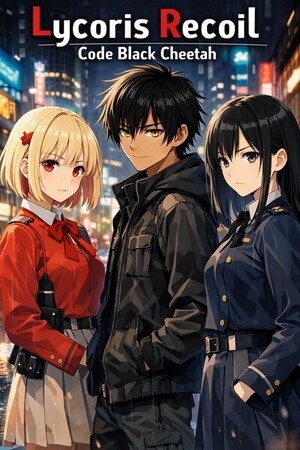
Lycoris Recoil: Code Black Cheetah
The dawn was a thin, grey smear on the horizon as the black van glided to a silent stop two blocks from the Adachi ward’s water treatment control center. The building was a nondescript, windowless concrete block from a forgotten architectural era, squatting behind a high fence crowned with rusted, benign-looking barbed wire. To any casual observer, it was a civic relic. To the team’s trained eyes, it was a fortress: the hidden teeth beneath a yawn.
Inside the van, the air was thick with the smell of ozone from electronics and the quiet tension of calibrated violence. Raze, Chisato, and Takina were a study in contrasting readiness. Chisato vibrated with a contained, kinetic energy, her fingers drumming a silent rhythm on her thigh. Takina was a statue of focused calm, her breathing slow and even, her eyes closed as she visualized the schematics one final time. Raze sat between them, running a final systems check. The hum of his nanites was a familiar song beneath his skin, the chip a cool, logical presence at the back of his mind. He wasn’t fighting it now. He was partnering with it.
“Final sync,” Kurumi’s voice came through their earpieces, clear and focused from her remote station. “I’m feeding you live structural analysis from municipal seismic sensors. The ground floor is a shell. All the real activity is subsurface, two levels down. K-1’s ghost is still floating in Syndicate networks. They’re debating it. Confusion is optimal.”
Mika’s voice, deep and steady, followed. “Remember the priority. Find the command nexus. Plant the data taps. Proof of operation is the goal. Avoid prolonged engagement if possible. You are a scalpel, not a hammer.”
“Copy,” Takina said, opening her eyes.
“Let’s go be the best scalpel ever,” Chisato grinned, her eyes sharp.
Mizuki, in the driver’s seat, didn’t turn around. “Back door is prepped. You’ve got ninety seconds of clean access from my mark. Go.”
They slipped from the van, three shadows against the grey dawn. They approached not the main gate, but a storm drain culvert fifty meters down the road. Mizuki’ earlier “logistics run” had involved subtly compromising its heavy grate. With a shared heave, they slid it aside just enough to slip through, dropping into the chill, echoing darkness of a runoff tunnel.
“Clock starts now,” Mizuki whispered in their ears.
They moved quickly through the ankle-deep water, guided by the blue-tinted night vision of their goggles. The tunnel led directly under the facility’s perimeter. A maintenance access hatch, marked on the stolen blueprints, was set into the ceiling. Takina boosted Chisato, who worked a pick and a torsion wrench into the old lock. Ten seconds later, a soft clunk echoed, and the hatch swung down.
They ascended into a basement corridor of dripping pipes and grinding machinery—the legitimate, noisy cover for what lay below. According to Kurumi’s model, the entrance to the sub-levels was a disguised freight elevator behind a false wall in a pump control room.
They found the room. The false wall was well-made, but to sensors and a trained eye, the seams were visible. Raze located the hidden catch, a magnetic switch disguised as a rusty bolt head. A section of wall hissed inward, revealing the elevator.
“So far, so predictable,” Chisato whispered.
“Predictability is a vulnerability,” Takina reminded her, as the elevator doors closed and it began a smooth, silent descent.
The descent felt longer than two floors. The air grew colder, drier. When the doors opened, they opened onto a different world.
The sterile, industrial grey of the Syndicate’s aesthetic greeted them. The corridor was wide, lit by cool LED strips, the floor a seamless polymer. It hummed with the low frequency of powerful climate control and distant servers. It was clean, quiet, and utterly hostile.
“I have your position,” Kurumi said. “Mapping you now. Heat signatures ahead… four stationary, two moving. You’re at the periphery of the operational zone. The command nexus should be straight ahead, then left.”
They moved, a perfect triangle. Chisato on point, her senses stretched to their limits, reading the air currents, the sub-audible vibrations in the floor. Takina covered the rear, her pistol a steady extension of her will. Raze was the pivot, his enhanced senses and link to K-1 providing a constant stream of data: temperature differentials that might indicate hidden doors, the faint EM signatures of surveillance feeds Kurumi was now looping.
They bypassed a sealed door labeled ‘Archive 7.’ They passed a closed lab, a glimpse of familiar server racks through a window. The sense of violation Raze felt in the Arashiyama Tower returned, colder now. This was the brain. Here, the dissection of his life was a daily function.
They rounded a corner and encountered the first moving patrol. Two Syndicate soldiers, armed, their armor matte black. There was no hesitation.
Chisato moved like a thought. A silent, leaping kick took the first in the temple before he could even register her presence. As the second began to turn, Takina’s suppressed round hit the power cell on his lower back, a non-lethal discharge that sent him convulsing to the floor. Raze was there to catch them both, lowering them silently. The whole encounter took less than three seconds and made no more sound than two sighs.
“Clear,” Chisato breathed.
They dragged the bodies into an empty side room. Time was compressing. The longer they were inside, the higher the chance a missed check-in would trigger the alarm.
Finally, they reached a junction. Straight ahead led to a barracks area. To the left, a heavy, reinforced door with a biometric scanner. A small placard read: NEXUS-1.
“This is it,” Raze said, his pulse kicking up a notch. This was the heart. Where Stalker would be, if he were here.
“Kurumi, can you bypass?” Takina asked, covering the corridor.
“Working on it… It’s a dual system. Biometric and a physical cipher key. I can fake the biometric, but I need the keycode sequence. It’s not on the main network. It’s air-gapped, inside the room.”
They needed someone with the key. Or they needed to force entry, which would be loud.
As they deliberated, the decision was made for them. With a soft, hydraulic hiss, the heavy door to Nexus-1 began to slide open from within.
They scattered, melting into doorways and shadows. From the opened door, a figure emerged. Not a soldier. A technician in a white coat, holding a tablet, yawning. He was stepping out, likely for a coffee run.
He never saw Chisato. She flowed from the shadows like water, one arm wrapping around his mouth, the other applying precise pressure. His eyes fluttered, and he went limp. She caught his tablet and dragged him back into their shadow.
“Keycard,” Takina noted, plucking it from his lanyard.
But the door was already closing. In a split second, Raze acted. He lunged, not for the door, but for the small, maintenance tool kit on the technician’s belt. He snatched a thin, sturdy spanner and jammed it into the closing door’s track just before it sealed.
The door shuddered, stopped, and let out a low, grinding alarm—a quiet, local sound, but an alarm nonetheless.
“So much for subtle,” K-1’s dry voice commented in Raze’s ear.
“Go, go, go!” Chisato urged.
Takina swiped the stolen keycard. The door, its mechanism confused by the obstruction and the authorized key, slid back open with a protesting groan. They surged inside.
Nexus-1 was the center of the web. Walls of monitors displayed data streams, security feeds from across Tokyo, and complex models of the Aegis data. Consoles formed a ring around the room. And in the center, standing calmly with his back to them, studying a main screen showing the ghostly digital trail heading towards South Africa, was Stalker.
He didn’t turn. “The phantom is elegant,” he said, his amplified voice filling the room. He gestured at the screen. “A convincing trace. It almost pulled a significant asset from my board.” Finally, he slowly turned to face them. His helmet’s single red optic gleamed. “Almost.”
A cold certainty settled in Raze’s gut. The trap hadn’t been at the Source Point in South Africa. It was here. He’d known. Or he’d guessed.
“You expected us,” Takina stated, her weapon raised, her voice ice.
“I anticipated the most logical counter-move from a group that values loyalty over strategy,” Stalker replied, spreading his hands. The doors behind them, and two others on the side walls, hissed open simultaneously. Six Syndicate soldiers filed in, weapons raised, forming a perfect circle around them. “To strike at the heart to protect the heart. It is… poetic. And predictable.”
They were surrounded. Outnumbered. In the heart of enemy territory.
Chisato’s grin didn’t falter; it turned fierce. “You know, for a guy who hates variables, you talk an awful lot.”
Stalker’s head tilted. “The variable is now contained. Subject Zero, you have a choice. Surrender willingly, and your companions may leave. Their irrelevance is their protection. Resist, and they will be removed from the equation here and now.”
Raze looked at the ring of weapons, at Stalker’s implacable stance, at the monitors displaying the secrets of his own mind. The chip calculated survival probabilities. They were dismal. The Omega Contingencies whispered of a path through the fire, at a cost he could not bear.
He looked at Chisato and Takina. They stood back-to-back-to-back with him, not a shred of surrender in their posture. They had known the risks. They had come anyway.
He wasn’t Subject Zero. He was Ren. And Ren did not leave his family.
He smiled, a small, tight smile. “You made one mistake, Stalker.”
“Oh?”
“You think the variable is just me.” Raze tapped his earpiece. “Kurumi. Now.”
Stalker’s optic brightened. “Your hacker cannot help you. This room is a sealed bubble.”
“She’s not hacking you,” Raze said, as all the lights in Nexus-1—the monitors, the LED strips, the console lights—abruptly died, plunging the room into absolute, suffocating blackness. “She’s turning off the lights.”
In the sudden, perfect dark, the human variable reigned supreme. And Raze had been trained by the best.
End of Chapter 17
Inside the van, the air was thick with the smell of ozone from electronics and the quiet tension of calibrated violence. Raze, Chisato, and Takina were a study in contrasting readiness. Chisato vibrated with a contained, kinetic energy, her fingers drumming a silent rhythm on her thigh. Takina was a statue of focused calm, her breathing slow and even, her eyes closed as she visualized the schematics one final time. Raze sat between them, running a final systems check. The hum of his nanites was a familiar song beneath his skin, the chip a cool, logical presence at the back of his mind. He wasn’t fighting it now. He was partnering with it.
“Final sync,” Kurumi’s voice came through their earpieces, clear and focused from her remote station. “I’m feeding you live structural analysis from municipal seismic sensors. The ground floor is a shell. All the real activity is subsurface, two levels down. K-1’s ghost is still floating in Syndicate networks. They’re debating it. Confusion is optimal.”
Mika’s voice, deep and steady, followed. “Remember the priority. Find the command nexus. Plant the data taps. Proof of operation is the goal. Avoid prolonged engagement if possible. You are a scalpel, not a hammer.”
“Copy,” Takina said, opening her eyes.
“Let’s go be the best scalpel ever,” Chisato grinned, her eyes sharp.
Mizuki, in the driver’s seat, didn’t turn around. “Back door is prepped. You’ve got ninety seconds of clean access from my mark. Go.”
They slipped from the van, three shadows against the grey dawn. They approached not the main gate, but a storm drain culvert fifty meters down the road. Mizuki’ earlier “logistics run” had involved subtly compromising its heavy grate. With a shared heave, they slid it aside just enough to slip through, dropping into the chill, echoing darkness of a runoff tunnel.
“Clock starts now,” Mizuki whispered in their ears.
They moved quickly through the ankle-deep water, guided by the blue-tinted night vision of their goggles. The tunnel led directly under the facility’s perimeter. A maintenance access hatch, marked on the stolen blueprints, was set into the ceiling. Takina boosted Chisato, who worked a pick and a torsion wrench into the old lock. Ten seconds later, a soft clunk echoed, and the hatch swung down.
They ascended into a basement corridor of dripping pipes and grinding machinery—the legitimate, noisy cover for what lay below. According to Kurumi’s model, the entrance to the sub-levels was a disguised freight elevator behind a false wall in a pump control room.
They found the room. The false wall was well-made, but to sensors and a trained eye, the seams were visible. Raze located the hidden catch, a magnetic switch disguised as a rusty bolt head. A section of wall hissed inward, revealing the elevator.
“So far, so predictable,” Chisato whispered.
“Predictability is a vulnerability,” Takina reminded her, as the elevator doors closed and it began a smooth, silent descent.
The descent felt longer than two floors. The air grew colder, drier. When the doors opened, they opened onto a different world.
The sterile, industrial grey of the Syndicate’s aesthetic greeted them. The corridor was wide, lit by cool LED strips, the floor a seamless polymer. It hummed with the low frequency of powerful climate control and distant servers. It was clean, quiet, and utterly hostile.
“I have your position,” Kurumi said. “Mapping you now. Heat signatures ahead… four stationary, two moving. You’re at the periphery of the operational zone. The command nexus should be straight ahead, then left.”
They moved, a perfect triangle. Chisato on point, her senses stretched to their limits, reading the air currents, the sub-audible vibrations in the floor. Takina covered the rear, her pistol a steady extension of her will. Raze was the pivot, his enhanced senses and link to K-1 providing a constant stream of data: temperature differentials that might indicate hidden doors, the faint EM signatures of surveillance feeds Kurumi was now looping.
They bypassed a sealed door labeled ‘Archive 7.’ They passed a closed lab, a glimpse of familiar server racks through a window. The sense of violation Raze felt in the Arashiyama Tower returned, colder now. This was the brain. Here, the dissection of his life was a daily function.
They rounded a corner and encountered the first moving patrol. Two Syndicate soldiers, armed, their armor matte black. There was no hesitation.
Chisato moved like a thought. A silent, leaping kick took the first in the temple before he could even register her presence. As the second began to turn, Takina’s suppressed round hit the power cell on his lower back, a non-lethal discharge that sent him convulsing to the floor. Raze was there to catch them both, lowering them silently. The whole encounter took less than three seconds and made no more sound than two sighs.
“Clear,” Chisato breathed.
They dragged the bodies into an empty side room. Time was compressing. The longer they were inside, the higher the chance a missed check-in would trigger the alarm.
Finally, they reached a junction. Straight ahead led to a barracks area. To the left, a heavy, reinforced door with a biometric scanner. A small placard read: NEXUS-1.
“This is it,” Raze said, his pulse kicking up a notch. This was the heart. Where Stalker would be, if he were here.
“Kurumi, can you bypass?” Takina asked, covering the corridor.
“Working on it… It’s a dual system. Biometric and a physical cipher key. I can fake the biometric, but I need the keycode sequence. It’s not on the main network. It’s air-gapped, inside the room.”
They needed someone with the key. Or they needed to force entry, which would be loud.
As they deliberated, the decision was made for them. With a soft, hydraulic hiss, the heavy door to Nexus-1 began to slide open from within.
They scattered, melting into doorways and shadows. From the opened door, a figure emerged. Not a soldier. A technician in a white coat, holding a tablet, yawning. He was stepping out, likely for a coffee run.
He never saw Chisato. She flowed from the shadows like water, one arm wrapping around his mouth, the other applying precise pressure. His eyes fluttered, and he went limp. She caught his tablet and dragged him back into their shadow.
“Keycard,” Takina noted, plucking it from his lanyard.
But the door was already closing. In a split second, Raze acted. He lunged, not for the door, but for the small, maintenance tool kit on the technician’s belt. He snatched a thin, sturdy spanner and jammed it into the closing door’s track just before it sealed.
The door shuddered, stopped, and let out a low, grinding alarm—a quiet, local sound, but an alarm nonetheless.
“So much for subtle,” K-1’s dry voice commented in Raze’s ear.
“Go, go, go!” Chisato urged.
Takina swiped the stolen keycard. The door, its mechanism confused by the obstruction and the authorized key, slid back open with a protesting groan. They surged inside.
Nexus-1 was the center of the web. Walls of monitors displayed data streams, security feeds from across Tokyo, and complex models of the Aegis data. Consoles formed a ring around the room. And in the center, standing calmly with his back to them, studying a main screen showing the ghostly digital trail heading towards South Africa, was Stalker.
He didn’t turn. “The phantom is elegant,” he said, his amplified voice filling the room. He gestured at the screen. “A convincing trace. It almost pulled a significant asset from my board.” Finally, he slowly turned to face them. His helmet’s single red optic gleamed. “Almost.”
A cold certainty settled in Raze’s gut. The trap hadn’t been at the Source Point in South Africa. It was here. He’d known. Or he’d guessed.
“You expected us,” Takina stated, her weapon raised, her voice ice.
“I anticipated the most logical counter-move from a group that values loyalty over strategy,” Stalker replied, spreading his hands. The doors behind them, and two others on the side walls, hissed open simultaneously. Six Syndicate soldiers filed in, weapons raised, forming a perfect circle around them. “To strike at the heart to protect the heart. It is… poetic. And predictable.”
They were surrounded. Outnumbered. In the heart of enemy territory.
Chisato’s grin didn’t falter; it turned fierce. “You know, for a guy who hates variables, you talk an awful lot.”
Stalker’s head tilted. “The variable is now contained. Subject Zero, you have a choice. Surrender willingly, and your companions may leave. Their irrelevance is their protection. Resist, and they will be removed from the equation here and now.”
Raze looked at the ring of weapons, at Stalker’s implacable stance, at the monitors displaying the secrets of his own mind. The chip calculated survival probabilities. They were dismal. The Omega Contingencies whispered of a path through the fire, at a cost he could not bear.
He looked at Chisato and Takina. They stood back-to-back-to-back with him, not a shred of surrender in their posture. They had known the risks. They had come anyway.
He wasn’t Subject Zero. He was Ren. And Ren did not leave his family.
He smiled, a small, tight smile. “You made one mistake, Stalker.”
“Oh?”
“You think the variable is just me.” Raze tapped his earpiece. “Kurumi. Now.”
Stalker’s optic brightened. “Your hacker cannot help you. This room is a sealed bubble.”
“She’s not hacking you,” Raze said, as all the lights in Nexus-1—the monitors, the LED strips, the console lights—abruptly died, plunging the room into absolute, suffocating blackness. “She’s turning off the lights.”
In the sudden, perfect dark, the human variable reigned supreme. And Raze had been trained by the best.
End of Chapter 17






Please sign in to leave a comment.