Chapter 3:
Chapter 3: The First Night
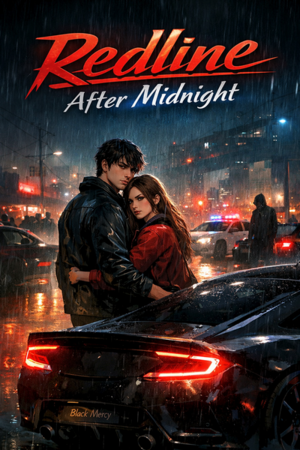
Redline After Midnight
The next day didn’t feel like the next day.
It felt like a thin sheet pulled over something still burning. Routine laid carefully on top of a moment that had already changed the way her body understood danger. She went to campus. She sat in lectures. She nodded at people who spoke to her as if the world hadn’t briefly narrowed into an alley and a pair of footsteps and the low, controlled voice that had cut through panic like a blade.
‚Get in.‘
She told herself she’d been lucky. That was the easiest explanation. Luck was clean. Luck didn’t have a face. Luck didn’t text you later with two words that made your stomach drop.
‚You okay?‘
And yet the city kept offering reminders, as if Ravenport itself had decided she didn’t get to close the door.
On Tuesday evening, she left the campus library later than usual, books heavier in her bag than they had any right to be. The rain had returned in a patient, relentless mist - more atmosphere than weather - turning the campus paths into slick dark ribbons. It wasn’t the kind of rain you fought. It was the kind you surrendered to.
She walked with her shoulders slightly hunched, chin tucked, hood pulled up. Not because she was cold, but because it felt wrong to be too visible.
Halfway down the steps, her phone buzzed.
You’re out late again.
She stopped at the bottom of the stairs, the glow from the library’s tall windows spilling behind her, casting her silhouette long across the wet concrete.
Her first instinct was irritation.
Her second was… something else. Something she didn’t want to name.
She typed back with fingers that moved faster than her thoughts.
And you’re following me again…
She could have left it there. She should have. But a part of her, so small and stubborn, wanted to poke at the boundary, to see if it would poke back.
The reply took longer than last time.
No, but as I already mentioned…
I just know the rhythm of this city.
She stared at the words until the screen dimmed and the reflection of her own eyes looked back at her, framed by rain-speckled glass.
That’s not comforting, she’d written before. It’s honest, he’d said.
Honesty from strangers was dangerous. It made you feel like you owed something in return.
She resumed walking. The parking lot was nearly empty, since most students had already gone home. The campus at night always looked slightly unreal, as if the buildings were sets and the people were extras moving through a scene.
She reached her car and sat inside without starting the engine.
Her phone buzzed again.
You decide yet?
Her throat tightened.
The memory of his voice under the streetlamp came back, too clear, as if the night had left it behind in her ears.
‚Next time, you decide if this is really the road you want.‘
She should have said no. She should have blocked the number. She should have gone home and let the feeling fade.
Instead, she typed:
Where?
A pause. Then:
Midnight.
North edge of campus.
The old maintenance road.
Her fingers hovered.
Why there?
Another pause.
Less eyes.
More road.
She stared at the message, heart beating with an intensity that didn’t match the moment. It wasn’t like she was agreeing to anything explicit. A drive. That was all. She could leave at any time. She wasn’t committing to his world, just looking at it from the edge.
That was the lie she told herself as she started her car and drove toward home.
—————
Her father’s house smelled like coffee and paper.
It always did, even late at night. The scent clung to the walls, to the furniture, to the quiet spaces between words. It was the smell of someone who didn’t know how to stop working. Someone who carried a city’s problems on his back as if putting them down for a few hours would mean they’d slip away forever.
She entered quietly, shoes soft on the entry rug and hung her damp jacket on the hook by the door.
The kitchen light was on.
Her father sat at the table with a file open in front of him, reading glasses perched low on his nose. A map lay spread beside the papers, marked with circles in red ink. When she stepped into the doorway, he looked up.
His eyes didn’t soften immediately. They assessed. That was what years in law enforcement did to a person. Even family became something you evaluated before you embraced.
“You’re late,” he said, voice low.
“I had to finish something at the library,” she replied automatically.
He nodded once, the motion more acknowledgment than acceptance. “You ate?”
“Not hungry.”
He studied her face. “You look… wired.”
She forced a small, tired smile. “Finals are coming.”
“That’s not what I mean.”
Her pulse jumped. She kept her posture loose, shoulders relaxed, like she’d always seen him do when he didn’t want someone to sense tension.
“I’m fine,” she said. “Just tired.”
He leaned back slightly. “Sit.”
She did.
The file in front of him was open to a printed photo: a grainy shot taken from a traffic camera. A car, mostly shadow, just the shape of it and the glint of taillights.
Her stomach tightened.
“It’s getting worse,” he said, tapping the paper. “They’re escalating. More meets. More reports. More complaints. And now they’re running in weather like this, which means they either don’t care… or they’re confident enough to think nothing can touch them.”
She kept her eyes on the photo without letting her face react.
“Any word on the driver?” she asked, careful to keep her tone neutral, as if she didn’t already know the name that haunted his board.
Her father’s jaw tightened. “A nickname keeps coming up. People talk like it’s a myth. Like he’s not a person but a rumor.”
He paused, then looked at her directly.
“Ghostline.”
The name hit her like a cold drop down the spine.
She blinked slowly, as if the word meant nothing.
“That’s dramatic,” she said, forcing a half-laugh.
Her father didn’t smile. “It’s effective. A good nickname makes people careless. Makes them worship you instead of fearing consequences.”
She swallowed. “Are you sure it’s one person?”
“I’m sure there’s one leader. The others follow. They imitate. But there’s one driver they all reference like he’s… the standard.”
He set his glasses down and rubbed a hand over his face, fatigue briefly breaking through his controlled exterior.
“I don’t like it,” he said quietly. “Not because of pride. Because I’ve seen what happens when people start believing they’re untouchable.”
She thought of the car’s motion: smooth, restrained, almost respectful of the road despite its power.
Untouchable wasn’t the word she would have chosen.
“Be careful,” her father added, voice softening. “I know you’re independent. I know you’re not a kid anymore. But Ravenport at night… it’s not the same city anymore.”
Her throat tightened.
“I know,” she said, and it was the most honest thing she’d said all day.
He reached for his mug. “If you’re going out, text me. Don’t make me guess.”
“I will.”
She stood. “I’m going to shower.”
He nodded, eyes already dropping back to the file.
As she walked upstairs, her phone vibrated in her pocket.
Another message.
Don’t bring your car. Walk.
Her stomach flipped.
She closed her bedroom door and leaned against it for a moment, listening to the quiet of the house. Her father’s footsteps downstairs. The faint static of the radio. The steady drip of rain against the window.
She knew she was about to cross into something she didn’t fully understand.
And still… still… her fingers moved.
Okay.
—————
She waited until the house settled into deeper silence.
Her father’s office light turned off. The faint murmur of the radio died. The air in the hallway cooled, as if the home itself had exhaled and gone to sleep.
She dressed in dark clothes. Nothing dramatic, nothing that screamed secrecy. Just practical. Comfortable. Her shoes were quiet. Her hair was damp from the shower, pulled back loosely to keep it out of her face. She avoided perfume, avoided anything that felt too intentional.
If she was going to do something reckless, she didn’t want it to look like she’d planned it.
She slipped out the back door and cut through the yard, hopping the small fence into the alley behind the houses. The rain had thinned to a mist again, hovering in the air like breath. Streetlights cast soft halos on the wet pavement.
She walked quickly, hands shoved in her pockets, shoulders tense despite her efforts to appear calm.
Every sound felt louder tonight. Footsteps. Car tires. The distant bark of a dog. Her own breathing.
The campus wasn’t far, but it felt farther than usual.
She kept hearing his words from the last time they’d met:
‚There are rules.‘
She kept hearing her own reply:
‚I can follow rules.‘
Her phone buzzed as she reached the edge of campus.
Left at the field. Then straight. Don’t stop.
Her throat tightened.
She followed the directions.
Past the athletic fields, empty now, bleachers glistening with rain. Past a locked maintenance building with peeling paint. Past the last set of campus streetlights, where the world shifted from curated student safety into something less maintained, more honest.
The maintenance road was barely a road. It was an old strip of asphalt that had once been used for service vehicles, now cracked and patched, bordered by trees and weeds. The kind of place you didn’t wander into by accident. The kind of place that existed on the edges of maps.
She stepped onto it and stopped.
The silence here was different. Thicker. The city’s hum felt far away.
Her phone buzzed again.
Keep walking.
She obeyed.
And then she saw it.
A faint glow of red, low to the ground, barely visible through the mist.
The car was parked further down the road, positioned so the trees swallowed most of it. Matte black paint drank the dim light. The taillights were on but muted, as if even the car was trying not to attract attention.
Ghostline stood beside it, hands in his pockets, posture relaxed in a way that felt almost unreal given the tension twisting inside her.
He watched her approach without moving.
When she stopped a few feet away, he spoke.
“You came on foot.”
“You told me to.”
His quick and precise gaze flicked over her, not lingering in a way that felt invasive. Like he was checking if she’d brought someone. Like he was checking if she’d brought danger.
“Good,” he said.
She forced her voice steady. “Is this… safe?”
He tilted his head slightly. “Safe is a word people use when they want to feel in control.”
“That’s not an answer.”
“It’s the only answer that matters.”
She swallowed, then gestured weakly at the car. “So what is this? You said there are rules.”
He moved closer, stopping at the passenger side, one hand resting lightly on the door as if the metal recognized him.
“There are,” he said. “Rule one: you don’t ask to be let in.”
“You already told me that.”
“And you still did it.”
She bristled. “I asked you to teach me, not to… whatever this is.”
He watched her for a moment, expression unreadable beneath the dim light.
“This,” he said, voice lower, “is not teaching.”
“Then what is it?”
He opened the passenger door.
“A test.”
Her pulse spiked. “Of what?”
“Of whether you can sit in a car like this and not turn your fear into noise.”
She stared at him. “That’s ridiculous.”
“Is it?”
She hesitated, then slid into the passenger seat, the leather cool beneath her. The interior smelled like clean leather, cold metal, and something faintly sharp, like ozone or electricity. The dashboard lights glowed low, minimal, controlled. Nothing flashy. No unnecessary screens.
Everything about the car felt purposeful.
He closed the door and circled to the driver’s seat.
When he climbed in, the space felt smaller, tighter. Not claustrophobic, but intimate in a way that made her hyper-aware of her own presence. Her breathing. The heat of her body.
He started the engine.
The sound was a low, contained purr. No roar. No show. The vibration traveled up through the seat into her ribs. It didn’t feel like the engine was loud, no… It felt like it was alive.
He put the car in gear and pulled forward slowly.
For a moment, she expected him to accelerate hard, to do something dramatic, something that would justify the myth her father chased through papers and maps.
Instead, Ghostline drove like he was carrying something fragile.
He eased the car along the maintenance road, tires whispering over wet asphalt. He didn’t exceed the speed limit. He didn’t test the grip. He just moved, smooth and controlled, as if the road itself mattered.
Minutes passed. Trees blurred gently beyond the windows. Mist curled in the headlights like pale smoke. The world outside became a tunnel of wet darkness.
“You’re not racing,” she said quietly, unable to keep the confusion out of her voice.
“No.”
“Then why bring me out here?”
“Because people like you assume it’s always about speed.”
She frowned. “People like me?”
“People who haven’t felt a machine like this under their hands.”
She glanced at him. His face was calm, eyes fixed on the road ahead, jaw relaxed. He looked less like a criminal and more like someone in a private ritual.
“You’re careful,” she said, the words coming out before she meant them to.
He didn’t look at her. “I’m precise.”
“Why?”
A pause.
“Because carelessness gets people killed,” he said, voice flat.
The words landed heavy in the small cabin.
She swallowed. “Have you…?”
He cut the question off with silence, and the silence was answer enough.
They drove out onto a wider road, leaving the campus edges behind. Ravenport’s industrial outskirts began to emerge: long stretches of warehouses and fencing, empty parking lots slick with rain, the occasional semi-truck moving like a slow shadow.
The city felt different from this angle. Less like a place people lived, more like a place things were moved and hidden.
She realized she’d been clenching her hands in her lap and forced herself to loosen them.
Ghostline glanced at her, just once. “Breathe.”
She did.
“Good,” he said. “Now listen.”
“To what?”
He eased off the gas slightly, letting the engine’s note change.
“The car,” he said. “It tells you what it wants. People who don’t know that… they fight it. They overcorrect. They panic.”
“You talk like it’s alive.”
“It is,” he said simply.
The road curved ahead, a long sweeping bend bordered by concrete barriers. The rain had polished the surface into a mirror.
Ghostline didn’t slow dramatically. He didn’t show off. He guided the car through the curve with barely perceptible input, hands steady, movements minimal.
And she felt it.
The way the car settled. The way the tires gripped. The way the weight transferred smoothly, like a dancer shifting balance.
It was beautiful in a way she hadn’t expected.
Her throat tightened. Not from fear. From something like awe.
“I didn’t know it could feel like that,” she murmured.
Ghostline’s mouth twitched, almost a smile. “Most people don’t.”
They drove on.
The silence between them wasn’t awkward now. It was thick with shared attention, as if the car had become a third presence in the cabin, shaping the atmosphere.
After a while, he spoke again.
“You live with him.”
Her stomach dropped.
“Why do you keep saying that?” she asked, trying to sound annoyed instead of shaken.
“Because it changes what you think you’re doing.”
“I’m just… in a car.”
“That’s the lie,” he said, voice calm. “You’re not just in a car. You’re in my world.”
She stared out the window, watching streetlights pass like slow pulses.
“My father doesn’t own the city,” she said quietly.
Ghostline didn’t respond immediately.
“No,” he said finally. “But he thinks he does.”
The words were sharp, but not cruel. More like resignation.
She thought of her father’s face at the table, the fatigue behind his authority. The way he’d said Ghostline like it was an infection he needed to cut out.
“He’s trying to stop people from getting hurt,” she said.
Ghostline’s grip tightened on the wheel for the first time.
“That’s what he tells himself,” he said.
“And what do you tell yourself?”
Silence.
For a moment, she thought he wouldn’t answer.
Then he said, “That I’m the one who understands the line.”
“What line?”
“The one between control and ego.”
The rain thickened again, tapping against the windshield in a steady rhythm.
They passed a closed gas station, neon sign buzzing faintly. Beyond it, the road opened into a long stretch that ran parallel to the waterfront.
Ghostline slowed and pulled into an empty lot overlooking the harbor.
He killed the engine.
The sudden quiet was startling. All that remained was the ticking of cooling metal and the distant sound of water moving against docks.
She didn’t speak. She didn’t know what to say.
Ghostline leaned back slightly, gaze drifting to the dark water.
“You asked me to teach you,” he said.
“Yes.”
“You don’t even know what you’re asking.”
“I know enough,” she replied, voice softer than she intended.
He turned his head to look at her. His eyes were dark in the low light, unreadable.
“Tell me why,” he said.
Her throat tightened. “Why what?”
“Why you want this.”
She opened her mouth, then closed it again.
Because I’m bored wasn’t true. Because you’re fascinating was too honest. Because I want to be someone else felt dangerous.
She swallowed.
“Because,” she said slowly, “for one night… I didn’t feel like someone’s daughter.”
Ghostline didn’t move. His expression didn’t change. But something in the air shifted, as if she’d said a word that mattered more than she’d intended.
“And what did you feel like?” he asked quietly.
She looked out at the harbor, the city’s lights reflecting on the black water.
“Like myself,” she said.
The silence that followed wasn’t empty. It was full.
Ghostline nodded once, subtle.
“That,” he said, “is the only reason that isn’t stupid.”
She let out a breath she hadn’t realized she’d been holding.
He turned the key again, the engine coming back to life like a heartbeat resuming.
“We’re going back,” he said.
“Already?”
“You don’t get more than you can carry.”
She frowned. “That sounds like another rule.”
“It is.”
They drove back through the city with the same controlled pace. No sudden acceleration. No dramatic turns. Just the steady, deliberate movement of someone who understood that restraint was its own kind of power.
As they neared the campus outskirts again, Ghostline spoke.
“One more thing.”
She glanced at him. “What?”
“If you do this again,” he said, voice calm, “you don’t bring questions about who I am.”
Her pulse quickened. “Then what can I bring?”
He looked at her for a moment, eyes steady.
“Silence,” he said. “And honesty.”
The car slowed near the maintenance road entrance.
He pulled over beneath a line of trees and killed the lights, leaving them in near darkness.
“Get out,” he said.
She hesitated. “You’re just dropping me here?”
“You know the way.”
She stared at him, then reached for the door handle.
Before she opened it, she paused.
“Why Ghostline?” she asked softly, unable to stop herself.
The air tightened instantly.
Ghostline didn’t look at her. His jaw set. The engine remained quiet, but something in him had shifted. Like she’d touched a bruise.
“I told you,” he said, voice colder than before. “No questions.”
She swallowed. “Right. Sorry.”
For a moment, she thought he might tell her to never text again. Might cut the thread right here.
Instead, his voice softened slightly.
“Go home,” he said. “And don’t let him see your eyes.”
Her throat tightened. “What does that mean?”
He finally looked at her, gaze sharp.
“It means you’re not good at hiding when you want something.”
She stepped out into the mist, the cold air immediately rushing around her. The door shut softly behind her.
The car remained still for two seconds, maybe three.
Then the engine murmured, and Ghostline was gone, slipping back into the city like a shadow returning to its owner.
She stood alone on the edge of the maintenance road, listening to the fading sound until it disappeared completely.
Only then did she realize her hands were shaking… Not from fear this time, but from the weight of what she’d done.
She’d entered his world.
And she hadn’t even asked to be let in.
As she walked back toward the campus lights, the city felt sharper. Brighter. More alive.
And somewhere far away, in a quiet house filled with coffee and paper, her father slept while the map on his table waited patiently for the next circle.





Please sign in to leave a comment.