Chapter 3:
[ 00 : 03 : 58 ]
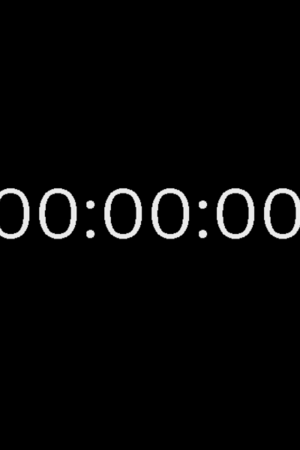
[00:00:00]
I stand there for three heartbeats after he disappears into the crowd on the opposite sidewalk—long enough for instinct to finish screaming and for the cold, dull ache of habit to take over. Long enough for the city to stitch itself closed again, sealing the wound he made in the logic of the world. Then I turn left instead of right. I let the evening crowd swallow me, carrying me away from the glitch like heavy sediment in a rushing river.
Anomalies are expensive.
Curiosity costs lives. I learned that early. You stop to look at a car crash, and you miss your own bus. You stop to question the numbers, and you forget to watch your own step. The universe charges interest on attention, and I am already in debt.
The city doesn’t notice my decision. It never does. Cars surge forward, tires hissing on the damp road. A bus exhales a cloud of exhaust at the curb, smelling of diesel and fatigue. Someone bumps my shoulder hard and mutters an apology that arrives half a second too late, already lost in the wind. Time keeps paying out its debts in small, invisible installments, and nobody looks at the receipts.
Good. Normal. This is how it works.
I keep my eyes level now—not down at the pavement, not up at the sky. Faces only. I let the numbers stay in my peripheral vision, a bleeding red smear at the edge of consciousness. It takes practice to do this. You have to relax the muscles behind your eyes, the ones that desperately want to focus and categorize. If you look directly at the timers for too long, they start to feel personal. They start to look less like data and more like sentences.
I don’t want personal. I want arithmetic.
A woman in a green coat brushes past me, smelling of rain and cheap vanilla perfume.
[ 50 : 11 : 08 ]
Just over two days.
Her hand is trembling. She’s scrolling through her phone with the frantic, jerky precision of someone rereading a message that already said exactly what it was going to say. She is looking for a loophole in the text, a hidden meaning that will save her. I know she won’t find it. The timer above her head doesn't care about her heartbreak. It ticks down with boring, steady regularity. I don’t slow down. I don’t speed up. I don’t reach out to steady her shaking hand.
That is the second thing I do right.
A few yards later, a man leans against a storefront window, his forehead pressed against the cold glass. His reflection floats over a display of mannequins, looking older and more hollow than he does.
[ 00 : 19 : 44 ]
He’s crying quietly. Not sobbing—there’s no energy left for that. Just leaking.
Inside him, I know there is chaos. His pulse is likely racing; his mind is likely screaming. But the timer above him is perfectly calm. It doesn't jitter. It doesn't stutter. It simply subtracts one second after another, indifferent to his grief. The disconnect between his human pain and the cold mechanics of his expiration date is cruel, but it is the law.
I pass him too. I leave him to his nineteen minutes.
I tell myself the rules again, reciting them like a prayer I don’t believe in but need to hear.
I don’t intervene. I don’t warn. I don’t reroute. I observe. I endure. That is all.
A siren wails somewhere behind me. Not for the station—I’m far enough away now that it could be anything. A fire. A robbery. A heart attack. Sirens are just the city clearing its throat. They don’t mean anything on their own.
I turn down a narrower street, a shortcut the office crowds don’t favor. The buildings lean closer here, brick and concrete pressing in like conspirators, blotting out the sky. The light thins into a dull, claustrophobic grey wash.
I breathe easier here. The data stream thins out.
Then I see her.
She’s sitting on the curb, knees pulled to her chest, arms wrapped tight around her shins like she’s trying to hold herself together by force alone. She is small, diminished by the dark coat she wears. An empty vodka bottle rolls lazily near her foot, clicking softly, rhythmically, every time the wind nudges it against a crack in the pavement. Click. Click. Click.
[ 00 : 03 : 58 ]
Four minutes.
Her foot is dangling halfway into the street.
I stop. I can’t help it.
This is the danger zone—the suffocating space between noticing and acting. The part of me that still remembers being human, the part that hasn't calcified yet, leans forward. It stretches its spectral fingers.
Just pull her back. Just say something. Just ask her for the time.
I look at the timer instead.
It is relentless. It doesn't speed up to match her panic, and it doesn't slow down to grant her mercy. It just subtracts. The seconds fall away with terrifying, mechanical precision. Her heart might be hammering, racing against the inevitable, but the number above her head is cold and steady.
[ 00 : 00 : 05 ]
[ 00 : 00 : 04 ]
The contradiction is peaking. Her biology is screaming for life, but the math has already decided. The war is ending, not with a bang, but with a countdown that refuses to flinch.
She feels my gaze. She looks up and meets my eyes.
There it is—the reflexive flicker of hope. Not hope for life. She doesn't want to be saved. She wants interruption. She wants someone else to carry the weight of the ending. She wants permission to let go.
I shake my head once. Small. Almost apologetic.
Her face caves inward, the hope vanishing into resignation.
She turns away from me, toward the street, just as a delivery truck barrels around the corner. It is moving too fast for the narrow road, too close to the curb.
There is a sound—dull, final, administrative. Like a heavy book being slammed shut.
[ 00 : 00 : 00 ]
The number shatters. It explodes into red dust that no one else sees, dissolving instantly into the wet air.
People scream. Someone drops a bag of groceries on the sidewalk. Oranges scatter across the road, bright and obscene against the dark, wet asphalt. They roll toward the body like mock offerings.
I step back into the shadows.
I don’t feel righteous. I don’t feel cruel. I feel what I always feel afterward—emptied out, scoured hollow, like a room after the furniture has been repossessed.
It works the way it’s supposed to. Gravity. Mass. Velocity. The equation balanced.
That thought should settle me. It usually does.
It doesn’t.
Because as I turn away, as the crowd coagulates around the absence she left behind, an image forces itself into my mind, overlapping the tragedy I just witnessed.
Worn black boots.
A frozen colon.
A timer that refused to move.
I stop walking.
No.
I don’t do this. I don't compare.
But my mind is already cataloging the differences, dissecting the anomaly against the reality.
She hesitated. He didn’t. She was loud with fear, yet her timer marched on. He was quiet, and his timer obeyed him. Her time was a cage. His time was a leash he held in his hand.
She was a casualty of the design. He was a glitch in the code.
I exhale sharply and start walking again, faster now, forcing my legs to move, as if speed can scrub the comparison away.
By the time I reach my apartment building, it’s fully dark. The city has shifted into its evening rhythm—less urgency, more resignation. The timers I pass on the stairwell stretch longer on average. Night gives people the illusion of mercy, the false promise that time slows down when the sun sets.
I unlock my door and slide into the sanctuary.
I don’t turn on the lights. I drop my coat onto the chair and sit on the edge of the bed, elbows on my knees, hands clasped until the knuckles turn white.
I close my eyes.
But the darkness isn't empty. Behind my lids, red numbers glow, burning in the phosphor of my memory.
The woman on the tracks. [ 00 : 00 : 00 ]
The girl with two weeks. [ 336 : 06 : 30 ]
The man at the window. [ 00 : 19 : 44 ]
The woman on the curb. [ 00 : 03 : 58 ]
And him.
[ 18,421 : 07 : 33 ]
Standing still while the world rushed around him. A rock in the stream.
"I don’t feel chased," he had said. "And I don’t feel late."
I open my eyes. The room is silent. The only thing ticking is the blood in my ears.
“An anomaly,” I say to the empty room, testing the word like a diagnosis. “Just a glitch.”
Saying it doesn’t make it true.
For the first time in years, I wonder if there is something my sight cannot measure. I wonder if there is a variable I have missed.
And that thought—the possibility that the design is flawed—is far more dangerous than any countdown.

Please sign in to leave a comment.