Chapter 5:
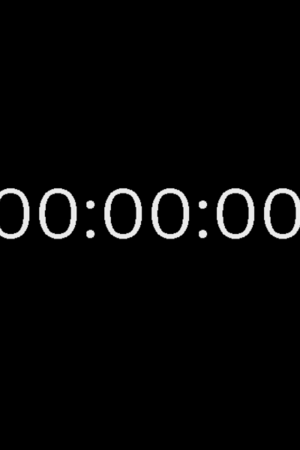
[ 00 : 00 : 11 ]
[00:00:00]
We leave the café without deciding to.
The door swings shut behind us, trapping the warmth and burnt sweetness inside. Outside, the rain has softened into a mist that clings to streetlights and turns every halo into a smear.
He walks first.
The timer moves.
[ 18,421 : 07 : 31 ]
[ 18,421 : 07 : 30 ]
He keeps his hands in his pockets, shoulders slightly hunched, like the world is a drafty room he never agreed to enter. He doesn’t hurry. He doesn’t drift. He walks with the deliberate neutrality of someone crossing a room they don’t plan to stay in.
I match his pace.
We pass a laundromat. A man inside feeds coins into a machine with the seriousness of prayer.
We pass a closed florist, buckets stacked upside down like surrendered helmets.
“You always walk like this?” I ask.
“Like what?”
“Like you’re not going anywhere.”
“That’s the point.”
He slows.
Stops.
The timer freezes.
[ 18,421 : 07 : 12 ]
We stand at the edge of a narrow bridge over a drainage canal. The water below crawls thick and black, carrying reflections that don’t belong to it.
“Places like this,” he says, resting his elbows on the railing, “they don’t demand opinions.”
I lean beside him.
The city keeps flowing. Feet. Tires. Breath.
Time does not.
“Do you ever miss wanting things?” I ask.
He doesn’t answer right away.
“When I wanted things,” he says finally, “I felt like I was borrowing urgency from the future. Like I owed it interest.”
“And now?”
“I stopped taking loans.”
The timer stays frozen.
I watch the water instead of his head.
“You know people think this kind of stillness is dangerous,” I say.
“For who?”
“For you.”
He smiles, barely.
“They always say that,” he says. “But nobody can explain why stopping is worse than running in circles.”
A cyclist rattles across the bridge, bell chiming in irritation at our immobility.
We don’t move.
The cyclist swears under his breath and disappears.
The universe adjusts.
“I don’t feel pulled anymore,” he says. “That’s what scares people.”
“Why?”
“Because pull is proof. It means something wants you.”
The rain thickens.
He pushes off the railing and starts walking again.
The number obeys.
[ 18,421 : 07 : 11 ]
[ 18,421 : 07 : 10 ]
I feel it in my chest every time it ticks — not urgency, but permission.
We walk through a residential block where windows glow with other people’s evenings. Dinners. Arguments. Television laughter timed by producers.
He slows near a playground.
Stops.
The timer freezes.
A swing creaks in the wind, moving without a rider.
“I used to think if I stayed still long enough,” he says, “something would come find me.”
“Did it?”
“No.” He watches the swing. “But nothing chased me either. That felt… fair.”
I swallow.
“You don’t mind being left behind?”
“I don’t feel behind,” he says. “I feel… outside the race.”
The timer remains still.
I wonder — not for the first time — if the race ever noticed him leave.
We walk again.
[ 18,421 : 06 : 58 ]
I choose a route with gentle curves.
Not obviously.
Just enough.
A block with benches.
A corner where the sidewalk narrows.
A crosswalk with a long red light.
Each pause stitches him more time he doesn’t know he’s keeping.
“You ever notice,” he says, “how people apologize for stopping?”
“Yes.”
“They say ‘sorry’ like stillness is rude.”
He stops at the crosswalk.
Timer freezes.
[ 18,421 : 06 : 45 ]
The light is red.
Cars pass.
We wait.
“I think,” he says, eyes on the empty street, “if I disappeared tomorrow, the only thing I’d miss is quiet.”
I don’t answer.
Because if he stands here long enough, tomorrow will never arrive.
The light turns green.
He steps forward.
The number moves.
And I follow — not because I want to save him, but because walking beside him feels like the only honest thing I’ve done in years.
The city teaches me the difference.
It does it the same way it always does: without asking permission.
The first is a man on a rooftop.
He stands at the edge of a building with his shoes lined up neatly behind him, toes pointed toward nothing. His jacket is zipped too high for the weather. Wind claws at his hair like it wants him early.
Above his head:
[ 00 : 03 : 41 ]
He paces. Three steps left. Three steps right.
The timer doesn’t care.
[ 00 : 03 : 40 ]
[ 00 : 03 : 39 ]
He presses his palms together like he’s praying to gravity.
“I just want it to stop,” he whispers. Not to anyone. Not even to me. To the air.
He cries.
It is ugly crying. Loud. Snot and breath and shaking shoulders.
The number keeps falling.
[ 00 : 02 : 58 ]
He looks down once and stumbles back like the ground punched him.
“I can’t,” he says.
Then, quieter:
“I have to.”
That’s what they sound like.
Struggle braided with certainty. Fear welded to resolve.
I leave before zero.
I always do.
The second is a girl in a bathroom stall at a bus terminal.
Her sneakers are pink. They don’t match her coat. Her phone is in her lap, screen cracked, a text unsent.
[ 00 : 01 : 22 ]
Her breathing is too fast. Her hands won’t stay still.
“I don’t want to,” she tells the empty room.
“I don’t want to, I don’t want to, I don’t—”
Her timer does not pause for repetition.
[ 00 : 01 : 09 ]
She presses her forehead to the stall door.
“I just don’t know how else to stop.”
She is bargaining.
With pain.
With memory.
With whatever god still listens.
I walk past her shoes.
The third is a man on a bridge.
Not my bridge.
A smaller one.
Concrete.
Graffiti.
River smelling like old metal.
He grips the railing like it’s trying to leave him behind.
[ 00 : 00 : 47 ]
“Just five more minutes,” he says into his sleeve.
“To think.”
The number does not grant minutes.
[ 00 : 00 : 46 ]
[ 00 : 00 : 45 ]
He hesitates.
That is the cruelest part.
The body does not want to die.
The mind does not know how to live.
He swings one leg over.
Then pulls it back.
Then again.
He sobs like he’s losing an argument with himself.
[ 00 : 00 : 11 ]
When he finally jumps, it isn’t graceful.
It isn’t peaceful.
It is a mistake repeated on purpose.
I don’t watch the zero.
I don’t need to.
That is what suicides look like.
They beg.
They stall.
They bargain.
They shake.
They apologize to people who aren’t there.
They want out.
They are pushing against the world with everything they have left.
He doesn’t.
He doesn’t pace at edges.
He doesn’t cry into railings.
He doesn’t whisper to gods.
He stops.
At curbs.
At benches.
At places that don’t ask questions.
His timer freezes not because he resists it.
But because he forgets to move toward anything else.
They run at zero.
He sits beside time and lets it wait.
That is the difference.
Others are drowning and thrashing.
He is already underwater, standing still.
They fight the clock.
He doesn’t touch it.
And I finally understand:
He isn’t trying to die.
He isn’t even choosing not to live.
He is doing something worse.
He is not holding life.
Not gripping it.
Not pushing it away.
Just… setting it down.
Like something heavy he forgot he was carrying.
And the universe, stupid obedient thing that it is, doesn’t know what to do with a person who won’t run from the end…
…but won’t walk toward anything else either.
That’s why he scares me.
Not because he will reach zero.
Because he doesn’t seem to care if he ever does.




Please sign in to leave a comment.