Chapter 1:
Chapter 1 : The routine
The optimized
Apartment A1A.
A woman sat calmly in her living room, tea in hand.Asahi rang the doorbell.
“Good morning,” he said formally once she opened the door.
“Good morning,” she replied.
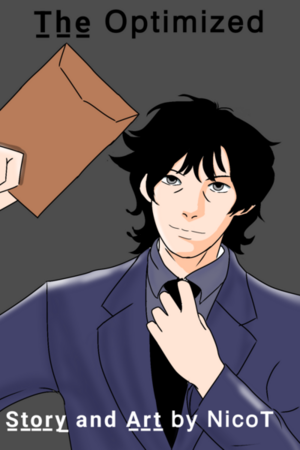
He handed her the notice.
“You have been selected for optimization. Your replacement will be activated in seventy-two hours.”
She took the paper without trembling.
She read it once.
Twice.
Then she nodded.
“I see,” she said quietly. “I suppose it’s time.”
Asahi made no comment. He never needed to, words were unnecessary in this profession, explanation was irrelevant. Death—or replacement—was not negotiable.It was improvement.
It was mercy.
He stepped inside the apartment and observed her carefully. The way her fingers lingered around the porcelain cup, the subtle tilt of her head, the precise way she folded her hands in her lap.Every detail mattered.
The clone would need to replicate her mannerisms perfectly, any deviation could cause distress within the family.He recorded everything.
Then he left.Outside, the city continued undisturbed, children walked to school with identical backpacks, couples exchanged polite smiles, traffic lights shifted in flawless rhythm.
Efficiency in motion.
The second case was a man, he greeted Asahi with familiarity, almost warmth. He had been expecting him.He signed the acknowledgment form without hesitation. He even smiled at his children, who stood quietly beside him.
He, too, would be replaced, and he was fine with it.
Everyone was.Routine,repetition, precision.
Asahi did not question it.
He never questioned it, that was not his job.
At Brown Café, he paused for a lemonade. He chose a place near the window, observing the street and wondering about nothing.
The waitress served him, her hands shaking. Asahi noticed the mole on her right hand. His stare moved up to her face. She blushed and quickly moved away from him, returning behind the counter.
He sighed. That waitress had been doing that for a while.
He glanced at the next address written in his agenda. The name was different, but it meant the same. He stood, paid, and left, feeling the familiar weight of the notice in his hand. The waitress simply stared at him as he walked away, her face tinged with sadness.
The owner opened the door before he could knock. She was young—perhaps twenty-eight—but her posture was deliberate, measured. She had seen this procedure happen to others. She knew how it ended.
He handed her the envelope. She read it silently. The edges of her lips twitched—not in fear, but in something else. Curiosity? Defiance? It didn’t matter.
“I… I suppose I understand,” she said finally.
He nodded.
“Will my husband notice?” she asked.
“No,” he replied flatly.
She paused, then smiled faintly. It was a strange expression—one he had always found unsettling.
“Then I will comply,” she said.
The words were soft, but they carried the weight of inevitability.
Seventy-two hours.
That was all she had.
Asahi made his notes, checked the list, verified the details.
And then he left.
Evening
Back at headquarters, he reviewed the files again. Names, dates, addresses. Today there had been just three cases. Sometimes he had one, two, or ten. Sometimes he received none.
The city continued to shine as he walked toward his superior’s office.
Yugo Amemiya.
Amemiya was a tall man with smooth dark hair, already married—to the disappointment of most of the women in the workforce. Beyond his appealing appearance, he was well-spoken, supportive, and gentle.
He had tried many times to invite Asahi to his home for dinner, but the latter had always declined.
“Kurosawa! My dear friend, how was today’s mission?” he asked, already preparing two cups of coffee.
“As usual,” Asahi answered calmly.
“I need more details, my friend. Your reports are always so impersonal, cold, and—”
“Is that a problem?” Asahi stared at the full cup in front of him.
He never understood why Amemiya always made him a cup of coffee. He would always leave without drinking it.
“No, no, just… You know what? Forget about it,” Amemiya backpedaled, a little annoyed.
Asahi simply stared at him.
“It’s difficult to be your friend. But you know… if you want to stay alone, you should stop smiling like that,” Amemiya said seriously.
Asahi left.
He had to prepare for tomorrow. The morning would bring new cases, new routines. He would notify, observe, leave. He would witness the replacement.
And the city would remain perfect.
The huge clock in the hallway ticked as he walked past, its echo matching the rhythm of the city he served.




Please sign in to leave a comment.