Chapter 1:
Day 1
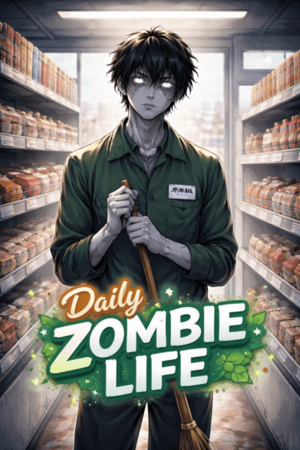
Daily Zombie Life
This isn’t my first day of being a Zombie, or the first day of the restructuring. Before the restructuring, I couldn’t write this, and after it began, I didn’t have time to write. As impossible as it is to describe what it was like before, the early days of the restructuring were all too uniform. We started building. First barricades, then fences, repairing houses and constructing buildings as needed. We took no breaks, we did not sleep, I don’t want to sleep. Where I and the horde had shambled about aimlessly had become a fortress of undeath. Why did we build it? I don’t know why the others started, but all of a sudden, I wanted to build instead of eat, so I did. I have never talked to other zombies; our communication begins and ends with intuition
After the job was finished, it was almost as if we turned back the clock. Electricians started repairing downed power lines, and factories belched black smoke like waking dragons. Were it not for the decaying facades of abandoned buildings, shattered debris, and the sickly pallor most residents of this town had now, I’d have believed the plague never happened. I worked at a convenience store.
It wasn’t really an economy per se: there wasn’t and isn’t any money, I stocked the aisles, swept, mopped, and diligently inventoried for no other reason than because I felt like it. I didn’t like the job before, but like my mindless construction, I was compelled to do so. I wonder if this is a progression of the disease; some late stage of the condition that no one knew about when the infection started. Or, perhaps I am trying to rationalize a new routine: there was no love lost for my old job, but compared to the nightmare before, this return to normalcy is welcome. The only big difference is the delivery team: rather than being a group of workers in uniform, a pack of unruly guys saunters into my store. Their only thing uniform about them is that they are all bloated, their bellies poking out of their shirts. They go to the back, and I let them. I sense I should. Afterwards, they come back out, now rail-thin instead. They are all so gaunt, ribs poking under their skin, but they have a wolfish look on their face, like they are devouring me with their eyes. I don’t like them.
When I move into the back, the food is waiting for me, packaged in the back. I rip it open and start preparing it as always. I prepare freshly-made food and put the packaged stuff on the shelves, chips, candy, breads, and all the premade stuff. Eventually, others shamble into the store, take something, and leave, not even acknowledging me. The more things change, the less. I keep things stocked for the rest of the day, and at a certain point, I realize I need to leave and go home.
I wasn’t born in this town, and didn’t live here before I turned, so I’ve ended up living in an abandoned house. I feel like an interloper every time I return, the place filled with other people’s things. The walls are covered in pictures of fruit, fine cuts of ham, beautiful roasted fowl, things that I didn’t even have in life. I can’t make myself remove their items; perhaps it feels like the ultimate betrayal. I already stole their house, I should at least honor their memory.
I spent much of my time after “work” wandering the house, exploring the contours of my new home. My life feels like four distinct eras: Now, the Restructuring, the Rampage, and Before. Each is layered on top of the other, so that to recall memories from an era, I have to push away the thoughts from all the others, like prying apart vines and branches of a misty jungle in my mind. To look at Before, I have to go through Rampage, anyway, from what I remember, I didn’t pay much attention to where I lived before. I was just passing through; all it was to me was where I left for work and where I came back afterwards. I worked as much as I could and usually ate out, so I would just sleep when I came home. The system is different now: I work as much as I like (which is usually roughly forty hours), bring home some food from the store, and don’t sleep, so I have all the time in the world afterwards. Taking my time to take in my surroundings, I noticed things I’d never otherwise. Wallpaper peeling to show a completely different pattern below, long faded indentations of a height chart for the family’s children, little pieces of jewelry that fell under the furniture, maybe they were too busy with life to care or even notice it went missing? As I meandered across the property, I eventually learned the names of at least four of the previous occupants: Arthur, Vanessa, Quinn, and Polly. I’m still debating whether one or more of those were family pets, but I saw all those names written down, on rags that were once embroidered napkins, faded sticky notes, quilted blankets. I wondered if they were still in town or had died in the rampage. Even if they were, there’s no way I would ever find them, not without talking to anyone. In their own way, they became my new neighbors; when I found a new sign of the lives they used to live, I greeted them as if I bumped into them on the street.
For a while, I was waiting for everything to fall apart: when the world ends, that makes you a natural pessimist. I suspected that this was some trap, and life would go back to the way it was before I knew it. I think this concern is why I’m writing this: I’ve realized how special this time is, really. Before I descend back into the walking dead, I’d like to document this time, so whatever happens next, some part of me survives. Mine is a meager existence, but considering I’ve never seen anything but indifference and hunger on the faces of everyone around me, this may be the only thing ever written by a Zombie. I’m a leading figure of Zombie Literature, the founder in fact. I don’t know what happens outside the walls anymore, but I wonder if this may be the last thing anyone ever writes again







Please sign in to leave a comment.