Chapter 0:
Prologue - The World Before the Fire
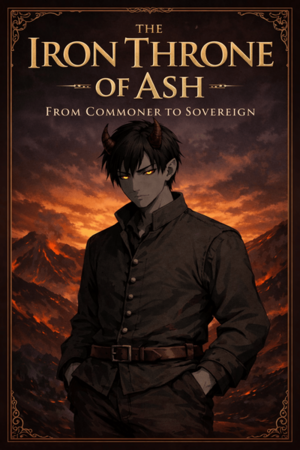
The Iron Throne of Ash - From Commoner to Sovereign
PROLOGUE
─────────────────────────
The World Before the Fire
Before the names, there was the land.
Vaelthar is not a gentle world. It was not made to be inhabited so much as endured, and the civilizations that rose from its soil did so in the manner of things that have survived something — shaped as much by what they had lost as by what they had built. Its mountains are volcanic and temperamental. Its forests are old enough that the trees have stopped recording time in the way younger things do. Its coastlines are contested, its rivers are borders, and its plains have been crossed by enough armies that the grass has learned, in some unconscious geological way, to grow back faster than it used to.
It is a world in motion. Not the dramatic motion of catastrophe — though catastrophe visits regularly enough — but the slower, more grinding motion of civilizations pressing against each other along lines of territory, doctrine, theology, and pride. The borders on any map of Vaelthar are accurate for perhaps a decade before they require revision. Cartographers in the major capitals have learned to use ink that can be dissolved and reapplied without damaging the parchment. This is considered a practical profession.
Five powers define the current age. Not the only powers — there are city-states, independent territories, nomadic confederacies, and entities that defy easy political categorization scattered across the continent's edges. But five are the weight-bearing columns of the structure. Five are the forces whose decisions determine the shape of the world for everyone else. Five, in the reckoning of this particular era, are the ones that matter.
This is an account of those five. What they are, what they believe, and why — in the year that concerns us — they are all, in their various ways, making the same fundamental mistake.
They have decided, each of them, that they know what the future looks like.
They are wrong.
✦ ✦ ✦
THE KINGDOM OF VALDENMOOR
Capital: Carenthal, the Crowned City
─────────────────────
"Order is not imposed. It is earned, sustained, and defended."
Of all the powers in Vaelthar, Valdenmoor is the one that most resembles what it claims to be.
It calls itself a kingdom of order. A civilization built on law, discipline, and the systematic application of both to every problem it encounters — military, political, theological, agricultural. Where other nations improvise, Valdenmoor documents. Where other powers rely on the talent of exceptional individuals, Valdenmoor builds institutions designed to function regardless of the quality of the individual inside them. It is, in the estimation of its own historians — who are, admittedly, employed by the crown — the most advanced political organism in Vaelthar.
This is not entirely self-congratulation. Valdenmoor is, by most measurable metrics, exactly as capable as it believes itself to be.
The capital, Carenthal, sits at the confluence of the Vel and the Maren rivers in the central lowlands — a position chosen three hundred years ago by the founding king not for beauty but for logistics. Two navigable rivers mean two supply lines, two trade routes, two directions from which an army can be fed without straining the road network. The city that grew around that founding logic has become one of the largest in Vaelthar, a dense and layered place of broad administrative avenues, military parade grounds, cathedral spires that double as signal towers, and the particular kind of civic order that only develops in places where disorder has been systematically punished long enough for the population to genuinely internalize the preference for its absence.
The army of Valdenmoor is its truest expression. Three standing corps, professionally trained, permanently maintained, organized along a hierarchy of rank that is documented, examined, and promoted through demonstrated competence — at least in the lower and middle grades, where merit still functions. The upper grades are a more complicated negotiation between bloodline and capability, as they are everywhere, but Valdenmoor has managed to produce, across its history, an officer class that is more frequently competent than not. This is a low bar, but it clears it consistently, which over time produces results.
The infantry fight in disciplined line formations, drilled to a timing that functions like machinery. The artillery corps — still new, still finding its doctrine — is already more systematically deployed than any equivalent force on the continent. The cavalry has accepted, with institutional reluctance and significant internal argument, that its era of battlefield primacy is ending, and has begun the painful process of reinventing its purpose as screening, scouting, and rapid exploitation rather than the decisive charge.
Valdenmoor's weakness is the same as its strength: it is very good at doing things it has already decided to do. It is considerably less good at deciding to do different things. The institutional weight that makes it reliable also makes it slow to recognize when reliability is the wrong tool. Its commanders know how to win the battles they have planned for. The battles they have not planned for are another matter.
It has been fighting the demons of the Ashfel Dominion along its southern border for thirty years. It is winning. It expects to keep winning. It has not seriously considered the possibility that the nature of the problem might change.
In the great cathedral-palace of Carenthal, behind stained glass windows that depict Valdenmoor's military victories in scenes of luminous, self-congratulatory detail, the court of King Aldric the Third debates taxation policy, manages succession intrigue, and remains largely unaware that a commoner on a volcanic ridge is sitting down to rethink their entire southern campaign.
This will become a problem.
✦ ✦ ✦
THE ELVEN SOVEREIGNTY OF AETHINDRAL
Capital: Vaelith, the City of Long Memory
─────────────────────
"We were here before your history began. We will remain when it ends."
The Elven Sovereignty of Aethindral does not consider itself one power among five. It considers itself the context in which the other four operate.
This is not arrogance in the way a young nation is arrogant — loud, insecure, needing to be heard. It is the settled, bone-deep certainty of a civilization that has been here long enough to have watched the other four form, watched their predecessors form before them, and filed all of it under the general category of things that happen. Elven institutional memory extends back approximately eight hundred years before the founding of Valdenmoor. Their oldest living citizens remember the era when Carenthal was a river crossing with three buildings.
Vaelith, the capital, is built into and around a forest so ancient that the cartographers of other nations mark it simply as the Old Wood and leave the interior blank. The city is not built on the forest — it is built with it. Towers grown from living wood over centuries of slow, guided cultivation. Bridges of woven branch and root that have calcified over generations into something harder than stone. Streets that follow the organic logic of the trees rather than the imposed grid of human city planning. To an outside visitor, it looks chaotic. To an elven resident, it looks like everything has been exactly where it belongs since before the visitor's grandparents were born. Both assessments are correct.
The Sovereignty governs through a Council of Branches — seven seats, each representing one of the great bloodline families that have constituted elven aristocracy since the earliest records. Decisions are made by consensus, which means they are made slowly and with extraordinary thoroughness. An elven military campaign is typically planned for a minimum of three years before deployment. This is not inefficiency — it is a civilization operating on a timescale where three years of planning before a campaign is preferable to a century of consequence after a bad one.
Their army is small by the standards of Valdenmoor or the demons and devastating in proportion to its size. Elven soldiers fight with a century or more of accumulated personal experience. They do not make the mistakes of youth because they are not young. An elven archer has been practicing archery for longer than most human kingdoms have existed. The magical component of their forces — Veil-attuned combat casters, woven into their military structure not as a separate arm but as an integral element of every unit — makes them qualitatively beyond the reach of any force that tries to fight them on the terms they have chosen.
The Sovereignty's great vulnerability is one it has never had to seriously address: it is very difficult to be a civilization that thinks in centuries when the world around you is beginning to change faster than that. The Sovereignty has managed its relationship with every other power through the slow application of leverage accumulated over generations — economic weight, information advantage, the memory of obligations owed. It has never had to be fast.
The thing approaching from the south will require speed.
In Vaelith, in a tower that has been growing for four hundred years, a Council of Branches meets to discuss a minor military incident on the Valdenmoor-Ashfel border. They note it. They assign an observer — a field officer of the third rank, a woman named Avariel Thessindra, chosen for her analytical record. They add the matter to the long list of things being monitored.
They do not yet consider it urgent.
✦ ✦ ✦
THE VAMPIRE COMPACT OF OSSIVAEL
Capital: Duskmere, the Eternal Port
─────────────────────
"All things are negotiable. The terms are the only question."
The Vampire Compact of Ossivael is not, technically, a kingdom. It is a treaty.
Specifically, it is the Compact of Ossivael — a document signed three hundred and twelve years ago by the seven major vampire houses of the eastern coast, agreeing to stop killing each other long enough to cooperate on the management of the trade routes they were all destroying through their mutual warfare. The Compact established a shared governance structure, a unified external face, and a set of internal rules that have been amended, reinterpreted, and selectively enforced ever since. It has survived because every signatory house calculated, correctly, that the Compact profitable enough to preserve and flexible enough to manipulate. It is the most successful political arrangement in Vaelthar, by the metrics of longevity and economic output. It is also, by most other metrics, deeply dysfunctional.
Duskmere, the seat of the Compact, is built on a natural harbour on the eastern coast where the cold northern current meets the warmer channel water and creates a permanent maritime mist that has given the city its distinctive character. The buildings are old and dense, layered over each other in the way of a city that has never had enough space and has never been willing to expand outward when it could expand upward instead. The harbour is the busiest in Vaelthar — the Compact controls the eastern sea lanes with the combination of legitimate commercial dominance and barely-disguised privateering that characterises most vampire economic activity.
The Compact does not fight wars in the conventional sense. It finances them, which is considerably more effective and far less dangerous to the houses themselves. Every major military conflict of the past two centuries has had at least one vampire house with significant financial exposure on each side. The houses maintain small, extremely capable personal forces — bodyguards, enforcers, a limited naval arm — but deploy them surgically, for specific objectives, rather than in the sustained campaigns of attrition that the other powers favour. When the Compact wants something done on a battlefield, it hires someone to do it.
Information is the Compact's true currency. The vampire houses have had three centuries of incentive to build the most comprehensive intelligence network in Vaelthar, and they have done so with the diligence that attaches to genuinely profitable enterprise. They know the disposition of Valdenmoor's treasury reserves. They know the internal arguments of the Aethindral Council of Branches. They know the names of the Dragonkin clutch leaders and their current territorial tensions. And they are beginning, in the way of an organisation that monitors everything, to receive early reports about an anomaly developing in the Ashfel Dominion.
In Duskmere, in the high-windowed counting house of House Van Haust — currently the least prestigious of the seven houses, its fortunes reduced by a series of investments that went sideways in the previous generation — a vampire woman named Mireille reviews the early reports, sets them aside, and then picks them up again. Something in the pattern bothers her. She cannot yet articulate what. She files it under active monitoring and continues her work.
She will return to it.
✦ ✦ ✦
THE DRAGONKIN CLUTCH-TERRITORIES OF VARRETH
Capital: Cinderhold, the Summit Fortress
─────────────────────
"We do not need to prove what we are. The proof is that we remain."
The Dragonkin do not have a kingdom. They have never needed one.
A kingdom is a structure built to extend power beyond the reach of the individual — to project authority into places the ruler cannot personally stand, to maintain order in the absence of the ruler's direct presence. The Dragonkin have never needed to project authority beyond their personal reach because their personal reach is, by the standards of every other race in Vaelthar, already extraordinary. A dragonkin clutch-lord does not need an army to hold territory. The territory understands, in some wordless way, that it is held.
The Clutch-Territories of Varreth occupy the mountainous northeastern highlands — a region of dramatic, inhospitable terrain that the dragonkin find congenial and every other race finds various degrees of impassable. Cinderhold, the closest thing to a capital the Clutch-Territories possess, is a fortress built into the peak of the highest mountain in the range, accessible by three routes that are each independently terrifying and collectively designed to ensure that only someone very determined or very flying would ever arrive uninvited.
The dragonkin number fewer than three thousand in the current age. They were once far more numerous. Centuries of war — against each other as much as against outside forces — have reduced a species that was once the uncontested dominant power of Vaelthar to something between a relic and a deterrent. They are still, individually, the most physically formidable beings alive. A dragonkin in open combat is a tactical problem for which most military doctrines have no answer beyond do not engage in open combat. Their natural armoring, regenerative capability, and the elemental force that manifests in their bloodline — fire in most, though the mountain lineages run to stone and wind — makes them resistant to the kind of mass casualty production that human volley fire inflicts on softer targets.
They have responded to this power by becoming very still. The Clutch-Territories have not initiated a major external conflict in forty years. The clutch-lords meet annually at Cinderhold to confirm territorial boundaries, address disputes between clutches, and reaffirm the mutual non-aggression compact that has kept dragonkin numbers from declining further. They are not at peace with the world — they are simply not currently at war with it, which is a distinction they would consider important.
The Dragonkin watch the other powers the way very old, very large animals watch smaller things moving around them — with the patient attention of something that does not feel threatened and is therefore not yet paying the kind of attention that would be useful. They are aware of Valdenmoor's expansion. They are aware of the Compact's financial maneuvering. They are aware of the Sovereignty's slow repositioning.
They are not yet aware that something is changing in the south. When they become aware, they will have to decide whether it is the kind of change that requires them to move.
In Cinderhold, at the annual gathering of clutch-lords, a young dragonkin named Varreth-Kesh — fourth of his name, inheritor of the mountain clutch — asks his elders whether anyone has received intelligence from the Ashfel border recently. The elders tell him that the demons are losing, as they always lose, and there is nothing there worth attending to.
He accepts this. He is young enough that he still trusts the elders' certainty.
He will not always be that young.
✦ ✦ ✦
THE ASHFEL DOMINION
Capital: Korreth, the Caldera City
─────────────────────
"Strength is the only argument that has never been refuted."
And then there is the Ashfel Dominion.
Every historian who has attempted to write a serious account of the Dominion has encountered the same problem: it is very difficult to analyze a political structure that does not believe analysis is a legitimate activity. The Ashfel Dominion is not a kingdom in any of the ways the other four powers are kingdoms. It is not a treaty, a sovereignty, a compact, or a clutch-confederation. It is, in the most precise possible terms, an ongoing argument about who could hit whom hard enough to get everyone else to stop arguing, conducted at civilizational scale, across volcanic highland terrain, over a period of centuries, without resolution.
The Dominion's territory covers the southern highlands of Vaelthar — the Ashfel, a region of volcanic ridges, obsidian plains, deep thermal vents, and the particular, sulphurous beauty that belongs to landscapes formed by geological violence. It is rich in mineral resources. It is defensible, in the way that things are defensible when the terrain itself is hostile to armies. It holds a population of warriors who are, individually, the physical peers of anyone on the continent.
None of this has translated into power, because power requires organization, and the Dominion is organized the way a fire is organized: intensely, chaotically, and in whatever direction the most fuel happens to be.
Korreth, the capital, is built into the caldera of a dormant volcano in the western Ashfel. It is impressive in the way that all things are impressive when they are made by people who approached every construction problem with brute force and absolute conviction. The walls are thick beyond any defensive necessity. The central fortress — the Korreth Holdstone — is a structure so massive that it generates its own microclimate in the form of perpetual shadow across the lower city. The market district functions on the honor system, which in Korreth means that disputes are settled by whoever hits hardest before witnesses who are too invested in the outcome to serve as reliable testimony.
The Warlord Council governs the Dominion in the way that seven competing magnets govern a pile of iron filings: with a great deal of tension and a result that is technically a configuration but also technically a mess. Each of the seven warlords controls a military district, maintains a personal force, and is obligated by tradition to contribute soldiers to the Dominion's shared campaigns — an obligation that each warlord interprets as generously as they can get away with, which means the shared campaign forces are always undermanned, undertrained, and undersupplied.
The demons who fill those campaigns are brave. This is not in dispute. They are strong, they are fast, they are possessed of a physical capability that should make them feared across the continent. They charge without hesitation. They fight without flinching. They die without the organizational structure that would have prevented it from being necessary.
They have been losing the border war with Valdenmoor for thirty years. Slowly, in the way that large things lose slowly — a valley here, a ridge there, a supply route cut off that is not noticed until the unit depending on it runs out of food six weeks later. The warlords blame each other. The warriors blame bad luck and human cowardice. The scholars — a tiny, low-status caste whom no one listens to — write careful analyses that sit unread in stone archives beneath Korreth's Holdstone.
Nobody asks why they keep losing. The culture that produced the Dominion does not ask why. It asks who to hit next.
On a ridge above a valley that will be lost by nightfall, a demon commoner named Caedron Voss opens his eyes for the first time in a world he did not choose, in a body he did not expect, in the middle of a battle that should not be survivable, and begins — with the methodical, unhurried precision of someone who has spent thirty-five years learning how these games are played — to ask why.
The Ashfel Dominion does not know this yet.
It will.
✦ ✦ ✦
This is the world at the beginning of the story that concerns us.
Five powers. Five capitals. Five civilizations with five certainties about the shape of the coming century, each certainty constructed carefully from history, doctrine, intelligence, and the particular blindness that attaches to things that have been winning long enough to mistake their method for a law.
Vaelthar has seen empires rise before. It has watched each of them arrive with the same quiet certainty that the rising was permanent, and it has watched each of them discover, at varying speeds and with varying degrees of violence, that nothing in this world is permanent except the land itself — and even the land is volcanic, and prone to revision.
One man woke up on a ridge above a losing battle and decided to think about it differently.
The world will take a long time to notice.
And then it will not be able to stop noticing.
─────────────────────────
End of Prologue





Please sign in to leave a comment.