Chapter 4:
Chapter 4 — “The Thing She Doesn’t Talk About”
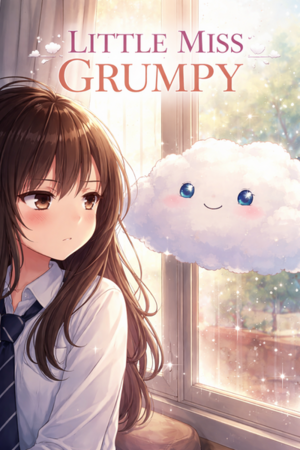
Little Miss Grumpy !
The school festival arrived like an unwanted guest who refused to leave early.
Paper lanterns swung from every hallway, bright reds and oranges clashing with the usual gray monotony of the building. Booths lined the courtyard—takoyaki stands hissing with oil, goldfish scooping games already littered with broken paper scoops, and a makeshift stage where the music club was butchering a pop song with too much enthusiasm.
The air smelled like fried batter and cheap candy, loud and sticky and everywhere.
Mio hated it.
She moved through the crowds with her shoulders hunched, umbrella clutched like a shield even though the sky was clear. The cloud had followed her to school again, but today it looked heavier, its edges frayed as if it had absorbed some of her mood overnight.
She kept her eyes on the ground, dodging groups of laughing students and teachers in silly aprons. All she wanted was to survive until the final bell and disappear behind the gym where the noise couldn’t reach.
Ben found her anyway.
He was carrying two paper cups of ramune soda, the marbles rattling inside like tiny trapped hopes. His uniform was slightly rumpled from helping at the class booth earlier, and there was a smear of takoyaki sauce on his sleeve.
He held one cup out to her without fanfare.
“Thought you might want something that fizzes louder than your complaints,” he said, falling into step beside her.
Mio took the cup but didn’t open it.
“Everything here is too loud. Including you right now.”
He didn’t flinch.
“Festival’s only once a year. Figured we could hide behind the gym after I finish my shift. There’s supposed to be a good cloud-viewing spot from there.”
She almost agreed.
The words were on her tongue—something dry about clouds being overrated—but then the announcement crackled over the speakers.
“Third-year students, please gather in the auditorium for the family appreciation activity. Bring your prepared photos or mementos.”
Mio’s stomach dropped.
She had forgotten.
Or rather, she had deliberately ignored the reminder slips that had been passed around all week.
The activity was simple on paper: share one item that represented your family, talk briefly about why it mattered. Most kids brought baby photos, old letters, or silly family vacation stories.
Harmless. Heartwarming for everyone else.
For Mio, it felt like walking into a trap made of glass.
Ben noticed the change immediately.
“You okay? You look like the ramune just insulted your mother.”
She didn’t answer.
Her fingers tightened around the cup until the plastic creaked. The cloud above seemed to sink lower, its shadow darkening the lanterns around them.
In the auditorium, rows of chairs faced a small stage where students took turns. The lights were too bright, the applause too quick.
Mio sat stiffly in the back row, Ben beside her because he had followed without being asked.
When her name was called near the end, she stood on legs that felt borrowed from someone else.
She walked to the front, clutching nothing.
No photo. No mementos.
Just the heavy silence she carried everywhere.
Mr. Tanaka smiled encouragingly from the side.
“Mio, would you like to share something about your family?”
The room waited.
A few kids whispered. Someone’s phone camera clicked.
Mio stared at the floor. Her throat closed around words she didn’t want to say.
“I… don’t have anything.”
A pause.
Then a well-meaning girl in the front row offered, “What about your parents? Or siblings?”
The word siblings hit like a crack across thin ice.
Mio’s head snapped up.
“I said I don’t have anything.”
Her voice came out sharper than intended—flat, cold, edged with something raw.
A few students shifted uncomfortably. Ben was watching her from the audience, his expression quiet but concerned.
Mr. Tanaka tried to smooth it over.
“That’s alright. You can pass if—”
“No,” Mio cut in, the pressure building behind her eyes. “You all want a nice story, right? Happy family memories. Mine isn’t nice. My brother—”
She stopped, the word catching like a hook in her throat.
She hadn’t said it out loud in over a year.
Not to anyone.
“He’s gone. Two years now. Car accident. And the music box he gave me doesn’t even play anymore. So no. I don’t have a cute photo or a funny story. Happy now?”
The auditorium went still.
Someone dropped a pen; the sound echoed too loudly.
Mio turned and walked off the stage before anyone could respond.
Her footsteps rang against the wooden floor like accusations.
She pushed through the side door into the courtyard, the festival noise crashing over her again—laughter, music, the sizzle of food.
It all felt mocking now.
Ben caught up outside, breathing a little fast.
“Mio, wait—”
She whirled on him.
The ramune cup was still in her hand, unopened and sweating.
“Don’t. Just… don’t.”
He stopped a few feet away, hands raised slightly like he was approaching a startled animal.
“I’m not trying to fix anything. I just—”
“You just what?”
Her voice cracked, the anger spilling out because it was safer than the ache underneath.
“You just keep showing up with your onigiri and your stupid cloud talk and your broken music box like any of it matters. Like you can make the quiet go away. But it doesn’t. It never does.”
“My brother used to wind that box every night. It played this dumb little tune that made everything feel less empty. Now it’s just wood and dust, and so is everything else.”
“So stop. Stop acting like I’m someone worth the effort.”
The words hung between them, sharp as broken glass.
Ben’s face didn’t twist in hurt or anger.
It just… softened.
Which somehow made it worse.
“I’m sorry,” he said quietly. “I didn’t know.”
“Of course you didn’t.”
She laughed, but it came out brittle.
“Nobody does. Because I don’t talk about it. And I don’t want to. Not with you. Not with anyone.”
She turned away, shoulders rigid.
The cloud above them had grown darker, its edges heavy and low, blocking out the festival lanterns like a personal storm.
Rain began to fall.
Light at first.
Then steadier.
As if the sky had decided to match her mood.
Mio walked home alone.
The streets were slick and empty, festival sounds fading behind her.
She didn’t open her umbrella.
The rain soaked through her blazer, plastered her hair to her forehead, but she barely felt it.
At home, the apartment was silent.
Her mother was still at work; the note on the fridge from that morning felt like it belonged to another life.
Don’t forget your umbrella.
She went straight to her room and stood in front of the shelf.
The music box sat there, small and accusing.
Faded carvings of birds and flowers, the crank bent from years of careful winding by small hands that no longer existed.
Mio reached out, fingers trembling, and turned the key anyway.
Once.
Twice.
Nothing.
Just the faint click of gears that refused to catch.
No melody.
No lullaby.
Only silence and the distant patter of rain against the window.
She sank to the floor, back against the bed, knees drawn up.
The cloud pressed against the glass outside, its shape distorted by water streaks, no longer playful.
It looked as heavy as she felt—sodden, quiet, waiting.
Tears came then.
Hot and angry at first.
Then quieter.
The kind that left her chest hollow.
She didn’t sob loudly.
She just let them fall, mixing with the rain dripping from her hair onto the floorboards.
The music box stared down at her, lid slightly ajar, empty of everything that once mattered.
Ben’s words from earlier in the week echoed faintly:
You don’t have to like everything… just some things.
She closed her eyes against them.
Right now, she didn’t like anything.
Not the festival.
Not the rain.
Not the boy who kept refusing to leave.
Not even herself.
Especially not herself.
Outside, the cloud lingered, its shadow stretching long across her room as evening settled in.
It didn’t bob or drift cheerfully anymore.
It simply stayed—heavy, patient, and unbearably present.
Just like the ache she had tried so hard to ignore.


Please sign in to leave a comment.