Chapter 9:
Peripheral Figures
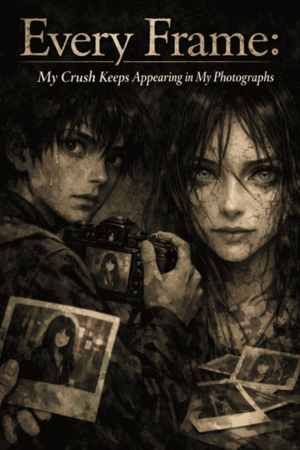
Every Frame: My Crush Keeps Appearing In My Photographs
The exhibition room smelled of old paper, dust, and the slow rot of institutional pride.
It sat at the far end of the department’s older wing, beyond the studios students still used and beyond the offices faculty pretended to inhabit efficiently. First years barely knew it existed. Most second years knew it only as the room where old project boards went to die. Fourth years rediscovered it every spring with the panic of people realizing poster tubes and installation diagrams had a history they might accidentally repeat.
Makoto had been inside before.
Never with this much purpose.
Reina had borrowed the keys from the department secretary under the true enough excuse that she wanted to review past exhibition layouts before critique season. Yuto arrived with pastries in a paper bag and the triumphant face of someone who believed bribery should count as research support.
The binders lived on the back wall.
Tall gray spines. Years handwritten in fading marker. Some thick, some thin, all heavier than they looked.
Reina pulled the 2003 binder free and set it on the long table at the center of the room.
Dust lifted in a pale cloud through the shaft of morning light from the high window.
Yuto coughed theatrically. “Excellent. We’re definitely in the chapter where the environment wants us to leave.”
Makoto ignored him and opened the binder.
The first pages were administrative. Floor plans. Participant lists. Delivery schedules. Then the student project titles began.
Makoto ran a finger down the typed names.
Mori, Ayaka.
Takahashi, Daisuke.
Senda, Hironori.
Mamiya, Riku.
There.
Project title: Peripheral Figures
Medium: gelatin silver prints, 12 works
Placement: eastern wall, rear half
Faculty note: removed from final arrangement pending review
No reason given.
No image attached.
Reina pulled the binder closer. “Turn the page.”
The next sheet held rough layout sketches. Small rectangles for framed works, some crossed out in pencil. Beside Mamiya’s section, in quick cramped handwriting, someone had written:
Rehang after discussion. Do not display current set.
The pen pressure had cut slightly through the page.
Yuto leaned over. “That’s not subtle.”
Makoto turned another page.
Critique notes. Typed comments from faculty and visiting reviewers clipped in place from pre-exhibition assessments.
Project intellectually promising but formally unstable.
Overreliance on accidental subjects.
Interesting recurrence across environments, though artist seems unwilling to discuss method plainly.
Student increasingly fixated on peripheral female figure not legible to all viewers.
Makoto stopped.
Reina read the line again, lower this time. “Not legible to all viewers.”
Yuto straightened. “That is a terrible sentence.”
“Yes,” Reina said. “Because it means they had already started lying in academic language.”
Makoto turned to the final note on the page. Handwritten, not typed.
Ask Shinohara to review separately. Student becoming defensive.
No signature.
But they did not need one.
The room felt colder after that.
Makoto kept turning pages. Late layout changes. Loan forms. A checklist of frame sizes. No images. No copies of the works. If Mamiya’s actual prints had ever been in the binder, they had been removed thoroughly.
“There has to be a storage record,” Reina said. “If they pulled the prints, they went somewhere.”
Yuto had already gone to the second shelf, rifling through loose exhibition packets with no clear order except instinct. He made a sound and held up a folded sheet.
“Found a floor plan addendum. Different handwriting. Listen.”
He read aloud.
Rear storage requested after student reported repeated disturbance to mounted works during overnight prep. Security found no evidence of entry. Prints moved to temporary cabinet.
Makoto looked at him. “Repeated disturbance?”
Yuto shrugged. “That’s all it says. No details. But whoever wrote this had bad handwriting and worse nerves.”
Reina took the page. “Temporary cabinet where?”
Yuto pointed to the bottom margin. “No room listed. Just initials. K.S.”
Silence.
Makoto frowned. “K.S.?”
“Yeah,” Yuto said. “Definitely K.S. Unless the writer had a stroke in the middle of the second letter.”
Reina’s thumb rested along the page edge. “That doesn’t help.”
She folded the addendum once, carefully. “We copy all of this.”
Yuto raised both hands. “Gladly. But can someone explain what not legible to all viewers means without making me feel worse?”
Makoto thought of Yuto seeing the girl at once in frame seven. The reflected fourth shape in the second roll. The dark figure in the lamp base from the clipping photograph.
“Maybe it means exactly what it says,” he replied.
Yuto stared. “That was the opposite of reassuring.”
Reina had already taken out her phone.
They spent the next half hour copying everything tied to Mamiya’s project. Layout sheets. Notes. Addendum. One typed comment from a visiting reviewer that said, in clipped cruel language, that the student had become more interested in proving the existence of a repeated woman than in asking what repetition was doing to the work.
Makoto kept coming back to that sentence.
What repetition was doing to the work.
Not to the student.
They kept looking.
Not systematically after a point. The room infected method. Yuto checked behind binders and between folders with the energy of someone trying to outrun his own investment. Reina scanned labels, cabinet numbers, penciled corrections. Makoto turned over documents that should have been useless and found even uselessness suspicious in a room where things had already been removed.
Yuto was the one who did something dumb enough to work.
He crouched to reach behind the back row of binders, lost his balance, swore under his breath, and knocked a thin board packet sideways. Something slid down behind the shelf and hit the floor with a papery slap.
All three froze.
Yuto reached down first and pulled it free.
A contact sheet.
Unlabeled. Bent at one corner. Not part of the formal archive at all.
He lifted it and said nothing.
Makoto and Reina both turned.
The sheet held six medium-format frames.
Urban roads.
A station platform.
A narrow alley.
A row of windows lit at dusk.
And in frame three, near a vending machine at the far left edge, the dark-haired girl stood looking toward the lens.
At the bottom border, in technical pen, someone had written:
Natsume. 1998. Aiba.
Reina took the contact sheet with both hands.
“This shouldn’t be here,” she said.
“No,” Makoto replied. “It shouldn’t.”
Yuto looked between them. “You’re telling me the department had this the whole time?”
Makoto’s mouth had gone dry.
If Aiba was not a student, if his contact sheet sat hidden behind a student exhibition binder from five years later, then the department’s history with this was older, wider, and more deliberate than any of them had understood.
Reina scanned the sheet immediately.
Then, before any of them could decide what that meant, the exhibition room door opened.
It was the woman they had seen near Shinohara’s office before, always with folders or archive boxes in her arms, always moving with the sort of quiet efficiency that made students lower their voices without knowing why. Gray cardigan. Dark blouse. University tag clipped to her pocket. Ring of keys looped around two fingers. Hair pinned back in a way that should have looked neat and somehow didn’t.
Kuroda.
No one moved.
Her eyes went first to the open 2003 binder. Then to the pages on the table. She did not show surprise.
She only stood there a moment too long, as if measuring the room before deciding which part of it belonged to words.
Then she stepped inside and shut the door behind her.
“What are you doing in here?” she asked.
Her tone was not sharp. That made it worse. If she had come in angry, they could have reacted to anger. This sounded like a question already hardening into consequence.
Reina answered first.
“Looking at old exhibition records.”
Kuroda let her gaze drop once to the table again. The open binder. The copied sheets. Makoto’s notes.
“You should not be here,” she said.
Yuto leaned back against the shelf as though he had every right to be standing there. Makoto knew him well enough to see the tension hidden inside the performance.
“And you should?” Reina shot back.
For the first time, something like the edge of a smile appeared near Kuroda’s mouth. It did not soften her face.
She tapped the clipped tag.
“It is my job as a librarian,” she said.
The answer sat there. Not defensive. Not explanatory. Just sufficient in the way official things often were when they were meant to close a door.
Makoto noticed that she had not looked too directly at any one page for too long. As if she were being careful not to let her attention settle visibly anywhere.
Reina held her gaze. “So this room is part of your job?”
“Yes.”
“And watching who comes into it?”
Kuroda tilted her head. “Among other things.”
The air in the room changed.
A moment ago it had felt like discovery. Now it felt like trespass, and worse, like trespass witnessed by someone with no intention of dramatizing it for their benefit.
Kuroda came farther in and stopped at the end of the table.
“Hand me the keys,” she said.
No one answered.
She looked at Reina, not impatiently, but with the kind of waiting that made refusal feel childish before it had even been attempted.
Reina reached into her pocket, took out the ring, and placed it on the table instead of directly into Kuroda’s hand.
The metal made a flat little sound.
Kuroda picked the keys up.
Then she said, “You signed these out to review layout history. Not to open binders that were not requested. Not to remove papers from sequence.”
Yuto said, “We’re here just to see some materials.”
Kuroda’s eyes moved to him. “Really?”
The single word landed lightly and still made him look away first.
Makoto could feel his pulse in his palms where his hands rested at the table edge. The room had gone too quiet. Outside the high window, pale afternoon light held steady on the courtyard wall. Somewhere in the hall, someone laughed and passed by, unaware of the three of them standing in a room full of old paper trying not to look guilty.
“Even so,” Kuroda said, “you were not authorized to access these materials.”
Reina said, “If the material is here, why keep it if no one is meant to see it?”
Kuroda’s gaze shifted back to her.
“That is not the same question as why it is not meant to be accessed by just anyone.”
It was a careful answer. Makoto felt the care in it immediately. Not because of what it gave away. Because of what it refused to touch.
Yuto said, “We were putting things back.”
Kuroda looked at the table. The open binder. The loosened notes. The copies stacked near Reina’s elbow.
“That may even be true,” she said.
No sarcasm. Somehow harsher for it.
Makoto kept very still.
At some point during the exchange, while Kuroda’s attention had settled on Reina and then Yuto, he saw Yuto’s right hand move once. Casual enough to miss if you did not know him. A page shifted. A sleeve lifted. Something slid inside the fold of his jacket.
The Aiba sheet.
Makoto knew it instantly and forced his face not to change.
If Kuroda had seen it, she gave no sign.
Or worse, she had seen it and chosen not to.
Reina asked, “Why were you here?”
It was too simple a question to refuse directly.
Kuroda adjusted the keys in her hand. “I told you. I’m a librarian.”
“That isn’t an answer.”
“It is the answer you’re getting.”
Again that almost-smile. Not warmth. Not mockery. More like acknowledgment that the room contained people who still believed answers came in the size they requested.
She reached down and closed the 2003 binder herself.
The dusty thud of it made Makoto’s shoulders tighten.
“You have seen enough,” she said. “Put the loose pages back in order. Leave the copies you made on the table. And next time you decide curiosity gives you permission, choose a less obvious room.”
No one moved at first.
Then Reina gathered the photocopied pages with a motion too calm to be natural. Makoto watched her hands. Fast, not reckless. The useful pages they had already copied were separated from the less important ones in one smooth stack. The original notes went back where they belonged. The copies slid under the closed binder. The table looked cleaner by the second, but not so clean that the speed itself became suspicious.
Yuto remained leaned against the shelf with the exact posture of someone who should not be trusted and had made peace with that long ago.
Makoto put the loose Mamiya sheets back into their folder. The movement felt numb.
Kuroda stood there and watched.
Not like a guard.
Like a person taking inventory without using paper.
When they finished, she opened the door and stepped aside.
That felt worse than being thrown out.
Reina picked up her bag first. Makoto followed. Yuto pushed away from the shelf and fell into step beside them, easy and loose.
The corridor outside felt brighter than it should have. Not warm. Only overexposed, as if stepping out of the exhibition room had moved them into a different layer of the day where everything was forced flatter and whiter than before. The old building smell of dust and paper paste met them all at once. A cart rattled near the print lab. Someone shut a locker too hard two rooms away.
The world had resumed with indecent speed.
They did not speak until they had gone down one flight of stairs and out into the courtyard.
Even then the silence held a little longer.
Students crossed the open space with portfolios and tote bags, already half gone into the long weekend. Someone had pinned a Golden Week travel notice to the board near the vending machines. Wind lifted one corner and let it fall again. Everything looked exactly like ordinary late afternoon on campus.
Makoto hated it.
Reina stopped first. “Well?”
Yuto glanced left and right once, then reached inside his jacket and pulled out the Aiba contact sheet.
For one absurd second Makoto only stared at it.
Natsume. 1998. Aiba.
The girl still stood by the vending machine in the edge of frame three, dark and still and impossibly small.
Reina closed her eyes. “You idiot.”
“I know,” Yuto replied. “But I’m your idiot.”
“That is not comforting.”
“No, but it is structurally true.”
Makoto took the sleeve from him carefully. The paper felt warm from where it had been pressed inside Yuto’s jacket.
He looked back toward the older wing of the building.
The exhibition room windows were too high and too dirty to reveal anything now.
“She knew,” he said.
Reina folded her arms. “Maybe.”
Yuto shook his head. “No. She definitely knew something.”
“That’s not the same thing,” Reina said.
Makoto slipped the Aiba sheet into the center of his notebook and closed it.
The movement felt ceremonial in a way he did not like.
What sat in his chest now was not triumph. Not even relief.
Only heaviness.
The kind that came after a situation turned from curiosity into consequence.
Kuroda had not threatened them. She had not asked what they found. She had not searched their bags. She had simply appeared, taken back the keys, and let them leave.
That permission felt wrong.
Not generous. Not accidental.
Calculated, maybe. Or patient.
Yuto seemed to feel some version of the same thing. The loose, half-mocking energy had drained out of him.
“I don’t like adults who speak softly in rooms full of paper,” he said.
Reina let out a breath through her nose. “That sounds like something a child would say after almost setting a library on fire.”
“It can also be wisdom.”
Makoto looked down at the notebook in his hands.
Golden Week was coming.
A week ago that had meant empty campus, cheap travel tickets if booked early, students pretending they had lives beyond deadlines. Now it meant something else. A space in which no one would be watching them closely enough to stop bad decisions from becoming plans.
He realized, with a cold certainty, that they were already making one.
The thought must have shown in his face, because Reina looked at him and asked, “What?”
Makoto lifted his eyes. “We’re not done.”
Neither of them answered.
Because all three already knew.
The campus around them had begun to thin toward evening. Doors shutting. Fewer footsteps. Longer shadows under the concrete awnings. A holiday opening in the middle of the week like a loose seam.
Yuto shoved both hands into his pockets. “Then next time we choose where we go before someone else chooses it for us.”
They started walking again.
Only after they had crossed half the courtyard did Reina speak.
“I know what K.S. is.”
Both boys looked at her.
She kept her eyes ahead. “You didn’t notice the nametag. I did.”
Makoto’s grip tightened on the notebook.
Yuto stopped first. “What?”
Reina looked back once toward the old wing, then lowered her voice.
“Kuroda Sayaka.”
Silence.
The wind moved the Golden Week notice on the board again. Somewhere behind them a bicycle bell rang twice and faded.
Makoto said, “You’re sure?”
“Yes.”
Yuto swore softly. “So the initials on the cabinet note…”
“Yeah,” Reina said. “They were hers.”
That changed the shape of the afternoon all over again.
Not cleanly. Not usefully. But decisively.
Makoto thought of the addendum. Rear storage requested. Prints moved to temporary cabinet. K.S.
Kuroda had been in the paper trail before she had entered the room in person.
Which meant she was not just adjacent to the archive.
She had touched it.
Maybe managed it. Maybe hidden parts of it. Maybe only filed what other people gave her. But no longer neutral. No longer only the librarian who took keys back and spoke in careful doors.
Yuto ran a hand over his face. “Great. Fantastic. We’ve upgraded from vague adult unease to initials.”
Reina ignored the tone. “She goes on the list.”
“The what?”
“The suspicious list.”
“That’s an insane phrase.”
“It’s an accurate phrase.”
Makoto looked back once more toward the building.
Kuroda had taken the keys. Kuroda’s initials were on the storage note. Kuroda had appeared at exactly the wrong moment. Kuroda had let them leave.
He felt something settle in him then.
Not understanding.
Only placement.
The story had shifted again, and now one of its adults had a name attached to the wrong piece of paper.
That mattered.
He did not yet know how much.
But as they crossed the courtyard with the Aiba sheet hidden inside his notebook and Golden Week opening before them like a bad idea given time to mature, Makoto knew one thing clearly.
Kuroda was no longer just a woman who worked near Shinohara’s office.
She had entered the frame.






Please sign in to leave a comment.