Chapter 16:
Chapter 16: The Brother’s Path
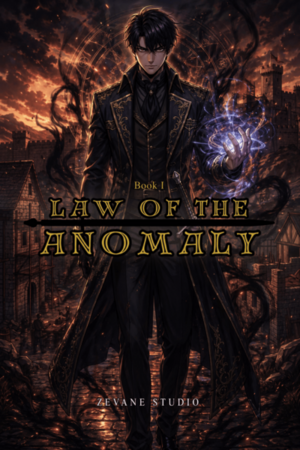
Law Of The Anomaly
The Sword’s Will
Strength without thought… was wasteful.
Two days after his conversation with Marian and Elaine, Adrian crossed the inner courtyard before dawn and went to the training yard.
The body objected long before the mind found the walk unreasonable. The morning air was colder than the previous week, and the cold reached this body faster than most forms of discomfort. It settled in the lungs first, then the joints, then in the long, bitter ache beneath the ribs that never fully vanished and only changed shape depending on the hour, the weather, and the price of foolishness. Adrian kept his pace even anyway. He used the cane because there was no value in pretending he did not need it. The gravel path from the western wing to the open yard was short. It felt longer in a body shaped by years of poison and lesser expectations.
Mist hung low above the stone edges of the training ground where night had not fully released its claim on the estate. The first line of light had only just begun lifting behind the eastern wall, painting the sky in pale gray and thin silver rather than gold. The yard itself looked harsher at that hour—less like the place where Isaac spent his mornings making noise and certainty out of wooden blades and more like what it truly was: a disciplined square of packed earth, racks of practice swords, marked ground for stance work, weighted poles, and the enduring labor of repetition.
Darius was already there.
The Knight Captain stood near the edge of the ring in a dark training coat with one hand behind his back and the other resting lightly at his side. He was a large man in the quiet, useful way rather than the theatrical one—broad through the shoulders, compact through the center, carrying the balance of someone who had lived too long in armor to mistake muscle for force. His face gave little away, but Adrian had learned enough of him by then to understand that the man’s stillness was not passivity. It was measured attention. Darius watched things the way soldiers and predators both did—without needing them to announce their significance first.
Across from him, Isaac moved through a sequence with a wooden practice blade in both hands.
He was younger, restless even in concentration, and built in direct opposition to everything this body had once been. His motions were not yet refined, but they were immediate. He attacked the air as if it had personally insulted him. Sweat already darkened the collar of his tunic despite the cold. His steps were a little too aggressive, his shoulders a little too eager, his grip tightening earlier than it should. Yet there was force in him. Not merely physical strength, though that was growing. There was the beginning of something more difficult to teach—unembarrassed commitment.
Adrian stopped near the outer rail and watched without announcing himself.
Isaac lunged, cut downward, twisted, recovered too wide, corrected, and drove again into the sequence. The blade snapped through the morning air with a dull wooden crack at each forced endpoint. Darius said nothing through the first cycle. He only watched. Isaac reset and began again. The second attempt was cleaner. The third overcommitted. The fourth was almost good.
Then Isaac noticed him.
“You’re here early,” he said, lowering the practice sword but not the energy in his stance. “Or you didn’t sleep.”
“Both remain possible.”
Isaac’s mouth twitched. “You should be in the library bothering Marian or asking Elaine things that make her stare at you like you’re a disguised academy examiner.”
“That would require them to be awake.”
“That has never stopped you before.”
Darius’s gaze shifted once toward Adrian and then back to Isaac, but there was a different quality in it than before. Since the days after Adrian’s awakening, the Knight Captain had been steadily revising his judgment. At first, it had been duty sharpened by caution. Then it became a professional interest. Now it had settled into something quieter and more serious: the watchfulness a capable soldier gave to a variable he had not yet categorized but had stopped underestimating.
“You came to watch?” Darius asked.
“Yes.”
Isaac set the wooden blade against his shoulder. “Watch what?”
“Aura.”
That changed the air more effectively than if Adrian had raised his voice.
Isaac straightened slightly. Darius did not move at all, which meant the question interested him more than surprise would have. The sounds of the waking estate remained distant beyond the wall—stable hands in low conversation, one gate hinge, the muted clatter of buckets somewhere near the kitchens. Within the yard, only the three of them mattered.
Darius said, “Marian explained Essence.”
“And Elaine explained the limits of current doctrine,” Adrian replied.
That earned the faintest movement at one corner of the captain’s mouth. “Did she?”
“She was more polite in her phrasing.”
Isaac looked between them, clearly deciding whether this exchange was real or part of the strange, dry language Adrian sometimes used when he meant something more direct than it sounded. “And now you want Aura.”
“I want the second half of the system,” Adrian said.
Darius studied him for a second longer, then nodded once. “Then watch properly.”
Isaac reset his grip and, without being told, resumed his stance.
The difference between sword practice and Essence discussion revealed itself immediately. Essence, at least in its theory, belonged to stillness first. Thought. containment. perception refined into structure. Aura began in movement. Not wild motion, not senseless force, but the kind of directed action that made stillness feel less like peace and more like preparation.
Isaac stepped forward and struck.
The wooden sword cut from right to left, not perfectly, but decisively. Adrian did not focus first on the blade. He focused on the body, carrying it. The movement began before the arms. That mattered. The hips drove. The shoulders followed. The weight committed before the strike reached its arc. It was not elegant. It was honest. There was no cognitive overdesign in it, no attempt to force beauty where instinct had not yet learned efficiency. Isaac attacked as though the line before him ought to break because he had chosen it as the line to break.
He struck again.
Then again.
Each attempt varied. The body remembered some things and lost others. A better step. Worse balance. Cleaner recovery. Sloppier grip. But beneath the inconsistency, there was a common thread Adrian recognized at once from his earlier observations and from Marian’s descriptions of the alternate path.
Will.
Not in the abstract, moral language people used when they wanted to flatter soldiers and simplify warriors. Not determination as a slogan. Not courage as a noble performance. Actual internal direction is exerting itself outward until the body is aligned around it.
Darius finally spoke.
“Stop trying to cut the air,” he said. “The air is not your enemy.”
Isaac frowned, lowering the blade. “I know that.”
“Do you?”
“I know what you mean.”
“No,” Darius replied, “you know the words. That is not the same thing.”
Isaac exhaled and shifted his stance. The response was part irritation, part attention, and all of it immediate enough to amuse Adrian more than he expected.
Darius gestured with two fingers. “Again. But before you move, decide what the strike is for.”
“It’s a downward cut.”
“That is the shape,” Darius said. “Not the purpose.”
Isaac looked at him, then at Adrian, then back at Darius as if deciding the adults in the yard had all collectively chosen to become difficult before sunrise.
“What purpose is a practice strike supposed to have?” he asked.
“The same purpose every real strike has,” Darius said. “It must go somewhere. If your sword has no path before it moves, then you are only spending strength.”
Adrian’s attention sharpened.
Sword path.
Not merely conviction. Direction.
Isaac lifted the blade again with more annoyance than understanding and repeated the sequence. This time, Darius stepped in on the second strike, intercepted with his own practice blade, twisted, and used the contact to show the weakness in Isaac’s line.
“Feel that?” he asked.
Isaac reset with a grimace. “Yes.”
“You wanted impact more than direction. That’s why I took your center so easily.”
“I’m trying to hit through the block.”
“You are trying to prove you are strong enough to hit through the block.” Darius’s voice remained calm. “That is not the same as seeing the path of your sword.”
Isaac was quiet for a beat.
Then, grudgingly, “Show me.”
Darius took a position opposite him.
When the captain moved, Adrian understood immediately why seasoned warriors were described differently from young ones, even when both possessed strength. Darius wasted almost nothing. The sword did not swing because he desired motion. It moved because a line had already been chosen in him before the wood began to cut through the air. He stepped once, the blade rising from low guard into a clean diagonal with such economy that the strike seemed to reveal itself rather than be created. There was no excess force. Yet Isaac, watching, shifted unconsciously backward.
“Again,” Darius said.
He repeated it more slowly.
“This is not only will,” he said. “Anyone can want to hit something. Children want. Drunks want. Fools want. Aura is not simply wanting. It is the shaping of the self behind the strike until the sword has one clean answer to the question of where it goes.”
Adrian said, “So conviction without vision is unstable.”
Darius turned his head slightly. “Yes.”
Isaac frowned. “I thought Aura was about force.”
“It is about force,” Darius said. “Force directed by conviction.”
“Same thing.”
“No.” Darius pointed at the center of Isaac’s chest with the wooden blade. “Aura forms here because the heart is where your chosen direction becomes true enough to sustain power. But if the direction changes every breath—anger, fear, pride, frustration, excitement—then what exactly is the heart sustaining?”
Isaac opened his mouth, then closed it again.
Adrian answered instead.
“Volatility.”
Darius’s gaze shifted to him. “Correct.”
The captain stepped back and lowered the blade. “The first ring of Aura is not merely born from emotion. That is the mistake people outside the path make when they want to sound knowledgeable. Emotion is fuel. It is not a form. Aura requires the swordsman to perceive his own path so clearly that feeling does not scatter him. It hardens him toward one line.”
Isaac muttered, “That sounds like thinking.”
“It is thinking,” Darius said. “Just not the kind Marian practices over books.”
That distinction interested Adrian more than the words themselves admitted.
He moved a step closer, careful not to show the effort it cost. “Then Aura is also cognitive. Just differently organized.”
Darius considered him with new intent. “Explain what you mean.”
“Essence constructs through abstraction. Aura appears to construct through embodied decision. But neither path is mindless. One builds circles in the cognitive field. The other builds rings around conviction carried in the heart. Both require internal organization before power becomes stable.”
Isaac looked between them and scowled slightly. “You two are doing it again.”
“Doing what?” Adrian asked.
“Talking like the practice yard is a council chamber.”
Darius did not smile, but his voice carried a trace of approval. “Let him continue.”
Adrian looked toward Isaac’s sword, then to the boy himself. “You improve when you stop chasing force as proof.”
Isaac’s scowl deepened. “That sounds insulting.”
“It is descriptive.”
“I’m not trying to prove anything.”
“Yes, you are.”
Silence.
Not long. Just long enough for truth to irritate.
Darius broke it. “He’s right.”
Isaac let out a breath through his nose. “You always say that to him now.”
“I say it when it’s true.”
“That’s convenient.”
“No,” Darius replied. “Convenient would be letting you grow into bad habits because they flatter your effort.”
He nodded once toward the center line of the yard. “Again.”
Isaac reset.
This time, the change was subtle but real. He stood longer before moving. The blade rose with less unnecessary tension in the shoulders. The gaze settled not on Darius as a body to defeat, but on a line through space between them. When he stepped and cut, the strike did not become stronger in a visible sense. It became cleaner.
Darius caught it, but not as effortlessly as before.
“There,” he said. “What changed?”
Isaac was breathing harder from concentration now rather than exertion. “I… knew where I wanted it to go.”
“Before or after you moved?”
“Before.”
“And?”
Isaac hesitated. “It felt easier.”
“Not easier,” Darius corrected. “Truer.”
Adrian filed the word away.
That was how practitioners often spoke when the theory underneath a system had not yet been made precise enough. True. Pure. Clean. Aligned. Resonant. In one world, the language had been markets and statecraft. In this one, it was circles, rings, cores, paths. The vocabulary changed. Structure did not.
Isaac attacked again.
Then again.
The sequence improved in bursts rather than steady increments. That mattered. Essence, as Elaine described it, demanded layered refinement. One built, corrected, stabilized, refined. Aura, by contrast, surged. Progress came when internal alignment suddenly locked and just as suddenly vanished when emotion disrupted it. Adrian watched the pattern clarify with each attempt.
Confidence sharpened the line.
Frustration destabilized it.
Anger added force but often at the cost of clean direction.
Determination, when separated from ego, produced the best results.
Then came the true flaw.
Isaac missed one recovery and overextended. Darius checked him with the wooden blade against the ribs, not painfully, but enough to mark death in any real exchange.
“You felt the line and then wanted the line to prove something,” Darius said.
Isaac lowered the sword. “I wanted to push harder.”
“That is pride, not path.”
Isaac looked away, annoyed.
Adrian said, “Aura rewards internal state too directly.”
Both brother and captain turned toward him.
He continued without raising his voice. “Essence has its own vulnerabilities—rigidity, miscalculation, theoretical arrogance, collapse from poor structure. But its model appears less responsive to momentary emotional fluctuation once the circle is formed cleanly. Aura, from what I’m seeing, remains dangerously exposed to the volatility of the practitioner at the exact moment force is required.”
Darius did not answer immediately.
Instead, he set his practice sword aside and stepped nearer. “That is true,” he said at last. “It is also why weak men should not be given blades and strong men should not be trusted merely because they hit hard.”
Isaac muttered something under his breath that was probably about everyone in the yard deciding to turn his training into a philosophical attack.
Darius ignored him. “Aura is powerful because it draws from something most people possess before they ever understand how to discipline it. Rage. resolve. hunger. loyalty. desperation. A man can become dangerous with those things long before he becomes wise. That is why the path creates so many failures that look promising when they are young.”
“And the answer?” Adrian asked.
The Knight Captain’s gaze settled on the practice swords at the rack, then shifted to the first faint gold appearing above the wall.
“The answer,” he said, “is seeing your own sword’s path before emotion uses you instead of the other way around.”
Isaac blinked. “You’ve said that three different ways now.”
“And you still needed the fourth.”
The boy groaned softly and dragged a hand through his hair. “Fine. Then what exactly am I supposed to see?”
Darius stepped behind him and adjusted the angle of his shoulders with both hands, not gently, but not roughly either. “Not the enemy first. Not the noise of the yard. Not whether someone is watching. Not whether you look strong. See the line your sword should travel. See the line your body must take to make that possible. See what the strike is for.”
“For winning.”
“No.”
“For breaking through.”
“Sometimes.”
“For—”
“For expressing one answer cleanly,” Adrian said.
Isaac turned his head slightly. “What does that even mean?”
“It means,” Adrian said, “that hesitation, vanity, and excess all create additional answers at the point of movement. A sword should not have multiple intentions.”
Darius’s eyes narrowed slightly with interest. “That is closer than most people get without years of training.”
Isaac looked openly offended now. “I live with both of you, and somehow I’m the only one speaking like a normal person.”
“You are also the only one sweating,” Adrian said.
That pulled a short laugh from Darius before he suppressed it.
Isaac pointed the practice sword toward Adrian in mock accusation. “You’re impossible when you’re tired.”
“I’m efficient when I’m tired,” Adrian replied.
“Those are not the same thing.”
“No,” Adrian said. “But they remain useful.”
The exchange lightened the yard just enough for Isaac to loosen the tight pride that had begun interfering with his training. That, too, Adrian noticed. Aura was not merely affected by emotional surges. It was destabilized by certain kinds of self-consciousness. Frustration made the body tighter. Embarrassment made the line less honest. The boy improved when he forgot to perform his own strength.
That would matter later.
Darius sent Isaac through another series, slower this time, breaking the sequence into individual phases. Stance. Breath. intention. Step. line. recovery. Not force. Not spectacle. Line. Adrian watched with the stillness of someone assembling a second system beside the first in his mind.
Essence is built through cognition and abstraction.
Aura built force through conviction and directed selfhood.
Essence privileged the mind’s capacity to structure mana into circles.
Aura privileged the heart’s capacity to sustain a chosen line strongly enough that mana formed rings around will.
Essence risked paralysis through overdesign.
Aura risked volatility through emotional interference.
Both paths were powerful.
Neither was complete.
The thought settled deeper than observation. It had not yet concluded. That would come later, when enough information existed to make synthesis worth attempting. For now, he only watched.
The sun rose another degree above the wall. Light spread across the yard. The mist lifted in thinning ribbons. Somewhere beyond the training ground, the estate had fully awakened. Stable hands shouted. A wagon wheel scraped stone. The kitchens released heat into the colder air. The world continued. Within the ring of packed earth, Isaac struck, corrected, failed, adapted, struck again.
On the seventh pass, Darius abruptly stepped in, caught the blade, twisted, and took Isaac to the ground.
It happened fast enough that the boy hit the dirt with a hard curse and a burst of shock before any pride could hide it.
“Why?” Isaac demanded, pushing himself up on one elbow.
“Because you had the line,” Darius said, “and then loved having it more than using it.”
“That makes no sense.”
“It will.”
Isaac sat fully, scowling, dust clinging to his sleeves. “No, it won’t.”
Adrian said, “You recognized improvement and immediately tried to turn improvement into identity.”
Isaac glared at him. “That sounds even worse when you say it.”
“It is still correct.”
Darius extended a hand and hauled the younger boy back to his feet. “There is strength in you,” he said. “Real strength. But if you let emotion choose its own direction every time it rises, then Aura will make you dangerous in the wrong ways first.”
Isaac rubbed one shoulder and took back the wooden sword. “So what, then? I’m supposed to feel nothing?”
“No,” Darius said. “You are supposed to know what feeling serves.”
That answer held.
Adrian saw at once that it was the true dividing line. Not emotion against reason, but emotion disciplined toward usable purpose. Aura was not lesser because it ran hotter. It was simply more exposed. More dependent on self-command at the exact point where many men possessed the least of it.
“And the ring structure?” Adrian asked. “What forms it first?”
Darius looked at him with renewed seriousness. “The same thing that forms a man’s true strike. A will that stops breaking apart inside itself.”
“That still sounds too imprecise.”
“Of course it does,” Darius replied. “You want a diagram.”
“I want an accurate model.”
“You won’t get it from the first yard lesson.”
That, at least, was honest.
Adrian accepted the limitation without liking it. “Then answer this. If the heart sustains the ring, is Aura necessarily more vulnerable to corruption than Essence?”
Isaac groaned softly. “You can’t just say that to him before breakfast.”
But Darius had gone still.
The captain did not answer immediately. When he did, his voice had lowered. “Yes.”
The word hung in the air between them.
“Explain,” Adrian said.
“Aura magnifies what it is fed,” Darius replied. “Discipline and oath can produce remarkable swordsmen. So can wrath, obsession, revenge, and fanatic devotion. The ring does not care whether the conviction is noble. It cares whether it is strong enough to hold.”
Isaac looked from one to the other, some of the earlier irritation falling away as the subject sharpened. “Then why would anyone choose it?”
Darius turned to him. “Because men are rarely empty of feeling, Isaac. Because when danger comes, conviction is often closer at hand than perfect thought. Because in battle, there are moments when the body needs force faster than a scholar needs theory. Because some people are born to see the world through a line they can cut, not a model they can explain.”
Isaac absorbed that quietly.
Adrian did as well.
This path, then, was not merely dangerous because emotion fueled it. It was dangerous because it could be fueled by things the world often rewarded before it punished them. Anger. zeal. vendetta. absolute loyalty. Any of these could make a swordsman formidable long before they made him wise.
He thought of states. Armies. Priests. Noble houses. Brothers. Enemies not yet named.
He filed the conclusion away.
The body interrupted then, as it always did when the mind outran its vessel.
The cold air, the walk, the concentration, the prolonged standing—it all arrived at once in the lungs like a bill. Adrian suppressed the first cough and failed to suppress the second. He turned slightly aside, caught it into a cloth already half-raised from habit, and waited through the burning contraction in his ribs with his face turned away from the yard.
Silence followed.
When it eased, Isaac had gone pale. Darius had already taken one step closer.
“I’m fine,” Adrian said before either could speak.
“No, you’re not,” Isaac snapped, too quickly and with too much worry to sound angry.
“I’m functional.”
“That is not the same thing.”
“Correct,” Adrian said, folding the cloth once before putting it away. “But it will suffice.”
Darius studied him with that same soldier’s stillness. “You’ve had enough for today.”
Adrian looked toward the practice ring, toward Isaac’s stance, toward the unfinished structure of what he had come to observe.
“Not yet.”
Darius’s expression hardened slightly. “That was not a suggestion.”
It might have become a conflict if Adrian had still stood in the body of his first life. In that life, he would have decided for himself how much was enough. In this one, the cost of defiance was written in blood too often to romanticize.
He inclined his head once. “Then answer one final question.”
Darius waited.
“What is the first lesson of the sword path, stripped of pride, stripped of noble theater, stripped even of instruction meant to flatter boys with blades?”
The Knight Captain regarded him for several seconds.
Then he said, “That the sword reveals what kind of self is holding it.”
The sentence settled cleanly.
Adrian nodded.
Isaac shifted the blade in his hands, looking between them. “And what exactly am I supposed to do with that?”
Darius turned back toward him. “Train until the answer stops embarrassing you.”
The younger boy made a face at that, but the reply had landed.
Adrian took up the cane again.
The movement felt heavier now than it had when walking into the yard. The body had made its judgment. Still, the time had not been wasted. Not remotely. Marian and Elaine had given him the first half of the world’s power—structured cognition, the circles of Essence, logic incomplete but disciplined. Isaac and Darius had given him the second conviction, the path, the ring at the heart, a force shaped by the self’s chosen line and endangered by the instability of that same self.
As he turned toward the path back to the manor, he looked once over his shoulder at the boy in the ring and the captain correcting him without indulgence.
Essence refined thought into power.
Aura armed feeling into force.
One built through the mind.
One surged through the heart.
Neither could be trusted alone without flaw.
The idea was not yet ready to become anything more than that. But it was enough to sharpen the next stage of his attention.
He walked back slowly through the cold morning light, the cane tapping once against stone and then earth, the estate rising around him in pale gold and shadow, the training sounds fading behind.
When he finally spoke, it was to no one standing close enough to require the answer, yet Darius heard it anyway from the yard’s edge.
“Emotion fuels power,” Adrian said, voice quiet and exact.
He did not look back.
“Dangerous.”





Please sign in to leave a comment.