Chapter 19:
Chapter 19: The Knights
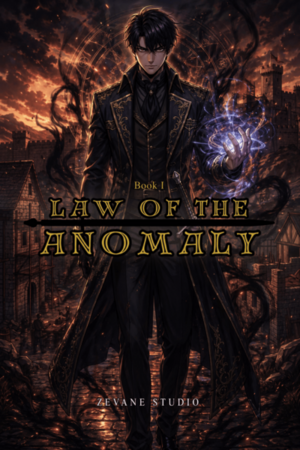
Law Of The Anomaly
Strength Is Not Words
The training yard lay beyond the western wall of the manor, where the ground had been beaten hard by years of boots, drills, and weather, until it held the memory of every season in its surface. In summer, it gave up dust. In the rain, it thickened into mud. Now, under a pale sky and the dry edge of approaching cold, it was hard-packed and gray, marked with shallow ruts, boot-scars, and the darkened circles where practice posts had stood long enough to stain the earth around them. The house banners hanging above the wall stirred only when the wind remembered them. Otherwise, the place belonged to sound: the crack of wooden blades, the brief ring of steel where sparring grew careless, the barked cadence of correction, the grunt of bodies asked to do more than they wanted.
Adrian stood at the edge of it with one hand resting lightly atop the cane and watched the knights of House Valenhart train.
They had noticed him the moment he emerged from the western corridor, though only the younger men let their attention show it. The older ones had trained too long to break rhythm for the sake of curiosity. Even so, the yard changed around his presence in small ways that mattered. One pair of squires slowed a fraction before correcting themselves. A sergeant barked the next count louder than necessary. The two men sparring nearest the post-line both drew their strikes shorter for the space of a breath, as if remembering too late that the sickly heir stood close enough to see them fail.
Knights did not trust weakness.
Not truly. They might pity it. They might protect it if loyalty is required. They might even honor it when it wore the right bloodline and suffered quietly enough. But trust belonged to things that could hold under pressure. Trust belonged to structures that did not break because the world leaned on them at the wrong angle. The men in this yard had spent too much of their lives reducing uncertainty into stance, timing, routine, and reflex to look upon frailty without instinctively measuring the cost of it.
Lucien had always known that, though he had never phrased it so cleanly. The memory of standing at the edge of this same yard while the household knights practiced lived in him with peculiar sharpness. The ache of wanting to belong there had mixed too often with the humiliation of being observed kindly. Not mocked. That would have been easier. Kindness from fighting men always contained distance. It meant they had already decided what one could not do and were compensating for it. Lucien had learned early to smile at the edge of the drills, ask small questions, and hide his breathlessness behind interest. He had loved some of them for trying, and hated himself more for needing them to.
Adrian did not inherit the shame.
He inherited only the information it had left behind.
Captain Darius Vane stood at the center of the yard, a practice blade in hand, broad-shouldered and spare in the way men became after enough years of physical discipline had burned all unnecessary softness out of them. His hair had begun to gray at the temples, but the body beneath the padded coat still moved with the exact economy of someone whose habits had long ago replaced wasted motion with command. He was not the strongest man in the territory. Adrian could already see that in the way the younger knights struck harder than he did. But he was unquestionably the one around whom the others oriented themselves. That was more valuable.
“Again,” Darius said, and the man opposite him—a younger knight named Oren, if Lucien’s memory served—reset his footing at once. “Your blade reaches before your shoulders do. If I can see your intention in the elbow, a butcher in the market could see it too.”
Oren’s jaw tightened. He corrected his stance and struck. Darius turned his wrist, redirected the blow, stepped inside the line of the younger man’s guard, and tapped the practice blade lightly against his ribs before Oren could recover.
“Dead,” the captain said. “And worse, instructively so. Again.”
The exchange repeated itself twice more before Oren finally adjusted enough to avoid the same mistake. Even then, Darius shook his head. “Better. Still not good. When you commit to a line, commit through the waist, not the shoulder. Your body is trying to win the strike with force because your mind hasn’t finished deciding.”
Adrian listened.
The language interested him as much as the movement. Men who trained their bodies for war always revealed their view of power in the words they used to correct failure. Darius did not speak of strength first. He spoke of decision, structure, and sequence. The knights of Valenhart might trust visible force more easily than scholars did, but their captain understood something subtler beneath it. A sword was not merely an instrument of violence. It was a chain of organized commitments. If one link failed, the whole action lost its authority.
A stable hand crossed behind Adrian, carrying wrapped practice poles, and nearly flinched when he realized who stood there. “Young master,” he muttered, dipping his head too fast.
Adrian inclined his own by a fraction and returned his attention to the yard.
The knights did not know what to do with him now.
That much had become increasingly clear over the last two days. The servants felt the change in him and translated it into quiet unease. The family felt it and kept testing its edges through conversation. But the knights were simpler in one regard and harsher in another: they judged by function. Lucien’s old softness had placed him outside their world. The change in his manner had pulled him closer, but not yet close enough to alter rank in their minds. They were waiting, perhaps without realizing it, for evidence that the difference was more than words spoken with unusual composure.
Adrian had not come for their approval.
He had come to observe what approval from such men actually required.
Darius dismissed Oren with a gesture and turned slightly, addressing a pair of younger guards drilling shield rotation at the far side of the ring. His gaze passed over Adrian in that moment—not dismissive, not quite welcoming, simply acknowledging the fact of him. That alone marked a shift. The captain would once have halted the yard and sent someone to escort the invalid heir back inside before dust or wind offended his lungs. Now he let him remain.
Interesting.
Adrian adjusted his grip on the cane and moved a little closer to the fence line. The body objected, though less dramatically than it once had. The distance from the corridor to the yard would have cost Lucien a pause halfway through and perhaps a coughing fit by the end of it. Now the weakness came as a low tremor beneath the ribs, the kind of strain that announced itself honestly without seizing command. He ignored it. Pain and effort only became tyrants when treated as voices rather than data.
A practice spear flew unexpectedly from one of the farther drills and struck the dirt near the rail with a dull thud. Two younger men hurried after it, one laughing, the other cursing under his breath, until they noticed Adrian standing within a few paces of where it had landed. Both stopped short.
“My lord,” one of them said, flushing. “We did not see—”
“That is the problem,” Darius cut in from across the yard. He did not raise his voice; he simply directed it. “If you do not see what is in front of you, it doesn’t matter whether it is an heir or a blade. Fetch it and start again.”
The two men bowed awkwardly, retrieved the spear, and withdrew. Darius resumed instruction, but the yard had absorbed the moment. Adrian could feel their attention moving in glances now, returning to him and away again. He let it happen. Watching men watch was often more useful than speaking to them.
By the time the drills shifted from paired sparring into rotational endurance forms, the wind had strengthened enough to carry a sharper cold through the yard. Sweat darkened tunics. Breath showed in faint bursts. The younger men slowed first, then corrected under command. Darius did not spare them because the season had turned. Neither, Adrian noticed, did he waste energy humiliating them for weaknesses they could outtrain. He pushed only where function improved.
That made the man more dangerous and more useful than sentimental captains who mistook affection for discipline.
When the rotation finally broke for water, Darius crossed the yard toward the fence line with the measured pace of a man who had decided a conversation must occur and preferred to spend no excess motion in reaching it. He stopped on the other side of the rail from Adrian and rested both hands on the top plank. Up close, the marks of his life showed more clearly: an old line of scar tissue disappearing into the collar at the neck, the compressed bridge of a nose broken long ago and set without enough care, the calm and permanent fatigue around the eyes of men who slept lightly because other people depended on it.
“You’ve been here longer than usual,” he said.
Adrian met his gaze. “The yard remains useful longer than usual.”
The captain’s expression did not change, but a small movement at one corner of his mouth suggested he had heard the answer as it was intended. “The men are uncertain whether you mean to observe or judge.”
“Does the distinction matter?”
“To them, yes.” Darius lifted one shoulder slightly, then let it settle again. “Men train differently when they think a noble is measuring them.”
“They should train as if failure has consequences, whether I am watching or not.”
“That is the ideal. The ideal and the practice rarely share a stable boundary.”
Adrian glanced toward the men gathered by the water trough. Several pretended not to look over. Several failed at pretending. “Then their discipline is incomplete.”
Darius studied him for a moment longer. “That is not the sort of thing Lucien would have said.”
“No,” Adrian replied. “He would have thought it and apologized for the thought.”
The answer landed with enough force that the captain said nothing immediately. That silence was not empty. Adrian recognized evaluation when he saw it. Darius was not merely reacting to the words. He was weighing whether to treat them as insolence, honesty, or evidence of something more complicated.
At length, the captain said, “You have changed.”
“So I am told.”
“Does that trouble you?”
“No.”
“It troubles them.” Darius tilted his head very slightly toward the knights. “Not because they dislike strength. Because they do not yet know what shape yours takes.”
Adrian let his eyes move across the yard once, then back. “And you?”
“I know enough not to mistake composure for weakness.” Darius’s voice remained level. “But I also know words can be worn like armor by men too brittle to survive the first real blow.”
“That is true.”
The captain’s gaze sharpened. “You do not object?”
“Why would I object to an accurate standard?”
That, more than any display of defiance, would have altered the line of Darius’s mouth. He straightened a little from the rail. “Then answer one question plainly.”
“If I can.”
“When pressure comes—real pressure, not books or observations or the safety of speaking beside a fence—what remains?”
Adrian considered him. The question was not philosophical. Darius was asking in the language of soldiers whether the thing standing in front of him would hold or collapse when force ceased to be abstract. Lucien had never been able to answer that question to the knights’ satisfaction because his body had betrayed him long before his mind had been tested properly. The assumption had followed naturally after that: if the body failed, the man behind it would fail also.
A primitive model, Adrian thought. But common.
“What remains,” he said, “is what was organized before the pressure arrived.”
The captain did not move.
“Meaning?”
“Meaning a man does not become reliable at the moment of crisis. He reveals whether reliability was already built into him. You train these men because panic cannot be argued with once steel is out. I read, observe, and ask what others avoid because confusion behaves no differently.”
Darius’s eyes remained on him, but the skepticism within them had changed shape. It no longer sought the sick boy beneath the tone. It had turned toward the answer itself. “That’s a soldier’s answer in a scholar’s coat.”
“It is a functional answer.”
“Function,” Darius repeated. “You’ve taken a liking to the word.”
“Most things worth preserving do.”
One of the younger knights—Bran, broad-handed and too expressive to hide his attention properly—had drawn closer under the excuse of adjusting the strap on his bracer. Adrian noticed without acknowledging it. Darius noticed as well and chose not to dismiss him. That, too, was deliberate. Men like Darius never wasted accidental witnesses when an exchange might teach more through overhearing than private instruction.
“You still cannot hold a blade for long,” the captain said.
“No.”
“You cannot ride at speed.”
“Not yet.”
“You tire after a walk that most boys your age would not register.”
“Yes.”
The plainness of Adrian’s answers unsettled Bran visibly. Darius merely nodded, as if a test had been passed whose terms only one of them had understood in advance.
“And yet,” the captain continued, “you stand there telling me my men’s discipline is incomplete.”
“Yes.”
Bran shifted, perhaps expecting offense to follow. It did not.
Darius rested one forearm along the fence rail. “Then tell me what Oren’s mistake was this morning.”
Adrian’s gaze moved to the young knight in question, who had just set his water cup aside and was now openly listening despite the pretense of checking the binding on his wrist. “He begins with the shoulder because he distrusts the lower body. It makes the strike look stronger early, but the force arrives before the structure does. Anyone patient enough to hold the line can break the action at the ribs.”
Oren’s expression changed from defensive uncertainty to surprise before he caught it. Darius did not glance back at him. “And Bran?”
Bran went still.
“He compensates for caution with overcommitment,” Adrian said. “When he believes he sees an opening, he commits a fraction too far to prove to himself he is no longer hesitating. It will get him killed by anyone who knows how to retreat half a step and turn the angle.”
Bran’s face went dark with the shock of recognition. Darius finally looked at him then. “Is he wrong?”
Bran swallowed once. “No, Captain.”
Darius’s attention returned to Adrian. “You’ve been watching more closely than I thought.”
“I told you the yard was useful.”
The captain’s gaze fell briefly to the cane, then rose again. “Can you hold a training blade at all?”
“Yes.”
“For how long?”
“Long enough for the point to matter.”
That answer produced the first actual reaction from Bran—a faint intake of breath that bordered on disbelief. Darius, however, only turned and called toward the rack by the wall. “Oren. Bring one of the lighter wooden blades.”
The yard shifted around the command. Several men straightened. Isaac, who had returned midway through the exchange and lingered by the far post pretending to adjust his wrappings, brightened instantly in the irritating way only younger brothers and eager dogs could manage.
Adrian did not move from the fence line as Oren approached with the practice weapon. The wood was balanced decently, though its weight remained poorly suited to Lucien’s current condition. He took it without flourish and tested the grip. The weakness in his right hand made itself known at once, a fine instability running from the wrist through the fingers. He adjusted. Not by squeezing harder. By repositioning.
“Only one line,” Darius said. “I don’t need proof of courage. I need proof you understand what you’re saying.”
Adrian stepped back from the rail and onto the yard itself. The ground was firmer than the corridor floors, less forgiving beneath weak legs but more honest. He set the cane aside carefully. That simple act pulled more attention than any speech could have. The knights around the trough, the men at the post line, Isaac by the far rail, even Mira carrying folded cloths toward the laundry walk beyond the gate—they all stopped to look.
He positioned his feet.
Not in the style the yard expected. Not fully.
Lucien’s body lacked the endurance for a proper guard under their school, and Adrian had no interest in imitating form without function. Instead, he stood in a narrower line, knees soft, weight distributed to minimize strain. The blade sat lower than a knight’s ready position, but not weakly. Economically.
Oren took his place opposite him under the captain’s gesture, visibly uncertain whether he was meant to treat this as a demonstration or a courtesy. “Should I—”
“Strike as if correction matters,” Darius said. “No more.”
Oren obeyed.
The first movement came from the younger man’s front foot, then the shoulder, just as before. Adrian saw the sequence early because he had spent enough of his previous life reading intent from smaller signs than muscle rotation. He did not meet the strike with force. Lucien’s body could not afford that stupidity. Instead, he shifted half a step off the line and lifted the blade only enough to alter the angle at contact. The wooden weapons touched with a sharp crack. Oren’s strike glanced away. Adrian let the momentum pass, then tapped the point of his practice sword against the younger man’s exposed forearm where steel would have opened muscle cleanly.
The yard fell quiet.
It was not an impressive movement. Not physically. Anyone expecting speed, strength, or hidden mastery would have found none of it. What the exchange revealed instead was timing so exact that it made weakness briefly irrelevant.
Oren stared at his own arm as if the wood against it had left a mark.
Darius said, “Again.”
This time, Oren corrected early, beginning the motion from lower in the body. Better. Adrian still saw the hesitation at the midpoint, the uncertainty of a man trying to prove he could improve while being watched by every other knight in the yard. He redirected again, smaller this time, and because the body could not entirely conceal its limitations, the effort sent a brief spike of strain through his shoulder and ribs. He did not show it. The blade slid along Oren’s and stopped against the younger man’s throat.
Not hard. Only there.
Oren stepped back immediately, more out of instinct than instruction. Bran had stopped pretending not to stare. Isaac looked one breath from a triumphant shout. Darius did not move.
The third pass, he called himself.
He took up a practice blade from the rack and stepped into the ring without ceremony. That changed the entire yard at once. Whatever indulgence the men might have granted a recovering heir ended there. If the captain entered, the exchange had meaning.
“You are too weak for force,” Darius said quietly, taking position across from Adrian.
“Yes.”
“You know that.”
“Yes.”
“Then show me discipline.”
He struck without warning.
The speed was modest by a trained captain’s standard and far beyond what Lucien’s body should have handled comfortably. Adrian moved because not moving would have been stupid. The first redirection cost him more than he liked. The second nearly failed because the weakness in his wrist arrived half a breath too soon. Darius pressed once, not cruelly but decisively, and Adrian felt the line of the exchange tipping against him. So he changed it. Rather than hold the blade contest he could not win, he released the pressure, stepped inward where Darius would have expected retreat, and let the older man’s own restraint become part of the gap. His wooden blade touched the captain’s chest just below the collarbone an instant before Darius’s stopped at his shoulder.
Neither movement would have killed cleanly with steel. Both would have been wounded.
They held there for a breath.
Then Darius stepped back first.
The yard remained silent. Not out of shock exactly, but because every man present understood that what they had witnessed was not a sickly heir proving hidden strength. It was something more complicated and, to soldiers, in some ways more unsettling: weakness arranged so intelligently that it could still produce danger.
Adrian lowered the practice blade. The strain in his arm had deepened to the edge of tremor, and the pulse in his chest had turned irregular enough to demand attention soon. He gave it none while the yard was watching.
Darius returned the blade to the rack and looked at him for a long moment. “You would lose that exchange in three more passes.”
“Yes.”
“But not because you lack discipline.”
“No.”
The captain nodded once. “Cane.”
Bran moved first, almost too quickly, retrieving it and bringing it to Adrian with an expression that no longer held the vague courtesy reserved for noble invalids. It held something sharper now. Not obedience. Recognition.
Adrian accepted the cane. “Thank you.”
Bran bowed his head slightly. “My lord.”
Isaac crossed half the yard before he remembered he was supposed to act with restraint and slowed himself to a pace no one believed. “You saw that?” he demanded of no one in particular. “He made Captain step!”
“Captain allowed the line,” Oren muttered automatically, then stopped when Darius looked at him.
“He did not allow the timing,” the captain said. “And timing is what kills allowances.”
That sentence would remain in the yard longer than any display of force. Adrian knew it the moment he heard it. Men like these did not change their judgments because of spectacle. They changed them because someone they trusted to measure violence accurately had just adjusted the standard aloud.
The rest of the drills resumed after that, but not as before. The younger knights straightened when Adrian remained by the fence. Bran no longer spoke over him in passing. Oren avoided the embarrassed defensiveness he had worn earlier and instead looked as though he were trying to recalculate an unfamiliar equation. Even the stable boys near the post line watched him differently—not with fear, not even with admiration exactly, but with the sharpened respect reserved for things that had ceased to fit the place one thought they occupied.
Darius dismissed the yard at dusk. Men dispersed by habit, returning weapons, carrying water, laughing low where tension had finally loosened. The captain crossed to Adrian once the others had moved far enough not to overhear without obvious eavesdropping.
“You understand something most men don’t learn until pain teaches it,” he said.
“Which is?”
“That strength is not the same as authority.” Darius folded his arms. “The body matters. It always will. But men follow more than muscle. They follow what appears able to hold when the shape of things breaks.” His eyes moved once over Adrian’s frame—not unkindly, but without illusion. “You are still fragile.”
“Yes.”
“But that is no longer the most important thing about you.”
The statement settled more deeply than praise would have. Praise was cheap in houses where blood outranked merit. This was an assessment. It mattered because it had cost the speaker his old conclusion.
Darius glanced back toward the yard, where Bran and Oren still stood talking near the rack. “They’ll test you differently now.”
“That was inevitable.”
“Yes.” The captain’s expression shifted by the smallest degree. “See that you give them reason not to regret the change.”
He left then, carrying his own practice blade toward the armory walk. Adrian remained where he was until the last of the light fell flatter across the yard and the evening cold deepened enough to make the body’s fatigue no longer optional. He turned toward the manor at last. As he did, he caught Bran’s voice drifting from the rack where the younger knights had gathered. It was quiet, almost disbelieving, and not meant for him.
“He is… not fragile anymore.”
The words followed him back toward the house.




Please sign in to leave a comment.