Chapter 12:
The Call She Never Took
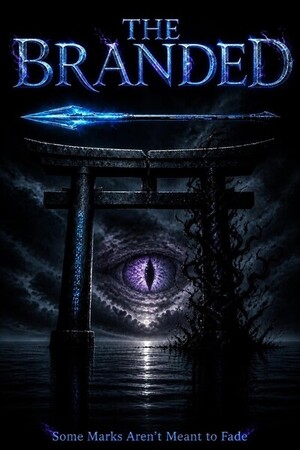
The Branded
The phone buzzed. Mariposa didn't look at it. She was in her office, reviewing the latest batch of treatment reports, her left hand gloved and resting on the desk. The files were stacked in three piles: completed, pending, urgent. The urgent pile was the tallest. It was always the tallest.
The screen flashed a contact label: 'Ex-Husband.'
She let it ring.
The office was small but immaculate. White walls. A single window facing the interior corridor, frosted glass that let in light but no view. A desk of pale wood, uncluttered except for the files and a single pen. A photograph in a simple frame — Diego at five years old, before the bus, before the sedation. She kept it facing her desk so visitors couldn't see.
She hadn't looked at it in weeks.
The phone went silent. A voicemail notification appeared. She didn't check it. She turned the phone face-down and picked up the top file from the urgent pile.
Emil. Age ten. Brand classification: Shape Shifting. Unstable. The boy's face flickered in the intake photograph — one moment a child, the next a blur of features that didn't belong to him. She'd scheduled his next session for tomorrow. Three hours. Intensive.
The phone buzzed again. Face-down, the screen hidden, it was easier to ignore.
It had been ringing for three days. Dozens of calls. Voicemails she hadn't listened to. Texts she hadn't read. She'd been busy. The Governor needed updated compliance statistics. The shape-shifting boy needed another session. Diego's empty room needed to be cleaned, or sealed, or burned — she hadn't decided which.
'Not now,' she thought. 'Whatever it is, it can wait.'
She pulled another file from the stack and began to read. The phone buzzed three more times before she left for her next session.
She never listened to the voicemails.
---
Three days earlier — three hundred miles away
Lucia sat on the edge of her bed and painted a symbol on her shoulder.
The paint was cheap — acrylic from the art supply store downtown, a tube of orange she'd bought with her last twenty dollars. She'd practiced on paper first, dozens of times, until the shape was perfect. A rising sun with rays that curved like open hands. Welcoming. Reaching.
She'd seen a Brand once, on a woman in a documentary about the Registry. A spiral on the woman's palm that glowed faintly when she used her power. Lucia had been fascinated. Not by the power. By the mark itself. The permanence of it. The way it said 'I am something.'
Lucia wasn't something. She was just a girl who missed her brother.
Her bedroom was small. Posters on the walls — bands her father didn't recognize, movies she'd watched a dozen times. A photograph on the nightstand: her father, younger, holding a baby wrapped in a yellow blanket. Diego. She'd been six when he was born. She remembered the weight of him in her arms, the smell of baby powder, the way he'd grab her finger and hold on like he'd never let go.
She hadn't seen him in eleven years.
Her mother had kept him. That was the deal. Her father had kept her. They'd signed papers and split their lives down the middle like splitting a check, and Lucia had grown up watching her father work double shifts and fall asleep on the couch and never, ever talk about the woman who'd chosen the Registry over her family.
Lucia had learned to hate that woman. Not because she'd left. Because she'd taken Diego with her.
She finished the symbol and examined it in the mirror. The sun with hands. It wasn't a Brand. It was paint. It would wash off. But for now, it was hers.
Her father's voice came through the door. "Lucia. You sure about this?"
She didn't turn. "I'm sure."
"It's dangerous. The Registry doesn't care if you're Branded or not. They care if you're in the way."
She capped the paint tube and set it on the dresser. "I'm not going to be in the way. I'm going to stand in a square and hold a sign. That's not illegal."
"It's not illegal until they decide it is."
She turned. Her father stood in the doorway, still in his work clothes — a shipping warehouse polo shirt, faded jeans, boots that had seen better years. His hair was gray at the temples. His face was tired in a way that had nothing to do with sleep.
"I have to do this," she said.
"Why?"
She didn't have an answer he would understand. How could she explain the weight of eleven years, the silence from her mother, the brother she barely remembered and couldn't stop thinking about? How could she explain that standing in that square with that symbol on her shoulder was the only thing that made her feel like she was doing something?
"Because someone has to," she said.
Her father looked at her for a long moment. Then he nodded, slow and heavy, and stepped aside.
"Be careful."
"I will."
She walked past him, down the hallway, out the front door. The bus to the city left in twenty minutes. Three hundred miles. An overnight ride. She'd sleep on the bus and wake up where her mother lived, where her brother was, where the Registry had its headquarters and its walls and its white rooms.
She didn't look back.
---
The protest — the city
The square was smaller than she'd expected.
Forty people, maybe fifty. Signs and slogans and the nervous energy of people who knew they were being watched. A woman with a bullhorn led the chants. A man with a camera documented everything. A teenager with a Brand on his forearm — something geometric, unidentifiable — stood near the back, his hood pulled low.
Lucia found a spot near the front. The sun with hands on her shoulder was visible to everyone. She wanted it to be visible. She wanted them to see that an unmarked person could stand with them.
The chants started slow, building momentum.
"Registration is not protection!"
"Suppression is not safety!"
"The Branded are not your enemy!"
Lucia shouted until her throat was raw. She believed it. She believed it with her whole chest. Her mother had spent years making people into weapons, into patients, into hollow shells of who they used to be. Lucia was here to undo that. To say that someone from that family — from that woman — could choose differently.
She didn't know Diego was Branded. She didn't know he'd been sedated for six years. She didn't know any of it.
She just knew she was angry, and this was the only way she knew to be.
The Registry vans arrived at 2:47 PM.
Three of them. Black, unmarked, sliding to a stop at the edge of the square. Agents poured out — gray suits, visored helmets, suppression batons glowing blue at the tips.
Lucia didn't run. She'd done nothing wrong. She was unmarked. She had rights.
The first smoke canister went off at 2:49. Gas billowed across the square, white and thick and stinging. Lucia coughed. Her eyes watered. People screamed and scattered.
She stayed.
The Branded teenager near the back — the one with the geometric Brand — panicked. His power lashed out. She didn't see what it was. She saw the agents turn, saw their batons rise, saw the flash of suppression fire.
Then the shooting started.
Lucia heard the first shot. The second. The third. She didn't feel the one that hit her. Not at first. She felt the ground come up to meet her. She felt the warmth spreading across her chest. She touched her shoulder — the sun with hands — and her fingers came away red.
She thought of Diego. A boy with dark eyes and a quiet voice who'd follow her around the house like a shadow. She wondered if he'd ever think of her.
Then she didn't think anything at all.
---
The call — three hundred miles away
Rafael's phone rang at 4:12 PM.
He was in the middle of a shift, stacking pallets in the warehouse. The caller ID was a local hospital. He almost didn't answer. Hospitals called for paperwork, for billing, for things that could wait.
He answered.
"Is this Rafael Reyes?"
"Yes."
"Sir, I'm calling about your daughter, Lucia. There's been an incident."
He stopped moving. The pallet in his hands hovered between the floor and the stack.
"What kind of incident?"
"Sir, I need you to sit down."
"I am sitting down." He wasn't.
"Lucia was transported to General via air ambulance. She sustained critical injuries at a protest in the city. We did everything we could. I'm so sorry. She didn't make it."
The pallet hit the floor. Not dropped. Not set down. It fell from hands that had forgotten how to hold anything.
"You have the wrong person. My daughter is on a bus. She's coming home tomorrow."
"Sir, we confirmed identity through her ID. She had your contact information listed as emergency next of kin."
Rafael's supervisor appeared in the doorway of the office, coffee in hand, a joke already forming on his lips. "Hey, Reyes, you planning on finishing that stack or are we—"
Rafael walked past him. Didn't speak. Didn't explain. Just walked. Out of the warehouse, across the parking lot, into his car. His supervisor called after him once, twice, then stopped.
Rafael drove home.
---
The house — three hundred miles away
The driveway was empty.
He sat in the car for a long time. The engine ticked as it cooled. The sun was low, painting everything in shades of orange and gold. Their house was small. A porch with two chairs. A garden Lucia had started last spring.
He got out.
The front door was locked. He fumbled with his keys, dropped them twice, picked them up with hands that didn't feel like his own.
Inside, the house was quiet. Not the quiet of someone sleeping. The quiet of someone gone. Her shoes by the door. Her jacket on the hook. A mug on the coffee table with the dregs of tea she'd made before she left.
He walked through the rooms like a ghost.
Her bedroom. The bed was made. The posters on the walls. The photograph on the nightstand — him, younger, holding a baby wrapped in a yellow blanket. Diego. She'd kept that photograph her whole life.
He sat on her bed. Her pillow still smelled like her shampoo. Coconut and vanilla. He pressed his face into it and didn't cry. Not yet.
When he stood to leave, something crunched under his shoe.
A sticky note. Fallen from the doorframe, dislodged when he'd opened the door. He bent down and picked it up. Her handwriting. Loopy, careless, the way she wrote when she was in a hurry.
Going to the city. Back tomorrow. There's leftovers in the fridge. Treat yourself instead of worrying. Love you, Dad.
He read it once.
Then again.
Then a third time, and the words didn't change, and she wasn't coming back, and she'd written 'love you' because she always wrote 'love you' because she was seventeen and she thought she had forever.
The sound that came out of him didn't sound like his voice. It wasn't a word. It wasn't a cry. It was something raw and animal, torn from a place he didn't know existed. He didn't realize he was screaming. He didn't feel his knees hit the floor. He didn't feel the note crumpling in his fist.
He just held it. Her last words. Her last 'love you.' He screamed until his throat gave out, and then he sat on the floor of her empty room, in her empty house, and didn't stop shaking for a long time.
Later — minutes, hours, he couldn't tell — he unfolded the note. Smoothed the creases. Read it one more time.
'Love you, Dad.'
He called Mariposa at 7:30 that night.
She didn't answer.
---
The voicemails
He called again at 8:00. Voicemail. The beep came.
"Mariposa. It's Rafael. I need you to call me. It's about Lucia. Please. Just call me."
He hung up.
At 8:30. "Mariposa. Please. I can't do this alone."
At 9:00. "Mariposa."
At 9:30. Nothing. Just breathing. Then the beep cut him off.
At 11:47 PM, he left the last one.
"Mariposa. It's Rafael. I don't know if you're listening to these. I don't know if you care. But Lucia is dead. Our daughter is dead. She came to your city. She traveled three hundred miles to protest the system you work for. The Registry showed up. Someone in the crowd had a Brand, and things got out of control, and now she's gone. She was seventeen. She had your stubbornness. She never knew when to back down."
A pause. A breath that sounded like it had been punched out of him.
"I know you and I haven't spoken in years. I know you've got your work. Your patients. Your Governor. But I thought you should know. Diego should know too. If you even still have him. If you haven't already turned him into one of your projects."
Another pause. Longer.
"She painted a symbol on her shoulder. A sun with hands. She made it up. She thought it meant solidarity. She thought it would protect her. She was wrong. She was wrong about a lot of things."
A breath. Ragged. Wet.
"Goodbye, Mariposa."
The message ended.
Rafael lowered the phone. His hand was shaking. He looked at the note in his other hand — 'Love you, Dad' — and pressed it to his chest.
He didn't call again.
He sat on the floor of her room, in the dark, and waited for a morning that would never be the same.
---
Mariposa's office — the same night
The phone buzzed. Mariposa was still at her desk. The urgent pile was smaller now — four files left. She glanced at the screen. 'Ex-Husband.'
She let it ring.
She had work to do. The Governor needed his reports. The patients needed their sessions. Diego's room was still empty, still waiting, still a decision she didn't want to make.
The phone went silent. A voicemail notification appeared.
She didn't check it.
---
Three days later
Mariposa picked up her phone to check her schedule. Seventeen missed calls. Eleven voicemails. All from the same contact.
'Ex-Husband.'
She stared at the screen. Her thumb hovered over the icon. For a moment — just a moment — something flickered behind her eyes. Curiosity. Annoyance. A faint, distant sense that whatever he wanted, it could wait.
She cleared the notification and opened her calendar.
She had a session in twenty minutes. The acid girl, Sasha, who hadn't spoken in weeks. The girl needed her. The Governor needed her. The Registry needed her.
Whatever Rafael wanted, it wasn't important.
She put the phone in her pocket and walked to the treatment wing.
---
Mariposa's session — the treatment wing
The room was white. Sasha sat in the chair, her hands folded in her lap, her Brand visible on her throat — a tear-shaped droplet, pale against her skin. She was twelve years old. She hadn't spoken in weeks.
Mariposa sat across from her, gloves on, file open.
"How are you feeling today, Sasha?"
No answer.
"Your file says you spoke to an orderly yesterday. One word. 'Hurts.' Do you remember that?"
No answer.
Mariposa made a note. 'Patient non-responsive. Recommend extended session.'
She closed the file. Removed her glove. The loom pulsed on her palm. The girl's eyes flickered — fear, recognition, resignation — and then the room went quiet, and the threads began to turn.
Somewhere, three hundred miles away, a father sat alone in a house that was too quiet. He held a crumpled note in his hand.
'Love you, Dad.'
He waited for a call that would never come.
Mariposa's phone stayed dark.
The machine kept running.





Please sign in to leave a comment.