Chapter 8:
CHAPTER 8: Sunlight at Midnight
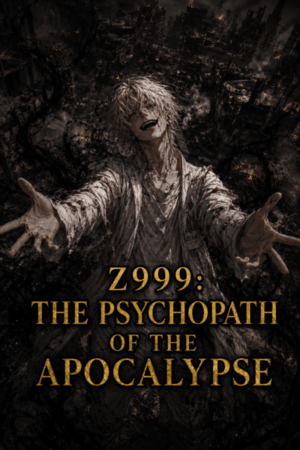
Z999: The Psychopath of the Apocalypse
Crazy World
Three months after the first nuclear strike, the world finally agreed on a name.
Pandemic.
The word arrived too late.
Z01B had already crossed borders, barracks, airports, shelters, hospitals, military convoys, refugee lines, private bunkers, and the expensive rooms where powerful people believed filtered air could protect them from ordinary death. Governments had called it a respiratory cluster, a hostile contamination event, a national security infection, and a biological emergency.
The public learned the truth from locked hospital gates, quarantine buses, missing relatives, soldiers at grocery warehouses, and officials telling citizens to remain calm while their own families disappeared underground.
By the time the word pandemic became official, civilization had already stopped acting civilized.
Curfews. Ration lines. Military checkpoints. Street executions disguised as crowd control. Communication blackouts. Neighborhood militias. Old rebel groups wearing new names. New gangs pretending to be resistance. Terrorists called terrorists when they lost, rebels when they survived, and freedom fighters when they took a warehouse before the army did.
The world did not collapse in one direction.
It split.
Inside the federal psychiatric hospital, the news came through broken feeds and restricted briefings. At first, the upper command controlled every screen. By the second month, control became inconsistent. By the third, the monitors showed whatever signal survived the interference.
The facility remained officially active.
In reality, it was dying.
Director Evelyn Cross sat in an upper communication room beneath reinforced concrete, facing a secure screen that failed twice before stabilizing. The President appeared from an undisclosed location. He looked older each time she saw him. Beside him waited two military advisors and a medical director.
Cross did not waste time.
“Patient Z358 from Cell 14 has shown consistent immunological progress.”
The medical director leaned forward. “Define progress.”
“Self-produced antiviral response after controlled Z01B exposure. Partial neutralization. Not full immunity, but enough to build a framework.”
“How long?” one advisor asked.
“Preliminary extraction has begun. If the pathogen remains stable, we may produce a candidate vaccine.”
“If?”
“Z01B is unstable,” Cross said. “Respiratory collapse in some hosts. Immune shock in others. Neurological aggression in a smaller group. Some carriers look clean until the fever breaks through late.”
The President’s mouth tightened. “We need an answer.”
Cross almost laughed.
The public had needed an answer before the first quarantine bus.
Instead, she said, “Z358 is the first host in three months to produce usable antiviral response. Every prior subject failed, declined, or produced nonviable data.”
“How many viable subjects remain?”
Cross paused.
“Few.”
The room on the screen went still.
The President said, “Continue the work.”
“You promised supply restoration.”
“You will receive what can be allocated.”
That meant nothing.
Cross ended the call with the required acknowledgments and left before the screen went black.
On the upper observation bridge, she passed the old monitor bank connected to Lower Containment. Most feeds were dead. Some showed static. Some showed empty rooms that still carried patient numbers. A few showed sealed cells where no one had moved in days.
One feed still worked.
Cell 50.
Zera sat on the floor with his back against the wall and a book across his knees.
He looked worse than he had three months ago. The decline showed even through grainy footage. Sharper cheekbones. Thinner wrists. Slower hands. The file still carried its cold label.
FAILED EXPERIMENT — Z999.
Weekly notes said the same thing in cleaner language. Neurological decline. Unstable immune markers. Reduced weight. Survival uncertain.
Still, he read.
Cross stopped before the monitor.
Zera lifted his eyes toward the camera.
For a moment, they looked at each other through wire, glass, concrete, and every decision that had turned a hospital into a place where bodies became data.
Then he turned the page.
Cross walked away.
Cell 50 survived on leftovers now.
Leftover staff. Leftover meal schedules. Leftover water pressure. Leftover medication, when medication still existed. The researchers had no use for him. The federal leader had stopped asking for updates. Cross kept the feed alive because guilt, habit, and fear sometimes looked the same when they had nowhere to go.
Zera did not mind leftovers.
He ate when food arrived. Drank when water worked. Slept when no one interrupted him. When trays stopped arriving regularly, he counted the gaps. When the lights flickered, he learned which circuits died first. When the water pressure dropped, he measured the rhythm of the pipes.
His body declined.
His attention did not.
Failure made him less worth guarding.
That mattered more than strength.
By October, the guards stopped caring about the lower cells.
Too few remained. Some had transferred. Some had been infected. Some had abandoned posts when outside communication failed. Those who stayed no longer spoke with the old professional rhythm. Lower Containment had become a hallway of bad memories and locked doors.
Only Cell 50 remained occupied in the old high-risk row.
The rest had died, been moved, or disappeared into sealed records.
Zera became the last patient in that section.
Officially, Lower Containment still housed classified psychiatric assets.
In reality, one failed experiment sat in a cell and read while the building rotted around him.
Late one October night, two guards stopped outside the corridor entrance.
“Why are we still feeding him?”
“Because Cross hasn’t signed the disposal.”
“He’s a person.”
“Don’t start ethics now. You’re three months late.”
“He’s dying anyway.”
“Then let him take his time.”
“Food’s low.”
“Everything’s low.”
A pause.
“If lower doors fail, I’m not going in.”
“If lower doors fail, I’m leaving.”
Neither returned the next day.
Zera remembered their voices. Not because he cared whether they lived, but because abandoned buildings were easiest to understand through the people who left them.
He looked at the camera after their footsteps faded.
“People leave before doors open,” he said quietly.
His voice sounded rougher now.
A second voice answered from the same mouth, softer and cleaner. “They leave when the door stops promising safety.”
Zera smiled.
A brighter tone slipped out, playful despite the dust in his throat. “Or when the food tastes like wet cardboard.”
“Food is information.”
“Food is food.”
“Both.”
The smile widened for a second, then faded.
That was how the days passed when no one came. Zera talked sometimes. Not loudly. Not for the cameras. To the room. To the shadow under the table. To the calm part that counted and the bright part that wanted the world to become interesting again.
“Three months,” the bright voice said one night.
“Eighty-nine days since the last complete medical round.”
“Boring.”
“Useful.”
“Boring things can be useful.”
“Useful things can wait.”
The Clown laughed softly at that.
Clever did not.
The old janitor came in November.
His name was Berth.
No one knew whether that was his first name, last name, or the only thing the facility had bothered to keep. Thin, white-haired, bent at the shoulders, hands rough from cleaning chemicals and decades of fixing what better-paid people broke. Before the war, staff noticed him only when something needed mopping, tightening, or replacing.
After abandonment, Berth became one of the last living routines.
He brought food when he could.
Half rations. Crackers. Water pouches. Once, a bruised apple from an executive lounge was stripped of everything else.
The first time, his hand shook so badly the ration pack almost fell.
Zera watched through the glass. “You are afraid.”
Berth swallowed. “Everybody is.”
“No.”
The old man gave a weak laugh. “You saying I’m special?”
“You are feeding the thing you fear.”
Berth looked at the ration pack, then at the slot, then at Zera.
“My grandfather used to say, if a wild dog comes near your house, don’t kick it unless you can kill it. Feed it enough that it remembers your door kindly.”
Zera considered that.
“I am not a dog.”
“No,” Berth said. “Dogs are easier.”
He opened the slot and sent the food through.
Zera took it slowly. “Do you want something?”
“I want to get old somewhere else.”
“You are already old.”
“Then I want to get older.”
Zera opened the ration pack.
After that, Berth returned whenever he could.
Maybe because he feared Zera. Maybe because feeding the last patient made him feel less like a ghost haunting his old job. Maybe because kindness and survival sometimes wore the same tired face.
Zera did not betray him.
Not because of mercy.
Because Berth was useful.
Because Berth was interesting.
Because Berth did not ask if he was human.
By late November, Cell 50 became less prison than den.
Zera had the master key.
He had the habits of a dying building.
He had months of observation.
And no one was left strong enough to stop him.
He did not leave dramatically. He did not open every door or shout into dead cameras. He used the facility the way an animal uses ruins: quietly, only for what he needed.
At night, when the lower guard post was empty or held by someone too exhausted to watch, Zera left Cell 50.
His body forced patience. Weakness made him pause. Dizziness made him count the distance. Tremors made him plan. He learned how far he could walk before needing the wall. Which doors had lost power? Which locks still obeyed the key? Which corridors smelled of rot? Which vents carried voices?
He found the real food.
Not the ration storage everyone knew. The hidden emergency cache behind the administrative command room was meant for federal officers if the staff became desperate. He took little at a time. Enough to remain unnoticed until no one remained to notice.
He found medicine.
Stimulants. Anti-nausea tablets. Antibiotics. Sedatives. Painkillers he did not need but kept because others valued them. Masks, gloves, water tablets, old batteries, a flashlight, two thermal blankets, and a pack of expired protein bars that tasted like sweet dust.
Then he returned to Cell 50.
Always.
People misunderstood staying. They thought it meant captivity. Sometimes it meant ownership. Cell 50 had been built to contain him. After the facility failed, it became the one room everyone else avoided.
That made it useful.
One night, Berth saw him outside the cell.
The old man froze at the end of the corridor with a water pouch in one hand.
Zera stood half in shadow beside the supply door, too thin, too pale, and too calm.
Berth whispered, “Lord.”
Zera lifted one finger to his lips.
Berth’s mouth closed.
For five seconds, neither moved.
Then Berth slowly placed the water pouch on the floor and backed away.
Zera watched him leave.
The bright voice whispered, “He did not scream.”
The calm voice answered, “He wants to get older.”
“Should we let him?”
“For now.”
Zera picked up the water and returned to Cell 50 before dawn.
Berth kept bringing food.
He never mentioned the open door.
By December, the world lost the dignity to collapse slowly.
The last clear broadcast came the day after Christmas Eve.
Berth heard it first in the upper security office while searching for batteries. The emergency band crackled alive, rough and layered with static.
“All remaining civilian populations within major metropolitan regions are advised to seek immediate underground shelter. Multiple strategic launches detected across all active factions. Repeat, multiple strategic launches. Retaliation chains are no longer contained. This is not a drill.”
Berth stood frozen beside the radio.
The voice broke, then returned.
“The Los Angeles region is included in the projected strike corridors. Estimated impact window unknown. Shelter immediately. Do not remain near glass, exterior walls, major roads, fuel depots, military sites, or federal facilities.”
Federal facilities.
Berth laughed once.
Then he ran.
Not far.
There was nowhere meaningful to go.
Aboveground, remaining staff heard fragments through broken channels, radio echoes, and one monitor that turned white halfway through the alert. Some ran toward exits with no fuel beyond them. Some ran toward underground doors that no longer opened with codes they remembered. Some prayed. Some called names into phones with no signal.
Zera heard the warning through the ventilation shaft outside Cell 50.
Not clearly.
Enough.
Los Angeles.
Multiple launches.
Shelter immediately.
Federal facilities.
He sat on the floor, surrounded by the small kingdom he had stolen over the weeks. Water. Food. Medicine. Flashlight. Mask. Batteries. Thermal blanket. His book lay open beside him, though he had not turned a page in nearly an hour.
The bright voice stirred. “Now?”
The calm voice answered, “Soon.”
“Run?”
“Where?”
The Clown smiled through him. “Good point.”
The air changed before the impact.
Not sound.
Pressure.
The building seemed to inhale.
Zera stood slowly, using the wall. His body protested; his mind recorded. He dragged the mattress against the lower wall, spread the thermal blanket over the exposed metal frame, pulled the emergency mask over his face, and wedged himself into the corner where Cell 50’s reinforced shell overlapped with the old structural column.
The cell had been built to hold him.
Now it might hold the world out.
Somewhere above, people screamed.
The first light came without permission.
Sunlight at midnight.
Cell 50 had no window, but the light still arrived as a ghost through power surges, camera glare, failing monitors, and the reflection on observation glass. For one impossible second, the underground facility became brighter than day.
Then the ground struck itself.
Concrete groaned. Pipes snapped. Lights burst. Ceiling panels collapsed in distant corridors. The camera in Cell 50 sparked behind protective glass and went dark. Dust poured from seams. Something heavy fell through two floors above and stopped with a sound that made the lower level shudder.
Zera hit the mattress barrier.
He held a position.
The second wave came lower and longer, turning metal into song and concrete into complaint. Doors screamed against locks. Alarms woke and died halfway. The facility that had spent years pretending to be unbreakable finally spoke its true language.
Fear.
Berth’s voice appeared once in the corridor beyond Cell 50.
“Zera!”
Another collapse swallowed the sound.
Zera lifted his head.
The bright voice laughed first, rough with dust and weakness. The calm voice counted beneath it: air direction, falling rhythm, aftershock gaps, blocked exits, stored water, remaining light, old tunnels, possible bodies, possible food.
The theater had opened.
Zera looked toward the dark place where the camera used to be.
“It’s showtime,” he whispered.
Far from the hospital, five minutes before impact, Mitch heard the same broadcast through the bunker radio.
He and the others were outside.
That was almost what killed them.
They had gone out after midnight because hunger had grown louder than caution. The abandoned convenience store two streets from Mitch’s property had already been searched by other survivors, but panic missed things. Park found sealed medicine behind a collapsed pharmacy shelf. Barnes found canned goods beneath spilled cleaning supplies no one wanted to touch. Holloway found batteries. Ellis found water purification tablets and cried once because relief had become too sharp. Jenny found antibiotics, children’s fever medicine, bandages, and three boxes of masks in a storage cabinet labeled empty.
They loaded everything into two carts and moved through the dead street.
No proper lights. No traffic. No normal distance sounds. Only emergency glow smeared across the clouds and smoke moving where wind should have been.
Then Mitch’s chest radio screamed alive.
“All remaining civilian populations within major metropolitan regions are advised to seek immediate underground shelter. Multiple strategic launches have been detected across all active factions…”
Mitch stopped in the street.
Park turned. “What?”
“Los Angeles region included in projected strike corridors…”
Barnes whispered, “No.”
Mitch became command before fear finished forming.
“Run.”
No one argued.
They pushed the carts so hard that one wheel cracked against the curb. Cans spilled. Barnes kicked them aside. Holloway grabbed the heavier cart when Ellis stumbled. Jenny clutched the medical bag to her chest with one arm and pushed with the other. Park ran ahead to unlock the bunker hatch.
The sky flashed far away.
Not impact.
Maybe interception.
Maybe another city.
Mitch shouted, “Move!”
They reached the property with five minutes left. Maybe less. Time had stopped behaving. Park threw the hatch open. Barnes and Holloway shoved the first cart down the ramp. It overturned halfway and spilled food across the concrete stairs. Ellis threw the water tablets after them. Jenny tossed the medical bag underground and nearly fell before Mitch caught her by the back of her coat.
“Inside!”
The second cart went down sideways and broke at the bottom.
Nobody cared.
They dropped into the bunker one after another. Mitch slammed the outer hatch, locked the first bar, then tore open the mounted emergency case.
Radiation hoods. Masks. Gloves.
He threw them hard.
“Wear it now!”
Barnes caught one against his chest. “How close?”
Mitch strapped his own mask on with shaking hands. “Close enough.”
Ellis fumbled with the hood. Park slapped his hands away and fixed the seal herself.
Jenny pulled her mask tight. “What about the vents?”
Mitch pointed. “Manual crank. Holloway.”
Holloway was already moving.
The bunker lights flickered.
Above them, the world became white.
Not bright.
White.
Every seam around the hatch glowed for half a heartbeat. Heat pressed through the upper metal like a giant hand had touched the house. Then came the sound, delayed and enormous, a wall of force rolling over streets, windows, roofs, trees, fences, and everything still foolish enough to stand aboveground.
The bunker shook.
The first shelf tore loose.
Barnes threw himself against it before the water drums fell. Park grabbed Ellis by the collar and dragged him under the table. Holloway braced the vent crank with both hands. Mitch slammed Jenny down behind the ration crates as the ceiling spat dust across their backs.
The second shock hit harder.
The house above them screamed.
Wood cracked. Metal bent. Glass vanished. Something heavy collapsed over the hatch.
For several seconds, there was no language.
Only impact.
Only breathing.
Only the dark was trying to decide if it would stay.
Then the shaking slowed.
Dust filled the bunker air.
The emergency lamp flickered, steadied, and turned the room amber.
Barnes coughed. “Everyone alive?”
Park answered first. “Ellis?”
Ellis wheezed. “I think.”
“Holloway?”
“Here.”
“Seltz?”
Jenny pushed herself up. Her ears rang. Her mouth tasted like metal. “Here.”
Mitch stood last, one hand on the wall, blood running from a cut near his hairline. He looked toward the hatch.
No one spoke.
A sound came from above them.
Not siren.
Not wind.
Falling things.
Mitch wiped blood from his eye.
“We stay sealed.”
Barnes stared at the buried hatch. “For how long?”
Mitch looked at the radio.
Static answered before he touched it.
Then, from somewhere inside the interference, a broken emergency voice whispered through.
“…secondary fallout corridor… Los Angeles… do not surface… repeat… do not…”
The signal died.
Jenny closed her eyes.
In the dead facility miles away, Zera laughed in the dark.
In the bunker, nobody could hear him.
But somehow, Jenny thought of him anyway.




Please sign in to leave a comment.