Chapter 12:
CHAPTER 12: Tremor
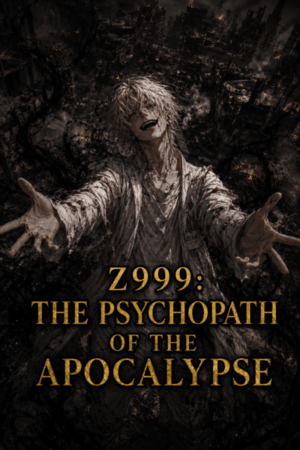
Z999: The Psychopath of the Apocalypse
The World Is Crazier
Victor Halden thought the monster had left.
That was the first mistake he made after surviving him.
For almost five minutes, the bunker remained quiet except for the damaged ventilation, the faint hiss from the drainage corridor, and the soft electrical buzz of emergency lights struggling above the central table. The air still burned his eyes. Tear gas clung to the corners of the room like invisible hands. Somewhere in the maintenance passage, debris settled with small, dusty clicks. Somewhere near the drainage pipe, the ruined air of Los Angeles breathed into his shelter.
His shelter.
Victor tried to hold on to that word.
It had been his bunker. His money. His food. His walls. His security. His escape plan. He had signed the contracts, paid the engineers, approved the filtration systems, funded the hidden elevator, and chosen every private emergency route. The building above had carried his name through shell companies and ownership trusts. Hotel Star had been his monument to taste, wealth, and protection.
Now the bunker felt like something that had been rented from death and repossessed early.
Marlo lay still near the table. Rusk had stopped moving. Senn remained unconscious beside the medical bay. Dane breathed in short, broken pulls from the floor. Lyle had not returned from the maintenance corridor. Talia had vanished into the drainage route with a mask and a hope that had sounded like coughing before silence swallowed her.
Victor was the only one fully upright.
That did not make him powerful.
It only made him alone enough to understand what power had been doing for him all his life.
He stared at the drainage corridor where Zera had disappeared. The man had left with the last proper radiation mask, the owner’s humiliation, and a sentence that sat inside Victor’s chest like a second wound.
Let the apocalypse eat you.
Victor hated him.
He hated the thin body, the calm eyes, the torn clothes, the childish laugh, the sudden silence, the way he had moved through trained men without looking excited enough to make it fair. Most of all, Victor hated that Zera had looked at him and found nothing worth keeping.
Boring.
The word still burned.
A scraping sound came from the supply room.
Victor stopped breathing.
At first, he thought one of the fallen men had moved. Then the sound came again, slower, deliberate, followed by the soft thud of a cabinet opening.
He turned his head.
Zera had not left.
The monster stood inside the supply room with his back partly turned, rummaging through shelves with the patience of someone shopping in a store that no longer had rules. The radiation mask hung at his side now. A torn cloth covered his mouth. His axe leaned against the shelf within reach. The handgun sat on a crate beside him. He ignored Victor completely.
That was worse than being threatened.
Victor’s voice came out raw. “What are you doing?”
Zera lifted a sealed meat pack from a cold emergency container and examined it.
No answer.
Victor took one unsteady step forward. “That is mine.”
Zera looked at the meat in his hand.
Then at Victor.
For a moment, Victor had the terrible certainty that the man was deciding which one had more value.
Zera placed the meat into a small bag.
He did not look like any survivor Victor had imagined during his contingency planning. He ignored whole shelves of tools, spare clothing, emergency documents, gold wafers, sealed data drives, and expensive portable communication gear. He did not gather everything. He did not panic. He did not even look grateful for the abundance.
He took sealed meat packs first.
Then a few cans, but only the ones closest to his hand.
Painkillers. Antibiotics. Bandages. Alcohol wipes. One bottle of water. A compact knife. A coil of thin cord. Nothing too heavy. Nothing that would slow him down.
Victor watched, disbelieving.
“You’re leaving the water filter.”
Zera placed alcohol wipes into the bag.
“You’re leaving the emergency radio.”
Zera added two sealed packets of medicine.
“You idiot, do you know what that is worth?”
Zera finally looked at him.
“The meat is worth more now.”
Victor stared. “More than communication?”
Zera tilted his head slightly. “Communication with who?”
The question landed harder than it should have.
Victor looked toward the dead monitor wall.
The world outside had not answered him. His people had not answered. The government had not answered. The bunker had become a room full of equipment built to talk to systems that were no longer listening.
Zera returned to the shelves.
Victor’s fear shifted into anger because anger was easier to stand inside.
“You cannot just take my property.”
The sentence sounded weak as soon as it left him.
Zera paused with a second meat pack in hand.
The corner of his mouth lifted.
“Property,” he repeated, as if tasting an old joke.
Victor saw the knife on the lower shelf before he fully knew he was reaching for it. A utility blade, heavy enough to feel like courage. His fingers closed around the handle. He lifted it with both hands, not trained, not elegant, but desperate.
“Leave it,” Victor said.
Zera looked at the blade.
Then at Victor’s face.
Something changed around his eyes.
Not anger.
Not fear.
Interest, briefly.
Then less than interest.
Victor held the weapon higher. “I said leave it.”
Zera picked up a smaller knife from the crate beside him.
The movement was so ordinary that Victor almost failed to react.
The knife flew.
A thin flash across the emergency light.
Victor cried out and dropped the utility blade before he understood what had happened. The thrown knife had cut across his leg, shallow but sharp enough to steal strength. He stumbled back into the table, knocking a lamp sideways. The pain came bright and humiliating, more frightening because the wound was not large enough to explain the terror it caused.
Zera stepped over the dropped flashlight and continued packing meat.
No speech.
No warning.
No lesson delivered aloud.
That was what broke something inside Victor more than a dramatic attack would have. He had raised a weapon. Zera had answered just enough to make the argument irrelevant, then returned to hunger.
Victor slid down against the table, one hand pressed near his injured leg, breathing through his teeth.
“You are insane.”
Zera closed the bag.
“No,” he said.
Victor laughed once, a cracked and ugly sound. “No?”
Zera lifted the axe with one hand and slung the bag over his shoulder.
“Insane people stay in cages that do not feed them.”
Victor stared as the thin man crossed toward the drainage corridor.
“You’ll die out there.”
Zera paused at the edge of the gas-fogged passage.
The Clown came back for a second, bright and unpleasant.
“So will here.”
Then Zera disappeared into the pipe.
Victor listened to him go.
The bunker remained.
The cage remained.
The air remained bad.
The rich man remained alive because the monster had decided nothing was interesting enough in him to finish.
Outside, midnight had forgotten how to be dark.
Zera emerged from the drainage route into the air, the color of old fire.
The sky did not blacken as night deepened. It only thickened. Orange above. Black smoke below. Red dust between the buildings. Midnight wore sunset’s face, and Zera never cared whether the world was lying. Light was light. Shadow was shadow. Smoke gave cover. Fire gave direction. Ruin gave options.
He stood still for several seconds, letting the air touch him.
The mask helped, but not enough. His lungs tightened. His eyes watered. The skin along his injured hand pulsed with heat. Radiation was somewhere in the dust, the ash, the air, the metal, the invisible places books warned about with diagrams and calm words. The world itself had become contaminated, and people still thought walls were promises.
Zera adjusted the bag on his shoulder.
Meat first.
Pain later.
Pills may be useful.
Owner noisy.
That was enough structure for now.
He walked away from Hotel Star without looking back.
The streets beyond the hotel had changed even since he entered. A fire that had burned two blocks west had eaten through another row of stores. A collapsed pedestrian bridge blocked the intersection. Several cars had shifted during aftershocks, sliding into one another like dead insects pushed by a careless hand. Somewhere far off, gunfire sounded twice, then stopped. Dogs howled from inside locked houses, their voices thin and desperate under the orange sky.
Zera followed no map.
Maps were memories pretending to be instructions.
He moved north by instinct until the road forced him east, then crossed through a broken plaza where ash had settled over advertisement screens that still flickered in fragments. A smiling woman on one cracked display offered luxury apartments that no longer stood behind her. Another screen repeated half of a government message with no sound: PROCEED TO NEAREST… PROCEED TO NEAREST… PROCEED TO…
Zera watched the woman’s broken smile blink on and off.
“Nearest what?” the Clown asked.
Clever ignored the screen.
The Madman cared only that the bag smelled of meat.
Zera walked until hunger pushed hard enough to become commanding.
He found shelter beneath the partial cover of a bus station whose roof had folded but not fallen. He sat on the ground with his back against the least cracked wall and opened one of the sealed meat packs. This one was cured, dry, and expensive, the kind of food rich people kept for emergencies because even fear needed flavor when money arranged it. He ate with his fingers. Slowly at first. Then faster.
His body responded.
Not with joy. Joy belonged to people who expected life to reward them.
This was a function.
Energy entered. Tremor in the hands has reduced. Breath eased slightly. Heat moved under the skin. The deep weakness left by experiments did not vanish, but it loosened its grip enough for him to stand when he finished.
He licked salt from his thumb and laughed softly.
“Meat is medicine,” the Clown said.
“Temporary,” Clever answered.
“Everything is temporary.”
“Then eat carefully.”
“Boring.”
“Living is useful.”
The Clown hummed and spun once beneath the bent roof, one hand extended as if dancing with falling ash.
Then the first sign came.
Not the shake.
Not yet.
A bird rose from a dead tree across the street.
Then another.
Then many.
They lifted suddenly from branches that should not have held life at all, wings cutting through orange haze. Dogs stopped howling. For three seconds, they were silent. Then the howling returned, sharper, higher, coming from several directions at once.
Zera tilted his head.
A streetlight leaned.
It had already been damaged, but now it bent another inch with a low metallic whine. The glass in a half-standing storefront began to hum in its frame. Not rattle. Hum. A long, nervous sound that seemed to begin under the road rather than in the window itself.
Zera looked down.
Dust lifted from the cracked asphalt.
Not from wind.
From below.
His bag shifted slightly against his hip as if something had tugged at the strap. Parked vehicles creaked. A loose sign swung without a breeze. Somewhere underground, pipes groaned with a deep animal note.
“The floor is angry,” Zera whispered.
The Clown smiled.
“Oh,” he said softly. “The planet learned a trick.”
The first tremor rolled through the street like a question.
It was not violent enough to throw him. Not yet. The ground moved under his feet in a slow, wrong way, as if the city had become liquid for one breath and remembered itself too late. Zera laughed because the safe world had finally stopped pretending.
Buildings had always been falling.
Roads had always been breakable.
People had always been standing on a thin skin of stone and arrogance.
Now the world admitted it.
The second tremor answered harder.
The bus station roof shrieked.
Zera stepped away from the wall.
Not because he knew the official survival rule. He did not think in slogans. He moved because his instincts hated falling shadows. Walls could bite from above. Towers could shed teeth. Glass could rain. Corners could become traps. He did not run into a building like the few distant figures he saw ahead. He moved toward the middle of the road, where there was sky above him and cracked ground below, both dangerous, but only one immediately hungry.
The road jumped.
Zera fell to one knee.
The bag tore partly open against broken asphalt. A can rolled out. Bandages scattered. One water bottle bounced away, spinning toward a drain.
Zera grabbed the meat first.
The Clown laughed so hard he coughed.
A power pole snapped two streets away and dropped cables in a shower of sparks. A building facade peeled outward, bricks and dust crashing onto the sidewalk where three people had been running. Zera watched the dust swallow them without changing direction.
Fascinating.
Then the earthquake stopped being funny.
The ground did not merely shake.
It moved in conflicting directions.
The road cracked open in a long jagged line down the center, the sound deep and wet under the concrete. Vehicles shifted sideways. A burned-out bus tilted and slammed into a storefront. Windows that had survived the blast finally surrendered, bursting outward in silver sheets. The orange sky filled with dust until the world became smaller, louder, and closer.
The Clown’s laughter cut off.
Shadow arrived.
Zera lowered himself.
Small now.
Quiet.
He crawled when standing with wasted balance. He rolled when the ground threw him. He kept away from walls and anything tall enough to collapse across him. Smoke and orange light covered his movements. People ran in every direction, most toward doorways, stairwells, and signs that had once promised safety. Zera moved toward open space, even when open space split beneath him.
A man rushed past carrying a child.
A woman screamed at an elevator lobby that no longer had power.
A group of survivors tried to enter a leaning building because someone shouted that the basement was safe. The building answered with a groan that made even Zera look up.
Falling shadows.
He moved away.
A chunk of the upper wall collapsed behind him, striking the road hard enough to send debris against his back. He fell forward, rolled, and came up on one elbow. His hand burned against hot dust. Something cut his shoulder. He registered damage, then ignored it.
The meat pack remained in his fist.
The bag was dragged behind him by one strap, lighter now, leaking supplies.
He crawled toward a wide, cracked road leading under a broken overpass. The overpass had partially collapsed on one side, leaving a slanted slab over a drainage ditch. Not safe. Nothing was safe. But it had open angles, fewer walls, and enough broken concrete to hide behind if the shaking changed direction.
A stranger grabbed his bag.
Zera turned.
The man was young, soot-covered, eyes wide with a terror that had eaten language. He pulled at the strap with both hands, not attacking exactly, but not begging cleanly either. Survival had blurred the difference.
“Medicine,” the man gasped. “Please. Please. I need—”
Zera looked at him.
Then, a crack formed near the man’s rear foot.
The ground opened slowly at first, a dark line widening under dust.
The man did not notice. His eyes stayed on the bag. His hands pulled harder.
Zera did not argue.
He did not strike.
He did not laugh.
Levi passed through him as a cold absence.
Zera released the strap at the perfect moment.
The man fell backward from his own force, away from Zera, toward the opening crack. Not fully into it. Not immediately. He struck the ground hard, scrambled, screamed, and vanished behind a rising wall of dust as the road split wider between them.
Zera kept only the meat pack in his hand.
He moved on.
No rage.
No punishment.
No lesson.
Only calculation.
The quake intensified.
The broken overpass shuddered above the ditch. Zera slid down the slope, catching himself against exposed rebar with one arm. He lost the handgun somewhere in the dust. He lost two cans, the water bottle, most of the bandages, and the cord. He kept the knife at his belt, the axe strapped across his back, one medicine packet inside his pocket, and the meat.
That was enough.
He reached the drainage ditch as a section of road behind him collapsed into itself with a sound like thunder trapped underground. Dust struck him. He rolled beneath a slanted slab of concrete and covered his head with one arm, not because someone had taught him to do so, but because the body knew falling things without needing language.
For several minutes, the world broke.
The tremor was too large for one street, too large for one city. It felt as if the entire damaged continent had shifted in its sleep and found itself wounded. Far buildings dropped one after another, their collapses delayed by distance. Underground pipes burst. A line of fire rose from a cracked street and vanished into smoke. Somewhere behind him, Hotel Star gave a long, deep moan.
Zera turned his head.
The building still stood for three breaths.
Then the lower structure failed.
Hotel Star folded inward from one side, its damaged luxury collapsing over its hidden shell. Floors dropped into floors. The upper section twisted. The penthouse, the decoy, the bunker access, the owner’s cage beneath—all of it disappeared under weight, dust, and the city’s final argument with itself.
Zera watched from the drainage ditch.
His timing had been insane.
Or perfect.
Sometimes those were the same.
He smiled faintly as dust swallowed the place where Victor Halden had built protection.
The owner had wanted a room strong enough to survive the end.
The world had brought a larger hand.
When the shaking finally weakened, Zera remained under the slab, dirty, wounded, and breathing through cloth that tasted like dust, meat, and old smoke. The orange midnight had become darker, but not night. The sky still glowed in places where fires rose behind collapsed buildings. Ash fell softly. Metal groaned as the city adjusted to its new broken shape.
Zera crawled out slowly.
His shoulder dragged. His leg trembled. One side of his face was scraped. His bag was nearly empty. He had lost more supplies than he liked, though liking had little to do with usefulness. He checked what remained, found the meat still wrapped in his hand, and nodded once as if the world had made a reasonable trade.
The road ahead no longer looked like a road.
It looked like a wound moving north.
Zera stood.
For a moment, Shadow remained. Quiet. Small. Listening.
Then the Clown returned softly, not dancing now, only smiling through bloodless lips and dust.
“What else can happen?” he whispered.
Clever answered from behind his eyes.
“Do not ask questions the world enjoys answering.”
Zera laughed once.
It hurt somewhere in his chest, but pain still had no authority.
He walked.



Please sign in to leave a comment.