Chapter 4:
The Silence Between Meals
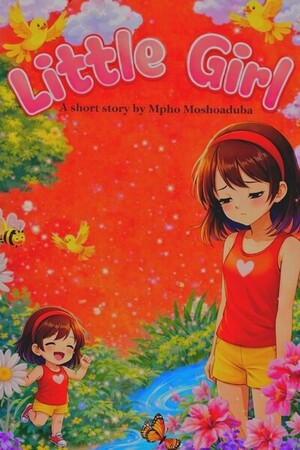
Little Girl
The days after the holiday passed in a haze of chores and silence. Alyssa’s punishment at the dinner table still lingered in her memory like the aftertaste of something bitter. She tried to tell herself that hunger was fleeting, that she could endure, but the memory of her mother’s words—No food for you tonight—remained carved into her like a scar.
Her siblings spoke little of it. Hulya busied herself with laundry, the repetitive slap of wet fabric against the washboard drowning out anything Alyssa might have said. Ibrahim spent longer hours outside, pruning hedges that already stood in perfect symmetry, his devotion to neatness louder than his voice. Neither teased her this time. Their silence was worse.
Mrs. Eren, for her part, seemed unaffected. She moved through the house with the same monotone commands, her hands red and raw from water, her voice sharp enough to cut the air. Yet Alyssa felt her mother’s eyes on her more often now, as though waiting for her to slip, waiting for proof that the lesson had not been learned.
Alyssa tried, at first, to keep herself invisible. She folded into corners, whispered when she could, kept her laughter subdued. But invisibility did not suit her nature. Words pressed against her lips like water against a dam, and silence only made her restless. By the third evening, she was speaking at dinner again, her voice rising over the clink of spoons, trying to fill the void that hung like smoke.
Her father’s eyes narrowed, the belt resting in its place by his chair. He did not need to touch it; its presence was enough. Alyssa’s words faltered, tumbling into quiet. She stared at her bowl, cheeks burning.
But it was her mother who struck hardest. One afternoon, after Alyssa had spent hours at the park and returned shivering in her thin sweater, Mrs. Eren met her at the door with folded arms.
“Where were you?” she demanded.
Alyssa hesitated, fumbling for words. “I was… I was just—”
“Don’t lie.” The words sliced cleanly. “You think I don’t know? You vanish, and always I hear from someone—‘She was at Jabu’s house,’ or ‘She was wandering again.’”
Alyssa’s lips parted, but no explanation formed. What could she say—that hiding was her comfort, that silence of the park was kinder than the silence of home? That she preferred the company of shadows to the sharpness of her mother’s gaze?
Her silence was answer enough.
Mrs. Eren stepped closer, the scent of soap and starch clinging to her. “You’ll end up like water spilled on the ground—gone before anyone notices.”
The words landed heavier than any belt. Alyssa felt them sink into her chest, cold and merciless. She wanted to protest, to insist that she was more than vanishing water, that she existed, that she mattered. But her voice failed her.
That night, when stew simmered again on the stove, Alyssa approached the table with a hopeful glance. Her hunger had grown unbearable, her stomach clenching so tightly she thought she might faint. But her mother’s hand froze her in place.
“No,” she said simply. “Not for you.”
The refusal was quiet, almost casual, but it carried the weight of finality. Alyssa stood there, stunned, as bowls were filled around her. Her father ate without lifting his eyes. Hulya and Ibrahim shifted uncomfortably but said nothing. The smell of broth and meat filled the room, taunting her.
Alyssa retreated to her corner, folding her arms tightly around herself. Tears welled, but she forced them back, biting her lip until she tasted iron. To cry would be to prove her mother right—that she was weak, careless, unworthy. She sat in silence, her body a vessel of shame and hunger.
It was then she made her decision. If food was denied here, if belonging was rationed like salt, she would find sustenance elsewhere. If her presence was a burden, she would slip away unnoticed, vanish into the places where discovery felt less cruel.
The punishment did not break her; it only sharpened her resolve. Alyssa would not beg again. She would seek her own refuge, even if it meant defiance.


Please sign in to leave a comment.