Chapter 3:
PROJECT MANTLE
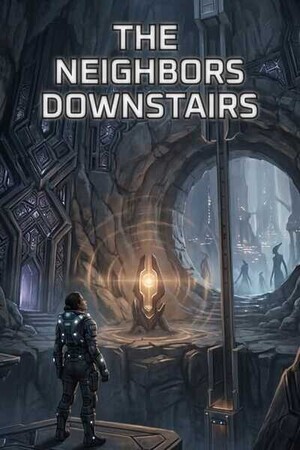
The Neighbors Downstairs
The next morning, Erina visited the communal cafeteria at the EDF headquarters. She could have ordered breakfast to her room, but she considered socializing with the others. She collected a tray with coffee, scrambled eggs, and a piece of toast that was still warm. Only a handful of people occupied the scattered tables that morning.
Erina chose a table by a pillar, halfway between the windows and the exit. She had just taken her first sip of coffee when footsteps approached.
“You’re Dr. Erina Wakai, aren’t you?”
A middle-aged woman with short, gray-streaked hair stood before her. She wore a cardigan over a blouse, distinguishing her immediately from the uniformed personnel packing the cafeteria.
“My name is Lena Peterson,” the woman said, offering a hand. “I’m a behavioral scientist. Well, social science, actually.”
Erina shook her hand. “Yes, I’m Erina. Nice to meet you.”
“May I join you?” Lena gestured to the empty chair. “The others seem less than approachable.”
“That’s what you get when you mix wary scientists and military officers during an alien threat,” Erina said.
Lena laughed. “I’ve been here three days, and I think that’s the most honest thing anyone has said to me.”
She sat, setting her tray down. “They don’t know what to do with social scientists here. I get to sit in a windowless office reading old papers about how chimpanzees interpret unfamiliar gestures.”
“Someone must have thought you’d be useful,” Erina said.
“Someone did. General McKenzie, actually.” Lena smiled. “He said, and I quote, ‘If we’re going to talk to these things, I want someone who knows how conversations start.’”
Erina smiled. “That’s surprisingly insightful for a military man.”
“Don’t let him hear you say that. He likes his reputation as a blunt instrument,” Lena muttered. “What about you? I tried to read your Europa paper last night. The math lost me, but your conclusions were bracing.”
They ate in silence for a few minutes.
“So,” Lena said, setting down her spoon, “have you read the report on the intranet about the low-frequency seismic data from the forty-five craters?”
Erina nodded. “The one about the repeating pulse every sixteen minutes. I read it before bed.”
“That pulse occurs every sixteen minutes, nine point nine one seven seconds,” Lena said, her voice dropping. “Fascinating, isn’t it? The signal analysts calculated that the interval is precisely twelve to the twelfth power times the vibration period of a cesium-133 atom.”
Erina paused. “Twelve to the twelfth power? That is a highly specific duodecimal scalar. Why would an extraterrestrial intelligence use a base-twelve calculation? And why baseline it against cesium rather than a more modern optical lattice clock like strontium or ytterbium?”
“From a behavioral standpoint, it feels like a deliberate handshake,” Lena said. “Think about it. Cesium-133 is what humans used to define the international standard of a second back in 1967. Strontium might be the future of metrology, but cesium is our historical landmark. If someone down there is adjusting their signal to match our specific timekeeping history, they aren’t just broadcasting. They’re letting us know they’ve been monitoring our technological maturity. They were waiting for us to develop atomic clocks, and now that we have, they are letting us know they are ready to talk.”
“That sounds more like pseudoarchaeology than behavioral science,” Erina said.
Lena smiled. “At the edges, Erina, all sciences merge. Whether it’s a chimpanzee lifting a hand or a subterranean anomaly broadcasting in base-twelve, the fundamental question is the same: does the entity on the other side recognize us as a conscious observer?”
She stood, gathering her tray. “I should let you finish your breakfast. Let’s continue this next time.”
“Thank you, Dr. Peterson,” Erina said.
Erina finished her coffee and checked her watch. She had four hours to prepare for her next meeting with General McKenzie.
In the afternoon, in a small conference room, Erina presented her theories about the extraterrestrial situation. General McKenzie sat at the head of the table, flanked by Frank and an aide Erina hadn’t met before.
Erina stood in front of the main wall screen, holding her tablet.
“Dr. Wakai,” McKenzie said, “let’s hear your alternative theories on the incident.”
“Thank you, General.” Erina tapped her tablet, bringing up her slides on the wall screen. “My first theory is that the aliens are installing geothermal taps. Geophysically, cratons have the oldest, coldest, and thickest continental roots on Earth.”
“Active zones, like volcanoes or plate boundaries, are too unstable,” Erina explained, switching to a diagram of a continental keel. “Drill a seven-kilometer borehole into a volcanic zone, and lithostatic pressure or shifting magma will crush the shaft within days. But cratons are different. Their rigid crystalline roots extend hundreds of kilometers into the mantle. The aliens are using that stability as a permanent protective sleeve to siphon helium-3, rare earths, or thermal energy directly from deep mantle plumes. The beacon signal is likely a data handshake with something already underground, maybe a subterranean biosphere or a mineral deposit.”
Another set of slides appeared on the screen.
“My second theory is that these craters are nodes of a planetary communication array,” Erina continued. “The impactors are dropped along tectonic boundaries and cratons to form a network that couples into Earth’s seismic and electromagnetic fields, using the mantle as a waveguide. My models indicate these nodes are positioned to bounce shockwaves directly off the Gutenberg discontinuity, the core-mantle boundary. Their goal is to send a message straight through the planet, perhaps to an ancient outpost buried millions of years ago.”
“A message to something underneath,” McKenzie muttered. “Maybe they’re trying to wake it up. That’s a grim prospect.”
Erina nodded. “I agree, General.”
“What else do you have?” McKenzie asked.
“My final theory is terraforming.” Erina pointed at the nodes on the screen. “If the goal is to reshape continents, triggering rifts along plate boundaries could expose fresh mantle, accelerate crust formation, or create entirely new landmasses.”
“And humanity becomes collateral damage,” McKenzie said.
“Exactly. Or they just want to see if their planet-cracking tech works on a world with active tectonics and a liquid core,” Erina said. “Earth is the lab rat. The craters are instrumented shots, and the beacons are just collecting the data.”
“Excellent presentation, Dr. Wakai.” McKenzie clasped his hands.
“Thank you for your attention,” Erina said with a polite nod. “Are there any questions or comments?”
“We’ve just received a new report from one of the crater sites.” McKenzie gestured toward Frank. “Frank, show Dr. Wakai the new recording for ‘PROJECT MANTLE’!”
Frank connected his laptop to the wall screen.
“We began the descent eight days ago,” McKenzie said. “The Canadian government granted us access to a site in the Shield.”
The screen flickered, displaying a feed from a balloon-suspended camera.
“This is the interior of the alien crater,” McKenzie said. “Watch.”
The footage shifted from surface rock into a yawning black void. As the camera dropped further into the shaft, its high-intensity arrays illuminated ancient, vertical walls of granite and gneiss.
“Starting at two kilometers, a ferronickel crystalline tube encased the hole.” McKenzie pointed a laser pointer at the screen.
The smooth, massive alloy tube reflected the camera’s lights. Then, the camera passed through a translucent layer. Erina leaned forward. The metallic wall formed planes and angles that repeated in geometric patterns, revealing what looked like an archway.
As the camera continued down, the structures became more organized. Tessellations covered the walls, repeating shapes that fit together like puzzle pieces.
“How deep does this go?” Erina asked.
“The drone hit bottom at seven point two kilometers, and then the camera failed. Heat wasn’t the problem; something else fried the circuits.”
The footage cut to black.
Erina straightened. McKenzie crossed his arms, watching her reaction.
“There is something down there,” she said. “Something that did not come from Earth.”
“That is our working theory.”
“I need to go down there,” Erina said.
McKenzie shook his head. “You aren’t trained for subterranean reconnaissance. Moreover, the temperature below the translucent layer drops instead of rising, and we don’t know why. We’ve lost three drones already.”
“Then send me with the next one. Or send me in a suit.”
The general stared at her. “The EDF is partnering with the Geological Survey, SETI, and a defense contractor for a joint exploratory mission. They call it teamwork; I call it a disaster waiting to happen. You will descend with the second team. If the first team dies, you can learn from their mistakes.”
“When do we leave?”
“In nine days. We are preparing the landing vehicles now, and you need basic subterranean training.” McKenzie stood, signaling the end of the meeting. “Get some rest, Dr. Wakai. You will need it.”
Erina nodded and left the conference room.





Please sign in to leave a comment.