Chapter 3:
The Sixty Four Squares
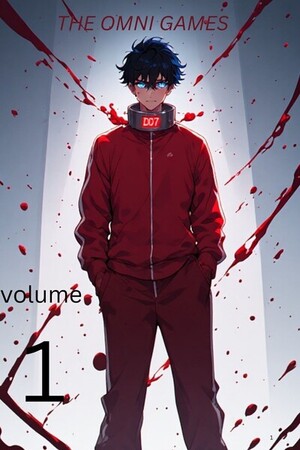
THE OMNI GAMES
Michael kept thinking of what the next game will be and how he will try to survive long time before sleep finally took him by force some where past midnight not the sleep of rest but the sleep of a body that had arguments against the brain.He woke up when the usual loud buzzer rang.
Every player was lined outside and followed the instructions of the the announcer and went to the waiting room.There was a long giant table with plates full of food and each chair numbered to a player.Every one fisted like it was their first meal Wich was going to be their last.Players were navigated to a passage which led them to a massive hall.
I. THE ROOM OF GLASS BOARDS
The hall was unlike anything else Michael had seen in the facility so far. . The lighting was colder, whiter, angled to eliminate shadow. There were chessboards that sat on pedestals of frosted glass, lit from within, so that each chessboard glowed faintly like something suspended in ice. Sixty four squares of pale and dark light. Pieces carved from what looked like obsidian and bone.There were no chairs at the boards.
Michael understood why the moment he saw the first match already underway near the entrance a thin man with a shaved head, sweat running freely down his neck despite the cold room, staring at a position with the kind of intensity that made his hands tremble. Behind him, mounted into the floor at a discreet distance, was a thin black rail that curved up at one end . Michael didn't understand what it was for until the modulated voice explained the rules.
"Chess," the voice said, filling the room the way it always did, from everywhere and nowhere. "You will be paired according to the seating chart displayed on your collar. Each match is standard chess with one modification: a ten minute clock per player, sudden death. If your clock expires, you lose. If you are checkmated, you lose. If you resign, you lose. There are no draws in this game ,if the king is unable to move it will not result to a draw the player with the most pieces wins. Every game will produce exactly one loser. You have ninety seconds to find your board ,if the player does not find the board within ninety seconds they will be eliminated."
A ripple went through the room. Michael had already understood the design before the voice finished speaking, but hearing it confirmed made something cold settle into his stomach. No draws. In the chess world vaguely remembered from documentaries and the rare highlight reel high-level matches between grandmasters often ended drawn, ground down to nothing by two minds perfectly cancelling each other out. Here, that escape route had been welded shut. Someone would lose. Every single time.
He looked at his collar. D07 — BOARD 19.
He moved through the room, weaving between standing players and glowing boards, until he found nineteen. A small plaque embedded in the glass pedestal read his opponent's number.
G12
He looked up.
The opponent was a boy. Maybe fifteen. Pale, thin, with glasses too large for his face and the unmistakable posture of someone who had spent far more of his life sitting in front of sixty four squares than running on grass. He was looking at the board already, even though neither of them had touched a piece. His hands were folded in front of him, very still, but his eyes moved constantly left and right.
Michael's stomach turned over.
"You're young," Michael said, because he didn't know what else to say.
"I'm fourteen," the boy said, without looking up. "My name is Marek."
"What did you do before you came here."Michael said. " I used to play cricket for the under 16 team back at my school."Said Marek.
Michael said. "I'm a footballer. I'm not good at this."
Marek finally looked up. There was no malice in his expression. No cruelty. If anything, there was something like an apology."I'm sorry," Marek said quietly. "I am very good at this."
II. THE OPENING
The voice gave the signal. Clocks began to count down ten minutes each, a small glowing red digit ticking downward on a strip embedded in the glass beside each player.
Marek had white. He moved first, and it was a move Michael didn't recognize the name of but understood instinctively as correct a pawn forward, claiming the center of the board, opening lines for pieces that hadn't moved yet. Clean. Economical. The kind of move that, on a football pitch, Michael would have recognized as a midfielder taking up space before the ball even arrived.
Michael looked at the board. He knew the names of the pieces. He knew, roughly, how each one moved the bishop diagonal, the rook straight, the knight in its strange hopping L-shape, the queen everywhere, the king fragile and precious and to be protected above all else. He had played exactly twice in his life and lost both times without understanding why.
He thought about Sasha's words from the day before: You think like a chess player.
He thought about football instead. About what he actually knew. About reading space, about understanding that the player without the ball was often more important than the player with it, about how a match was won not in the moment of the goal but in the fifteen decisions that built toward it invisibly.
He moved a pawn. Not the move Marek would have made. Not the correct move. But a move that opened a diagonal for his own bishop, that didn't commit too early, that kept his options wide.
Marek's eyebrows rose slightly. "Interesting," he murmured, more to himself than to Michael.
The game continued. Marek played with the fluency of someone speaking a first language fast, certain, barely pausing before each move, his clock barely ticking down because his decisions cost him almost no time at all. Michael played slowly, carefully, trying to apply the only framework he actually trusted: read the space. Read what your opponent is trying to create, and deny it to them. Don't think about your own attack until you understand their defense.
By the tenth move, Marek had developed his pieces into an elegant, coiled formation knights and bishops supporting each other, his queen tucked safely behind a wall of pawns, his king castled into the corner behind a fortress of its own soldiers. It was, Michael understood without being able to articulate exactly why, beautiful. The kind of position that a person who truly loved this game would admire even while losing to it.
Michael's own position was messier. Functional. A back four that would have made a football coach proud pieces covering each other, no obvious holes but lacking any of the elegant inevitability of Marek's formation.
"You really haven't played much," Marek said. Still no cruelty in it. Genuine curiosity.
"No," Michael admitted.
"Then why do your moves feel like they're listening to something?"
Michael looked up. "What do you mean?"
Marek considered the board for a long moment before answering, his clock ticking down almost imperceptibly. "Most beginners play toward something. Toward an attack, toward winning a piece, toward an idea they read once in a book. You play away from things. You see what I am building, and you put a piece exactly where it stops mattering." He looked up. "It's unusual."
"It's not chess," Michael said. "It's defense. I read where the danger's coming from and I close the door."
"In chess," Marek said quietly, "closing every door eventually means you have nowhere left to stand either."
III. THE MIDDLEGAME
The clocks ticked.
Michael had six minutes left. Marek had eight. The gap was growing, slowly, inexorably, as Marek's fluency outpaced Michael's careful deliberation. Michael began to feel the particular terror of a clock that didn't care how hard you were thinking it simply continued, indifferent, toward zero, and zero here did not mean a missed deadline. It meant a sound he had now heard fifty one times in two days.
He forced himself to slow his pulse, breathe out, lengthen the exhale, let the body settle even when the mind was screaming.
Around the seventeenth move, something happened that Michael almost missed.
Marek pushed a pawn forward an aggressive thrust on the kingside that, to Michael's untrained eye, looked like it weakened his own king's shelter. It was the kind of move that, in football terms, would have been a fullback bombing forward and leaving space behind him. Micheal's instinct the only instinct he fully trusted in this entire building screamed at him.
Space has opened. Someone left a door unguarded.
He didn't know the theory. He didn't know if this was a known trap, a sacrifice, a brilliancy that chess players studied in books, or simply a mistake. He only knew what his eyes told him: there was a square, three moves away, where his bishop could land and threaten both Marek's queen and his king at once. A fork. He didn't know the word yet, but he understood the shape of it the way he understood the shape of a give and go on the pitch two threats from one position, an opponent who could only defend against one.
He moved his bishop. Not directly into the fork yet he wasn't reckless but onto a diagonal that prepared it.
Marek's eyes narrowed. For the first time, he paused. Really paused, his hand hovering over a knight before withdrawing it, recalculating.
"You see it," Marek said. Quietly. Almost to himself.
"I see something," Michael admitted. "I don't know what it's called."
"It doesn't need a name," Marek said. "It only needs to work."
He played a defensive move pulling his queen back to safety, abandoning the kingside thrust's full potential to neutralize the threat Michael had built. It cost him tempo. It cost him the initiative he'd held since the opening.
For the first time in the game, Michael felt something shift in the air between them. Not victory nowhere near victory but parity. A football match where, twenty minutes in, you finally win a header you'd lost three times before. A small thing. Enough to breathe around.
It happened slowly, and then all at once, the way things in Michael's life had always happened.
Move twenty three. Michael found a combination three moves deep, something he calculated not through memorized theory but through the same kind of pattern reading that let him anticipate a cross before the winger had even looked up that won him a knight for nothing. A clean material gain. The first real, undisputed advantage of the game.
And in the half second after he made the move, before the consequence had even fully registered on Marek's face, Michael felt something light up in his chest that he immediately, viscerally, did not want to feel.It felt good.
Not relief. Not the simple animal gratitude of having survived another exchange. Good. The specific, clean satisfaction of having solved something difficult through his own mind, alone, with no one whispering instructions, no muscle memory built over twenty years of training just him, three days into captivity, sitting at a glowing glass board across from a boy who could have crushed him in any fair fight of pure chess knowledge, and finding a way through anyway.He caught himself almost smiling.
He killed it immediately, the way you'd stamp out a spark on dry grass. He looked at Marek's face fourteen years old, glasses too big, now staring at the board with the dawning, sick understanding that the gap between them had narrowed further than it should have and the smile died somewhere in Michael's throat before it ever reached his mouth.
What is wrong with you, he thought. A boy is about to lose his life on this board and some part of you just felt proud of yourself.
But the feeling didn't fully leave. It sat in his chest, quiet and unwelcome, a small ember that refused to go out even after he'd told it to.
He thought of Ashley's face from the corridor the day before relief, immediately hidden. He thought of Sasha's careful, unreadable composure. He wondered, distantly, frighteningly, if this was what had been happening to everyone around him too. If this ember was simply what happened to a human mind that was forced, again and again, to perform under the threat of death, and found despite every moral objection screaming otherwise that it was good at performing.
He pushed the thought away and looked back at the board, because the clock was still running, and a boy's life was still balanced on the board of glowing glass.
IV. THE ENDGAME
With a knight's advantage and the initiative finally his, Michael pressed forward the only way he knew how patiently, methodically, denying Marek any space to generate counterplay, the way a well organized defense slowly suffocates an attack until it has nowhere left to go.
Marek fought. He fought with the desperate, brilliant creativity of someone who had spent his entire short life inside chess and refused to believe they could betray him now. He found resources Michael didn't understand a sacrifice of his own that won back some initiative, a series of checks that ate at Michael's clock and forced him into split second decisions.
With three minutes left on Michael's clock and six on Marek's, the position had become a duel between Michael's material advantage and Marek's growing time advantage. If Michael couldn't convert his extra knight into something decisive before his own clock expired, the rules would do what the board itself refused to: declare a loser by exhaustion rather than skill.
Michael breathed out. Lengthened it. The way before a penalty.
He looked at the board not as chess he still didn't fully understand chess, would probably never fully understand chess but as space. As geometry. As a problem with the same bones as every tactical problem he'd solved on grass for twenty years: where is the gap, and how many moves until I'm standing in it.
He saw it. Three moves. A king with nowhere to run, hemmed in by his own pawns, the kind of position that on a football pitch would be called a trap pressing a defender into the corner where the touchline and another player both close off the only two ways out at once.
He moved his rook to the seventh rank.
Marek's king had one square. Then none.
"Check," Michael said, and it came out quieter than he meant it to.
Marek looked at the board for a long, long moment. His clock ticked. Five seconds. Four. He moved his king the only direction left to it.
Michael moved his bishop.
"Checkmate," Michael said.
V. WHAT FOURTEEN LOOKS LIKE WHEN IT ENDS
Marek did not move for a moment. He looked at the board with an expression Michael would carry with him for the rest of however long he had left in the facility not shock, not even fear exactly, but a kind of bone deep, exhausted recognition, as though some part of him had known this was always how it would end and had simply been hoping, against everything he understood about the game he loved, that hope itself might count for something.
"You really hadn't played much," Marek said. His voice was very steady. Too steady.
"No," Michael said. His own voice didn't sound right to him either.
"I would have liked," Marek said, "to have taught you properly. You have an interesting mind for this." He looked up, and for one terrible second, fourteen years old looked exactly like fourteen years old frightened, achingly young, looking for something to hold onto. "Will you remember my name?"
"Marek," Michael said immediately. "I'll remember."
"Thank you," Marek said.
The collar around his thin neck had already begun its faster pulse. Marek closed his eyes. He did not cry. He folded his hands in front of him on the edge of the glowing glass board, the same posture he'd held since the match began, as though even now, even here, he was still simply waiting for his opponent's next move.
Michael did not look away this time. He had looked away on the football pitch. He had looked away, in a different sense, during the Monopoly game, kept his eyes fixed on the board while the sounds happened around him. He told himself, in the half second he had to decide, that Marek deserved someone to actually see him. That looking away was its own kind of cowardness, the kind that let you pretend you weren't really part of what was happening.He watched.
It was fast. It was final. The sound was the same sound he'd heard fifty one times already, except this time it came from eighteen inches away, and this time he knew the name of the person it had ended.
The hall around him had gone very quiet, in patches other boards still locked in combat, the murmur of pieces being moved, but a widening pocket of silence rippling outward from board nineteen as nearby players registered what had happened and, for half a second, lifted their eyes from their own life or.death geometry to acknowledge it.
Michael sat very still. He looked at the empty space across the glass pedestal where a boy named Marek had been standing thirty seconds earlier. The pieces on the board were unchanged. Black king, checkmated, lying exactly where it had been when the game ended the board with splashes of Marek's blood.
He reached out and, very gently, set the black king upright. It had not fallen. He didn't know why he did it. It felt important that it not be lying down.
VI. THE WALK BACK
The overhead screens were already updating by the time the hall fully emptied. Michael walked among the survivors fewer than before, the gaps between people now noticeably wider, conversations even sparser than after the Monopoly game.PLAYERS REMAINING:121
Thirty nine gone. From chess alone. Michael did the arithmetic without wanting to and arrived at a number that made his chest tight: more than a third of the survivors of two prior games, gone to a board game that, three days ago, he would have described as something you played with your grandmother on a rainy Sunday.
He found Sasha near the lift bank, and the relief that crossed her face when she saw him was no longer something she tried to hide.
"You're shaking," she said.
Michael looked down at his own hands. She was right. He hadn't noticed.
"I beat a fourteen year old," he said. The words came out flat, stripped of everything he was actually feeling, because he didn't know how to say the rest of it yet the ember in his chest when he'd found the combination, the small, vile pride he'd felt and immediately hated himself for. He wasn't ready to say that part out loud. He wasn't sure he ever would be.
Sasha didn't ask for details. She simply stood beside him,and let silence do it's work.
Sasha was quiet for a moment. Then: "What did chess cost you?"
Michael looked at his hands again. Still faintly shaking.
"I don't know yet," he said honestly. "But I think I felt something today I shouldn't have felt. And I think that scares me more than the boy did."
Sasha didn't push. She simply walked beside him toward the holding level, and somewhere above them. Michael thought to him self what that feeling was ,he only knew that a part of him quiet, small, and growing had already started to wonder.




Please sign in to leave a comment.