Chapter 2:
Chapter 2: The cursed city that has learned to conceal its evil beneath the waters.
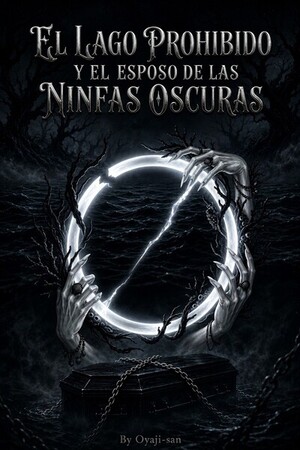
The Forbidden Lake and the Dark Nymphs' Husband
The water did not open for him.
It stepped aside.
It was not the same thing.
When he descended the submerged staircase alongside the nymphs, the lake did not react like an obedient body or a natural current. It reacted like an old creature acknowledging an uncomfortable visit. The water grew slower around him, thicker, as if every step demanded a small concession from the world. The bubbles did not rise. They spun. The light did not reflect. It became trapped in the dark surfaces and returned as a tired shadow.
He struggled to keep his balance.
He did not know if he was walking, floating, or being dragged along by some alien custom.
The nymph walking ahead of him never once turned to check if he was still alive; she simply knew he was. Her black hair was pulled back into a long, neat braid, fastened with a blue bone needle. Her dress looked as though it were made of wet veils and fine scales. On her back, almost hidden, were two curved marks that resembled amputated wings.
"Don't breathe too deeply," she said without looking at him. "The bottom has a memory, and sometimes it mistakes breath for a promise."
He watched her, bewildered.
"Is that a warning or a threat?"
"In our home, they are almost the same."
Her voice had come out with such a dry naturalness that he didn't know if she was joking. The nymph walking beside him let out a short, cruel laugh—the kind born not from humor, but from the pleasure of watching someone else lose their way.
That second nymph was different.
She had slightly tousled blue hair and was a bit smaller, looking more like a normal nymph, with gray eyes and an expression that always seemed on the verge of mocking something. She wore a necklace made of small black bells that made no sound. Every so often, she tilted her head as if listening to music no one else could hear.
"Don't speak to him as if he knows our customs," she said. "He just returned from the dead. He is still at the age where one thinks asking questions actually helps."
He frowned.
"I don't think that, and don't treat me like a child."
"You're right, you're even worse... Barely a newborn hatchling," the nymph replied with a smile.
The third one didn't walk: she seemed to glide. She had beautiful light blue skin that managed to glow even in the gloom, looking as if she were made of water, and eyes so deep they gave the impression of being bottomless. Her hair fell loose over her shoulders like spilled water, sharing the exact same hue as her skin. She was the tallest of the three by far, easily surpassing two meters in height, and the one who gestured the least, as if she were nervous or fearful. When she finally spoke, she did so in a low, clean voice, devoid of embellishment.
"Stop bothering him. If he breaks before we reach the sanctuary, we'll have problems later."
The one with the black bells raised her hands in feigned innocence.
"I'm not breaking him. I'm just giving him an education."
"That is the same thing," said the quiet-voiced one.
The leader of the group, the one in front, raised two fingers without turning around.
"Your name is the problem we need to address. Your current state is not important to me."
He blinked.
"My name?"
All three fell silent for a moment.
That silence held no awkwardness. It held weight.
As if the question had touched upon a custom buried beneath many others.
He felt a dry, precise void when trying to think of his own name. Not a pain. Not a crack. Not a flash. Just the absolute impossibility of finding it. It was like trying to cup water in your hand, only to discover there was no water, no hand, and no way to remember ever having them.
The nymph with the black bells looked at him with sudden curiosity.
"Hehehe... you don't have one."
The blue-skinned, quiet-voiced nymph tilted her head.
"He has one. What he doesn't have is access to it."
"What a pity," said the one with the black bells. "He looks like his name carried weight... men without names are far less fun."
The leader finally stopped.
So did he, almost by inertia.
Around them, the lake opened into a corridor of sunken columns, broken arches, and staircases leading to deeper terraces. Above a ceiling of black glass, the lake water moved like a liquid night. Torchlights floated between the pillars, trapped in lamps of iron and obsidian glass. They did not illuminate normally. They seemed to breathe. They pulsed. They were small mouths of domesticated shadow.
The leader turned to look at him for the first time.
In her violet eyes, there was a serenity more unsettling than any fury. Her beauty was not soft; it was severe. Like a statue that had learned to think. Looking at him, she offered no comfort or tenderness. She offered evaluation.
"Listen to me closely," she said. "Beneath this lake, there is no village. There is no temple. There is no palace. There is a large, old, and dangerous house. If you survive here, it will be because you learn to read its hallways, its silences, and its whims."
He held her gaze.
"And if I don't survive?"
The nymph barely bowed her head.
"Then the lake will return you when you are no longer useful to it."
The phrase, spoken without melodrama, sent an involuntary shiver down his spine.
The one with the braided black hair gestured toward the depths.
"Come. You haven't seen anything yet."
They continued moving forward.
With every step, the architecture grew stranger. The columns were covered in reliefs. They weren't heroic scenes or sacred imagery in the style of human temples. They were domestic and cruel scenes: a woman combing another's hair with an ivory comb; a little girl offering a tooth to a submerged mouth; a table set with black fruits and wide-eyed fish; an embrace ending in a bite; a crown placed at the bottom of the water by a trembling hand.
He stared at one of those reliefs longer than he should have.
The blue-skinned nymph noticed.
"Don't look too closely," she said. "Some columns feel flattered."
"Is that a joke?"
"No. It's a warning."
He immediately looked away.
The one with the black bells smiled, delighted.
"You're beginning to understand why everyone here has that annoyed look on their faces."
The corridor descended into an underwater plaza surrounded by circular terraces. There, the water became clearer, or perhaps darker in a different way. In the center stood a dry fountain made of black stone, with seven empty bowls at different heights. Around the plaza rose doors of various sizes—some open, others barred with chains, others barely visible behind curtains of braided algae and heavy fabrics.
It wasn't a sanctuary.
It was an organism.
There were areas for resting, cooking, ritual bathing, archiving, punishment, and "farming" whatever could grow without light. All intertwined like organs inside a body that hadn't yet decided to stop living.
He stood still, observing everything with an attention born not of admiration, but of necessity.
The leader watched him do it.
"Now you understand why the lake isn't just water," she said.
"I don't know if I understand anything."
"That is also a way of understanding."
The tall, blue-skinned nymph approached the dry fountain and ran her palm over one of the bowls. The stony metal responded with a faint glow.
"Here, you listen first with your hand," she said. "Then with your ear."
"Why?"
"Because lies sound prettier than stone," she replied. "And here, we prefer not to let ourselves be fooled by something pretty."
The explanation struck him as strangely honest. And in that strangeness lay the first piece of useful truth he had received since waking up.
"Are you trying to tell me that the point is to seek the answers, not just ask?" he said, tilting his head. "It would be easier if you didn't speak to me in codes or riddles."
The leader pointed to the largest door at the far end of the plaza.
"That is the Tide Hall. That's where the houses gather. Decisions affecting the entire sanctuary are made there. It's also where people eat, argue, and lie."
"Sounds cozy..."
"It is, as long as you don't talk too much."
They entered.
The Tide Hall was massive. The ceiling arched into a dark vault, from which chains, lamps, shells, ribbons, and fragments of carved bone hung. There were long stone tables and seats of various shapes, for not all nymphs preferred to sit the same way. Some were barefoot on damp cushions; others lounged on benches carved into the shape of thorns; others simply stood, as if sitting were an unnecessary concession.
Dozens of eyes turned toward him the moment he crossed the threshold.
No surprise.
There was evaluation.
Curiosity.
Calculation.
And something much harder to name: a kind of ancient expectation, as if many of them had heard his name before and had been waiting for him in a different body.
He resisted the temptation to step back or ask why they were looking at him like that.
The leader kept walking toward the center of the hall. As she passed, conversations died down one by one—not out of fear, but out of respect.
"This," she said, gesturing toward him with an elegant hand, "is the man who returned."
Not *my husband*, not yet.
He noticed that immediately.
Several nymphs exchanged glances. One of them, sitting cross-legged on the longest table, possessed a cold beauty and a smile that was much too wide. Another, with light hair and golden eyes, held the young man's gaze with an almost academic expression. A small group in the back watched in silence, as if witnessing something they hadn't yet decided whether to accept.
He swallowed hard.
"It feels like I'm being inspected."
The nymph with the black bells let out a giggle.
"Because you are."
"And what are they looking for?"
"Flaws," said a voice from the high table. "Or hopes. Depending on the mood of the day."
The speaker was a nymph with dark reddish hair, thin lips, and an indolent posture that concealed a razor-sharp focus. Her fingers and toes were blackened, as if stained with dark ink, and she held a bone tablet engraved with marks. The most unsettling thing about her was her gaze; her eyes were completely black, with a cold, blood-red iris.
She studied him like a newly placed piece on a chessboard.
The leader replied without turning around.
"They are looking for customs. He will look to name them, or so the legend more or less says."
The young man frowned.
"Name them?"
The violet-eyed leader looked directly at him.
"You cannot inhabit a place that has no names for you. Here, everything important is named. The doors, the debts, the promises, the rooms, the sisters. If you cannot name what you see, the lake will name it for you."
He looked down at his hands.
"I don't remember my name."
"We know," said the red-haired nymph, with no apparent sympathy. "But that doesn't mean you must remain without one."
The hall fell silent.
He looked up.
The nymph in the back placed the bone tablet on the table and crossed one leg over the other.
"The pact ripped away your old name," she said. "That cannot be undone. If we were to speak it, you would not remember it again. You would only feel that you are missing something far greater than what you are already missing."
"So, what do I do?" he asked.
The golden-eyed nymph tilted her head.
"We give you another."
There was a minimal reaction in the hall—a kind of sharpened attention. Not surprise. Not disagreement. Rather, interest.
He stood motionless.
"Are you telling me to abandon my old identity and change my name?"
"We are telling you," the leader replied calmly, "that a man without a name is easy prey for someone else's memory. And down here, someone else's memory always tries to bite first. Be grateful for this new existence, for you are someone new."
"What an encouraging detail..."
"I didn't come to encourage you," she said. "I came to save the structure of this house. There are things the sanctuary does not tolerate, and one of them is a husband without a useful identity."
The word *husband*, this time, did not sound ridiculous.
It sounded formal.
Dangerous.
A registered custom.
The nymph with the black bells raised a hand.
"I propose 'Shadow'."
The golden-eyed nymph shook her head dismissively.
"Too obvious."
"'Bone'."
"Worse."
The red-haired nymph gently tapped the bone tablet with her fingernail.
"Stop degrading the ceremony."
The man looked at them, confused.
"Ceremony?"
The leader replied,
"If you are to stay in this house, even by force, you must be registered."
A faint murmur rippled through the hall.
He frowned.
"Registered where?"
"In the memory of the lake," the leader said. "In the registry of our own. In the custom that prevents the water from swallowing the names of those who truly belong to it."
The phrase made his stomach twist strangely.
"And if I don't want to belong?"
The tall, blue-skinned nymph spoke for the first time since the entrance.
"That doesn't matter yet."
"It doesn't matter?"
"No," she said with serenity. "First, you learn to breathe here. Then, you decide if you like the air."
The answer, however absurd, seemed profoundly consistent with the place—a way of saying it didn't matter if he decided to leave.
The leader raised a hand, and the hall fell silent once more.
"He doesn't need a human name to begin with," she said. "He needs a sanctuary name. One that the lake will recognize without trying to devour it."
Several nymphs nodded.
The red-haired nymph observed the young man for a long moment.
"Look at him closely," she said, speaking more to the others than to him. "He doesn't wear the expression of a man who asked to come back out of nostalgia. He wears the expression of someone who agreed to return because the alternative was worse."
He said nothing.
He couldn't argue with it.
The leader seemed to accept the comment.
"Then so it shall be. He will have a provisional name until he earns it or loses it."
The young man looked up.
"And what would that name be?"
The leader walked around him, slowly, like someone examining a sword before deciding if it is useful.
"From now on," she said, "they will call you Narcissus."
Some eyes widened with interest.
He stared at her.
"Narcissus?"
The one with the black bells covered her mouth with a hand, delighted.
"Oh, how cruel we are."
The golden-eyed nymph smiled for the first time.
"No. It is fitting."
The leader stopped in front of him.
"Narcissus is not the name of a beautiful man. It is the name of a man whom the water ended up recognizing before the world did. And you have returned from an unforgiving lake. It seems rather fair to us."
He opened his mouth to protest, but the gleam in the nymphs' eyes made it clear that the decision was no joke, even if it carried an edge of mockery.
The red-haired nymph made a note on the bone tablet.
"Narcissus of the Forbidden Lake. Provisional husband of the sanctuary. Registry open."
"That sounds terrible," he muttered.
"Thank you," the nymph said. "Terrible things usually last longer."
A soft ripple of laughter swept through the hall. It wasn't a cruel outburst, but a strange acceptance. They weren't just laughing at him. They were integrating him into their way of viewing the world. That was the true oddity. There was no mercy. There was a sense of belonging to a family that was learning to incorporate a new object without ceasing to be dangerous.
The leader raised her hand to command attention.
"Now that he has a name, he may sit with us."
He looked around, searching for a seat.
They didn't point one out to him. That in itself was an answer.
The golden-eyed nymph pointed to the end of the central table, next to an empty, high-backed chair carved with motifs of serpents and withered flowers.
"There," she said. "That seat has not been occupied in a long time."
He approached cautiously.
As he walked, the conversations gradually resumed, albeit in a lower tone. Several nymphs followed him with their eyes—not as if they expected him to fall, but as if trying to guess what kind of man could emerge from a husband snatched from death.
When he reached the chair, he stopped.
The backrest bore an inscription carved in a language he did not know, yet somehow understood, as if he had heard it before in dreams. They were not words of praise. They were words of belonging. Of utility. Of a promise.
"May I sit?" he asked—not out of politeness, but because it suddenly seemed entirely possible that sitting there would be a transgression.
The leader barely arched an eyebrow.
"If you cannot sit in the chair of your own home, perhaps you do not deserve the title."
He sat down.
The sensation was strange.
Not comfortable.
Not hostile.
Simply correct.
As if the seat had been waiting for his weight since before he even knew he existed; and without warning, the carved serpents on the chair seemed to spring to life, bursting into flames as they writhed and shrieked until they detached themselves and fell from the chair.
The nymph with the black bells rested her elbows on the table and watched him with malevolent glee.
"Hahaha... it's a good sign, it seems you're the one," she said, raising her cup.
"You managed to survive the seal, welcome to the family," she said, making other nymphs laugh.
He looked at her sideways and then turned to examine the relief left behind by the flames—a scorched black mark of the serpent on the chair.
"That sounded like a threat."
"It was," said the leader, now back in her main seat, fingers intertwined in front of her.
"Listen carefully, Narcissus. This house has rules. Some will protect you. Others will bite you. None of them exist to give you comfort."
"I'm starting to notice a pattern."
"Good."
She raised a hand, and the entire hall seemed to lean into her words.
"First rule: in the lake, nothing is given away for free. If a sister offers you water, first figure out which part of you she intends to drink."
The nymphs nodded, some with barely visible smiles.
"Second rule: if a door is open, it doesn't mean you should cross it. Many doors in this house are left open so that the careless can disappear on their own."
He listened to her with absolute attention.
"Third rule: do not try to understand our customs as if you were a guest. You are no longer one."
A pause.
"You belong to the house. That makes you more vulnerable, not less."
The silence that followed was warm only in the most perverse sense possible.
He took a deep breath.
"And the magic?" he finally asked. "No one has explained what you did earlier to the holy knights. Nor why the lake responded like that."
Several glances were exchanged.
The red-haired nymph set the bone tablet aside.
"Our magic is not a clean tool," she said. "It doesn't heal, it doesn't bless, and it certainly doesn't illuminate. If a mortal sees it, they will descend into madness, which is why we never show it."
The golden-eyed nymph added:
"Sometimes it also serves to create silence in places where silence does not want to remain," she said while crossing her arms. "Since everyone ends up killing each other."
"And why use something like that?" he asked.
The nymph with the black bells smiled, barely showing her teeth.
"Because it is all we have."
The answer was so simple it was brutal.
The leader denied nothing.
"Our magic does not seek to appear noble. It seeks to be effective. If the lake gave us the depths, we learned the custom of using them without apologizing."
He lowered his gaze to his hands.
"So you *are* evil."
The hall went completely still.
Not out of offense.
But out of interest.
The leader watched him for a long moment before responding.
"No. We are worse."
He looked up, surprised.
She continued with the exact same calm:
"Evil things still believe that evil belongs to them. We do not believe in that. We believe in hunger, in the pact, and in the preservation of what is ours. If that looks like cruelty from the world above, it is only because those above invented another word so they wouldn't have to admit they live by eating others at a slower pace."
No one argued with that statement.
Neither could he. Not because he was entirely convinced, but because there was an uncomfortable truth in the way she had said it. The nymphs didn't pretend to be virtuously dark. They were dark in a natural, almost biological way. Like the sea, like sleep, like the grave, like roots beneath a stone. They did not present themselves as salvation. They presented themselves as fate.
The leader leaned forward.
"There is one more thing you must understand before you get too used to the name."
"What is it?"
"Your pact left you with no memories, true. But it did not leave you empty by mistake. It left you available."
He frowned.
"Available for what?"
"For us."
The phrase hung suspended in the air like a drop of ink.
Then, she spoke more slowly.
"Arriving here without a past, without a visible oath, and without a human anchor, the sanctuary can mold you. Not entirely. Not by force. But just enough to turn you into something useful, enduring, and ours."
He stared at her, motionless.
There was no overt threat in her words.
That was the worst part.
The leader finished:
"That is the true meaning of your title."
The golden-eyed nymph smiled with something akin to affection.
"You are not just a husband. You could be an unfinished piece, or the king we need."
The one with the black bells leaned back in her chair, satisfied.
"And that is infinitely more interesting."
The young man, Narcissus, slowly understood that the horror of this place wasn't found in a battle, an external enemy, or a bloody revelation. It lay elsewhere: in the naturalness with which these creatures received him as something to be claimed, used, dressed, renamed, and rewritten.
And yet, the structure of the sanctuary did not reject him.
It placed him.
It gave him room.
It offered him a chair, a gaze, a category.
Not compassion.
Not kindness.
Something far more dangerous.
A place.
The leader raised her black cup, filled with a liquid that looked neither like water nor wine, but rather a thick mixture of shadow and salt.
"Let us toast," she said.
"To what?" he asked, still cautious.
She looked at him with a razor-thin smile.
"To the fact that you are no longer dead."
The nymphs raised their cups, bowls, or mugs.
The entire hall whispered the exact same word, like a rite learned from the beginning of time:
"To Narcissus."
He felt the weight of that new name fall upon his shoulders with a strange gravity; he knew that if he drank this liquid, he could never consider himself human again. The entire situation seemed utterly absurd since he still felt hostility toward the nymphs, but the hatred and anger churning inside him confirmed they weren't lying. He didn't know who or what it was directed at, but he felt no hesitation in drinking the liquid, and that was what disturbed him the most.
"Cheers," Narcissus said, taking a deep draft from the cup.
He did not remember who he had been before.
But now he was here.
Beneath the lake.
Among creatures who smiled as if love and cruelty shared the very same glass.
And for the first time, he did not feel that the void was a door.
He felt it was a room.
An empty room, yes.
But ultimately, a room within a house that he had just decided was also his.



Please sign in to leave a comment.