Chapter 1:
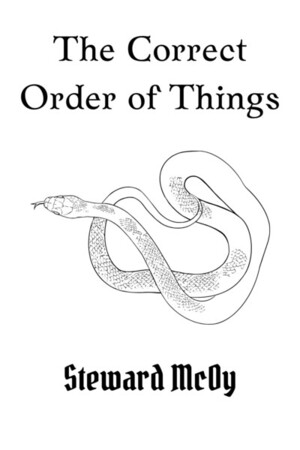
The Correct Order of Things
The Correct Order of Things
When is a god most godlike?
Some among my fellow deities insist it is during the act of creation—that sculpting mountains, hewing rivers, or crafting mortals gives godhood meaning. But if this is the case, then why do we still exist? We served our purpose eons ago.
Others argue that it is when doling out divine punishment. After all, mortals may pile up dirt to erect mountains, scratch the earth with their claws to form new rivers, and reproduce to create new life. But only gods may harness the very fabric of the universe to enact their will. This answer, too, is unsatisfying. What of the benevolent deities, or those who do not involve themselves with mortals? Are they any less of a god than I? Of course not.
In the realm of philosophy, this seemingly nonsensical question is the only one for which we cannot agree on an answer. We have debated it for millennia, and I still do not know how to begin to answer it.
After all, a scorpion is most like a scorpion when it delivers a sting. A flower is most like a flower when it blooms. A sea cucumber is most like a sea cucumber when it liquifies its body. (My greatest work, if I do say so myself.) But a god? When an entity can do everything, how can it be defined by any one thing?
Recently, I came to realize that the perniciousness of this question has blinded us to a similar conundrum. We always assumed mortals were simple enough to categorize that we simply stopped after the first few thousand. Intelligent mortals, however, are multifaceted.
Dragons are unique in their ability to breathe fire. Humans are more adept at throwing objects than any other animal. And yet, they rarely do these things. So what is it that characterizes them? Their capacity for kindness? Their ability to speak in the tongue of the gods? Their talent for deception?
Knowing that if I could not answer this query, I had no hope of solving the question of godhood, I decided to observe intelligent mortals more closely. The crow tengu of the northern continent built a large and opulent shrine to a fictional serpent god created from their own delusions. I decided to assume its form and make the shrine my temporary abode. Here, I have resided for the last two hundred years. My time among the tengu has proven less enlightening than I expected.
This morning, as every morning, I am greeted at sunrise by the city chief. His wings droop under the oppression of his advanced age and the hot summer sun. He barely manages to hold them high enough so that his feathers do not touch the ground.
Other important officials shuffle into the room behind him, marching in a slow lockstep. They hold their wings so high that it appears they are in competition with one another to show off their virility. Though they keep their expressions blank, their body language betrays their desire for the chief’s position.
All save one. At the rear of the procession, a tengu enters hunched over, the tips of his wings dragging behind him. His eyes are clouded and unfocused, but he wears the same ceremonial robes as the others, albeit without the dagger tucked into his belt that all tengu carry with them upon reaching adulthood.
I lift my head off my coiled body upon seeing him. When I first arrived, the tengu visited equally. Young and old, strong and weak, sharp and dim. All offered me tributes, prayed before me, and even engaged me in trivial conversation. Over the generations, my favor became a proxy for social standing, so the powerful built walls around the shrine and monopolized access to me.
It was exactly the kind of mortal folly that merited divine punishment, but because I’m on a mission to observe them in their natural habitat, I put it on hold. I could always visit my wrath upon their descendants.
Needless to say, it’s been decades since such a lacking specimen has been allowed in my presence. This is new, and anything new is interesting. It may provide me with an important clue.
At the very least, it should prove entertaining.
“Greetings, Lord Iione,” the chief says. “From the bottom of my heart, I humbly thank you for allowing us to bask in your splendor on this auspicious day.”
It’s the same greeting he gives every day, the same greeting his predecessor gave every day until he croaked. Ritualistic, impersonal, and quite frankly, insulting. It betrays that he sees me as an obligation to fulfill so he can go on with the rest of his day. He treats me like a tool.
Next, the officials do the same. One by one, they approach and bow their heads in prayer.
“Please strengthen our hearts so we may do what is necessary to protect the peace and harmony of your lands.”
“Bless us so we may continue to live in harmony with your designs.”
“Anoint us as your humble servants, so we may uphold the correct order of all you create.”
The youngling steps up next. When he speaks, his voice is quiet. “Please allow me to live a life dedicated to the pursuit of art.”
“Fool!” The chief slaps the youngling across the cheek. “The gods don’t care about such mundane concerns.”
He couldn’t be more wrong. Granted, we don’t involve ourselves in every trivial affair, but the reason we created mortals in the first place was so we could put an end to an eternity of boredom. The infinite combinations in which such “mundane concerns” clash with one another provide us with endless entertainment.
After shaking his hand out, the chief kneels before me. “Please forgive my grandson, Lord Iione. He has yet to engrave the true way of things into his heart, but I promise you, he will—”
Sensing an opportunity to acquire a new plaything—I mean, to observe tengu behavior—I interrupt him. My voice reverberates throughout the room, laced with coldness. “Leave the boy with me today. I will set him upon the correct path.”
The tengu nearly trip over themselves in their rush to leave. Perhaps it has been too long since I issued a proper reprimand, for I did not expect them to react so strongly. The youngling attempts to flee with him, but they push him into the room and slide the door closed behind them.
His eyes are unclouded now, and they look up at me, wide with fear. “Please don’t hurt me. I just—”
“Relax,” I say in a much softer voice. As if to demonstrate, I droop my head back down over my body. “I’m not going to do anything to you.”
“Then… why?”
“Because I do not want to see you punished. I, too, have a fondness for art. Keep me company for a while, then you can leave, and we can both pretend I disciplined you.”
“You mean it’s a ruse? I’m conspiring with a god?”
“You can think of it that way. Come, sit.” I gesture with my tail to a pillow on the ground. “Speak with me. Maybe I’ll even grant your wish… if I feel like it.”
The foolish child leaps onto the pillow so quickly that it slides forward and bumps into the base of my shrine. He flails about pulling it back into position and then sits upright. As upright as his weak spine will allow, anyway.
Ahhh, obedience. It’s been so long that I’ve nearly forgotten what it feels like. Sure, the boy only cooperates because he wants something from me, but it’s a start.
“Why did you come here today?” I flick my tongue lazily, giving the impression I don’t really care about the answer.
“My grandfather ordered me to. He said I should begin to curry your favor.”
“He would only do so if he wanted you to become a government official, like the others who accompanied him.” I turn my head to the side and focus one eye on the boy. “But you would pursue art instead?”
“Yes,” he answers without breaking his gaze. “The others soar elegantly through the sky and wield magic with delicate intricacy. Compared to them, I am ugly and clumsy.”
“Are you now? I hadn’t noticed. After all, it’s difficult for one as divine as I to tell. You’re all ugly and clumsy from my perspective. Perhaps you could help me see the difference. There is a table and paper by the wall. Draw me a portrait of yourself.”
Excitement replaces lethargy in his voice as he answers. “Yes!” He wastes no time acquiring a table, paper, pen, and inkwell.
His strokes are clumsy at first. His hands shake uncontrollably as he pulls the pen across the paper. But as he becomes drawn further into the process, he loses track of everything else: his surroundings, my presence, the aches and pains that riddle his body.
“Here, Lord Iione.” He holds the drawing in front of my face.
It’s a remarkably accurate depiction. Most would cover over their worst flaws to protect their egos, but not this lad. His crooked back, drooping feathers, and even dimwitted expression are drawn to the best of his ability. Perhaps he’s too simple to be dishonest.
Perfect.
“Now draw me a portrait of one of the others to compare,” I command.
He sets about his task with the same vigor. Though a mortal’s sense of aesthetics cannot hold a candle to my own, he’s not half bad. For someone so young to attain such mastery, it’s obvious he has been practicing this craft at every opportunity.
While he is absorbed in his drawing, I pose my real question. “You seem a keen observer of your people. Tell me, what is special about your people? When is a tengu most like a tengu?”
Although I know he heard me, he waits until he is finished to reply. “Maybe it’s our wings? When we fly?”
“But birds have wings. Humans build houses. Elves wield magics. What is it that makes you unique?”
“Ah, I understand what you’re asking now. The others would claim it is because we are lesser gods who assist you in maintaining the proper order of things.”
“But not you?”
He holds up his newly-finished drawing. “Does this look like a god to you?”
Perhaps he’s smarter than he looks. On the page is a sketch of a mighty-looking tengu soaring through the skies with wings spread so wide they nearly block out the sun. He has a large scar across his cheek, but this only adds to his machismo.
While the grandson was unsparing in his depiction of himself, he seems to have gone out of his way to exaggerate the vitality of his fellows. It cut an impressive figure but contained no trace of divinity.
“I believe I understand the difference between you now,” I say, “but you still haven’t answered my question. What do you think?”
He sits in silence as he ponders my question. After several minutes pass, he sighs in defeat. “I don’t know. Only a true god could answer such a question.”
Disappointing. I’m no closer to an answer. Perhaps it was a mistake to choose the tengu. They’re too rigid. They suppress too much of themselves. I will probably never learn what I need to from them, but at least I can have some fun.
“Do you think you can truly draw a tengu without understanding them?”
This time, he does not hesitate to answer. “I may not know what separates us, but I see beauty in all living things. I wish only to draw that beauty.”
“An acceptable answer. After all, if you could create a complete person, you really would be a god. But there is no beauty in your self-portrait. Can you perhaps not see the beauty in yourself?”
He bows his head. “As you say.”
“Then draw me one final picture: Show me your ideal self. I know you’ve imagined it.”
“Of course.” When he presses his pen to a new sheet of paper, it fails to leave a mark. “I’m out of ink.” He frantically searches the cabinets lining the wall but comes up empty.
“We can’t very well ask for more,” I say. “It would expose our ruse. There’s no other choice. You’ll have to use my blood.”
“I could never! If it comes to that, I’ll use my own.”
“And pass out from blood loss? That would defeat the whole point. I insist. Fill your bottle with my blood. It’s not like I need it.” I unwind my body and extend my tail toward him. “This is an order from your god.”
His hands shake even more than before as he picks up the pen. He grips it tight, but before he can jam it into my body, he stops himself. “The ink will stain your pretty white scales, my lord.”
“My, that is a problem.” I reach my tail up and caress a long feather on one of his wings. “Use this instead.”
“But…”
“It’s not like you can fly anyway. Did you not say you wanted to devote yourself to art? Show me you have the determination for it.”
I barely manage to wrap my torso around his face in time to muffle his scream as he yanks the feather from himself. His eyes peek out over the top of my body, and there’s a fire in them now. His hand is steady as he stabs the sharp point of the feather into my flank.
“I’m sorry,” he sobs, though the words are blocked as I squeeze tighter around him. I hold him in place as he holds the inkwell to my wound. It fills slowly, drop by drop. Only when it is full does he pull the feather out and I release him.
Without another word, he sets to work. My blood spreads from his pen across the page more smoothly than any ink, allowing him to depict small details, down to the barbs on his feathers.
The final result is more modest than the drawing of his fellow. He stands straight, a paintbrush in one hand, his wings spread so they do not drag along the ground. He’s healthy and confident, but his eyes do not gleam with the cleverness of the other tengu.
I take my time regarding the page as he holds it up to me, smeared with my blood and his tears. “This is the best drawing of the three. You’re right. You would be more beautiful this way. So shall it be.”
This time, I did nothing to silence him. His cry of pain combines with loud cracking noises as his spine rearranges itself to create a beautiful symphony. When the process finishes, he’s left panting for breath but standing straight and tall.
“Th—Thank you, Lord Iione,” he gasps. “My wings are beautiful now.” He spreads them out to admire them, his beak hanging in surprise. It snaps closed when he sees the empty space where one of his feathers should be.
“It will grow back,” I reassure him. “The others will come to check on you soon. Hide the drawings in the cabinet for now. And remember, not a word to anyone else about what happened. If you can keep it a secret, I’ll allow you to come back and draw some more tomorrow.”
⁂
It doesn’t take long for the chief to come rushing to the shrine. He throws himself down on the pillow with the same force as his grandson and prostrates himself before me.
“Lord Iione, thank you for the favor you have shown my grandson this day. I never should have questioned you. Please, continue to watch over him.”
My wound has long since healed, but I shift my body to make sure he cannot see the spot where my scales were disturbed. “Raise your head. I merely set him upon his proper path.”
“Yes, yes, exactly. He will make a wonderful chief under your guidance after I… leave.”
“I said his proper path. The boy can’t be chief. He lacks the ability to use magic. He won’t be able to renew the seals that protect the city from outside threats.”
The chief fumbles on his words before managing to form a coherent sentence. “B—But he couldn’t fly before today either. If you fixed that, surely you can grant him the power to cast spells.”
Such insolence, to demand I serve his interests. I kept myself out of their affairs so I could observe their behavior up close. In doing so, I allowed his family to monopolize political power in the city. Now he wants me to interfere so he can keep it.
“The boy would make a poor chief. He has no interest in it,” I tell him.
Surely, as greedy as the chief is, he’ll believe the word of his god.
“But my family has held the position for five generations.”
“Only because you possessed the strongest magic.”
“Exactly! We preserved the bloodline, strengthened it by marrying powerful mages into the family. Magic runs through the boy’s veins. His descendents will serve you far better than the inferior bloodlines of the other families. It was only an accident of his hatching that he ended up so crippled.”
Foolishness compounded upon foolishness. Does he really think that such selective breeding produces superior results in every subsequent generation? What does he take the gods for, believing their design would work that way? It would make mortal life much too predictable.
Much too boring.
“What about your son? Surely, he would make a better chief.”
“I have no son, only a grandson. He’s the last of my line.”
Just where does he think the grandson came from? No matter. I could correct his misconceptions right here and now, but I never stop someone when they’re making a very interesting mistake.
“Very well. Your family has served me for a long time without asking anything in return. If it is your fervent wish that the boy become chief, I shall see that it happens.”
“Thank you, Lord Iione. You won’t regret it.”
“In return, you must make a public announcement that you expect the boy to succeed you.”
“While he’s still… I…” His eyes shift left and right in their sockets as he considers the political problems this will create and whether he can overcome them. “Yes, Lord Iione. As you command.”
As if willing his feet to move through sheer force of will, the chief walks slowly toward the door. Before he makes it halfway, another tengu bursts into the room. I recognize him as the one from the grandson’s picture.
“Lord Iione! Chief! There’s a human at the city gates. He claims to be a priest with a message for Lord Iione from a god named Nudoa.”
No god exists with that name. Then again, there’s no god named Iione either. Perhaps one of my compatriots has assumed a fake guise, as I have. Still, why would they not contact me directly? This was shaping up to be a most intriguing diversion.
“Bring him to me,” I hiss.
Minutes later, a man clad in simple robes enters the room. He has no hair atop his head, but he does not carry himself like a priest. He is muscular and walks with a disciplined movement.
“Greetings, Lord Iione,” he says, pressing his hands together. “My god, Lord Nudoa has sent me with a message. He wishes to meet with you where the river meets the sea.”
What an obvious ruse. This man must believe I power the protective wards around the city, not the chief. His fellows no doubt lie in wait to sack the city once I leave. But their plan has no chance of working. I turn my head away and dismiss the man with a swish of my tail.
“Tell Nudoa if he truly wishes to meet, he can come to me.”
The man grits his teeth but bows his head. “I shall relay your message.” He turns to the chief and mutters in a low voice. “You worship a malicious god. For your own sake, you should rid yourself of it before it brings you ruin.”
I almost admire his tenacity. Since he can’t coax me out of the village himself, he’s trying to get the tengu to do his job for him.
“Hold your tongue!” the chief squawks. “I will abide none of your prejudiced drivel. Just because Lord Iione is a serpent, that does not make him evil.”
“Aye,” the man says. “He may have once been benevolent, but he has grown listless with the passage of time. I can see it in his eyes. He means mischief. If you lack the means to drive him off, my people can slay him for you. It does none of us good to have a malevolent god roaming free.”
My laughter fills the chamber. “Slay me? I’m a god. How can you kill a god? What a grand and intoxicating innocence.” Truly, it has been a long time since I came across such an interesting notion.
The chief pushes the man out of the room. “Enough. If you weren’t entrusted with a message from Lord Iione, I would slay you for such disrespect. Take him away.” His feathers are still bristled when he turns back to me. “What insolence. If they think their new iron weapons stand a chance against our magic or your divinity—”
“What iron weapons?” I ask.
“A nearby human kingdom has been conquering its neighbors using swords and armor refined by dragon fire.”
I tilt my head. “Dragons formed an alliance with humans? Since when?”
“No, the humans subjugated the dragons.”
The proud dragons, brought to heel by clever monkeys who could neither fly nor cast magic? Now that I have to see.
⁂
Weeks have passed, and I’ve already grown bored of the grandson. He always makes sure to bring plenty of ink with him, so that he will never again be required to use my blood.
Today, however, is different. He runs into the shrine, clutching his own arm, and throws himself down before me.
“Lord Iione, please, protect me. All I ever wanted was to be left to my art, but ever since my grandfather announced that I would be the next chief… The others used to look at me with pity; now they look at me with hatred. And today, one of them tried to kill me!”
Finally! Took them long enough.
“A truly lamentable turn of events,” I say. “Your grandfather is so obsessed with making you the chief. I’m afraid that even if you refused the position now, they would still come after you, just to be safe. You have no choice but to become the chief to protect yourself.”
“But I don’t want to be chief. I want to be an artist!”
“And you will be,” I reassure him. “Once you’re the chief, you can make the rules. You can spend as much time drawing as you want.”
“But how will I protect myself? I’ll have to spend every waking moment worried they might assassinate me. If I’m not careful, I’ll end up like my father.”
“My blood holds great power,” I tell him. “Remember when you drew yourself with a straightened back, and then it happened? You merely need to draw your enemies weak, enfeebled…”
“No, I could never do that. I could never destroy such beauty.”
“But there is beauty in death, is there not? Besides, you can’t be an artist if you’re dead.”
He swallows hard. “I won’t do it. I’m… I’m not a… At least my artwork will survive me.”
“Not if they burn it all. And believe me, they will. Your people do everything in their power to forget the dead, after all.”
I let my words hang in the air, weighing upon the youth. He’s already begun to break. How much longer can he hold on?
“I’ll at least give them beautiful deaths.” Pulling a feather from his wings, he runs toward me. I allow him to sink it into me. I bleed, but he’s the only one who feels pain.
Four drawings. A tengu strangled by vines bursting up from the ground. Another burning to a crisp as he flies toward the sun. One simply crumbling to dust and blowing away in the wind. And the last unable to contain his own magic, which consumes him from the inside.
He presents them to me, the most beautiful pictures I’ve ever seen from a mortal. I did not expect such creativity from the boy. In his honor, I will kill them just as he depicted.
Screams of terror rise up from the city. Sadly, the poor tengu who burned to death was at home, not flying toward the sun, and so the building he was in is now aflame.
The chief is the first person to reach me. He bursts through the door.
“Lord Iione! We’re under attack! Some foul magic—” His words catch in his throat when he sees the drawings laid out on the floor. “What have you done?!” He directs his anger at the boy, not me.
I move between them and rear up to my full five-meter height. “He’s only carrying out your wish. You wanted him to be chief. Did you know they tried to assassinate him?”
“But he can’t just—”
I lean down so that we’re face-to-face. “He can’t what? Kill them? Of course he can. That’s how it works in your culture, doesn’t it? You’re all so invested in pretending you’re lesser gods that you ignore any evidence that contradicts that belief. When one of you dies, you pretend they merely left, or perhaps they never existed in the first place.
“That’s why you never took revenge on those who murdered your son. Because you refused to believe he was dead, that they were capable of killing him.”
He falls to his hands and knees. “I didn’t want it to happen like this. It’s not the correct order of things. You should know that better than anyone, Lord Iione.”
“When have I ever said I agree with your pompous notion of the correct order? There is only one order: Gods above everyone else.”
The chief opens his beak to retort, but no words come out. He clutches his chest with one arm and collapses.
“Stop it,” the grandson pleads. “You’re killing him.”
“I’m doing no such thing,” I tell the boy. “It’s simply his time. Remember when I asked you when a tengu is most like a tengu? Well, here’s an easier one for you. When is a mortal most like a mortal?”
He doesn’t speak, but I can tell that even his simple mind can comprehend the answer.
The tengu with a scar on his cheek is the next to arrive. He recovers from his shock quicker than the former chief.
“The human was right,” he gasps. “You are an evil god!”
Wouldn’t do to have him spreading such ideas around, so I wrap my body around him, constricting him from head to toe, and turn my gaze to the new chief.
“Why didn’t you draw his death?”
“Because out of all of them, he’s the most beautiful. He was always kind to me, and he never tried to harm me.”
I loosen my grip on the tengu enough to allow him to speak. “Is this true? Will you still accept him as chief, knowing what he’s done?”
“I…” Apparently the scarred fellow is bad at lying, because he can’t bring himself to say it. The grandson’s shoulders droop. He knows what he must do, but I can tell he’ll require one last push.
“Well, can you destroy that which you find beautiful for the sake of your art?” I ask.
He approaches us with his bloody feather in one hand. “There is no death elegant enough to befit you. I’m sorry.”
Disappointing. Looks like the fun’s over. Unless…
I release the tengu and return to my shrine. “Do what you must. It is no longer my concern.”
The scarred tengu looks down at the chief and reaches for the knife tucked into his belt, but he hesitates. To my surprise, the chief does not.
He stabs the feather through the tengu’s heart.
⁂
“Lord Iione, Chief, open up! Please, I beg of you. It’s chaos out here.”
It’s become a daily ritual at this point for some poor tengu or another to knock on the door to the shrine and try to drag the chief back to some semblance of normalcy.
“You’ll have to come back later,” I say in a sing-song voice. “The chief is very busy with his art right now.”
I expect them to reply with the same excuses. The powerful families are fighting for power openly on the streets. Women and children are starving while the rich hoard food. Society has collapsed and there are no rules anymore. But instead, they say, “The protective seal around the city has failed. Humans are attacking.”
I lean my head down next to the chief’s cheek. “Isn’t it your duty to refill the protective seal?”
“You know I don’t have the ability to do that,” he mumbles. “It’s fine. All I need is your blood. I can just draw the invaders being killed.”
“Did you get that?” I call out. “The chief doesn’t have the power to maintain the seal. If only the previous chief hadn’t insisted his grandson inherit his position, this never would have happened. Still, I can’t help but wonder, why did no one else think to reinforce the seal?”
Instead of an answer, the person on the other side makes a gurgling noise. Shortly after, an ax pierces through the door. It appears the humans were closer than I thought. No use in waiting for them to come to me. This structure has outlived its usefulness regardless.
With a powerful gust of wind, I send the building around the shrine exploding in all directions. A wooden beam collides with a dragon flying overhead, sending it and the human riding atop its back spiraling to the ground. Another hits a flying tengu warrior in the back, propelling him higher into the air.
All around me, a beautiful chaos unfolds. It’s not just the humans and their enthralled dragons who have attacked. Faeries and beastfolk, who have long resented the tengu for enforcing their vision of order on the mountain, converge on the city from opposite directions. They clash with the humans and tengu for dominance in the city center. Local demons, drawn by the unfamiliar din of war, spring from nooks and crannies to attack everyone equally.
Now this is the natural way of things!
“Lord Iione, look.” the chief holds up a drawing showing the humans perishing in a sea of fire.
How unoriginal. I turn away and behold the humans approaching the shrine. True to the former chief’s words, they are clad in shiny armor and bear weapons of immense strength. For mortals, anyway.
The chief tears at his hair in frustration. “Why isn’t it working? It’s always worked before.”
“Did you believe it was your art that channeled the power of my blood?” I taunt. “Naive fool. Everything that came to pass was my whim. You were merely a puppet made to dance for my amusement, and you’re no longer good even for that.”
The humans charge. I swat the vanguard away with my tail, but those behind them sink their blades into my flesh. If I were charitable, I could say it hurt a little, but the sensation was akin to an annoying itch. I force the swords out of my vessel, sending their wielders flying back.
In the ensuing melee, the chief attempts to flee, only to be stabbed through the gut. He falls, no longer my concern. But these humans, they’ve proven to be quite interesting. I shall give them a chance to worship me. If I can trade them for the tengu, perhaps I can learn the answer to my question.
“As you can see, you are no match for a god.” My words bellow across the battlefield. Lay down your weapons. It is not too late for my mercy.”
The humans break out into impudent chatter. “Is that the snake god?” I hear one say. “But I thought it abandoned the city. Why else would their barrier fall?”
From amongst the riffraff, one steps forward to address me. I recognize him as the “priest” who visited the false shrine months ago with a message from a fictional god. His head was no longer bald, and he had traded his robes for plate mail.
“We will never kneel to you or any god,” he shouts. “Not again.”
Well, it was a nice idea while it lasted. “So be it,” I say. Unhinging my jaw, I open my mouth and shoot a beam of pure light at the man. It vaporizes him in an instant. All around me, I call down similar columns of energy from the heavens, completely eradicating every being still standing.
“I’ve never… seen anything so… beautiful.” The chief looks up at me with awe in his eyes. “I must draw…”
With his last remaining strength, he scoops up the blood pooling under him and frantically rubs his fingers against a nearby plank, drawing a crude image of holy light raining down from the heavens behind me. So obsessed is he with capturing my beauty that he works at it until he ceases to draw breath.
And there, in the most unlikely of places, I found the answer to my question. Not to the question about tengu, or humans, but the original question.
Perhaps the others will disagree with me, but in my opinion, it is when they are revered. Not because their venerator fears punishment or wishes for a reward, for that is why children revere their parents.
A god is most godlike when they are revered simply because they are divine.






Please sign in to leave a comment.