Chapter 8:
Spanish Civil War – Meeting and Farewell
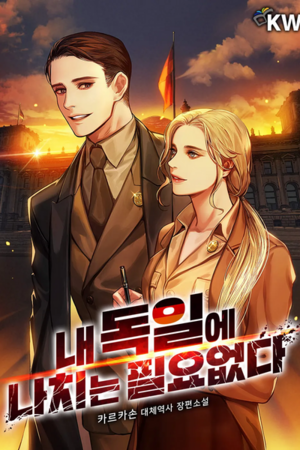
I Don’t Need Nazis in my Germany
Two months had passed since the bombing of Guernica. While participating in the Basque Offensive, a series of unexpected and unthinkable events began to unfold.
First came the Hindenburg disaster. The enormous German passenger airship, a source of national pride, exploded in the United States.
I vaguely remembered the incident, though the exact date escaped me. As a Korean, it hadn’t left much of an impression on Yun Seong-il.
The Hindenburg symbolized Germany’s long-standing love for airships, dating back to World War I. It was also a propaganda centerpiece used by the Nazi regime during the 1936 Berlin Olympics.
Rumors circulated in Germany that the disaster was the result of a Jewish conspiracy. Whatever the cause, the members of the Condor Legion were deeply shocked by the destruction of such a luxurious and iconic vessel.
Of course, in the aftermath of World War II, there would be tragedies so immense that this one would pale in comparison—but no one could know that yet.
It was a disaster that, in hindsight, I might have prevented—if only I’d remembered.
The second incident was even more unexpected: the death of General Emilio Mola, commander-in-chief of the Northern Campaign and leader of the offensive in the Basque region.
His transport plane had crashed while flying over the mountains. The reason? It was overloaded with ceremonial uniforms.
Although conspiracy theories swirled—some suggesting Franco was behind it—the cause was so ridiculous that people chose to believe the simple explanation.
Both incidents were monumental, yet I had never anticipated either.
They reminded me of my limitations. I had been too focused on my meeting with Willy Brandt and the idea of wielding future knowledge.
But there’s more to this era than just Germany and its politics.
In an age without real-time access to data, even someone with knowledge of the future is constrained by the limits of human memory.
That’s why I must stay cautious. My mission is nothing less than the dismantling of an evil and persistent ideology that has no rightful place in human history.
June 25, 1937 – Port of Cádiz, Andalusia, Southern Spain
Even after Mola’s death, the northern offensive pushed on. Ultimately, the Nationalists succeeded in capturing Bilbao, the capital of the Basque Country.
The Basque resistance forces retreated west to Cantabria.
The destruction of Guernica, despite international condemnation, had pleased Hitler. With the Condor Legion’s involvement now publicly known, the Nazis began to send reinforcements without hesitation.
Richthofen, now confident enough to interact with Spanish officers directly, no longer needed me as an interpreter. Additional interpreters had arrived with the reinforcements, and the Condor Legion had received substantial support to recover from recent losses.
It was time for me to return to my original post.
Aside from the matter of incendiary bombers, this would be my final mission under Colonel Richthofen—a competent and decent superior.
"Leutnant, this really is the last time. Are you sure you don’t want to consider the Luftwaffe? I don't usually recommend things like this lightly."
"I know. But I'm grateful for the offer, Colonel."
We were at the port to receive reinforcements from Germany. Since Bilbao had fallen, the new troops had been flown to southern Spain by transport aircraft—which was fortunate.
Because this reinforcement group included none other than the Bf 109 fighter.
Richthofen, visibly delighted by the arrival of this new-generation fighter plane—famous from movies and wartime footage—looked at me curiously. But for someone with knowledge of World War II, the appearance of such a well-known weapon was deeply emotional.
From now until the Battle of Britain, air superiority would belong to Germany. I remembered the frustration of losing air control to those crude early Soviet fighters...
Seeing me grumble to myself, Richthofen chuckled.
"That makes you happy, Leutnant? The 88—the 'Acht-Acht'—you had such a big role in improving, that’s coming too."
"Yes, Colonel. Now that we’ve upgraded the Bf 109s, the 88s can finally take a breather."
My greatest achievement with Richthofen was accelerating the development of the 8.8 cm Flak—a versatile anti-aircraft gun that became legendary during WWII.
Though originally designed for anti-aircraft use, I had pushed for modifications that wouldn’t appear until later: adding gun shields, improving rotation mechanisms, and addressing the poor mobility that made anti-tank use difficult.
Because of Göring’s obsession with air supremacy, the Luftwaffe had too many anti-aircraft units. But Richthofen believed in the potential of Flak guns for ground combat. Thanks to his support, the changes went through smoothly.
I’d had to write reports with the detail of doctoral dissertations to justify small but vital upgrades—but it paid off. The Army Command took notice. I owed Richthofen for that.
"Here they come."
As the transport ship from Germany docked, I stood up straight.
I already knew who was arriving, and though I had anticipated it, seeing them in person was surreal. These were men I had only ever seen in grainy black-and-white photographs. Now, here they were, in the flesh.
One man stood out—a second leutnant with a mustache and a surprisingly gentle expression. His name: Adolf Galland. Though younger than me, he would become one of the Luftwaffe’s greatest aces and an outspoken opponent of war crimes during the Nazi regime.
And leading the group…
"Heil Hitler!"
Alongside Richthofen, I raised my hand in the Nazi salute and shouted the phrase—not out of loyalty to Hitler, but as a sign of respect for a man who, under the worst of circumstances, would fight to protect a collapsing nation.
"Heil Hitler."
The man in his forties, wearing a monocle, returned the salute with a faint smile.
"I am Colonel Walter Model, dispatched from the Berlin General Staff. I look forward to working with you."
It took quite some time to unload the equipment the Germans had brought.
Tanks, Bf 109 fighters, bombers such as the He 111, Do 17, Hs 123, and—at my and the Condor Legion’s request—a prototype of the Flak 36, an upgraded 88 with a cannon shield.
As far as I knew, the famous Ju 87 Stuka, with its wailing dive siren, was also scheduled for testing in Spain—but that hadn’t happened yet. Along with the Bf 109, it would become a defining symbol of the Luftwaffe.
During the unloading process, I found myself sweating profusely, trying to keep up with one of my most respected generals from the Second World War.
"It’s hot. Is Spain always this hot? Or is this Africa?"
...What?
The officers and I exchanged glances for a long, awkward moment before bursting out laughing.
"Hahaha! Hahaha!"
"It was worth brainstorming jokes on the ship if it makes you laugh this much."
Seeing the Colonel smiling so cheerfully, I chuckled internally.
Walter Model—‘The Lion of Defense,’ ‘The Führer’s Fireman,’ ‘The Miracle Rebuilder,’ ‘The Guardian of the Eastern Front’—Germany’s final hope in WWII.
"On the battlefield, laughter is vital. You men should train your sense of humor, too."
I had read a small note somewhere that Model enjoyed cracking jokes with his troops—but I hadn’t realized just how true that was until now.
Apparently, he had been assigned as Chief of Staff to Leutnant General Thomas to manage the growing size of the army.
I hadn’t known that Model served in the Spanish Civil War. Seeing his name on the reinforcements list had been a complete surprise.
Our company’s structure had changed while I was acting as an advisor during the Basque Campaign. The unit had been on standby, and Clemens had temporarily taken over my role as company leutnant.
Two new officers had joined as well: Leutnant Egon Ross, who took charge of the 1st Platoon, and Leutnant Karl-Heinz Beckermann, assigned to the 3rd Platoon.
Leutnant Julius Havenstein, devastated by the loss of a fellow officer during the Battle of Guadalajara, had fallen into depression. I heard he had applied for a discharge during my absence—perhaps unable to bear the emotional toll.
The Condor Legion was often mocked as weak-willed. It’s a strange feeling, thinking I could have ended up like him.
"Alright. The unloading seems about done—let’s move out! The Condor Legion pays no respect to its enemies!"
"...Hahaha…"
Respected Colonel Model—sir… This might take some getting used to.
Leutnant Colonel Richthofen led the reinforcements of Leutnant Adolf Galland’s 3rd Squadron and proudly oversaw the launch of the newly arrived Bf109s and other aircraft.
It was a bit chilly, but that seemed fitting—it was a farewell.
I headed out with the support personnel, including mechanics and army reinforcements. Although I had been seconded to the Luftwaffe as an interpreter, I was now being formally appointed as a company commander—ironically, without ever having truly acted in that role.
Still, being a company commander brought with it certain expectations. I felt some pressure to build rapport with Leutnants Ross and Beckermann, who had recently been assigned to our unit. However, when we traveled together, I quickly realized there was no need for anxiety. Things flowed naturally.
We had no choice but to endure Colonel Model’s timeless jokes along the way. Through shared laughter, camaraderie came easily. Perhaps that’s part of why the 9th Army under Walter Model would go on to be so tightly knit, bound together by mutual respect and brotherhood.
Salamanca, Spain – A Nationalist Stronghold
Upon arriving in Salamanca, a major base of the Nationalist faction, I formally reported in and transferred Leutnants Ross and Beckermann to Battalion Commander Major Beckers. After that, I was finally able to return to the company I had missed so dearly. It had been nearly three months.
“Clemens!”
“Dietrich!”
Only after assigning Ross and Beckermann to their respective platoons did I embrace Clemens—now my company leutnant—and share in the joy of our reunion.
“It’s a little late, but thank you, Clemens. I owe you my life.”
“Come on, between us? No need. But hey, I’m a leutnant now.”
“What do you know? It’s just the two of us here.”
It might have looked odd—two grown men embracing—but I had nearly died during the mad retreat from Guadalajara. It was Clemens who had pulled me from the wreckage of an air raid.
“Did you enjoy the Luftwaffe life?”
“Oh, it was fine. Just got a little closer with a senior leutnant colonel, that’s all.”
“Meanwhile, I almost grew moss waiting around. Too many casualties.”
“Yeah… there was nothing to be done. Is that why your face is a little puffier?”
“You noticed? Nothing much to do, so I spent time with some pretty girls! Ha!”
“Anyway, now that the reinforcements have arrived, the good days are over.”
Indeed, in our last battle, our company had suffered serious losses. We’d been held in reserve, sometimes assisting in training the Spanish forces. But now, we were heading back to the front.
Hitler was elated by the global attention given to the Luftwaffe’s exploits, and now he expected the army to perform just as impressively.
The problem? It wasn’t a display of strength—it was a massacre. And a surprise attack, not a public demonstration.
As Clemens and I were finishing our conversation and catching up, there was a knock at the door.
“Hm?”
Normally, a non-commissioned officer or junior officer would enter first to announce a visitor. This time, there was no such formality.
“It's Havenstein, Leutnant.”
“Come in.”
Leutnant Julius Havenstein—the former 3rd Platoon commander—entered with a downcast expression and gave a Nazi salute.
“Heil Hitler!”
“….”
Not wanting to shout a tribute to Hitler, I acknowledged it with a vague gesture. He may have misread my meaning, but it made the atmosphere all the more awkward.
Just a short while ago, we’d shared the same rank. Now, I was in command, and he was standing at attention.
Had he been waiting outside this whole time while Clemens and I talked?
Havenstein hesitated, and the way Clemens looked at him—with naked disdain—made it clear how he had been treated while I was away.
If I had chosen to request discharge instead of returning to the front lines… would Clemens look at me the same way?
I don’t know. But it was a sobering thought.
“Is this about your discharge report, Ensign?”
“Yes, sir.”
Leutnant Beckermann had only recently taken over the 3rd Platoon, so Havenstein must have remained in his post until the transition was complete. He was here now, preparing to return to Germany.
“Coward…”
Clemens muttered, loud enough to be heard.
I couldn’t remain silent.
“Leutnant Fleck?”
Clemens gave me a confused look.
“Would you mind stepping out for a moment?”
“…Yes, Leutnant.”
He left quietly. I would apologize to him later.
I rose and walked toward Havenstein.
“Leutnant Julius Havenstein.”
His eyes twitched nervously, uncertain of my intentions. I grabbed him gently by the shoulders.
“Relax. We’ve known each other a long time. What are you afraid of?”
“But I… I…”
PTSD—post-traumatic stress disorder—was not a recognized condition at the time. The best approximation was “shell shock.” Soldiers suffering severe symptoms were often seen as cowards, especially officers, who were expected to be examples of valor.
General Patton famously slapped a soldier with PTSD, calling him a coward. But that wasn’t just his story—it was the prevailing view of the time.
But that view was wrong. Even I, at times, still heard the shriek of shells in my ears.
“You’re not a coward. I guarantee it. You stayed till the end at Guadalajara, didn’t you?”
He had made a mistake by sending a private as a messenger. He had lost his platoon leader. He had broken down.
But he hadn’t fled.
No matter how terrified or pained he was, he hadn’t abandoned his comrades to save himself. That mattered.
“I’m sorry. I can’t keep going—”
“It’s okay. If killing is something to be proud of, then the people who boast about it are the real monsters. I know how hard you fought.”
I pulled out a small pouch I had been carrying since the Battle of Guadalajara and handed it to him.
“This…?”
“A letter and dog tags from Captain Kaufman. Deliver them to his family. You were there in his final battle. You know he fought bravely.”
“Leutnant…”
“Go now. I won’t say anything dramatic. But if anyone tries to smear your name, they’ll be insulting me as well. You’ve got your final order—now go home.”
It felt odd—a rookie company commander giving such a sentimental speech—but Julius Havenstein’s expression as he left the room didn’t look so bad.
If the Nazis start another war—if a truly devastating conflict begins—not just men like him, but even children and the elderly will be dragged into it.
This world is already broken. But at least, I’ve been given a body and a mind that won’t collapse on the battlefield.
And a chance—however small—to stop this from happening.
To topple the Nazis, those monstrous bastards, and prevent the most catastrophic tragedy in human history.
That is why I am here.



Please sign in to leave a comment.