Chapter 17:
Interwar Period – War College
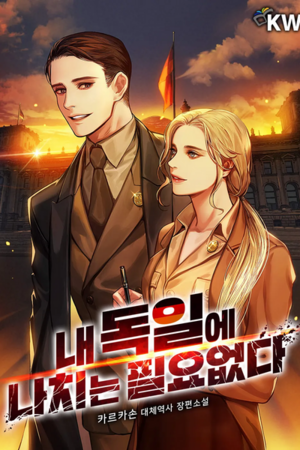
I Don’t Need Nazis in my Germany
November 4, 1937 – Berlin, Northern Germany
I had finally arrived in Berlin.
This historic capital of Germany, once the seat of the Duchy of Brandenburg, which would lie in ruins by the end of the Second World War.
Dark-red flags bearing the Hakenkreuz hung everywhere across the gritty city—perhaps in overcompensation, as if shouting for validation of a “German identity.”
It was a grim and imposing sight. The city resembled the kind of empire of evil often described in the West.
People seemed more spirited than expected, but it was common to see SS troops (Schutzstaffel) loitering at every corner.
From now on, this was my stage. If I made even a single mistake, it could all be over.
And I—
Before the Nazis ran into real trouble...
My God. Through the entire Spanish Civil War, I never sent a single letter home!
Dietrich Schacht, the man whose body I now inhabited, was born eight years after his older sister Cordula, who was born in 1903. A late-born son, he received excessive affection from his aristocratic grandmother and wealthy father. He grew up immature and entitled.
Even after graduating from the esteemed Heidelberg University, he clashed with his father, Hjalmar Schacht, and promptly enlisted in the army.
Hjalmar had wanted his son to complete his mandatory service and take over the family business. But like many young Germans, Dietrich had fallen under Hitler’s spell, seduced by his sharp uniforms and military theater. He aspired to become an officer.
Upon completing officer training, he was dispatched to Spain and never contacted home—not even once. His mother and sister had sent letters at first, but he never responded, so the correspondence ceased.
For Dietrich, that was normal. For me, with his memories now mine, I felt no discomfort—until I returned home and had to face it all.
And so now, I stood on the doorstep like a prodigal son who had vanished and was all but written off.
Cold sweat clung to me. In Korea, I’d always been close to my mother...
And now, aside from the emotional wreckage, there was the delicate political situation: I needed to reconnect with the Schwarze Kapelle, or "Black Orchestra," a group of anti-Hitler conspirators—many of whom were high-ranking officers. The core of their network was the von Kleist Society, a secretive aristocratic circle.
My entry point into them was Hjalmar Schacht. If I wanted access to this resistance, I had to maintain a good relationship with my father. But that… didn’t seem to be going well so far.
Swallowing hard, I looked at the three-story villa before me.
This wasn’t a townhouse in central Berlin—it was a freestanding mansion. In 21st-century Korea, you’d only find such homes in the wealthiest corners of Seoul.
Yet, standing there, I felt no joy.
“Dietrich…?”
I turned. An elderly German woman stood behind me, surprise etched across her tired face.
Her appearance was older than I remembered from Dietrich’s memories. But familiar.
Softly, I summoned as much sincerity as possible, leaning into the emotions of Yoon Seong-il.
“...Mother.”
Luise Sowa—Dietrich’s mother—ran to me and embraced me tightly.
“You… really... you came back safe…”
My heart sank at the sound of her sobbing.
Damn you, Dietrich. This was your job, not mine.
“I’m sorry... I’ve been away too long.”
Luise didn’t let go for a long time. Even for a bastard like him.
I listened closely to her stories, sharing what I could. I missed my real mother so badly it hurt. And yet, I couldn’t see her.
Cordula, my sister, now lived in England with her family. Her son had none other than Montagu Norman—the governor of the Bank of England—as his godfather. An impressive lineage.
But none of that mattered.
Just yesterday, my father, Hjalmar Schacht, had been dismissed as Minister of Economics and as the Nazi regime’s Special Envoy for War Economy.
The timing couldn’t be worse.
Though he still retained the title of “Minister without Portfolio,” his influence had been gutted. The man who had rescued Germany from hyperinflation and helped finance the Nazi rise was being pushed aside.
Now, Göring—a loud, drug-addled opportunist—was turning all of Germany into a munitions factory, flooding the economy with corruption and disarray.
I was still immersed in these thoughts when a loud bang echoed from the door.
Dietrich remembered Hjalmar as calm and intelligent—arrogant, but composed.
So seeing him stumble through the door, drunk and disheveled, was jarring.
He’d been a major contributor to the early Nazi rise—summoning old business contacts to fund the Party when they were nothing more than a fringe group. He must’ve truly believed that Hitler would help restore Germany’s greatness. But now?
“…Dietrich?”
Hjalmar stared at me, eyes wide, and then erupted.
“You—you idiot! Two years without a single letter, and now you come home?”
“Honey, please… He just got back—” my mother tried to interject.
But Hjalmar stormed forward, ignoring her.
“While I was covering for these Nazis, you enlisted out of admiration for them! So—how glorious was the battlefield?”
“I served as a volunteer in Spain. I’ve returned to Germany for the General Staff course,” I replied calmly. “I’m sorry for neglecting you.”
At my apology, he faltered briefly. Then, with a tired sigh, he pointed at the door.
“Get out of my sight. Shameful...”
So that was it. No warm welcome.
“I’m truly sorry, Father. Mother… I’ll be stationed in Berlin now, so I’ll visit often.”
He said nothing, but I could feel his anger cooling slightly.
“Take care… both of you.”
There was something deeply painful about trying to clean up Dietrich’s mess while also feeling like I’d been rejected by my own parents.
November 10, 1937 – Berlin War College
Thanks to my mother, Luise Sowa, who slipped me emergency funds, a considerable sum, I had managed to spend a few days resting comfortably at a hotel.
I’m sorry again. No—this isn’t even my fault… damn it.
Finally, the day of entry into the War College had arrived.
As I donned the Wehrmacht officer’s uniform, I felt like a character in a war movie.
A villainous one. The kind whose uniform looks cool—but that’s about it.
Admission to the War College is reserved for promising officers selected through fierce screening and recommendations. Rank or nobility didn’t matter here. Only skill.
Leutnants, first leutnants, captains—we were all mixed together. But thanks to the full backing of the Condor Legion, I’d have no problem keeping pace.
I owed Colonel Model, Richthofen, Clemens, and the others more than they knew.
For most here, the War College was the final step before becoming General Staff. Those who graduated wore the red-bordered epaulettes—the insignia of Germany’s top military elite.
But only 10–20% would finish the program and earn that honor.
The course spanned three years. While WWII would erupt in the middle of that timeframe, students wouldn’t just sit in classrooms. They’d be deployed, seeing real combat while continuing their training.
It was tradition. Since the days of Scharnhorst in the Napoleonic Wars.
Generals like Walther Model, Erich von Manstein, Heinz Guderian—they had all trained this way during World War I.
But all that faded into the background the moment he entered the room.
“Everyone, attention!”
The room went dead silent.
“Salute the Führer!”
“Heil Hitler!”
And there he stood. The man with the mustache. A figure who would haunt human history forever.
Adolf Hitler.
There was no resemblance to the historical portrayals—no books, films, or documentaries captured this.
“My young officers—the future of the German army—it is my honor to stand before all 160 of you.”
His tone was calm. Measured. Not the manic ranting he was known for.
“You love peace. But you must also be strong. As Germans, we must never be weak. We must be soldiers.”
He grew warmer with each sentence, his voice swelling with fervor.
“You must understand sacrifice. You must never give in. One day, we all vanish—but Germany will live forever!”
Now fully consumed by his own words, his hands began to wave in wild gestures.
“Your bodies are mine—your blood is German blood! Our souls burn with the same flame!”
Even among these elite officers—trained professionals—none could look away. Eyes locked on him. Breath held.
“The will to unite—that sacred order—fills Germany today! I believe you will draw close to each other, and together, we will be one!”
Even I—against my will—felt a tremble in my chest.
He was the enemy.
The greatest tyrant mankind had ever known. A madman who ruled an era by sheer charisma.
And now, soaked in sweat, he ended with a triumphant roar:
“As Führer, I command you—proud sons of Great Germany—be loyal to me! To Germany! To National Socialism! Offer your body, your blood, and if necessary, even your soul for your Fatherland!!”
He raised a clenched fist. Everyone responded instinctively, raising their arms.
“I solemnly swear to God—”
Hitler looked down at us, beaming.
“In unconditional obedience to Adolf Hitler, leader of the German people and Supreme Commander of the Wehrmacht—”
The voices echoed, one after another, filled with reverence and fire.
“I swear to give my life to uphold this oath!”
This was my battlefield now.

Please sign in to leave a comment.