Chapter 21:
The Last Day Of Break
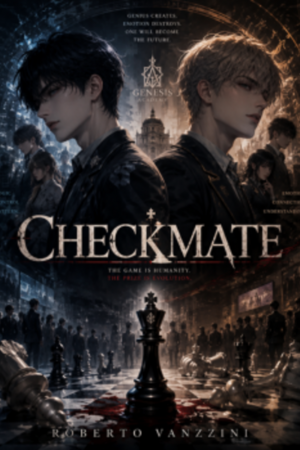
Checkmate
"Some people spend their lives trying to change the world."
"Others spend their lives trying to understand it."
Noah Kurogane had chosen long ago.
He would understand it.
Not because he lacked ambition.
Not because he feared competition.
But because the greatest truths were never found by the loudest people.
They were found by those willing to remain silent.
Before Genesis Academy...
Before anyone knew his name...
Before he stood at the top of the rankings...
Noah was invisible.
Not by accident.
By choice.
He was born in a quiet coastal town where nothing remarkable ever happened.
No famous schools.
No wealthy families.
No prestigious competitions.
Just ordinary people living ordinary lives.
His father repaired watches.
His mother worked as the town librarian.
Neither of them was considered a genius.
Neither believed their son needed to become extraordinary.
His father often said,
"A watch doesn't work because one gear spins the fastest."
"It works because every gear understands its place."
As a child...
Noah didn't fully understand those words.
Years later...
They would become the foundation of everything he believed.
Unlike Adrian...
Noah wasn't solving university mathematics at eight years old.
Unlike Victor...
He wasn't studying economics.
Unlike Lucien...
He wasn't naturally charismatic.
He was...
Average.
At least on paper.
His grades were good.
Not exceptional.
He wasn't the fastest runner.
Nor the strongest fighter.
Teachers described him with the same sentence every year.
"Noah has potential..."
"...but he never stands out."
That never bothered him.
Because while everyone looked at results...
Noah looked at people.
When he was seven years old...
His teacher asked the class a simple question.
"Who can tell me why Ethan and Ryan fought during recess?"
Hands shot into the air.
"Ethan started it!"
"No, Ryan pushed him first!"
"They both wanted the same toy!"
The teacher nodded politely.
Then she noticed Noah hadn't raised his hand.
"Noah?"
"What do you think?"
He looked toward the two boys.
"They weren't fighting over the toy."
The classroom became quiet.
"They were fighting because neither wanted to look weak."
The teacher blinked.
"...What?"
"Ethan's older brother called him a coward yesterday."
"Ryan laughed."
"So Ethan pushed Ryan today."
"Ryan pushed back because everyone was watching."
Silence filled the room.
The teacher turned to the two boys.
"...Is that true?"
Both children slowly nodded.
The toy had never mattered.
The emotions behind it had.
That was the first time an adult looked at Noah differently.
As he grew older...
He noticed patterns everywhere.
Not mathematical patterns.
Human ones.
At the grocery store...
He noticed which cashiers customers chose.
At restaurants...
He noticed who apologized first during arguments.
At school...
He noticed which students laughed before everyone else.
Not because the joke was funny.
Because they wanted to belong.
People fascinated him.
Not individually.
Collectively.
When Noah turned ten...
His mother gave him a notebook.
"What should I write in it?"
She smiled.
"Whatever you notice."
That notebook became his greatest teacher.
He didn't write about himself.
He wrote about everyone else.
One page read:
People rarely remember exact words.
They remember how those words made them feel.
Another:
The loudest person in a room usually wants reassurance.
Another:
People reveal themselves most when they think nobody is paying attention.
Every day...
The notebook grew thicker.
Not with facts.
With observations.
One afternoon...
His father took him to the town square.
An old clock tower stood at its center.
The enormous clock had stopped working.
Dozens of people gathered around.
Everyone had a different theory.
"The gears are broken."
"The springs snapped."
"The weather damaged it."
Nobody agreed.
Noah watched his father quietly climb the tower.
For nearly an hour...
He said nothing.
He simply looked.
Touched nothing.
Changed nothing.
Only observed.
Finally...
He smiled.
"The problem isn't the clock."
Everyone looked confused.
He pointed toward a tiny screw no larger than a fingernail.
"This was replaced with the wrong size."
One small adjustment later...
The massive clock began ticking again.
As they walked home...
Noah asked,
"How did you know?"
His father smiled.
"I didn't."
"I looked until the answer became obvious."
"But everyone else was trying to fix it."
His father nodded.
"That's exactly why they couldn't."
"They wanted to act before they understood."
Then he placed a hand on Noah's shoulder.
"Remember this."
"The first person to move isn't always the smartest."
"Sometimes..."
"The smartest person is the one still watching."
Noah never forgot those words.
Middle school changed everything.
Students became more competitive.
More emotional.
More complicated.
One day, the school announced an academic tournament.
The winner would receive a national scholarship.
Everyone expected Noah to compete.
His teachers encouraged him.
His friends insisted.
But when registration closed...
His name wasn't on the list.
His classmates were shocked.
"You could have won!"
Noah simply smiled.
"I wanted to see who needed to win."
They didn't understand.
So while everyone fought for first place...
Noah watched from the audience.
He noticed one contestant constantly glancing toward the exit.
Another stared at the scholarship papers more than the questions.
A third smiled after every correct answer...
But never celebrated.
Later, he learned why.
One needed the prize to pay for a sick parent's treatment.
Another wanted to escape an abusive home.
The third wasn't competing for himself at all.
He had promised his younger sister he would succeed.
That day...
Noah realized something profound.
The competition everyone watched...
Wasn't the real competition.
The real battle existed inside each person.
Their fears.
Their hopes.
Their reasons.
Results only revealed who won.
Motives revealed who they truly were.
Years later...
A black envelope arrived at his house.
There was no return address.
Inside was a single letter.
Genesis Academy has been observing you.
His parents looked confused.
His father asked,
"What do they want?"
Noah reread the final sentence.
We are searching for the perfect human.
He quietly folded the letter.
Then smiled.
For the first time...
Not because of the invitation.
But because of one detail.
"They've been watching me."
His mother looked worried.
"Does that frighten you?"
"No."
"It tells me something."
"What?"
"They think they've understood me..."
He looked out the window.
"...before we've even met."
He slipped the letter back into its envelope.
"They're making the same mistake most people do."
His father tilted his head.
"What mistake?"
Noah answered calmly.
"They observed my achievements."
"They never asked why I made them."
That night...
He accepted Genesis Academy's invitation.
Not because he wanted to become the perfect human.
Not because he wanted to defeat the world's greatest geniuses.
But because he wanted to answer one question.
If the smartest people on Earth spent all their time trying to outsmart one another...
Who was taking the time to understand them?
Noah intended to be that person.
Not the strongest piece on the chessboard.
The one who finally understood why the game was being played at all.
The third and final day of break was unusually quiet.
Outside...
Students laughed.
Some wandered through the city.
Others trained.
Some simply enjoyed the rare feeling of freedom.
For them...
The games had ended.
For the faculty of Genesis Academy...
The real work had only begun.
Deep beneath the academy...
Far below the classrooms...
Beyond reinforced steel doors that no student had ever seen...
A circular conference room slowly filled with people.
One by one...
The teachers entered.
Combat instructors.
Psychologists.
Military strategists.
Economists.
Former intelligence officers.
Every teacher at Genesis Academy had once been considered the best in their field.
Yet none of them had been invited to teach.
They had been invited to observe.
At the center of the room sat a long black table.
Above it floated dozens of holographic screens.
Every student's face appeared.
One hundred names.
One hundred files.
One hundred futures.
Professor Voss entered last.
She placed a tablet on the table.
"The Trust War has officially concluded."
"The first psychological evaluations have been completed."
"Today..."
"We discuss the results."
The room became silent.
A man in a gray military uniform folded his arms.
Colonel Hayes.
Former special operations commander.
Head of Physical Development.
"I'll say it first."
"They're adapting faster than expected."
Several teachers nodded.
Professor Emilia Hart, the academy's chief psychologist, adjusted her glasses.
"Not all of them."
Hayes looked toward her.
"You disagree?"
"I do."
"They aren't simply adapting."
"They're changing."
She tapped her screen.
"The academy isn't measuring intelligence."
"It's reshaping identity."
Silence.
Everyone knew she was right.
The first file appeared.
ADRIAN VALE
A photograph rotated slowly above the table.
Hayes spoke first.
"The obvious candidate."
"Highest logical processing speed recorded."
"Near-perfect memory."
"Excellent physical improvement."
Professor Hart interrupted.
"And emotionally unstable."
Several teachers looked surprised.
"Unstable?" Hayes repeated.
"He barely shows emotion."
Hart nodded.
"Exactly."
"Suppression isn't the same as control."
She enlarged Adrian's psychological chart.
"Notice this."
Every graph remained steady...
Except one.
Whenever conversations involved trust...
The graph spiked sharply.
Hart continued.
"Adrian doesn't fear losing."
"He fears dependence."
"Every major decision he makes avoids emotional vulnerability."
Professor Voss crossed her hands.
"Meaning?"
"He isn't controlling emotion."
"He's running from it."
The room became quiet.
One teacher finally asked,
"Can that become dangerous?"
Hart answered immediately.
"Extremely."
"The moment his worldview collapses..."
"He may either become the academy's greatest success..."
"...or its greatest failure."
The screen changed.
LUCIEN ARDENT
Several teachers smiled instinctively.
Professor Elena Morris laughed softly.
"I still can't believe he convinced three rival classes to cooperate."
Hayes shook his head.
"He should've lost."
Professor Hart replied,
"He understands emotional reciprocity."
Hayes frowned.
"English."
She smiled.
"When someone trusts Lucien..."
"They want to become worthy of that trust."
"That's incredibly rare."
Another teacher spoke.
"But isn't that exploitable?"
Hart became serious.
"Yes."
"In fact..."
She enlarged another graph.
"Lucien's greatest weakness is exactly what makes him dangerous."
"He believes everyone deserves another chance."
The room fell silent.
Hayes sighed.
"Eventually someone will use that against him."
Professor Voss quietly added,
"The academy intends to find out who."
Next.
VICTOR KANE
Several economic professors immediately began discussing his data.
Professor Nathan Cole leaned forward.
"I've never seen a sixteen-year-old negotiate with this level of precision."
Another teacher laughed.
"He charged another student interest on borrowed Genesis Points."
Even Professor Voss smiled.
Cole continued.
"He naturally converts relationships into systems."
"But..."
Professor Hart interrupted.
"He also scores lowest in emotional trust."
She tapped another file.
"Victor assumes every act of kindness hides an agenda."
Hayes shrugged.
"Considering his history..."
"I don't blame him."
Hart nodded.
"Neither do I."
"But if someone genuinely earns his trust..."
"He will become fiercely loyal."
Everyone looked at her.
She continued,
"The problem is..."
"He doesn't believe such a person exists."
The next file appeared.
ELIAS NOCTIS
The atmosphere changed instantly.
Even the teachers looked uncomfortable.
Professor Morris sighed.
"I still don't understand him."
Hayes laughed.
"Neither does anyone."
Professor Voss remained silent.
Hart enlarged Elias's behavioral chart.
Everyone stared.
It was almost impossible to read.
Unlike every other student...
There were no consistent patterns.
No predictable reactions.
No repeated habits.
Hart finally admitted,
"This student..."
"...is the only one our prediction models consistently fail to simulate."
Hayes raised an eyebrow.
"Impossible."
Hart shook her head.
"Not impossible."
"Documented."
"He deliberately creates behavioral inconsistencies."
"So nobody—including us—can establish a reliable baseline."
One teacher whispered,
"So he knows we're watching."
Professor Voss answered quietly.
"I believe he always has."
The room became completely silent.
One final file appeared.
NOAH KUROGANE
Nobody spoke immediately.
Not because they lacked information.
Because they had too much.
Professor Hart finally broke the silence.
"I've reviewed his recordings seventeen times."
"I still can't explain how he won."
Hayes folded his arms.
"He didn't manipulate."
"He didn't dominate."
"He barely competed."
Cole nodded slowly.
"And yet..."
"He influenced almost every major decision in the Trust War."
Professor Voss looked around the table.
"What makes Noah different?"
Nobody answered.
Finally...
The academy's oldest teacher spoke.
Professor Arthur Reeves.
Eighty-two years old.
Retired intelligence analyst.
He had remained silent the entire meeting.
Until now.
"The rest of them..."
"...play chess."
Everyone looked toward him.
Reeves continued.
"Adrian studies pieces."
"Lucien studies players."
"Victor studies value."
"Elias studies uncertainty."
He paused.
Then looked directly at Noah's profile.
"Noah studies the person sitting behind the board."
Silence.
Nobody had considered that perspective.
Professor Reeves slowly smiled.
"And that's why he frightens me the most."
The room remained silent.
For the first time since the meeting began...
Not a single teacher argued.
Because they all knew one thing.
They weren't raising ordinary prodigies anymore.
They were watching philosophies evolve into people.
And someday...
Those philosophies would collide.
Not in a classroom.
Not in another school game.
But in a way that would determine what kind of future humanity deserved.
Professor Voss looked at the one hundred student profiles floating above the table.
Then quietly said,
"The first month was never about finding the smartest student."
"It was about discovering which beliefs could survive reality."
She paused before giving one final order.
"Prepare the second evaluation."
"This time..."
"We stop observing."
A few teachers looked up.
Professor Voss's expression never changed.
"We're going to interfere."
The room fell silent.
The experiment had entered its next phase.

Please sign in to leave a comment.