Chapter 12:
The Prodigy (Natsume, before)
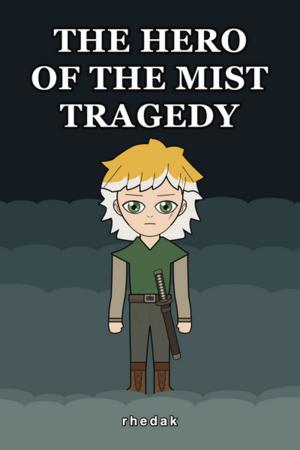
The Hero of the Mist Tragedy
Natsume, before
Natsume shared the carriage with Reika Mizuki as far as the village’s outskirts, an arrangement her frugality had proposed and the treasury clerk had approved without a second look. One driver, one set of tolls, two women bound for the same half-forgotten corner of the valley’s edge for entirely separate reasons: Natsume for a guest lecture no one at court would have thought worth the fare, Reika for a Mist ceremony the local shrine had been petitioning months for someone senior enough to perform. Reika kept the carriage on to the shrine grounds themselves, patient with the driver in a way Natsume could not match that morning.
Natsume had him let her out at the village’s edge instead, the lecture hall still the better part of an hour off on foot. Walking would give her something to do with a mind that would not stop turning over the council chamber’s last four days.
On foot, she was at least putting one foot in front of the other, which was more than four days of sketching had accomplished. She failed, again, to think of a single concrete way to make a sleeping Kami do what a king had ordered it to do.
Make it happen. Even if you don’t know yet how. Four days, and she still had nothing past the bare outline of the ambition itself: the old scrolls’ account of a first bargain, the priesthood’s plain, repeated doctrine of presence over command, a ceiling on the valley’s mist output that everyone agreed existed and no one could tell her how to raise.
She had sketched eleven different approaches to the problem since that meeting and crossed out eleven. Each one stalled at the same point: the moment ambition needed to become method.
The road followed the shore of a small lake for a while, its surface flat and undisturbed but for a heron working the shallows. It curved past the terraced rice paddies at the town’s edge, where the land was too uneven and too poor for mist-mills; only the wealthier holdings further south could afford those.
Here, instead, a single Kiri-no-Miko knelt at the head of the topmost channel, the same water Natsume had watched sitting flat and still in the lake not a quarter-hour before. Hands loose at her sides, eyes closed, breathing in a slow, even count Natsume could hear from twenty paces off. High Priestess Reika Mizuki, unmistakable even at a distance: a stillness so complete it made everyone around her feel unaccountably louder than they wanted to be.
Natsume slowed without deciding to. Two working explanations presented themselves, and she had never yet had cause to prefer one over the other: a woman moving mist by will, or a woman waiting, with great patience, for mist that had been going to move that way regardless. She had watched perhaps a dozen times in her life and still had nothing that would let her rule either one out.
The channel’s surface rose, filling by degrees, the way water rises when someone far off has opened a sluice rather than when someone nearby has poured it.
Natsume catalogued what should have been moving and wasn’t, from habit more than doubt: no current under the surface, no wheel turning to draw it, not even the smallest motion in Reika’s hands.
She had never formally proposed studying it. The funding case alone would cost her a season she didn’t have. The committee would want proof before it granted the time to find any. And underneath both sat a third reason, the one she liked least to write down even privately: she did not know whether her skepticism would survive being told, plainly, that there was nothing here to measure.
She might have walked on and thought no further about it, except that a shape at the paddy’s low stone border caught her eye before the ritual did.
A boy, no older than seventeen by the look of him, sitting where he clearly had no business sitting during school hours. He was watching it all with an expression that had nothing of the town’s usual quiet reverence in it, only scorn, precise and unhidden. Someone convinced the person in front of him was performing a trick, not practicing a mystery.
Not personal, Natsume catalogued, watching the boy’s face a moment longer than the scene required. The same unadjusted scorn, she would learn, went to teachers, to classmates, and eventually to a fair number of her own colleagues. A pattern worth watching, not yet a person worth arguing with.
“You’re supposed to be at your lessons.” Natsume said it lightly, more observation than reprimand, since it was, after all, none of her business.
“School let out an hour ago, for anything actually worth learning.” The boy did not look away from Reika while he said it, jet black hair pulled back in a plain, practical braid, half undone since the morning. “This is more interesting. Watch her hands. She never moves them. Not once, the whole time. If she actually knew how to do what everyone says she’s doing, she’d need her hands eventually. Nobody manages anything difficult for an hour running on breath and posture alone.”
He paused a moment, considering, still without turning. “Unless the hands were never the point, and the whole performance is there to make sure nobody looks anywhere else.”
“That’s an unusually specific theory for someone watching from a fence.”
“I’ve been watching my whole life. It’s not a theory anymore, it’s a conclusion.”
The boy finally turned, and the scorn Natsume had taken for the priestess redirected itself, without apparent embarrassment, into open evaluating interest. “You’re Dr. Natsume. The resonance paper. I read it twice, once to understand it and once to work out what you’d gotten wrong.”
Natsume had given exactly one public lecture on the technique, resonance solidification, since publishing it eighteen months before, to a hall of perhaps forty invited researchers, none of whom had been seventeen. “And which was it, in the end. What I’d gotten wrong.”
“Your third solidification stage. You’re treating the mist as a single wave and trying to force a phase match against it directly, which is why your yield keeps collapsing past the second minute no matter how precisely you tune the resonance chamber.” The boy rattled it off fast, the cadence of someone who had already explained this to himself a dozen times over and was mostly reciting it back now for Natsume’s benefit, not his own. “It isn’t one wave. It’s several, overlapping, slightly out of step with each other, and you only need to bring two or three of them into phase, not the whole mass at once. You’ve been trying to conduct an entire orchestra into the same note when you only needed the strings to agree with each other. The rest would have followed on its own, or not mattered either way.”
“That’s…” Natsume caught the sentence before it could come out half-formed, started over, and then gave up on ordering her thoughts at all. “Say that again. Slowly, from the beginning, not just the third stage, because if you’re right about that then the fourth stage’s containment argument changes too and I hadn’t even…”
She stopped herself a second time, aware only distantly that she was still standing in the middle of a public road with her satchel of lecture notes forgotten under one arm.
“Obviously,” he said, already talking again before Natsume had the pencil out of her bag.
The boy did, and once slowed down and walked through, it was exactly as correct as it had sounded the first time. Natsume logged the fact and moved past it: a good idea always tests as obvious after the fact, which was no use for telling you which of the day’s eleven bad ideas was about to turn out good before you’d spent a week proving it. Natsume asked a question. The boy answered it before she had finished asking, then anticipated the second question behind it and answered that too.
He corrected himself once, aloud, catching his own error a half-step ahead of Natsume, with no visible embarrassment at having made it.
He spoke as though the conversation itself mattered more than who technically outranked whom inside it, the way Natsume had spent her whole adult life wishing rooms full of senior researchers would speak to her.
“What’s your name?”
“Tomohiro.”
“Just Tomohiro?”
“For now.” A common enough answer, one Natsume had heard from a dozen farmers’ children over the years: a family name was something a crown or a house granted once, generations back, and passed down after that. Most families this far from court had simply never been granted one, and likely never would be. Something crossed the boy’s sharp, pale jade-green eyes, gone before Natsume could get a read on it. She filed it away unresolved: pride, maybe, or hunger, or possibly a thing with no name yet that hadn’t needed one because it had never once been wrong. “Names get better once you’ve done something worth one.”
They fell into step together without either of them proposing it, Tomohiro still going, unprompted, past the resonance chamber and into a second refinement Natsume hadn’t asked for and immediately wanted anyway.
Something about staggering the intake valves so the weaker secondary wave never had time to decohere before the dominant one caught up to it. Natsume asked a clarifying question. It turned into an objection.
Three exchanges later they were arguing a fine point of wave mechanics in the middle of a public road, and she had stopped noticing it was a road. “You keep tuning the chamber for amplitude,” Tomohiro said at one point, faintly scornful of the whole idea, “like a bigger wave was ever the hard part. Amplitude’s just how loud you shout once you’ve already agreed on the note. Phase is where the actual thinking is.”
Natsume did not stop to ask herself why it felt so easy. Neither, from every visible sign, did the boy. She forgot, somewhere in the fourth or fifth exchange, that she was walking anywhere in particular.
She forgot, a little later, to mind her breathing on an uneven stretch of road, and stumbled once, caught herself, and did not stop talking.
The lecture hall’s spire came into view once, at a bend in the road, and neither of them turned toward it.
“Someone taught you this.” Natsume said it mid-argument, watching the boy’s hands sketch a diagram in the air that had no business being as clear as it was, from someone who had never held apparatus in his life. “The resonance framework itself, I mean. Where you’re building all of this from.”
“Nobody taught me anything. I read what’s published, and then I think about it until it stops being confusing.” Tomohiro said it without false modesty and without much arrogance either, a plain report of how his mind happened to work.
No more remarkable to him than a talent for numbers or a good singing voice would have been to someone else. “School doesn’t teach anything that stays confusing long enough to be interesting. This did. So did she.”
He glanced back toward the paddy, brief and dismissive, toward the priestess still kneeling, still perfectly, patiently still. “Once I work out what she’s actually doing with her hands, or with whatever she’s actually using instead of her hands, I’ll have solved something worth solving.”
Natsume ran the two readings side by side and picked neither: a hidden mechanism worth cataloguing, or a discipline that had never needed a mechanism. She let the boy keep his answer and did not argue for the second. “I don’t suppose,” she said instead, “you’ve considered that some questions get answered by being asked properly rather than caught out by watching closely enough.”
“I’ve considered it. I don’t think it’s this question.” Tomohiro said it with the unbothered confidence of someone for whom being wrong had not once, so far, cost him anything he couldn’t out-think his way back out of.
They walked another quarter-hour before Natsume surfaced from the conversation the way a swimmer surfaces from deep water.
They had crossed past both the lecture hall and the turn back toward Tomohiro’s schoolhouse, and neither of them, at any point, had proposed stopping.
A boy of nine or ten sat idle on a fence post nearby, the kind every town road eventually produces, willing to run in exchange for a coin. On impulse, Natsume asked whether Tomohiro needed to go back for anything, a bag, a coat, whatever someone his age kept somewhere.
Tomohiro glanced once toward a shrine roof visible over the paddy’s far tree line, the same scorn from a moment ago settling back over his face. “No,” he said. “There’s nothing there I need.” The flatness in it went unexplained. Natsume, three sentences deep into a valve calculation, never got around to asking.
Natsume gave the runner two coins, and a message for the schoolhouse, delivered just as she meant it: Dr. Natsume required the day for the King’s business, and the boy Tomohiro would not be returning to his lessons. Dr. Natsume was engaging him immediately as a research assistant.
Both halves would hold up to scrutiny if anyone at the schoolhouse cared to check. She had not planned the sentence before she said it, and did not run it back afterward looking for a better one either.
Thanks never came. He only nodded once, as if the outcome had never been seriously in question. He asked, already turning back to the resonance chamber’s fourth valve, whether Natsume kept her research notes somewhere a person could read them properly, because reading a paper twice, it turned out, was never going to be enough.
Natsume walked the rest of the way back to her lodging with a headache building behind one eye, and something lighter underneath it: an unfamiliar, giddy lift she could not match to any conversation of hers on record.
She caught herself smiling at nothing twice before she’d even reached her door, and did not bother trying to stop it either time. Luck, she decided, filing it under the nearest available label and declining to examine the fit any further.
The first afternoon of the only real answer she would find to the question a king had ordered her to solve without knowing how. She never did sort it into one column or the other, not even years later, with every fact of what came after finally in hand. She left it unresolved, the same way she’d left the look in the boy’s eyes unresolved that first afternoon, and never once went back to close the file.











Please sign in to leave a comment.