Chapter 7:
Fourth Stop: The Classroom
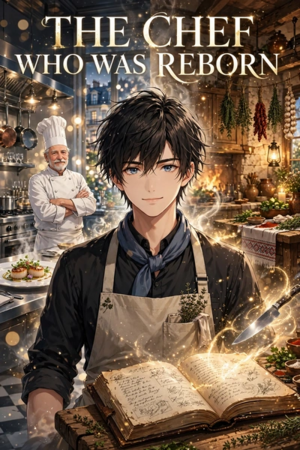
The Chef Who Was Reborn
Five years had passed.
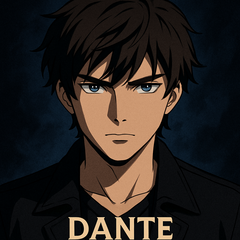
Dante was ten years old.
He no longer fit on the little stool. He no longer needed to be reminded to wash his hands before cooking. Now he walked to Ilona’s house alone, through the housing estates, the black notebook hidden inside his backpack between a math notebook and a half-empty lunchbox.
Ilona’s kitchen had stayed the same. The same yellow tiles, the same rattling refrigerator. Only Ilona had become slower. Time had turned her hair completely white, and sometimes she had to sit down while cooking. But her eyes remained the same.
The notebook, however, had not changed.
Italy.
Four knives. Two stars.
It still had not opened.
It was Monday. Third period. Class.
Mrs. Kovács wrote on the board with chalk:
What will you be when you grow up?
“Now, who would like to go first?” she asked.
Peti jumped up.
“A police officer! Because you have to be strong and protect people!”
Zsófi:
“A doctor! Because I’ll be able to heal my mother when she has a headache!”
Marci:
“A football player! Or a pilot! A football-player-pilot!”
The class laughed.
Everyone said something big. Quickly. Loudly. Something they had seen on television.
Mrs. Kovács nodded, smiled, and checked their answers off in the class register.
“Dante? And you?”
Dante stood up. He didn’t think about it.
He had known the answer for five years.
In a way, for ninety-seven years.
“A chef,” he said.
For a moment, the room went silent.
Then someone at the back laughed.
“My mom is a chef at home too!” Marci shouted.
“There are chefs in the cafeteria too, and they always burn the meatballs!” another voice added.
The class laughed.
Not cruelly. Not really.
Just the way ten-year-olds laugh when something isn’t cool enough.
A police officer was cool.
A pilot was cool.
A chef was just… someone who cooked.
Mrs. Kovács looked at him.
“A chef? That’s very sweet, Dante. I’m sure you cook delicious things at home.”
But there was something in her voice that Dante hated most.
Pity.
Dante felt his face growing hot.
In the past, he would have lowered his head.
But not now.
For ninety-two years, he had been someone people looked up to.
Now, at ten years old, he was the one they laughed at.
“A chef doesn’t just cook,” he said quietly, but the entire class heard him. “A chef reminds you.”
“Reminds you of what?” Mrs. Kovács asked, surprised.
Dante shrugged.
“Where you came from. And who you ate with.”
The classroom fell silent.
They didn’t understand.
It was too serious.
Too grown-up.
Mrs. Kovács wrote in the class register:
Martin — chef.
Beside it, she drew a little smiley face with a question mark.
Dante sat down.
The boy sitting beside him leaned over and whispered:
“So you’re going to be the cafeteria lady?”
Dante didn’t answer.
He simply looked out the window.
That afternoon, at Ilona’s.
“They laughed at me,” Dante said as he took out the onions.
They were making paprikás krumpli that day.
A simple dish.
Ilona’s favorite.
“Who did?”
“The class. Because I want to be a chef.”
Ilona sat down on the chair.
She looked at him for a long moment.
“And what did you say?”
“That a chef reminds you.”
Ilona smiled.
“That’s what Gábor would have said.”
Dante took out the notebook.
He opened it to the last entry.
Italy.
Four knives. Two stars.
The space beneath it was still empty.
No city.
No recipe.
No date.
“It still won’t open,” he said, annoyed.
“Because you don’t need it yet,” Ilona replied.
“But I’m ten years old!” Dante burst out. “I can make a roux. I can sharpen a knife. I can… I can do everything!”
“I know,” Ilona said quietly. “But for Italy, knowing how to cut an onion isn’t enough.”
Dante looked at her.
“Then what do you need?”
Ilona didn’t answer immediately.
She simply watched as Dante cut the potatoes into small pieces.
Precisely.
Evenly.
The way she had taught him.
And the way Dante Moreau had done it for ninety-two years.
“Someone to cook for,” she finally said.
Dante didn’t understand.
But he didn’t ask again.
They cooked together.
Not like before.
Ilona no longer held his hand.
She simply sat and spoke when necessary.
“Lower the heat, Dante. Let it simmer. Don’t rush it. Remember Munich?”
“I remember.”
When it was finished, they sat down.
Two plates.
Two spoons.
But there were three chairs in the kitchen.
On Tuesday, during recess, Dante sat alone in the hallway.
The others were playing football.
He was doodling in his notebook, trying to draw the perfect shape of tagliatelle from memory.
Then someone stopped beside him.
“What are you drawing? Pasta?”
It was a little girl.
Pigtails.
Freckles.
One knee stained green from the grass.
She wasn’t from his class.
She was from the parallel class.
“Yes,” Dante said, surprised.
“I’m Lili,” the girl said, sitting down beside him as if she had always belonged there. “You’re the chef boy they laughed at yesterday.”
Dante closed the notebook.
“Yes.”
“It’s okay,” Lili said. “My brother wants to be a garbage man. They laughed at him too. But someone has to take out the trash. And someone has to cook. Otherwise, we’d starve.”
Dante laughed.
For the first time since school had started.
“What do you want to be?” he asked.
“Nothing,” Lili said.
“I want to play.”
Then she pulled two handfuls of mud from her pocket.
“Shall we make soup?”
Dante stared at the mud.
A Michelin-starred chef with ninety-two years of experience, sitting in a school hallway with a handful of mud in his hands.
“It needs salt,” he said seriously.
Lili burst into laughter.
“You take everything too seriously!”
And they started cooking.
Mud soup.
Grass soup.
Meatballs made from pebbles.
Lili brought the ingredients.
Dante told her how to stir.
A teacher told them they were going to get dirty.
Lili shouted back:
“But this is a restaurant!”
That afternoon, when a little girl with pigtails and muddy knees appeared at Ilona’s door beside Dante, Ilona simply stared at her for a moment.
“Grandma, this is Lili,” Dante said. “My friend. Can we cook something for her too?”
Ilona looked Lili up and down.
Lili looked Ilona up and down.
Then she looked around the kitchen.
“Do you have pancakes?”
Ilona laughed.
She laughed so loudly that Dante couldn’t remember the last time he had heard her laugh like that.
“We don’t,” she said.
“But we will.”
And the three of them started making pancakes.
The first one burned.
The second one tore apart.
The third was perfect.
Lili didn’t ask how many stars it had.
She didn’t ask where the recipe came from.
She simply took a bite and said:
“Delicious! Can we make ten more?”
Dante looked at her.
And he understood what Ilona had meant that morning.
Someone to cook for.
That evening, after Lili had gone home and Anna had returned, Dante was alone in the kitchen.
Between the two empty pancake plates lay the black notebook.
He opened it.
The page dedicated to Italy was still empty.
But underneath it, very faintly, as if Lili’s muddy fingers had drawn it there, a new line had appeared.
It was written in Gábor’s handwriting.
But for the first time, it wasn’t addressed to Ilona.
“Some dishes cannot be eaten alone.” — G.
Dante closed the notebook.
Outside, in the kitchen, there were now three chairs around the table.
And not one of them was empty.






Please sign in to leave a comment.